Tagged: houseplant
The more I research it, the more I find that Hotwells had far better transport links back in Victorian and Edwardian times than it has today. Along with buses that went to more useful places than the City Centre, there were trams, the funicular up to Clifton, the landing stage for paddle steamer services and two railway stations all within easy walking distance of me.
Today I took a day off work as preparation for doing the bookkeeping for my tax return1, and took a wander along to the site of what would have been my nearest station, Hotwells (or Clifton, as it started out in life), nestled in the shadow of the suspension bridge, the Bristol terminus of the Bristol Port Railway and Pier.
From there I wandered down the Portway, following the original line, until I got to the area around Sneyd Park Junction, where the tunnel from the slightly later Clifton Extension Railway joined up with this originally-isolated BPR line. Then I headed up to Clifton through the "goat gully" at Walcombe Slade, seeing the few above-ground bits of evidence of the tunnel (which is still in regular use) along the way.
It was a lovely day, and a good walk, and it was interesting to daydream of the times when I could have walked a few minutes from my flat down to Dowry Parade, caught a short tram ride to Hotwells Stations, and then headed from there to Avonmouth, perhaps even to board a transatlantic passenger service. The completion of the Clifton Extension Railway that linked the Avonmouth station with Temple Meads made relatively direct transatlantic travel from London via Bristol possible, with passengers travelling up from Paddington to Temple Meads, on to Avonmouth on the Clifton Extension Railway and Port Railway and Pier line, then perhaps catching a Cambpell's paddle steamer—which sometimes acted as tenders for large steamers—to a larger ship that was headed out for Canada, say.
1 I've learned that the best approach is to take two days off and deliberately do something that's not my bookkeeping on the first day, as otherwise I just inevitably end up procrastinating and feeling guilty on the first day no matter what. I have an odd brain, but at least I'm learning strategies for dealing with its strange ways as I get older...
2 Information mostly gleaned from Colin Maggs' The Bristol Port Railway & Pier and the Clifton Extension Railway, The Oakwood Press, 1975.
A Water-Based Wander
11 Dec 2021
I woke up on this Saturday with a headache, feeling like I'd not slept at all. As well as that, I'm still in some pain from the wisdom tooth extraction I had a few weeks ago. I moped about the flat for a while and then decided that the best thing to do was to force myself out on at least a small walk to get some fresh air and coffee.
Was there anywhere I could walk locally that I'd never been? Actually, yes! Although it's not a road, and I didn't walk it, there is actually one route that I've not travelled so far in my wanders. And it even had coffee near its far end...
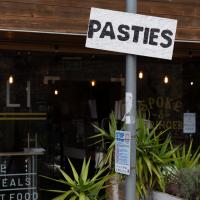
I love the way Spoke & Stringer's deli window with it predictably-hipster type choices and logo are somewhat put into perspective by their wonky big-arse OSB sign with PASTIES daubed on it.
There is a time for fancy marketing, and a time to just shout "GET YER PASTIES 'ERE" at the top of your signage.
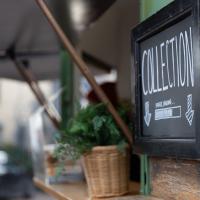
I mostly went out to hang out with my friends Sarah and Vik in Bedminster, but along the way I thought I'd take a closer look at something a little nearer home: the last crossing point of the Rownham Ferry.
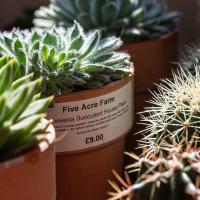
The Tobacco Factory, Bedminster's will-known theatre and bar, bought a farm in 2018 and now has a farm shop attached. always trying to be innovative, bought a farm in 2018 and now has a farm shop attached. I sometimes pop in on a Sunday, though it's the Sunday market that pops up in the back yard that actually lures me over there.
I've been pretty awful at reading so far this year, apparently averaging about one book per month. That's a far cry from 2019, say, where I got through 41 books in the year. Today's wander was prompted by my rubbish reading, as I needed to go hand back some books to the library, because I'd managed to renew them so many times that I hit the limit on renewals. Oops. Several of them were still unread.
So, off to the Central Library for me, tail between my legs. On the way there I did my best to recreate a historical photo of Dowry Square; while I was in the area I walked under the adjacent Norman arch and poked around behind the Cathedral, and I also had a little diversion to the city centre and came back along the south side of the river, hitting some trouble with the lock gates as I finally crossed the harbour back towards home.
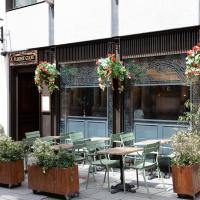
Okay, so given that the library won't be open until 1pm I need to kill some time. I decided to have a mooch around the "old city" area.
Here I noticed a newish specialist darts club, apparently. Can't for the life of me remember what was at 41 Corn Street before this appeared.
My boss plays darts, but given how accident-prone she is it would take some convincing for me to enter a room where she was both drinking and in charge of throwable pointy objects.
Nipping Up the Zig Zag to the Shops
19 Aug 2023
It's been a long while since I did one of these walks.
I'm thinking of finishing up the project by walking one or two last bits of road, thus being able to declare with all honesty that I've done my best to walk every public road within my mile (and quite a few alleyways besides.) As a prelude, and just because I felt like it, I decided to drag out the camera and GPS on this little wander to the local shops.
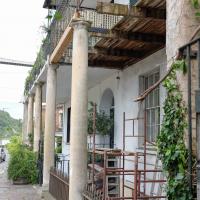
I was concerned about the state of Rock House, or at least its southern half, the last time I took a closer look at it while passing. Happily it seems to have been bought by someone prepared to fix up that drooping balcony. Here's hoping these repairs continue and my next photo of the place shows both sides of this old house (dated back to at least 1731 by a William Halfpenny engraving, no matter what the Listing says.)
Just behind Rock House you can see a bit of the Colonnade, sawn off at the end to make room for the widened Hotwell Road, I believe. Back in the day, according to 1925's The Bristol guide; being a complete ancient and modern history of the city of Bristol, the Hotwells and Clifton:
For those who prefer exercise to silting, there is the Colonade with shops, built beneath the rocks, and a parade about 800 feet long, shaded with trees, by the side of the river, so that the company may enjoy a dry and pleasant walk when it rains, or an airy, cool, and shady walk in the warmest season: also during the influx and efflux of the river, they may be entertained with the sight of the Merchant's ships, Steam packets, and Coasting vessels that generally pass up or down.