Tagged: day
Little Clifton Village Details
09 Nov 2020
I like The Paragon as a terrace, especially the bowed porches. On the other side of the road, a house attic has a stone lion surrounded by rocaille leaves, according to its listing.
I also love the detail of the arrows in the wrought iron of The Mall's balconies. Today I discovered Westfield place, a road I'd never encountered that runs up to the rear of the Coronation Tap. (It's a famous local cider pub, but I've only been in a couple of times. I'm more of a beer man.)
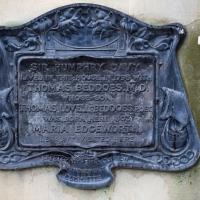
I was particularly intrigued by "MARIA EDGEWORTH his aunt visited here". It's this Maria Edgeworth, a prolific writer, apparently. "She was the second child of Richard Lovell Edgeworth (who eventually fathered 22 children by four wives)", so I imagine Thomas Beddoes had quite a few aunts...
Tags: Bristol Places UK onemilematt united kingdom Clifton Village plaque
Auto-Tags: Font Rectangle Commemorative plaque Artifact Electric blue Typesetting Metal Symmetry Wood History Relief Memorial Carving Emblem Art
Text Recognition Tags: SIR UMPHRY DAY VED IN THISHOISEIN1798ATH THOMAS BEDDOES.MD. ROSS SON STHOMAS LOVEEBEDDCES POET WAS BORN HERE 1805 MARIA EDCEWIORTHL S AUNT SFED PERE COMMITTES SIR UMPHRY DAY VED IN THISHOISEIN1798ATH THOMAS BEDDOES.MD. ROSS SON STHOMAS LOVEEBEDDCES POET WAS BORN HERE 1805 MARIA EDCEWIORTHL S AUNT SFED PERE COMMITTES
Bedmo and Ashton Court
21 Nov 2020
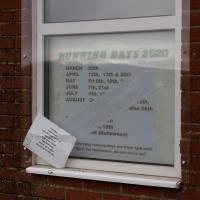
A rather more wide-ranging weekend wander with Sarah and Vik, taking in some mock Tudor bits of Bedmo (I should note that I've subsequently been corrected to "Bemmie", but I'm an outsider and have been calling it "Bedmo" for short for decades...), a chunk of Ashton, a path up Rownham Hill called Dead Badger's Bottom(!), The Ashton Court estate, a bit of the UWE campus at Bower Ashton, and some of the Festival Way path.
Tags: Ashton Court Estate Bristol Places UK onemilematt united kingdom Rownham Hill*. Ashton Court
Auto-Tags: Property Window Brick Brickwork Building Font Rectangle Facade Gas Commemorative plaque Signage Sash window Building material Nameplate Fixture
Text Recognition Tags: RUNNING DAYS 2020 MARCH 29th APRIL 12th, 13th & 26th Fri Bth, 10th, " 7th, 21st Sth, 1 MAY JUNE JULY AUGUST 2 Wed 26th 18th st (Halloween) day running days are rom 1pm unti TPALY For Halloween, pleane dress up RUNNING DAYS 2020 MARCH 29th APRIL 12th, 13th & 26th Fri Bth, 10th, " 7th, 21st Sth, 1 MAY JUNE JULY AUGUST 2 Wed 26th 18th st (Halloween) day running days are rom 1pm unti TPALY For Halloween, pleane dress up
And Back Down the Hill from the Flu Jab
21 Nov 2020
This is my return from getting my annual flu jab at Christ Church, as explained in more detail in my wander up the hill.
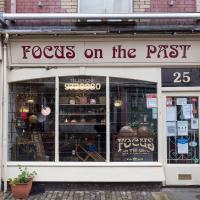
Ironically, this is the second photo I took as the first one wasn't in focus. Not sure how I managed that. Anyway. I like Focus on the Past and could browse in there for ages. When they're open they usually have an array of furniture and other goods out on the front apron, too.
Tags: Bristol Places UK onemilematt united kingdom Clifton Village
Auto-Tags: Plant Property Building Flowerpot Window Houseplant Door Retail Facade Floristry Awning Font Logo Mixed-use Street
Text Recognition Tags: FOCUS on the PAST W E 25 TELEPHONE FOCUS OPEN AERY DAY FOCUS on the PAST W E 25 TELEPHONE FOCUS OPEN AERY DAY
Avoiding the Accounts
26 Nov 2020
I took the day off my day job to do my accounts—or at least do enough bookkeeping to send them to my accountant. I hate doing the books. I woke up late, tired and with a headache and decided to bunk off for a walk around Cliftonwood, Clifton Village and Clifton instead, taking in a couple of good coffees along the way. Thanks, Foliage Café, and Twelve for the flat whites.

I love a cafe sign. Foliage Cafe, Regent Street, Clifton
Tags: Bristol Places UK onemilematt united kingdom Clifton Village Foliage Cafe cafesigns
Auto-Tags: Drinkware Automotive tire Wood Drink Handwriting Serveware Font City Tableware Metal Cup Dishware Cup Automotive design Fashion accessory
Text Recognition Tags: SOUP OF THE DAY MASK 50 SMOKY BUIERNUTSUPS SOUP OF THE DAY MASK 50 SMOKY BUIERNUTSUPS
Sunday Bedmo
20 Dec 2020
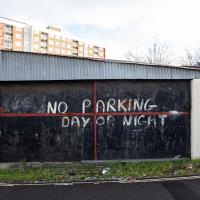
A long meander around bits of Bedminster, from the river to the north to Winterstoke Road to the south, taking a few roads I've seen before, and a few I haven't. The Christmas decorations were an extra bonus.
Tags: Bristol Places UK onemilematt united kingdom Bedminster Southville
Auto-Tags: Plant Sky Building Cloud Asphalt Graffiti Art Font Road surface Brickwork Rolling Brick Residential area Road City
Text Recognition Tags: NO PARKING DAY OR NIGHT NO PARKING DAY OR NIGHT
My historical research took a wander underground recently, partly inspired by the Canynge Square sinkhole, partly by St Vincent's (Ghyston's) cave and its tunnel to the Observatory, and I was surprised to find that there might be an intact tunnel from the Bristol Port Railway and Pier still just sitting there under Bridge Valley Road. A quick search turned up this recent video by an intrepid explorer, so it's definitely still there.
I went looking for the entrances today, and definitely found the south entrance, at the start of the Bridge Valley Path, the footpath that starts with steps at the bottom of Bridge Valley Road. It's easy to miss if you're not looking for it. I think I've figured out where the north entrance is, too, but it was getting dark at that stage and the Portway was still busy enough that crossing the road was still the normal nuisance, so I thought I'd leave further explorations for another day.
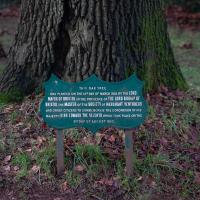
- Nice. It's just on the other side of the Promenade from the Alderman Proctor's Drinking Fountain.
Tags: Bristol Places UK onemilematt united kingdom Clifton Society of Merchant Venturers
Auto-Tags: Natural landscape Plant Wood Terrestrial plant Trunk Grass Twig Biome Woody plant Tree Deciduous Groundcover Font Forest Landscape
Text Recognition Tags: THIS OAK TREE MAS PLANTED UN THE 14 DAY OF MARCH 903 BY THE LOKD MAYOR OF BRISTOL IN THE PRESENCE OF THE LOND BISHUP OF BRISTOLTHE MASTER OF THE SOCIETY or MERCHANT VENTURERS AND OTHER CITIZENS TO COMMLMORAIE THE CORONATION OF HIS NAJESTY EDWARD THE SEVENTH.WHICH TOOK PLACE ON THE DDAY OF AUGUST 1902. THIS OAK TREE MAS PLANTED UN THE 14 DAY OF MARCH 903 BY THE LOKD MAYOR OF BRISTOL IN THE PRESENCE OF THE LOND BISHUP OF BRISTOLTHE MASTER OF THE SOCIETY or MERCHANT VENTURERS AND OTHER CITIZENS TO COMMLMORAIE THE CORONATION OF HIS NAJESTY EDWARD THE SEVENTH.WHICH TOOK PLACE ON THE DDAY OF AUGUST 1902.
One Albermarle Row, Granby Green and... People
12 Mar 2021
I was browsing some historical photos the other day, and came across "Rear of Unspecified House" in the Bristol Archives' John Trelawny Ross collection, and immediately recognised it as being the back of 1 Albermarle Row, just around the corner from me. I've not had much time to research the history of this odd little addition to Albermarle Row, or what happened to 1-4 Cumberland Place, number 4 of which used to be attached to the side of 1 Albermarle Row, but it was interesting to look at old maps for a few minutes and work out what used to be where.
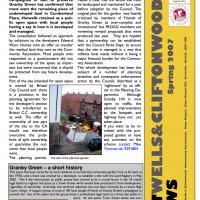
That all connects with the little local bit of land at Granby Green, too, as it used to be numbers 1-3 Cumberland Place. There was something of a planning battle over Granby Green, and I've included an old edition of Hotwells & Cliftonwood News that I found online, a copy of which would have been popped through my letterbox at the time.
I was also inspired by some old pictures of Hotwell Road to try to put a few more people in my pictures, though I set my pre-focus a couple of extra metres out from normal to make sure I didn't get too close to anyone!
Tags: Bristol Places UK onemilematt united kingdom Hotwells Cumberland Place Granby Green
Auto-Tags: Tire Automotive tire Newspaper Publication Motor vehicle Tread Font Wheel Material property News Vehicle Automotive wheel system Advertising Tire care Screenshot
Text Recognition Tags: Decision time for new h&cca Open Space in Hotwells HOTWELLS & CLIFTONWOOD COMMUNITY ASSOCIATION A recent poll of the people who sion granted to Edward Ware Homes campaigned in vain to preserve makes it clear that the whole site must Granby Green has confirmed that be landscaped and maintained for a year most want the remaining piece of before adoption by the Council, The undeveloped land in Cumberland original plan for the garden was heavily Place, Hotwells retained as a pub- criticised by members of Friends of lic open space with local people Granby Green as over-complex and having a say in how it is developed 'institutional but FROGG members are reviewing revised proposals that were The consultation followed an approach produced last year. They are hopeful by solicitors to the developers Edward that a partnership can be established with the Council Parks Dept. to ensure the residual land they own to the Com that the site is managed in a way that munity Association. Most people who reflects local needs without it being a responded to a questionnaire did not major financial burden for the Commu- ed by and managed. Ware Homes with an offer to transfer see ownership of the space as impor- nity Association. tant but were concermed that it should The whole development has been the be protected from any future develop- subject of a number of planning breaches and consequent enforcement Part of the site intended for open space action by the Council, described as a 'nightmare by an offi- cer in the Planning De- Alkhough Granby Hill is now open to traffic, the planned improvements to the footpath and highway have not yet ment. is owned by Bristol City Council and there is a provision in the planning agreement for the developer's section to be transferred to partment. Bristol C.C. owmership as well. The offer of ownership of one part of the site to the CA taken place. If you want to be in- volved with the pro- posed garden or have any comment on the scheme contact Mike would not therefore overcome the prob lems of split ownership or guarantee the out- come that local people Timmins tel: 9291804 want. The planning permis- The s of the panned garden Granby Green -a short history This apace had cared for by local residents a an informal community garden from as far back as the 1970s unail a fance was erected by a develaper, to establiah a tde with the Land Ragistry in May 2002 Tha 4 day interruption to pubic access later proved to be a crudal factor in the IB legal battle to regster the space as Town Green which would have protected it from developmere, n renoved by a recent High pnenas of Graby Green) campagned to Ibeen regardiess of ownership (iroricaly. chis technical objection has now been Court rulng A support group of around 100 local people prevent the loss of the space and the group tced a professional legal team at a three day publik in In this edition: Community News Winning ideas - Meet Your Neighbour -6 Events & Activities - quiry At one point, Town Green satus wos con ferred by the Bristol CC Open Spaces committee but bear rescinded folawing thrests of legal action by the then ownieri, Etward Ware Homes. Local resident Mike Timmin has ggeed that the now smaler space below Walace Place, che new 4 block of Mats should be christened Gromit Gar. 7 dens Rey Smth Contacts 8 HOTWELLS&CLIFTONWOe Spring 2007 SM3N Published y Hetwells A CIenweed Cemmunity Aassetaten, Htepe Chapel, Hepe Chapel Hill, Hetwells, Brtatel. BSa 4ND Decision time for new h&cca Open Space in Hotwells HOTWELLS & CLIFTONWOOD COMMUNITY ASSOCIATION A recent poll of the people who sion granted to Edward Ware Homes campaigned in vain to preserve makes it clear that the whole site must Granby Green has confirmed that be landscaped and maintained for a year most want the remaining piece of before adoption by the Council, The undeveloped land in Cumberland original plan for the garden was heavily Place, Hotwells retained as a pub- criticised by members of Friends of lic open space with local people Granby Green as over-complex and having a say in how it is developed 'institutional but FROGG members are reviewing revised proposals that were The consultation followed an approach produced last year. They are hopeful by solicitors to the developers Edward that a partnership can be established with the Council Parks Dept. to ensure the residual land they own to the Com that the site is managed in a way that munity Association. Most people who reflects local needs without it being a responded to a questionnaire did not major financial burden for the Commu- ed by and managed. Ware Homes with an offer to transfer see ownership of the space as impor- nity Association. tant but were concermed that it should The whole development has been the be protected from any future develop- subject of a number of planning breaches and consequent enforcement Part of the site intended for open space action by the Council, described as a 'nightmare by an offi- cer in the Planning De- Alkhough Granby Hill is now open to traffic, the planned improvements to the footpath and highway have not yet ment. is owned by Bristol City Council and there is a provision in the planning agreement for the developer's section to be transferred to partment. Bristol C.C. owmership as well. The offer of ownership of one part of the site to the CA taken place. If you want to be in- volved with the pro- posed garden or have any comment on the scheme contact Mike would not therefore overcome the prob lems of split ownership or guarantee the out- come that local people Timmins tel: 9291804 want. The planning permis- The s of the panned garden Granby Green -a short history This apace had cared for by local residents a an informal community garden from as far back as the 1970s unail a fance was erected by a develaper, to establiah a tde with the Land Ragistry in May 2002 Tha 4 day interruption to pubic access later proved to be a crudal factor in the IB legal battle to regster the space as Town Green which would have protected it from developmere, n renoved by a recent High pnenas of Graby Green) campagned to Ibeen regardiess of ownership (iroricaly. chis technical objection has now been Court rulng A support group of around 100 local people prevent the loss of the space and the group tced a professional legal team at a three day publik in In this edition: Community News Winning ideas - Meet Your Neighbour -6 Events & Activities - quiry At one point, Town Green satus wos con ferred by the Bristol CC Open Spaces committee but bear rescinded folawing thrests of legal action by the then ownieri, Etward Ware Homes. Local resident Mike Timmin has ggeed that the now smaler space below Walace Place, che new 4 block of Mats should be christened Gromit Gar. 7 dens Rey Smth Contacts 8 HOTWELLS&CLIFTONWOe Spring 2007 SM3N Published y Hetwells A CIenweed Cemmunity Aassetaten, Htepe Chapel, Hepe Chapel Hill, Hetwells, Brtatel. BSa 4ND
I got interested in Bristol's medieval water supplies after poking around near Jacobs Wells Road and Brandon Hill. It was during that research I found out about a pipe that's still there today, and, as far as I know, still actually functioning, that was originally commissioned by Carmelite monks in the 13th century. They wanted a supply of spring water from Brandon Hill to their priory on the site of what's now the Bristol Beacon—Colston Hall, as-was. It was created around 1267, and later, in 1376, extended generously with an extra "feather" pipe to St John's On The Wall, giving the pipework its modern name of "St John's Conduit".
St John's on the Wall is still there, guarding the remaining city gate at the end of Broad Street, and the outlet tap area was recently refurbished. It doesn't run continuously now, like it did when I first moved to Bristol and worked at the end of Broad Street, in the Everard Building, but I believe the pipe still functions. One day I'd like to see that tap running...
There are a few links on the web about the pipe, but by far the best thing to do is to watch this short and fascinating 1970s TV documentary called The Hidden Source, which has some footage of the actual pipe and also lots of fantastic general footage of Bristol in the seventies.
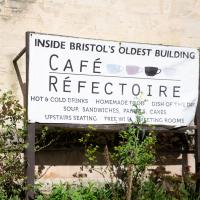
On my walk today I was actually just going to the building society in town, but I decided to trace some of the route of the Carmelite pipe, including visiting streets it runs under, like Park Street, Christmas Street, and, of course, Pipe Lane. I also went a bit out of my way to check out St James' Priory, the oldest building in Bristol, seeing as it was just around the corner from the building society.
There are far too many pictures from this walk, and my feet are now quite sore, because it was a long one. But I enjoyed it.
Tags: Bristol Places UK onemilematt united kingdom City Centre St. James' Priory
Auto-Tags: Plant Plant community Building Land lot Vegetation Font Grass Groundcover Real estate Grass family Landscape Billboard Signage Sign Advertising
Text Recognition Tags: INSIDE BRISTOL'S OLDEST BUILDING CAFÉ RÉFECTOIRE HOT & COLD DRINKS HOMEMADE FOO" DISH OF THE DAY SOUP, SANDWICHES, PAN S CAKES MEETING ROOMS UPSTAIRS SEATING FREE WI EA INSIDE BRISTOL'S OLDEST BUILDING CAFÉ RÉFECTOIRE HOT & COLD DRINKS HOMEMADE FOO" DISH OF THE DAY SOUP, SANDWICHES, PAN S CAKES MEETING ROOMS UPSTAIRS SEATING FREE WI EA
Long Bemmie Wander with Lisa
11 Apr 2021
My friend Lisa joined me again, this time for a long wander through "Bemmie". In fact, I tweeted recently using "Bedmo" as my abbreviation for Bedminster, and apparently there's something of a culture war going on. From what I can glean, the longer-term residents call it "Bemmie" and consider "Bedmo" a name made up by hipster gentrifiers.
I had no idea, but then I didn't grow up around here, and I don't live in Bedminster, and I'm not a hipster. I'm not sure I've ever gentrified anywhere, either; Hotwells was already quite gentrified by the time I arrived. I probably just lowered the tone a bit.
Anyway. Lisa and I entered Bemmie by the traditional toll gate (though actually you'd only have paid if you were coming from the Long Ashton direction, not merely nipping across from Hotwells) and then almost literally combed the streets to knock several new roads off my list of targets. Along the way we saw lots of street art, as you'd expect, and admired the area's panoply of gorgeous knockers.

I for one welcome our new robotic overlords. Piece by Angus.
Tags: Bristol Places UK onemilematt united kingdom Bedminster
Auto-Tags: Window Art Building Plant Wall Font Graffiti Facade Road City Mural Painting Visual arts Advertising Street
Text Recognition Tags: NGUS LAUGH NOW, BUT ONE DAY WE'LL BE IN CHARGE ! NGUS LAUGH NOW, BUT ONE DAY WE'LL BE IN CHARGE !
Desultory Coffee Wander
16 Apr 2021
Another day, another quick dash out for a coffee. I did at least try to take a different route from normal, especially on the way back, where I yet again got a bit lost in the strange paths, flyovers and underpasses that make up the odd maze of pedestrian "infrastructure" among the concrete jungle between the west of Greville Smyth and my neck of the woods in Hotwells. I swear one day I'll take a turn I've not tried before and end up being gored by a Bristolian minotaur.
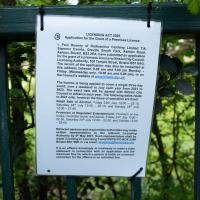
I'd heard there was going to be something of a wild party in Greville Smyth to mark the end of lockdown. It seems it may be the start of a regular thing, with a dance festival bringing 8,000 people to the park. I imagine I'll be able to hear it from my place, and therefore safely avoid it.
Tags: Bristol Places UK onemilematt united kingdom Bedminster Greville Smyth Park Ashton sign festival party
Auto-Tags: Plant community Plant Botany Natural landscape Terrestrial plant Vegetation Biome Grass Groundcover Font Forest Wood Shrub Signage Landscape
Text Recognition Tags: LICENSING ACT 2003 Application for the Grant of a Premises Licence & Paul Rooney of Radiosctive Clothing Limited TIA Slammin Events. Greville Smyth Park, Ashton Road, Ashton, Bristol, BS3 ZEA have submitted an application for the grant of a premises licence to Bristol City Council Licensing Authority, 100 Temple Street, Bristol BS1 SAG The record of the applicaeion may also be inspected at this address between .00 am and 6.00a pm Monday Friday. (Wednesday only. 10.00 am and 5.00 pm or on the Council's website at www.belatol.gox.uk The licence is being applied to cover a single three day avent, over a weekend in July ach year from 2021 te 2023. The esact date will be agreed with Bristol City Council in advance each year. The following dates relade to 2021 only. howevor the Bimes of operatlon are ed: Retail Saie of Alcohol Friy 23h uy 12:00 -22:10 Saturday 24 July 1200-22 10 and unday 25 July 12:00 -2140, Provision of Regulated Entertainment: Proviion of ve music recorded music wnd dance Fry 23 July 1200 22:30 Baturday 24 July 12:00-2230, and Bunday 1200 -22:00 Relevant persons and responsible authorities may make written reprenantation te the relevant Lconsing Authority by 4 May 2021. Such rapresentation shall be made in writing to Licensing Teameor PO BOK 339 Brienel B1 9NE vie smai Aano at.uk Ris an offence knowingy or reklessy to make a faise statement in connestion wh en oplcation and the masimum fine for which a peron is iable on summery conviction for the offence is an unmited e LICENSING ACT 2003 Application for the Grant of a Premises Licence & Paul Rooney of Radiosctive Clothing Limited TIA Slammin Events. Greville Smyth Park, Ashton Road, Ashton, Bristol, BS3 ZEA have submitted an application for the grant of a premises licence to Bristol City Council Licensing Authority, 100 Temple Street, Bristol BS1 SAG The record of the applicaeion may also be inspected at this address between .00 am and 6.00a pm Monday Friday. (Wednesday only. 10.00 am and 5.00 pm or on the Council's website at www.belatol.gox.uk The licence is being applied to cover a single three day avent, over a weekend in July ach year from 2021 te 2023. The esact date will be agreed with Bristol City Council in advance each year. The following dates relade to 2021 only. howevor the Bimes of operatlon are ed: Retail Saie of Alcohol Friy 23h uy 12:00 -22:10 Saturday 24 July 1200-22 10 and unday 25 July 12:00 -2140, Provision of Regulated Entertainment: Proviion of ve music recorded music wnd dance Fry 23 July 1200 22:30 Baturday 24 July 12:00-2230, and Bunday 1200 -22:00 Relevant persons and responsible authorities may make written reprenantation te the relevant Lconsing Authority by 4 May 2021. Such rapresentation shall be made in writing to Licensing Teameor PO BOK 339 Brienel B1 9NE vie smai Aano at.uk Ris an offence knowingy or reklessy to make a faise statement in connestion wh en oplcation and the masimum fine for which a peron is iable on summery conviction for the offence is an unmited e