Tagged: as
Royal York Crescent
02 Nov 2020
I've taken a lot of photos of Royal York Crescent over the years. This time I walked right to the dead-end bit at the far west corner and found a plaque to the Empress of the French. Call me hard to impress, but among the scientists, novelists, architects and artists whose plaques litter the rest of the area, that seems quite minor claim to fame.
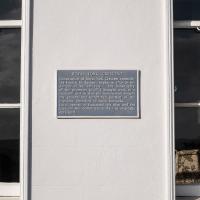
And in between times were the Napoleonic Wars, which probably explains the desire for a barracks.
Tags: Bristol Places UK onemilematt united kingdom Clifton Village
Auto-Tags: Fixture Rectangle Window Grey Font Tints and shades Glass Wood Door Facade Pattern Vehicle door Electric blue Room Transparency
Text Recognition Tags: ROYAL YORK CRESCENT Construction of Royl York Cresoem, reputodly tht Tongt in turops, heRen In 1791 to the deugrs of WIliem Faty of the promoter in 1791 brought work to e tandalli rd in 18 the covernment boat the groend and unfanistird portion of tir Crescent, imending to build baracks. Local opposito Irerated 1hts plan and the Crestent was completed in 181o as arainally The bankruptey ROYAL YORK CRESCENT Construction of Royl York Cresoem, reputodly tht Tongt in turops, heRen In 1791 to the deugrs of WIliem Faty of the promoter in 1791 brought work to e tandalli rd in 18 the covernment boat the groend and unfanistird portion of tir Crescent, imending to build baracks. Local opposito Irerated 1hts plan and the Crestent was completed in 181o as arainally The bankruptey
Morning Mist
05 Nov 2020
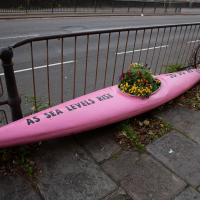
I spotted the fog and decided to go for a morning walk rather than a lunchtime walk today. It was cold on the Portway, but it was worth it. Most of my One Mile Matt photos are "record shots", but it's nice to get the chance to do something a bit more artistic.
Tags: Bristol Places UK onemilematt united kingdom Hotwells hotwell road
Auto-Tags: Bicycle Wheel Plant Boat Tire Vehicle Boats and boating--Equipment and supplies Road surface Bicycle wheel Asphalt Fence Tree Line Grass Sports equipment
Text Recognition Tags: AS SEA LEVELS RISE AS SEA LEVELS RISE
Little Clifton Village Details
09 Nov 2020
I like The Paragon as a terrace, especially the bowed porches. On the other side of the road, a house attic has a stone lion surrounded by rocaille leaves, according to its listing.
I also love the detail of the arrows in the wrought iron of The Mall's balconies. Today I discovered Westfield place, a road I'd never encountered that runs up to the rear of the Coronation Tap. (It's a famous local cider pub, but I've only been in a couple of times. I'm more of a beer man.)
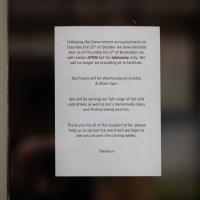
...but I always forget they're closed on Monday and Tuesday.
Tags: Bristol Places UK onemilematt united kingdom Clifton Village
Auto-Tags: Brown Wood Font Terrestrial plant Rectangle Event Paper Magenta Paper product Circle Number Natural material
Text Recognition Tags: Following the Government announcement on Saturday the 31" of October we have decided that as of Thursday the 5" of November we will remain OPEN but for takeaway only. We will no longer be providing sit-in facilities. Our hours will be Wednesday to Sunday 8.30am-2pm We will be serving our full range of hot and cold drinks as well as Jen's homemade cakes and freshly baked pastries. Thank you for all of the support so far, please help us to spread the word and we hope to see you all over the coming weeks. Twelve x Following the Government announcement on Saturday the 31" of October we have decided that as of Thursday the 5" of November we will remain OPEN but for takeaway only. We will no longer be providing sit-in facilities. Our hours will be Wednesday to Sunday 8.30am-2pm We will be serving our full range of hot and cold drinks as well as Jen's homemade cakes and freshly baked pastries. Thank you for all of the support so far, please help us to spread the word and we hope to see you all over the coming weeks. Twelve x
Jaunt to a Closed Coffee Shop
17 Nov 2020
A fruitless wander, as Spoke and Stringer (who I thought might do a decent flat white) were closed, and the only other harbourside inlet offering were a bit too busy to wait at, especially as I'd spent some time wandering some of the convolutions of Rownham Mead. This last congeries of dull alleyways and brown-painted garages was at least somewhere I've never been before, in parts.

A bethel ship was a kind of floating church; it would moor up near other ships and the sailors could board it for worship.
Tags: Bristol Places UK onemilematt united kingdom Hotwells
Auto-Tags: Cemetery Nature Natural environment Leaf Headstone Wood Grave Font Vegetation Grass Trunk Biome Woody plant Morning Groundcover
Text Recognition Tags: TO COMMEMORATE THE LUFE WORK OF SIMON SHORT WHO, FOR OVER HALF A CENTURY ASASEAMENS MISSIONAKANTHstcrANDSPEAINTENDENTO THE BETHEL SHIP AND AS THE PIONEER OF THE COCOA ROOMS AND COFFEE TAVERNMOVEMENT, DEVOTEDLY LABOURED FOR THE PEOPLES WELEARE THIS FOLNTAINIS PRESENED TO HIS NATTVE CITY BYMANY OF HIS FELLOW CITIZENS AND MEMBERS OFTHE NATIONAL TEMPERANCECTERERS ASSOGIATION. TO COMMEMORATE THE LUFE WORK OF SIMON SHORT WHO, FOR OVER HALF A CENTURY ASASEAMENS MISSIONAKANTHstcrANDSPEAINTENDENTO THE BETHEL SHIP AND AS THE PIONEER OF THE COCOA ROOMS AND COFFEE TAVERNMOVEMENT, DEVOTEDLY LABOURED FOR THE PEOPLES WELEARE THIS FOLNTAINIS PRESENED TO HIS NATTVE CITY BYMANY OF HIS FELLOW CITIZENS AND MEMBERS OFTHE NATIONAL TEMPERANCECTERERS ASSOGIATION.
Bedmo and Ashton Court
21 Nov 2020
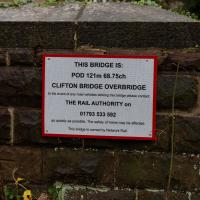
A rather more wide-ranging weekend wander with Sarah and Vik, taking in some mock Tudor bits of Bedmo (I should note that I've subsequently been corrected to "Bemmie", but I'm an outsider and have been calling it "Bedmo" for short for decades...), a chunk of Ashton, a path up Rownham Hill called Dead Badger's Bottom(!), The Ashton Court estate, a bit of the UWE campus at Bower Ashton, and some of the Festival Way path.
Tags: Bristol Places UK onemilematt united kingdom Ashton
Auto-Tags: Plant Nature Botany Vegetation Font Grass Brick Rectangle Brickwork Groundcover Petal Grass family Landscape Commemorative plaque Signage
Text Recognition Tags: THIS BRIDGE IS: POD 121m 68.75ch CLIFTON BRIDGE OVERBRIDGE In the event of any raad vehicles striking this bridge piease cortact THE RAIL AUTHORITY on 01793 533 592 as quickly as possible. The salety of trains may be affected. This bridge is owned by Network Ral THIS BRIDGE IS: POD 121m 68.75ch CLIFTON BRIDGE OVERBRIDGE In the event of any raad vehicles striking this bridge piease cortact THE RAIL AUTHORITY on 01793 533 592 as quickly as possible. The salety of trains may be affected. This bridge is owned by Network Ral
Up for the flu jab
21 Nov 2020
A trip up the hill to get my winter flu jab. I'm not sure I really needed it this year, what with avoiding Covid—I haven't had so much as a sniffle in more than a year—but seeing as they offered... Instead of the doctor's surgery on Pembroke Road, they'd taken over Christ Church, presumably to give more room and ventilation for the necessary social distancing at the moment. As usual, it was their typically efficient operation, and I was in and out in about three minutes.
On the way there and back I snapped as much as I could, but I wanted to be home in time for the first online Times Crossword Championship. As it turned out, I needn't have bothered, as the technology at the Times couldn't keep up with the demand from competitors, and their system just collapsed under the weight of page-views. They tried again the day after, and it collapsed just as badly. Maybe next year...
This wander is split into two parts, as I turned my tech off to go into Christ Church for my jab. The walk home can be found over here.
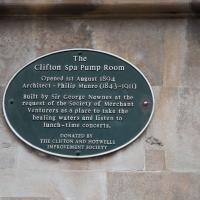
Tags: Bristol Places UK onemilematt united kingdom Clifton Village omm plaque Clifton Spa Pump Room
Auto-Tags: Font Circle Symmetry Commemorative plaque Public utility History Concrete Interior design Memorial Composite material Slate
Text Recognition Tags: The Clifton Spa Pump Room Opened Ist August 1894 Architect - Philip Munro (1843-1911) Built by Sir George Newnes at the request of the Society of Merchant Venturers as a place to take the healing waters and listen to lunch-time concerts. DONATED BY THE CLIFTON AND HOTWELLS IMPROVEMENT SOCIETY The Clifton Spa Pump Room Opened Ist August 1894 Architect - Philip Munro (1843-1911) Built by Sir George Newnes at the request of the Society of Merchant Venturers as a place to take the healing waters and listen to lunch-time concerts. DONATED BY THE CLIFTON AND HOTWELLS IMPROVEMENT SOCIETY
Avoiding the Accounts
26 Nov 2020
I took the day off my day job to do my accounts—or at least do enough bookkeeping to send them to my accountant. I hate doing the books. I woke up late, tired and with a headache and decided to bunk off for a walk around Cliftonwood, Clifton Village and Clifton instead, taking in a couple of good coffees along the way. Thanks, Foliage Café, and Twelve for the flat whites.
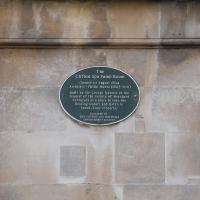
Another place that wasn't there in Fanny Burney's time—Evelina visits the Hot Well and Pump Rooms, but this would have been the original building down on the bank of the Avon below, long before the upper pump room or the funicular railway from here, next to the Avon Gorge hotel, that linked to the Portway below, existed.
In the novel Evelina in fact stayed in Hotwells, from what I can work out, rather than Clifton, as getting from Clifton to the Hot Well itself every day would have been too much travelling at the time.
Tags: Bristol Places UK onemilematt united kingdom
Auto-Tags: Font Wood Commemorative plaque Concrete Facade Symmetry History Number Public utility Limestone Memorial Rectangle Pattern Circle Signage
Text Recognition Tags: The clifton Spa Pump Room Opened ist Aoget 1894 Architect - Phitlo Munro (B43-101) Suitt by Sir Grorge NawnE at the request of the society of Merchant Venterers as a place to take the hesling waters and iisten to lanch-time concerts DUNATED EY THE CLITON AMD HOTVELLA The clifton Spa Pump Room Opened ist Aoget 1894 Architect - Phitlo Munro (B43-101) Suitt by Sir Grorge NawnE at the request of the society of Merchant Venterers as a place to take the hesling waters and iisten to lanch-time concerts DUNATED EY THE CLITON AMD HOTVELLA
Nothing New
02 Dec 2020
This may be the very first time I've gone for a One Mile Matt wander and not actually gone down any new roads, trod any new steps. I just wanted a coffee, frankly, so I went the same old way to Imagine That in the marina and back again.

This is the current plan to replace the caravan park
Tags: Bristol Places UK onemilematt united kingdom baltic wharf
Auto-Tags: Property Light World Architecture Font Line Sky Material property Natural landscape Publication Real estate Adaptation Landmark Landscape Travel
Text Recognition Tags: BALTIC WHARFI NEW HOMES FOR BALTIC WHARF Hew the propesed deveinpmemt cend oek frem the Flating Harter WHAT IS PROPOSEO FOR BALTIC WHARF? WHY DO WE NEED MORE NEW HOMES? Goram Homes, Bristol City Council's housing company, has partnered with Hil to propose transformational plans for Baltic Whart This would provide approsimately 165 new homes, including 406 affordable. It is widety acknowledged that the curent housing crisis has led to the under provision of housing and particularly atfordable housing within Bristol. Although much is being done in the City to address the crisis, there are key issues with affordability, rough sleeping, and lack of social housing Bristol currently has over 13,000 famlies on the affordable housing register and a further 710 people in temporary accommodation. The aim is to create a vibrant destination on the Floating Harbour with homes, retail, restaurants and commercial spece, one that is well connected to local walking and cycling routes, seamiessly integrates with the historic setting and capitalises on the waterfrort setting with expansive views across the lamous Bristol townscape. Comparing house prices in Bristol to those in other Core Cities in the decade between 2008 and 2018 indicated that Bristol had the highest average housing costs of all the Core Cities in this period, and also the highest percentage Increase - over S6, compared to a UK average increase in costs of just over 32 The site is the Boltik Wharf Carian Club, The site is owned by Bristol City Counci and as part of the overarching ambition to deliver high quality homes, this site has been identified as a site capable of providing bomes for Bristal. GORAM HOMES 出Hill Goram Homes was founded in 2018 as part ol an initiative from Bristol City Counci, wich the ambition to increase the provision of nea hemes in the city and to meet affordable housing requirements without compromising on build quality Goram Homes is a subsidary of Bristol Holding Ltd, HIl is an award-winning 5 star housebuilder, creating a range of beautiful and awardwinning new homes across the south of England. They are a leading partnership developer, delivering distinctive and award-winning new homes, having been named Housebuilder of the Year, medium and large, in 2018. which is wholly owned by Bristol City Council Goram is set up to deliver mised tenure housing on a joint ventune basis and our share of profit wil feed back into the funding of council servicel BALTIC WHARFI NEW HOMES FOR BALTIC WHARF Hew the propesed deveinpmemt cend oek frem the Flating Harter WHAT IS PROPOSEO FOR BALTIC WHARF? WHY DO WE NEED MORE NEW HOMES? Goram Homes, Bristol City Council's housing company, has partnered with Hil to propose transformational plans for Baltic Whart This would provide approsimately 165 new homes, including 406 affordable. It is widety acknowledged that the curent housing crisis has led to the under provision of housing and particularly atfordable housing within Bristol. Although much is being done in the City to address the crisis, there are key issues with affordability, rough sleeping, and lack of social housing Bristol currently has over 13,000 famlies on the affordable housing register and a further 710 people in temporary accommodation. The aim is to create a vibrant destination on the Floating Harbour with homes, retail, restaurants and commercial spece, one that is well connected to local walking and cycling routes, seamiessly integrates with the historic setting and capitalises on the waterfrort setting with expansive views across the lamous Bristol townscape. Comparing house prices in Bristol to those in other Core Cities in the decade between 2008 and 2018 indicated that Bristol had the highest average housing costs of all the Core Cities in this period, and also the highest percentage Increase - over S6, compared to a UK average increase in costs of just over 32 The site is the Boltik Wharf Carian Club, The site is owned by Bristol City Counci and as part of the overarching ambition to deliver high quality homes, this site has been identified as a site capable of providing bomes for Bristal. GORAM HOMES 出 Hill Goram Homes was founded in 2018 as part ol an initiative from Bristol City Counci, wich the ambition to increase the provision of nea hemes in the city and to meet affordable housing requirements without compromising on build quality Goram Homes is a subsidary of Bristol Holding Ltd, HIl is an award-winning 5 star housebuilder, creating a range of beautiful and awardwinning new homes across the south of England. They are a leading partnership developer, delivering distinctive and award-winning new homes, having been named Housebuilder of the Year, medium and large, in 2018. which is wholly owned by Bristol City Council Goram is set up to deliver mised tenure housing on a joint ventune basis and our share of profit wil feed back into the funding of council servicel
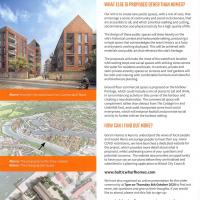
This is the current plan to replace the caravan park
Tags: Bristol Places UK onemilematt united kingdom baltic wharf
Auto-Tags: Property Architecture Font Line Urban design Real estate Landmark Screenshot Publication Facade Cloud Landscape Advertising City History
Text Recognition Tags: BALTIC WHARF WHAT ELSE IS PROPOSED OTHER THAN HOMES? Our aim is to create new public spaces, with a mix of uses, that encourage a sense of community and social inclusiveness, that are accessible to all, and which prioritise walking and cycling. social interaction and physical activity for a high quality of ife. The design of these public spaces wil draw heavily on the site's historical contet and harbournide setting, producing a unique space that acknowledges the area's history as a busy and dynamic working dockyard. This will be achieved with materials and public art that reference the site's heritage. The proposals will make the most of the waterfront location with seating steps and social spaces with striking views across the water for residents and locats. in contrast, private and semi-private amenity spaces on terraces and roof gardens will be calm and relasing with comfortable furniture and colourful and biodiverse planting. Ground floor commercial space is proposed on the harbour frontage, which could include a mix of places to eat and drink, in turn enhancing activity in this comer of the harbour and creating a new destination. The commercial space will complement rather than detract from The Cottage Inn and Underlall Yard, and could incorporate some local social enterprises, which will enhance footfal and promote social activity to further eniven the harbour setting Above: How theo cite cou lockhom Cumberlard Hoad HOW CAN I FIND OUT MORE? Goram Homes is keen to understand the views of local people and would like to encourage people to have their say. Given COMD restrictions, we have launched a dedicated website for the project, which provides more detail about what is proposed, whilst addressing some ef your questions and potential concems. The website also provides an opportunity to have your say on our plans before they are finalised and submitted in a planning application to Bristol City Councit Abover The proposals withintheir contot Belaw: The emergng site layout www.balticwharfhomes.com We have also organised an ontine presentabion for the wider community at Tpm on Thursday Bth October 2020 1o find out more, ask questions and give us their thoughts, Ifyou would like to attend, please visit this link to sign-up: www.balticwharfhomes.com/presentation If you are unable to visit either website, please give our Co Isultation team a call on 07342 039 444 (during office hours), who can book you in and make olternative amangements to get involved in the session, or provide all information in an alternative fomat appropriate for you BALTIC WHARF WHAT ELSE IS PROPOSED OTHER THAN HOMES? Our aim is to create new public spaces, with a mix of uses, that encourage a sense of community and social inclusiveness, that are accessible to all, and which prioritise walking and cycling. social interaction and physical activity for a high quality of ife. The design of these public spaces wil draw heavily on the site's historical contet and harbournide setting, producing a unique space that acknowledges the area's history as a busy and dynamic working dockyard. This will be achieved with materials and public art that reference the site's heritage. The proposals will make the most of the waterfront location with seating steps and social spaces with striking views across the water for residents and locats. in contrast, private and semi-private amenity spaces on terraces and roof gardens will be calm and relasing with comfortable furniture and colourful and biodiverse planting. Ground floor commercial space is proposed on the harbour frontage, which could include a mix of places to eat and drink, in turn enhancing activity in this comer of the harbour and creating a new destination. The commercial space will complement rather than detract from The Cottage Inn and Underlall Yard, and could incorporate some local social enterprises, which will enhance footfal and promote social activity to further eniven the harbour setting Above: How theo cite cou lockhom Cumberlard Hoad HOW CAN I FIND OUT MORE? Goram Homes is keen to understand the views of local people and would like to encourage people to have their say. Given COMD restrictions, we have launched a dedicated website for the project, which provides more detail about what is proposed, whilst addressing some ef your questions and potential concems. The website also provides an opportunity to have your say on our plans before they are finalised and submitted in a planning application to Bristol City Councit Abover The proposals withintheir contot Belaw: The emergng site layout www.balticwharfhomes.com We have also organised an ontine presentabion for the wider community at Tpm on Thursday Bth October 2020 1o find out more, ask questions and give us their thoughts, Ifyou would like to attend, please visit this link to sign-up: www.balticwharfhomes.com/presentation If you are unable to visit either website, please give our Co Isultation team a call on 07342 039 444 (during office hours), who can book you in and make olternative amangements to get involved in the session, or provide all information in an alternative fomat appropriate for you
I went to have a peep at the giant sinkhole that's opened up in Canynge Square—ironically, having recently discovered the gardens were public I'd had the (triangular!) square on my list to re-visit for a few days, but now there's no entrance to the gardens due to the danger. The area was well fenced-off for safety, but I tried to get a couple of photos from behind the barriers.
I also explored the area around Camp Road, an real melange of architectures, one of the most mixed-up areas I've seen in Clifton, in fact, and confirmed my friend Claire's suspicion that an earlier snap of a sign from Manilla Road was in fact for a fire hydrant. Nice.

Tags: Bristol Places UK onemilematt united kingdom Clifton Village
Auto-Tags: Tire Wheel Motor vehicle Automotive tire Vehicle Automotive exterior Tread Automotive wheel system Font Fender Bumper Commercial vehicle News Vehicle door Truck
Text Recognition Tags: Dear negbour od 14 aund 1 ene unknoun tomeit the extensebuling wo ur wy on the house t to umber, damag ringwide truc/orry the d t eoistently parked at the te for seeal wee ng and aown and iemrahing ut you to ask i you can al e regivtration number of any detavsal regarding thê truck, bu yourself have hat yeur demaged recently as lythis ne an isolated moa rm what remenber itwosa uck wth aopen ar ba end for toading up scatfording etc, uimilar to this steckiel Wiknson The driver contacted my partrer aver the interc o seek the owner before breakin offand SL alter being informed the persen te wistalng too couid put him in comt with me herefore ey that if this persan has degnother cars uch as yours. he is kely t repeat behavidur in the future and nat act to infem you 00 have had amy dimage to yaur car recently or an emember and share any details of the Tack in question or if you saw what haupened t would be enainouly acoreciated f you would Lotact me va teatical 0766994321. Orvamall at simonmattheapayne@nai.com Althe best, Mecry Christmaes and stay sale Smbeumbi The Fosseway Dear negbour od 14 aund 1 ene unknoun tomeit the extensebuling wo ur wy on the house t to umber, damag ringwide truc/orry the d t eoistently parked at the te for seeal wee ng and aown and iemrahing ut you to ask i you can al e regivtration number of any detavsal regarding thê truck, bu yourself have hat yeur demaged recently as lythis ne an isolated moa rm what remenber itwosa uck wth aopen ar ba end for toading up scatfording etc, uimilar to this steckiel Wiknson The driver contacted my partrer aver the interc o seek the owner before breakin offand SL alter being informed the persen te wistalng too couid put him in comt with me herefore ey that if this persan has degnother cars uch as yours. he is kely t repeat behavidur in the future and nat act to infem you 00 have had amy dimage to yaur car recently or an emember and share any details of the Tack in question or if you saw what haupened t would be enainouly acoreciated f you would Lotact me va teatical 0766994321. Orvamall at simonmattheapayne@nai.com Althe best, Mecry Christmaes and stay sale Smbeumbi The Fosseway
Prince's Lane
06 Jan 2021
The International Grotto Directory website says:
Prince’s Lane might have been one of the original ancient tracks from Hotwells to Clifton, in the Avon Gorge. The site later formed part of Rownham Woods which comprised some thirteen acres. By the end of the 18th century and the early 19th century, the Society of Merchant Venturers granted to Samuel Powell a building lease, for The Colonnade (1786), St. Vincent’s Parade (1790), Prince’s Buildings (1796), and Rock House. Rock House is generally considered to be the oldest surviving building associated with the Hotwell (see Chapter 20). John Power conveyed part of the woods to William Watts for the construction of Windsor Terrace (1790-1808).
The above development of the Avon Gorge cleared Rownham Woods, and created a triangle of land on the north side of the gorge, that became enclosed as a result, by Mansion Houses, whose garden walls all entered on to Prince’s Lane. The Lane started at the bottom of the gorge, at the base rock of Windsor Terrace, and came out half way up Sion Hill. It is clearly shown as a public footpath, dotted with trees, in Ashmead’s map of 1828. Some of the gardens were quite steep in parts and therefore, had to be terraced, because of the gradient of the gorge.
I've passed Prince's Lane literally thousands of times in my life, every time I've walked past the Avon Gorge Hotel, which itself started (in 1898) as the Grand Clifton Spa and Hydropathic Institution and pumped water up from the Hot Well for its hydropathic treatments. I've never actually ventured down it until today, or at least nothing like as far down it as I did this afternoon—I may have poked my head around the back of the hotel to see the original pump rooms at some point in the past.
This was a great wander, though it does very much feel like a private road, and frankly I may have been pushing my luck a bit by winding my way between the astoundingly big back gardens of the houses of some presumably very wealthy Cliftonites, but I felt vaguely justified in exploring the history of one of the oldest footpaths in my part of Bristol...
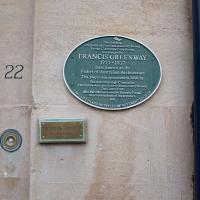
One thing it doesn't mention is that he became the Father of Australian Architecture after being transported for forgery, having gone bankrupt, forged a financial document, been caught, pled guilty, and been sentenced to death, which I think is an interesting detail...
Tags: Bristol Places UK onemilematt united kingdom Clifton Village
Auto-Tags: Wood Font Door Gas Circle Commemorative plaque Signage Public utility Number History Metal Facade Memorial Concrete Sign
Text Recognition Tags: THE CLITONAND BOTWELIS MEROVEMENT OCETY Di bading originaly un leelA y Roens e Cien Soungloen wdenigned by FRANCIS GREENWAY 1777-1837 later known as the 22 Father of Australian Architecture Thin plaque was sponsored in 2008 by The Australian H Conmiion The Dritaiauralia Selery WeatContry ranch The Cann Chuy M Pa Maes sod M maty Punal direndeicendam of he tect. THE CLITONAND BOTWELIS MEROVEMENT OCETY Di bading originaly un leelA y Roens e Cien Soungloen wdenigned by FRANCIS GREENWAY 1777-1837 later known as the 22 Father of Australian Architecture Thin plaque was sponsored in 2008 by The Australian H Conmiion The Dritaiauralia Selery WeatContry ranch The Cann Chuy M Pa Maes sod M maty Punal direndeicendam of he tect.