Tagged: circle
Mokoko
26 Oct 2020
A dash around the harbourside to see if I can get to Mokoko and back in my lunch hour.
This was my first wander and I was still getting the hang of the technology. I managed to record only part of the way back on my GPS, by the looks of it, so I've had to bodge things a bit to pick up the photos, which is why there are photos in places the track doesn't reach!
I also need to fix a few technical things including managing my photo timezones more carefully. This wander was the day after the clocks went back for winter, and I think my camera may still have been in BST, which may not have helped me tie things up. Need to do a bit of research into how my cameras, Lightroom and the code I'm writing on this website handle BST and GMT, but at least I have until the last Sunday in March before things get urgent, I think...
The End of a Private Road
27 Oct 2020
One of the homes in Windsor Terrace went on the market for £2,000,000 a few years back. This is the closest I've been to it, right at the end of the private road. Presumably they're okay with people wandering down the road if there's a blue plaque to be seen at the far end?
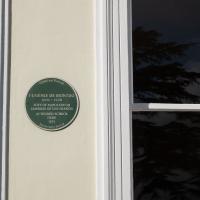
Both the plaque to Edward St John Daniel and the other photo I took (in these early walks I was mostly walking, rather than mostly taking photographs) have interesting stories of a rise and fall associated with them in the first Google hits I found. Daniel was indeed the youngest recipient of the VC, but was stripped of the medal by Queen Victoria herself in 1861, following conviction for desertion and evading court martial. Lubetkin is probably most famous for designing the penguin pool at London Zoo, which was closed 17 years ago, after the micro-abrasions in the penguins' feet caused by the concrete led to them developing an infection with the charming name "bumblefoot".
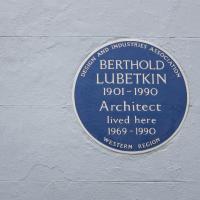
Designer of, among other things, the London Zoo penguin pool, and Highpoint, described by Corbusier as "This beautiful building .... at Highgate is an achievement of the first rank", and I like Corbusier's ideas, having read about them in How to Make a Home, I think, so that was what caught my eye on the Wikipedia page.
Royal York Crescent
02 Nov 2020
I've taken a lot of photos of Royal York Crescent over the years. This time I walked right to the dead-end bit at the far west corner and found a plaque to the Empress of the French. Call me hard to impress, but among the scientists, novelists, architects and artists whose plaques litter the rest of the area, that seems quite minor claim to fame.
Little Clifton Village Details
09 Nov 2020
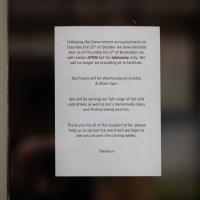
I like The Paragon as a terrace, especially the bowed porches. On the other side of the road, a house attic has a stone lion surrounded by rocaille leaves, according to its listing.
I also love the detail of the arrows in the wrought iron of The Mall's balconies. Today I discovered Westfield place, a road I'd never encountered that runs up to the rear of the Coronation Tap. (It's a famous local cider pub, but I've only been in a couple of times. I'm more of a beer man.)
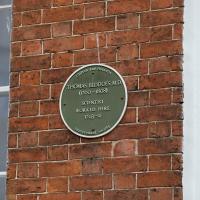
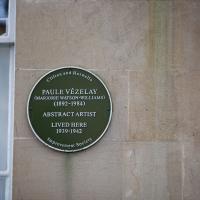
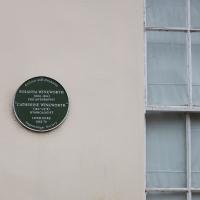
I'm not entirely clear how a Bristolian called Marjorie Watson-Williams ends up moving to Paris, changing her name to Paule Vézelay, and becoming a famous painter of the abstract school, but it must have been quite a fun ride, surely...
She returned to Bristol when war broke out and apparently spent the first few years in Rodney Place.
Clifton Village: Jesus and the Tympanum
12 Nov 2020
My goal is walk down every public road within a mile of me; sometimes it's not easy to tell what's public. I've passed the turning for Cornwallis Grove a thousand times, but never had a reason to venture down it, and although the street signs at the end seem to be council-deployed and I didn't spot any "private" signs, it's a gated road and definitely feels private.
Gathering all the white middle-class privilege I could muster, I wandered down and was rewarded with the sight of a Victorian pump, a statue of Jesus, and from the end of the road, a view of a private garden that once belonged to a private girls' school.
The Cornwallis House history page says:
In the early 20th century the house, together with Grove House, became a Catholic school, St Joseph’s High School for Girls. The Congregation of La Retraite took over the school in 1924, with the nuns living in Grove House while the schoolrooms were in Cornwallis House. The headmistress was Mother St Paul de la Croix (Sister Paula Yerby). By the 1970s La Retraite High School had around 700 pupils.
It closed in 1982 and the building was bought by Pearce Homes Ltd (now part of Crest Nicholson) who developed it into 21 flats. Grove House next door was bought by the Bristol Cancer Help Centre, and was later converted into flats in 2007.
Hotwells and Clifton/Clifton Village
14 Nov 2020
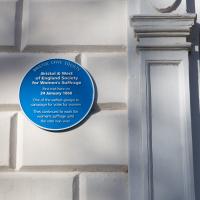
A local walk with my friend Lisa in tow, including a coffee from the cafe in the Clifton Observatory, where I have fond memories of experiencing my first camera obscura, and cake from Twelve in Clifton Village, one of my favourite recent finds for both food and flat whites.
Dowry Square Jaunt
16 Nov 2020
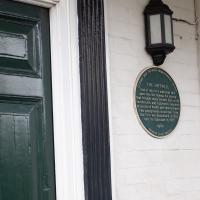
A quick lunchtime jaunt to Dowry Square, which is very close to me but, being effectively a cul-de-sac as well as a square, I've probably only circumnavigated a couple of times in the last couple of decades.
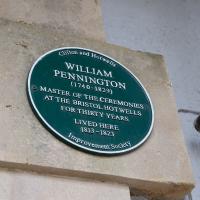
From The Bristol Hotwell, by Vincent Waite:
The Bristol Hotwell was, of course, much smaller than the neighbouring spa of Bath, and it was in no sense a rival but rather a supplementary cure, for many people combined visits to the two resorts. After 1785 the Hotwell imitated Bath by appointing a Master of Ceremonies, "William Pennington Esquire," who wore a gold medallion strung on a blue ribbon to emphasise the dignity of his office. In order to preserve decorum in the public entertainments he issued the following regulations:
- That a certain row of seats be set apart at the upper end of the room for ladies of precedence and foreigners of fashion.
- That every lady who has a right of precedence deliver her card to the Master of Ceremonies on her entering the room.
- That no gentleman appear with a sword or with spurs in these rooms, or on a ball night, in boots.
- That on ball nights when minuets are danced, ladies who intend dancing there will sit in a front row for the convenience of being taken out and returning to their places.
- That on all occasions ladies are admitted to these rooms in hats, not excepting the balls given to the Master of the Ceremonies.
- That the subscription balls will begin as soon as possible after 7 o'clock and conclude at 11, on account of the health of the company.
- It is earnestly requested that when a lady has gone down the dance she will be so polite as not to retire till it is concluded.
Jaunt to a Closed Coffee Shop
17 Nov 2020
A fruitless wander, as Spoke and Stringer (who I thought might do a decent flat white) were closed, and the only other harbourside inlet offering were a bit too busy to wait at, especially as I'd spent some time wandering some of the convolutions of Rownham Mead. This last congeries of dull alleyways and brown-painted garages was at least somewhere I've never been before, in parts.
...which is also the name of the new hipster coffee place around the corner. Or am I bluffing?
Quick Coffee
19 Nov 2020
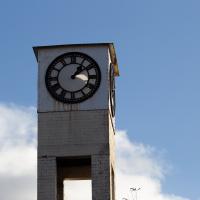
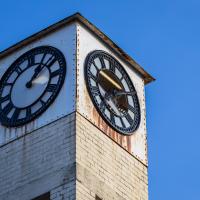
A sunny day, and though I should have probably headed for less well-travelled territory I just headed over to the Marina to grab a flat white from Imagine That's horsebox café.
Clifton Village Mini Wander
20 Nov 2020
Just a quick wander up the hill to get a flat white from Twelve. I really enjoyed the spooky mannequin (?) in the window.