Tagged: grave
Little Clifton Village Details
09 Nov 2020
I like The Paragon as a terrace, especially the bowed porches. On the other side of the road, a house attic has a stone lion surrounded by rocaille leaves, according to its listing.
I also love the detail of the arrows in the wrought iron of The Mall's balconies. Today I discovered Westfield place, a road I'd never encountered that runs up to the rear of the Coronation Tap. (It's a famous local cider pub, but I've only been in a couple of times. I'm more of a beer man.)
Outside the Zone
01 Nov 2020
This started as a little local walk with my friend Lisa, but when we randomly met my friends Sarah and Vik at Ashton Court, turned into joining them for a very long wander out to Abbots Leigh Pool. Most of this was well outside my one-mile radius but it was a lovely walk.
Dowry Square Jaunt
16 Nov 2020
A quick lunchtime jaunt to Dowry Square, which is very close to me but, being effectively a cul-de-sac as well as a square, I've probably only circumnavigated a couple of times in the last couple of decades.
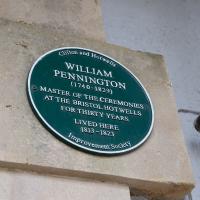
From The Bristol Hotwell, by Vincent Waite:
The Bristol Hotwell was, of course, much smaller than the neighbouring spa of Bath, and it was in no sense a rival but rather a supplementary cure, for many people combined visits to the two resorts. After 1785 the Hotwell imitated Bath by appointing a Master of Ceremonies, "William Pennington Esquire," who wore a gold medallion strung on a blue ribbon to emphasise the dignity of his office. In order to preserve decorum in the public entertainments he issued the following regulations:
- That a certain row of seats be set apart at the upper end of the room for ladies of precedence and foreigners of fashion.
- That every lady who has a right of precedence deliver her card to the Master of Ceremonies on her entering the room.
- That no gentleman appear with a sword or with spurs in these rooms, or on a ball night, in boots.
- That on ball nights when minuets are danced, ladies who intend dancing there will sit in a front row for the convenience of being taken out and returning to their places.
- That on all occasions ladies are admitted to these rooms in hats, not excepting the balls given to the Master of the Ceremonies.
- That the subscription balls will begin as soon as possible after 7 o'clock and conclude at 11, on account of the health of the company.
- It is earnestly requested that when a lady has gone down the dance she will be so polite as not to retire till it is concluded.
Jaunt to a Closed Coffee Shop
17 Nov 2020
A fruitless wander, as Spoke and Stringer (who I thought might do a decent flat white) were closed, and the only other harbourside inlet offering were a bit too busy to wait at, especially as I'd spent some time wandering some of the convolutions of Rownham Mead. This last congeries of dull alleyways and brown-painted garages was at least somewhere I've never been before, in parts.
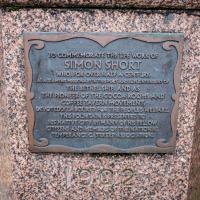
A bethel ship was a kind of floating church; it would moor up near other ships and the sailors could board it for worship.
Strangers' Burial Ground
04 Dec 2020
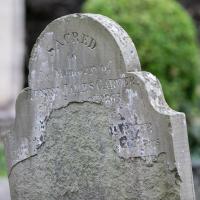
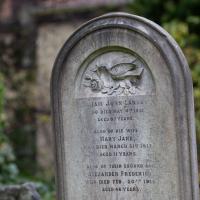
I tried to find the Strangers' Burial Ground the last time was up in Clifton, but I'd not realised that Lower Clifton Hill continues further on after the turning with Constitution Hill. Sadly it was chained shut, but it still looks beautifully-maintained, perhaps by the same man referenced by this story from John Hodgson, which helped me find it. Apparently Thomas Beddoes is buried here.
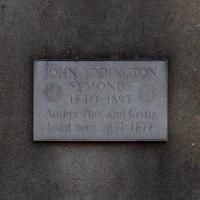
He sounds... a little unusual. Just to be clear, it's the pederasty I'm frowning at, not the homosexuality.
Rainy Clifton
13 Dec 2020
A long walk around Cliftonwood and Clifton with my friend Lisa, taking in some of the 12 Days of Christmas display at Queens Parade, picking up a take-away coffee from Pinkmans of Park Street, and poking our heads up against the glass of SS Peter and Paul Catholic Cathedral.
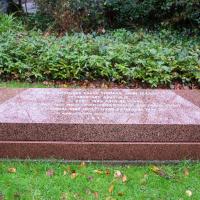
As ususal with religious stuff, I've just looked up what a protonotary is and am really none the wiser.
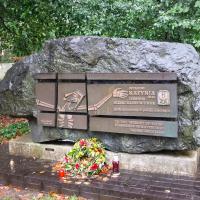
"The Katyn massacre was a series of mass executions of nearly 22,000 Polish military officers and intelligentsia carried out by the Soviet Union, specifically the NKVD ("People's Commissariat for Internal Affairs", the Soviet secret police) in April and May 1940. Though the killings also occurred in the Kalinin and Kharkiv prisons and elsewhere, the massacre is named after the Katyn Forest, where some of the mass graves were first discovered." — Wikipedia
Cliftonwood and Clifton Village Lunchtime Stroll
14 Dec 2020
The lunchtime walk has been feeling a bit of a chore lately, especially as I only have an hour and have to keep a mental watch out for my "bingo" point or risk being late back. Today I went for a deliberately brief local walk and got home in time to have lunch on my sofa rather than while I was back at work.
It's interesting filling in the gaps in my Clifton Village knowledge, especially starting to "see" the bits I can't see, the negative spaces. The size of both Fosseway Court and the Bishop's House gardens (check out the latter on Google Maps for an idea) are both something I've noticed by just getting to know the areas around them. I may also have to walk into the driveway of the very well-hidden Nuffield hospital to get an idea of how big it is.
None of those are anything compared to the trick of hiding the gargantuan public school that is Queen Elizabeth's Hospital so well that I keep on forgetting it's there, until a glimpse of it from somewhere like Lower Clifton Hill reminds me about it, of course...
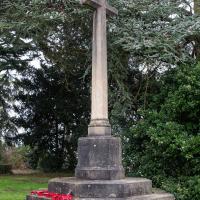
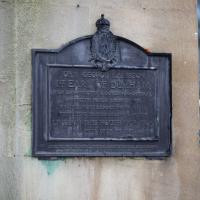
War Memorial, approriately next to the remaining foundations of St Andrew's Church, destroyed by bombing in 1940
A Promenade on New Year's Day
01 Jan 2021
I wandered along the gorge today and found the entrance to the disused Portnalls Number 1 railway tunnel of the Bristol Port Railway and Pier. The door was unlocked, but as soon as I opened it I felt a sense of current habitation and decided discretion was the best option. There's a lot of people homeless in Bristol at the moment, and they don't need disturbing. For the same reason, I've omitted posting some pictures of a little encampment somewhat off the beaten track of the new Zig Zag, where I reversed direction as soon as I realised I'd come across a current habitation of some sort.
Up in Clifton it took me a little while to work out that the picture of the Promenade I was trying to reproduce was taken from the viewpoint I'd thought, it was just that the Alderman's fountain was moved from the top of Bridge Valley Road to the other side of the promenade in 1987, so trying to use it as my initial landmark wasn't very helpful!
Finally I swung past the Society of Merchant Venturers, who presumably still own most of Clifton, having bought the entire manor, including Clifton Down, in 1676, and I imagine aren't in much danger of running out of money. That's true to their motto: indocilis pauperiem pati is apparently from the Odes of Horace, and translates as "will not learn to endure poverty"...
Birthday Coffee
21 Jan 2021
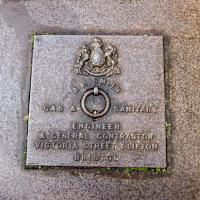
A quick jaunt to Clifton Village to grab a birthday coffee and cake (courgette, lime & pistachio, thanks for asking) from Twelve, and rubberneck at the demolition of the block that used to house the WH Smith, among other things. I remember the Havana Cafe, Mail Boxes Etc (for those who wanted a Clifton postcode without living there?) and others.
Snowy Leigh Wander
24 Jan 2021
I started this wander with my "support bubble" Sarah and Vik, after Sarah texted me to say "SNOW!" We parted ways on the towpath and I headed up into the bit of Leigh Woods that's not actually the woods—the village-like part in between Leigh Woods and Ashton Court, where I'd noticed on a map a church I'd not seen before. I found St Mary the Virgin and quite a few other things I'd never experienced, despite having walked nearby them many, many times over many years, including a castellated Victorian water tower that's been turned into a house...
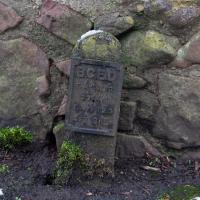
Some kind of electrical marker, I think -- BCED is most likely to be Bristol Corporation Electricity Department. Probably an underground cable marker.