Tagged: south
Jaunt to a Closed Coffee Shop
17 Nov 2020
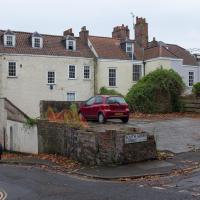
A fruitless wander, as Spoke and Stringer (who I thought might do a decent flat white) were closed, and the only other harbourside inlet offering were a bit too busy to wait at, especially as I'd spent some time wandering some of the convolutions of Rownham Mead. This last congeries of dull alleyways and brown-painted garages was at least somewhere I've never been before, in parts.
Tags: Bristol Places UK onemilematt united kingdom Hotwells
Auto-Tags: Car Plant Land vehicle Building Sky Vehicle Window Wheel Tire House Road surface Land lot Asphalt Neighbourhood Residential area
Text Recognition Tags: 円 SOUTH C 田田 円 SOUTH C 田田
Nothing New
02 Dec 2020
This may be the very first time I've gone for a One Mile Matt wander and not actually gone down any new roads, trod any new steps. I just wanted a coffee, frankly, so I went the same old way to Imagine That in the marina and back again.

This is the current plan to replace the caravan park
Tags: Bristol Places UK onemilematt united kingdom baltic wharf
Auto-Tags: Property Light World Architecture Font Line Sky Material property Natural landscape Publication Real estate Adaptation Landmark Landscape Travel
Text Recognition Tags: BALTIC WHARFI NEW HOMES FOR BALTIC WHARF Hew the propesed deveinpmemt cend oek frem the Flating Harter WHAT IS PROPOSEO FOR BALTIC WHARF? WHY DO WE NEED MORE NEW HOMES? Goram Homes, Bristol City Council's housing company, has partnered with Hil to propose transformational plans for Baltic Whart This would provide approsimately 165 new homes, including 406 affordable. It is widety acknowledged that the curent housing crisis has led to the under provision of housing and particularly atfordable housing within Bristol. Although much is being done in the City to address the crisis, there are key issues with affordability, rough sleeping, and lack of social housing Bristol currently has over 13,000 famlies on the affordable housing register and a further 710 people in temporary accommodation. The aim is to create a vibrant destination on the Floating Harbour with homes, retail, restaurants and commercial spece, one that is well connected to local walking and cycling routes, seamiessly integrates with the historic setting and capitalises on the waterfrort setting with expansive views across the lamous Bristol townscape. Comparing house prices in Bristol to those in other Core Cities in the decade between 2008 and 2018 indicated that Bristol had the highest average housing costs of all the Core Cities in this period, and also the highest percentage Increase - over S6, compared to a UK average increase in costs of just over 32 The site is the Boltik Wharf Carian Club, The site is owned by Bristol City Counci and as part of the overarching ambition to deliver high quality homes, this site has been identified as a site capable of providing bomes for Bristal. GORAM HOMES 出Hill Goram Homes was founded in 2018 as part ol an initiative from Bristol City Counci, wich the ambition to increase the provision of nea hemes in the city and to meet affordable housing requirements without compromising on build quality Goram Homes is a subsidary of Bristol Holding Ltd, HIl is an award-winning 5 star housebuilder, creating a range of beautiful and awardwinning new homes across the south of England. They are a leading partnership developer, delivering distinctive and award-winning new homes, having been named Housebuilder of the Year, medium and large, in 2018. which is wholly owned by Bristol City Council Goram is set up to deliver mised tenure housing on a joint ventune basis and our share of profit wil feed back into the funding of council servicel BALTIC WHARFI NEW HOMES FOR BALTIC WHARF Hew the propesed deveinpmemt cend oek frem the Flating Harter WHAT IS PROPOSEO FOR BALTIC WHARF? WHY DO WE NEED MORE NEW HOMES? Goram Homes, Bristol City Council's housing company, has partnered with Hil to propose transformational plans for Baltic Whart This would provide approsimately 165 new homes, including 406 affordable. It is widety acknowledged that the curent housing crisis has led to the under provision of housing and particularly atfordable housing within Bristol. Although much is being done in the City to address the crisis, there are key issues with affordability, rough sleeping, and lack of social housing Bristol currently has over 13,000 famlies on the affordable housing register and a further 710 people in temporary accommodation. The aim is to create a vibrant destination on the Floating Harbour with homes, retail, restaurants and commercial spece, one that is well connected to local walking and cycling routes, seamiessly integrates with the historic setting and capitalises on the waterfrort setting with expansive views across the lamous Bristol townscape. Comparing house prices in Bristol to those in other Core Cities in the decade between 2008 and 2018 indicated that Bristol had the highest average housing costs of all the Core Cities in this period, and also the highest percentage Increase - over S6, compared to a UK average increase in costs of just over 32 The site is the Boltik Wharf Carian Club, The site is owned by Bristol City Counci and as part of the overarching ambition to deliver high quality homes, this site has been identified as a site capable of providing bomes for Bristal. GORAM HOMES 出 Hill Goram Homes was founded in 2018 as part ol an initiative from Bristol City Counci, wich the ambition to increase the provision of nea hemes in the city and to meet affordable housing requirements without compromising on build quality Goram Homes is a subsidary of Bristol Holding Ltd, HIl is an award-winning 5 star housebuilder, creating a range of beautiful and awardwinning new homes across the south of England. They are a leading partnership developer, delivering distinctive and award-winning new homes, having been named Housebuilder of the Year, medium and large, in 2018. which is wholly owned by Bristol City Council Goram is set up to deliver mised tenure housing on a joint ventune basis and our share of profit wil feed back into the funding of council servicel
Sunday Bedmo
20 Dec 2020
A long meander around bits of Bedminster, from the river to the north to Winterstoke Road to the south, taking a few roads I've seen before, and a few I haven't. The Christmas decorations were an extra bonus.

Tags: Bristol Places UK onemilematt united kingdom Bedminster
Auto-Tags: Automotive parking light Sky Cloud Car Wheel Tire Automotive tire Automotive lighting Street light Motor vehicle Vehicle Automotive exterior Automotive design Tree Billboard
Text Recognition Tags: SOUTH BRISTOL Retal Park Curya PCWorld bm KFC halfords the food WAREHOUSE halte SOUTH BRISTOL Retal Park Curya PCWorld bm KFC halfords the food WAREHOUSE halte
Saint Vincent's Spring
28 Dec 2020
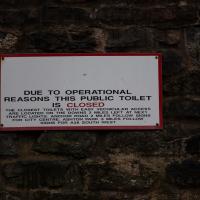
Fractionally outside my one-mile zone, but I got curious about Saint Vincent's spring, whose last remnants you can see in a defunct drinking fountain on the Portway. Along the way I passed Gyston's cave, sometimes called St Vincent's cave, in the sheer wall of the gorge. It's now accessible by a tunnel from the observatory—I tried it about twenty years ago, I think, and still recall the vertiginous moment of looking down from the protruding balcony and realising that you could see straight through the grille floor to the drop below—but from what I can work out the tunnel is relatively recent. Before the tunnel was dug it was accessible only by access across the cliff face, which must have been even more terrifying.
This cave was first mentioned as being a chapel in the year AD 305 and excavations, in which Romano-British pottery has been found, have revealed that it has been both a holy place and a place of refuge at various times in its history.
A few different sources say that the cave became a hermitage and chapel to St Vincent following Bristol's early trading in Iberian wines; St Vincent of Saragossa is Lisbon's patron saint, and a lot of nearby things bear the name.
I'm not sure where the crossover of Vincent and Ghyston happens, though. On the giants Goram and Vincent (or Ghyston), Wikipedia says:
The name Vincent for one of the giants rests on the fact that at Clifton, at the narrowest point of the Avon Gorge, there was formerly an ancient hermitage and chapel dedicated to St Vincent, at or near the present cave in the cliff-face which bears his name. Another (apparently modern) version of the story calls the Clifton giant Ghyston, which is in fact the name, of obscure origin, for the whole of the cliff-face of the Avon Gorge at least as early as the mid-fifteenth century, in the detailed description of the Bristol area by William Worcestre. The place-name was personified to produce the giant's name. Vincent's Cave is called Ghyston cave or The Giant’s Hole in an article in the July 1837 issue of Felix Farley’s Bristol Journal.
In my research on the original Hot Well House, I've seen quite a few contemporary paintings which state their viewpoint as "from St. Vincent's Rock", so in the 16th century it seems the cliff-face name was typically St Vincent Rock rather than Ghyston's Rock, perhaps.
I am, as you can tell, no historian!
On the way, I also wandered around the base of the popular climbing area, which I think is the site of the old Black Rock quarry.
Tags: Bristol Places UK onemilematt united kingdom A4 Avon Gorge Portway road St Vincent's Rocks
Auto-Tags: Brown Wood Font Groundcover Signage Landscape Bedrock Soil Rock Carmine Sign Concrete Natural material Grass Brick
Text Recognition Tags: DUE TO OPERATIONAL REASONS THIS PUBLIC TOILET IS CLOSED THE CLOSEST TOILETS WITH EASY VECHICULAR A CCESS ARE LOCATED ON THE D OWNS 2 MILES LEFT AT NEXT TRAFFIC LIGHTS. ANCHOR ROAD 2 MILES FOLLOW SIGNS FOR CITY CENTRE. ASHTrON PARK a MILE S FOLLOW SIGNS FOR A38 SOUTH WEST DUE TO OPERATIONAL REASONS THIS PUBLIC TOILET IS CLOSED THE CLOSEST TOILETS WITH EASY VECHICULAR A CCESS ARE LOCATED ON THE D OWNS 2 MILES LEFT AT NEXT TRAFFIC LIGHTS. ANCHOR ROAD 2 MILES FOLLOW SIGNS FOR CITY CENTRE. ASHTrON PARK a MILE S FOLLOW SIGNS FOR A38 SOUTH WEST
Since setting up a search for Hotwells on eBay I've mostly managed to restrain myself from buying much (or in one case, was outbid, luckily for my finances.) However, I couldn't resist a 1902 flyer for a singalong at the Terrett Memorial Hall, which would have stood five minutes' walk from my flat, overlooking Howard's Lock.
I've found out a fair bit about this non-denominational seaman's mission, including tracking down both a Loxton drawing and an aerial photo of it. The main thing that's eluded me, ironically enough, is finding out who Terrett was, so as a Memorial Hall it didn't do a very good job 😀.
EDIT: Ah! Did a little more digging and found that the Bristol Archives has a Bristol Dock Company document on file called "William Terrett, Esq.; corresp. etc. re proposed erection of a Mission Hall at Cumberland Basin, 1892", so that might be worth a look once the Archives are properly open again. Given that:
Sarah Terrett died suddenly on 25 November 1889, aged 53, after speaking at a meeting of the White Ribbon Army, the temperance organization she had founded in 1878. Following her death many people sent letters of sympathy to her bereaved husband, William. One of these, from the Rev. W. F. James, a minister of the Bible Christians, makes for especially interesting reading. The Bible Christian denomination, to which Sarah and William belonged, was one of the smaller Methodist connexions, and had its heartland in rural Devon, the area where she had grown up. James recalled the hospitality he enjoyed when visiting the Terretts’ home, Church House, in Bedminster, south Bristol...
...I wonder if William Terrett built the hall in memory of his late wife. They were clearly just the kind of temperance movement people who would've founded a seaman's mission to get people together to have a nice non-alcoholic singsong rather than a night out on the tiles.
Anyway. This walk to grab a coffee from Hopper Coffee in Greville Smyth Park was mostly an excuse to post the leaflet, a few other things I found related to it, and some pictures of how the site looks now. I would suggest that the present day is not an improvement.
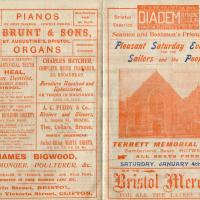
This was my random eBay purchase. I had no idea that the Terrett Memorial Hall had ever existed until I saw this leaflet up for sale.
There's some information on the hall on the Places of Worship database; as you can guess from the title of the leaflet it was basically a seaman's mission, with the aim "to promote the social, moral and religious welfare of sailors and provide sleeping accomodation for seamen, also free beds for destitute seafarers"
My favourite random thing on this leaflet is probably that the Surgeon Dentist is called Mr Heal.
Tags: Bristol Places UK onemilematt united kingdom Hotwells Cumberland Basin Flyover System Cumberland Piazza Cumberland Basin Terrett Memorial Hall
Auto-Tags: Font Material property Publication Brickwork Paper Book Pattern Paper product Brick History Newsprint Book cover Rectangle Holy places Document
Text Recognition Tags: BE SURE YOU CET THE ROYAL F RASNC DIADEM UR Hire Parebane PIANOS As to ATSS. Bristol of the per Month. BY BEST MAKERS LUWEST PRICS FRACTICAL TEST PRIVES THL BESTIneorponated Seamen and Boatmen's Friend Society. District W. BRUNT & SONS, ST. AUGUSTINE'S, BRISTOL. Pleasant Saturday Evenings Instreinenta Instrunents ORGANS Repatred. Exthanged roR THE Sailors and the People. ANERICAN A ENOISH DENTITRY Prize Medal ARTIFICIAL TEETH. Mr. HEAL, Surgeon Dentist, CHARLES HATCHER, COMPLETE HOUSE FURNISHER, 20, BROADMEAD. 25, OLD MAHKEr STREET. BRISTOL. Furnituro Repaired and Upholstered, the t quaty OR TAKEN IN EXCHANGE. CASIL OR IHIRK. a An Metais C Monik s pmaro WET oF NGLANO AND SOUTH WALES A. C. PUDDY & Co. PRRMANENT BUILDING SOCIETY Hosiers and Glovers, SL Staphan's ureat, Bristat he sosh ANNUAL REPORT 3. Dolphie St., BRISTOL Ties, Collars, Braces, Re Men t i anora frebeYBARS Ma FOR DORIDWER AY TER WINTER UNDERWEAR. Parfect-fitting WHITE SHIRTS, in a . e e TERRETT MEMORIAL HALL, Cumberland Basin. HOTWELLS A dm, A Ere JAMES BIGWOOD, ALL SEATS PREE. FISHMONGER, POULTERER, &c. SATURDAY, JANUARY 4th, 1902. BUY THE Bristol Mercury LICENSED DEALER IN VENISON, GAME AND WILD FOWL IMPORTER oF PURE WENHAM LAKE IOE. Baldwin Street, BRISTOS, and Victoria Street, CLIFTON. FOR ALL THE LATEST NEWS. BE SURE YOU CET THE ROYAL F RASNC DIADEM UR Hire Parebane PIANOS As to ATSS. Bristol of the per Month. BY BEST MAKERS LUWEST PRICS FRACTICAL TEST PRIVES THL BESTIneorponated Seamen and Boatmen's Friend Society. District W. BRUNT & SONS, ST. AUGUSTINE'S, BRISTOL. Pleasant Saturday Evenings Instreinenta Instrunents ORGANS Repatred. Exthanged roR THE Sailors and the People. ANERICAN A ENOISH DENTITRY Prize Medal ARTIFICIAL TEETH. Mr. HEAL, Surgeon Dentist, CHARLES HATCHER, COMPLETE HOUSE FURNISHER, 20, BROADMEAD. 25, OLD MAHKEr STREET. BRISTOL. Furnituro Repaired and Upholstered, the t quaty OR TAKEN IN EXCHANGE. CASIL OR IHIRK. a An Metais C Monik s pmaro WET oF NGLANO AND SOUTH WALES A. C. PUDDY & Co. PRRMANENT BUILDING SOCIETY Hosiers and Glovers, SL Staphan's ureat, Bristat he sosh ANNUAL REPORT 3. Dolphie St., BRISTOL Ties, Collars, Braces, Re Men t i anora frebeYBARS Ma FOR DORIDWER AY TER WINTER UNDERWEAR. Parfect-fitting WHITE SHIRTS, in a . e e TERRETT MEMORIAL HALL, Cumberland Basin. HOTWELLS A dm, A Ere JAMES BIGWOOD, ALL SEATS PREE. FISHMONGER, POULTERER, &c. SATURDAY, JANUARY 4th, 1902. BUY THE Bristol Mercury LICENSED DEALER IN VENISON, GAME AND WILD FOWL IMPORTER oF PURE WENHAM LAKE IOE. Baldwin Street, BRISTOS, and Victoria Street, CLIFTON. FOR ALL THE LATEST NEWS.
Long Bemmie Wander with Lisa
11 Apr 2021
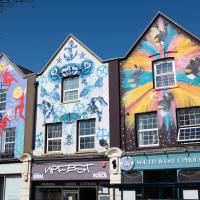
My friend Lisa joined me again, this time for a long wander through "Bemmie". In fact, I tweeted recently using "Bedmo" as my abbreviation for Bedminster, and apparently there's something of a culture war going on. From what I can glean, the longer-term residents call it "Bemmie" and consider "Bedmo" a name made up by hipster gentrifiers.
I had no idea, but then I didn't grow up around here, and I don't live in Bedminster, and I'm not a hipster. I'm not sure I've ever gentrified anywhere, either; Hotwells was already quite gentrified by the time I arrived. I probably just lowered the tone a bit.
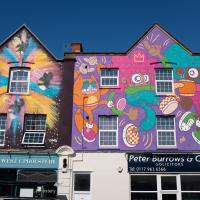
Anyway. Lisa and I entered Bemmie by the traditional toll gate (though actually you'd only have paid if you were coming from the Long Ashton direction, not merely nipping across from Hotwells) and then almost literally combed the streets to knock several new roads off my list of targets. Along the way we saw lots of street art, as you'd expect, and admired the area's panoply of gorgeous knockers.
Tags: Bristol Places UK onemilematt united kingdom Bedminster
Auto-Tags: Building Window Property Sky Purple Pink Font Art House Graffiti Residential area Real estate Paint City Facade
Text Recognition Tags: SOUTH WEST UPHOLSTERY Peter Burrows & Co. SOLICITORS Tel: 0117 963 6366 194 Nstery SOUTH WEST UPHOLSTERY Peter Burrows & Co. SOLICITORS Tel: 0117 963 6366 194 Nstery
Tags: Bristol Places UK onemilematt united kingdom Bedminster
Auto-Tags: Sky Window Building Font Residential area Art Real estate City Facade Paint Commercial building Mixed-use Graffiti Tree Street
Text Recognition Tags: SOUTH WEST UPHOLSTERY UPFEST KOBRA POSCA FRAMING 80OKS CLOTHING lstery vare SOUTH WEST UPHOLSTERY UPFEST KOBRA POSCA FRAMING 80OKS CLOTHING lstery vare
Sequel Injection
07 May 2021
I saw this tweet the other day and started thinking of my second Covid-19 vaccination as my "Sequel Injection" (to a geek, it's funny. You'll have to take my word for it.) Whatever you call it, this morning I went and got it.
It was in the same place I got my initial injection—my left arm! No, okay, it was at the Clifton College Prep School. I didn't take any photos of the event itself; the NHS production line is so efficient you barely have time to do anything else, even if the privacy of other patients wasn't a factor.
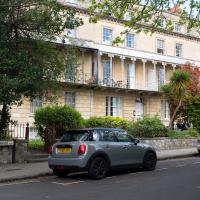
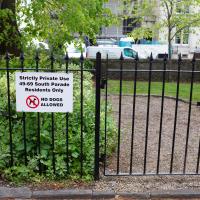
Along the way I mused at all the road resurfacing going on in Clifton, and also discovered a secret (okay, not-well-known and possibly slightly trespassey) way into Canynge Square, and on the way back I knocked off a few streets from my "leftovers list" of north-east Clifton. I've got much of Clifton done now, with the only obvious "to dos" on the east side of Whiteladies Road...
It was quite a long walk, and I'm feeling pretty tired now, though that might be the effects of the jab too, I suppose. Anyway. Tomorrow and Monday I'm walking outside Bristol, I think, and I imagine my feet will need some recovery time on Sunday, so it might be a while before I post another Wander.
Tags: Bristol Places UK onemilematt united kingdom Clifton South Parade
Auto-Tags: Wheel Car Tire Land vehicle Vehicle Building Plant Window Automotive lighting Tree Vehicle registration plate Asphalt Road surface Motor vehicle Automotive design
Text Recognition Tags: SOUTH PARADE SOUTH PARADE
Tags: Bristol Places UK onemilematt united kingdom Clifton South Parade
Auto-Tags: Plant Property Fence Tree Road surface Land lot Grass Home fencing Public space Woody plant Groundcover Gas Shrub Landscape Wire fencing
Text Recognition Tags: Strictly Private Use 49-69 South Parade Residents Only NO DOGS ALLOWED Strictly Private Use 49-69 South Parade Residents Only NO DOGS ALLOWED
Another Day, Another 50 Metres
29 May 2021
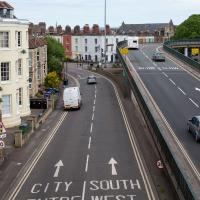
I met my friends Sarah and Vik at Riverside Garden Centre today; I needed to buy some compost for repotting my wildly-overgrowing aloe vera, and I went a little bit out of my way to knock off a stretch of Ashton Road. It was a pleasant enough walk in the surprisingly warm (and surprising-not-tipping-it-down-on-a-Bank-Holiday-weekend) weather.
Tags: Bristol Places UK onemilematt united kingdom Hotwells Cumberland Basin Flyover System
Auto-Tags: Car Land vehicle Window Sky Vehicle Building Infrastructure Street light Road surface Motor vehicle Asphalt Mode of transport Plant Tree Thoroughfare
Text Recognition Tags: 30 CITY SOUTH JWEST 30 CITY SOUTH JWEST
I managed to knock off a reasonable chunk of the roads I had left to walk around the University at the north-eastern extremity of my mile on this nice sunny walk. As well as being impressed by the number of big townhouses now occupied by various departments, I took some time on my way there to check out a war memorial, and some time on the way back to do a little extra wandering of Berkeley Square.

Tags: Bristol Places UK onemilematt united kingdom Clifton university of bristol
Auto-Tags: Building Plant Tree Window Woody plant Facade City Landscape Font Signage Shrub House Urban design Sign Advertising
Text Recognition Tags: PRIORY ROAD 1 Social Sciences & Law South West Doctoral Training Partnership (SWDTP) Trade Unions UCU Unison Unite University of 2E BRISTOL PRIORY ROAD 1 Social Sciences & Law South West Doctoral Training Partnership (SWDTP) Trade Unions UCU Unison Unite University of 2E BRISTOL
Green Squares and Secret Gardens
31 Jul 2021
At the end of July I went to have a look around some of the private gardens opened up by the annual Green Squares and Secret Gardens event. Sadly it was compressed into a single day this year, for various Covid-related reasons, it seems, so I didn't get to poke around too many places. I went to:
- A talk by the oldest resident of Victoria Square
- The St Vincent's Rocks Hotel garden
- The Paragon garden
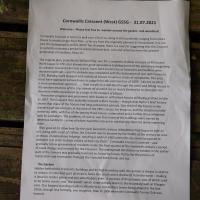
- Cornwallis Crescent gardens, both east and west
- The Polygon garden
And snapped a few things in between, too. It was a lovely day—a bit too hot, if anything—and it was interesting to get into a few places I'd only ever seen from the outside, especially The Paragon and Cornwallis gardens, which are the least visible to passing strangers of all of them.
Tags: Bristol Places UK onemilematt united kingdom Clifton Village Clifton Cornwallis Crescent Garden Clifton Open Garden Squares Green Squares and Secret Gardens open day Cornwallis Crescent garden
Auto-Tags: Font Grass Wood Terrestrial plant Groundcover Grass family Plant Paper Commemorative plaque Rectangle Landscape Paper product Document Publication History
Text Recognition Tags: Cornwallis Crescent (West) G5SG - 31.07.2021 Welome-ease teel tree to wander round the garden and woodland Comwal Crescnta home to wel er 150 u. ng in 85 h holds cangng fromente huse to mesty sin oor tats-a larcry fron the originaly olanned 31 households Itnot at the demugraphi prute whch has changed, there na cane forsuggesting that the Crescent sureetly enjoyru a perod efunerecedemad ke, cae and attention fm the pret generation of reutents, Read o. The ongnal plan pronatly by AIta Pay as tor a mplete shullew cresmtol 4hes Work begat a1791, buc akeady the gret spetidative bukdng boo of the perkidwas beginnirg e colapie resaurs become scar, lons had to ome by as finwnciers and buiders were edered boninatnd the debide wan completed wiiti the decteration of war wth France in Bding work vtopped with i tal houne in vanous states of complenn The area inust have arpeaet etroordinary to ute hom this ommentaryof R07 1do noe ecalect mone melhoy oectace westem enros of ms citwamot avofuts are so none than a wok oea d dou t gh tre sent and folng nouses n andesd Theraher meal, with loass on unfinished hauses stit beng gramed an l The Cressent then proably enjoved a hart heydaythough Alan yder's briet testory shows that many f the houses had fong untannted periods dne thied of the houses in the wntern taif atood empty at the time of the I51 census for instance, and the stuation is itle better ty L89L with fiet of the twenty three houses untenarted ind a further thres inhabited only by cartaken The problem of coure was tht many of the buidings were owned hy sentee lindhordi-some of whom tad itle interest in mntaiing them let alone imeroving propress was pite them Nan goes on to show tw y the early twmtleth contury undatian hod beyan to rake to Ang with much of ctor the Cescnt was to beame by the middle of the cntury an anw d cheap maaned odgings reachng eadr in 136 tem he oty cdund proposed to demalah itin prer to bda block of huh-e Datir Comwalh Crescont survtaed-and gadualya nee gonration of residents mode the finsl uarter of the twentieth century perkod of rapid change and runewis for the Crescent. The widespread derekction so evident in the earker part of the oury was gradualy reversed an, house by house Hat ly fat the procs of restoration and renovation changed the Crescent boch inside and mut The Garden Hdden tehind the Crestent's buidings and thigh boundary wal, the gurden is aw a surpriee to wstars. it's the best part of an acre, faces dje south and is shettered from the north-making tideal for terder plants and sun warshippers alte It consists of three laur, two of witsch used to be terns courts and the woods whih slope steeply soun to the bundary wal on Polypon Lane. Our longmt-standing resident. Myrtle Way ememten ter beng played in the tne 1950, though less famaly, one imagines, than in 1906 when the Comwalts Tenni Clit wa fanned Cornwallis Crescent (West) G5SG - 31.07.2021 Welome-ease teel tree to wander round the garden and woodland Comwal Crescnta home to wel er 150 u. ng in 85 h holds cangng fromente huse to mesty sin oor tats-a larcry fron the originaly olanned 31 households Itnot at the demugraphi prute whch has changed, there na cane forsuggesting that the Crescent sureetly enjoyru a perod efunerecedemad ke, cae and attention fm the pret generation of reutents, Read o. The ongnal plan pronatly by AIta Pay as tor a mplete shullew cresmtol 4hes Work begat a1791, buc akeady the gret spetidative bukdng boo of the perkidwas beginnirg e colapie resaurs become scar, lons had to ome by as finwnciers and buiders were edered boninatnd the debide wan completed wiiti the decteration of war wth France in Bding work vtopped with i tal houne in vanous states of complenn The area inust have arpeaet etroordinary to ute hom this ommentaryof R07 1do noe ecalect mone melhoy oectace westem enros of ms citwamot avofuts are so none than a wok oea d dou t gh tre sent and folng nouses n andesd Theraher meal, with loass on unfinished hauses stit beng gramed an l The Cressent then proably enjoved a hart heydaythough Alan yder's briet testory shows that many f the houses had fong untannted periods dne thied of the houses in the wntern taif atood empty at the time of the I51 census for instance, and the stuation is itle better ty L89L with fiet of the twenty three houses untenarted ind a further thres inhabited only by cartaken The problem of coure was tht many of the buidings were owned hy sentee lindhordi-some of whom tad itle interest in mntaiing them let alone imeroving propress was pite them Nan goes on to show tw y the early twmtleth contury undatian hod beyan to rake to Ang with much of ctor the Cescnt was to beame by the middle of the cntury an anw d cheap maaned odgings reachng eadr in 136 tem he oty cdund proposed to demalah itin prer to bda block of huh-e Datir Comwalh Crescont survtaed-and gadualya nee gonration of residents mode the finsl uarter of the twentieth century perkod of rapid change and runewis for the Crescent. The widespread derekction so evident in the earker part of the oury was gradualy reversed an, house by house Hat ly fat the procs of restoration and renovation changed the Crescent boch inside and mut The Garden Hdden tehind the Crestent's buidings and thigh boundary wal, the gurden is aw a surpriee to wstars. it's the best part of an acre, faces dje south and is shettered from the north-making tideal for terder plants and sun warshippers alte It consists of three laur, two of witsch used to be terns courts and the woods whih slope steeply soun to the bundary wal on Polypon Lane. Our longmt-standing resident. Myrtle Way ememten ter beng played in the tne 1950, though less famaly, one imagines, than in 1906 when the Comwalts Tenni Clit wa fanned