Tagged: are
Bedmo and Ashton Court
21 Nov 2020
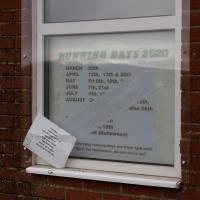
A rather more wide-ranging weekend wander with Sarah and Vik, taking in some mock Tudor bits of Bedmo (I should note that I've subsequently been corrected to "Bemmie", but I'm an outsider and have been calling it "Bedmo" for short for decades...), a chunk of Ashton, a path up Rownham Hill called Dead Badger's Bottom(!), The Ashton Court estate, a bit of the UWE campus at Bower Ashton, and some of the Festival Way path.
Tags: Ashton Court Estate Bristol Places UK onemilematt united kingdom Rownham Hill*. Ashton Court
Auto-Tags: Property Window Brick Brickwork Building Font Rectangle Facade Gas Commemorative plaque Signage Sash window Building material Nameplate Fixture
Text Recognition Tags: RUNNING DAYS 2020 MARCH 29th APRIL 12th, 13th & 26th Fri Bth, 10th, " 7th, 21st Sth, 1 MAY JUNE JULY AUGUST 2 Wed 26th 18th st (Halloween) day running days are rom 1pm unti TPALY For Halloween, pleane dress up RUNNING DAYS 2020 MARCH 29th APRIL 12th, 13th & 26th Fri Bth, 10th, " 7th, 21st Sth, 1 MAY JUNE JULY AUGUST 2 Wed 26th 18th st (Halloween) day running days are rom 1pm unti TPALY For Halloween, pleane dress up
Nothing New
02 Dec 2020
This may be the very first time I've gone for a One Mile Matt wander and not actually gone down any new roads, trod any new steps. I just wanted a coffee, frankly, so I went the same old way to Imagine That in the marina and back again.

Tags: Bristol Places UK onemilematt united kingdom Hotwells Cumberland Basin Flyover System
Auto-Tags: Wood Plant Fence Chair Grass Font Tree Metal Landscape Wire fencing Handrail Wire Signage Spoke Sign
Text Recognition Tags: Hi, How Are You? Ha h epron ti What makes ya lagh Hi, How Are You? Ha h epron ti What makes ya lagh

This is the current plan to replace the caravan park
Tags: Bristol Places UK onemilematt united kingdom baltic wharf
Auto-Tags: Property Light World Architecture Font Line Sky Material property Natural landscape Publication Real estate Adaptation Landmark Landscape Travel
Text Recognition Tags: BALTIC WHARFI NEW HOMES FOR BALTIC WHARF Hew the propesed deveinpmemt cend oek frem the Flating Harter WHAT IS PROPOSEO FOR BALTIC WHARF? WHY DO WE NEED MORE NEW HOMES? Goram Homes, Bristol City Council's housing company, has partnered with Hil to propose transformational plans for Baltic Whart This would provide approsimately 165 new homes, including 406 affordable. It is widety acknowledged that the curent housing crisis has led to the under provision of housing and particularly atfordable housing within Bristol. Although much is being done in the City to address the crisis, there are key issues with affordability, rough sleeping, and lack of social housing Bristol currently has over 13,000 famlies on the affordable housing register and a further 710 people in temporary accommodation. The aim is to create a vibrant destination on the Floating Harbour with homes, retail, restaurants and commercial spece, one that is well connected to local walking and cycling routes, seamiessly integrates with the historic setting and capitalises on the waterfrort setting with expansive views across the lamous Bristol townscape. Comparing house prices in Bristol to those in other Core Cities in the decade between 2008 and 2018 indicated that Bristol had the highest average housing costs of all the Core Cities in this period, and also the highest percentage Increase - over S6, compared to a UK average increase in costs of just over 32 The site is the Boltik Wharf Carian Club, The site is owned by Bristol City Counci and as part of the overarching ambition to deliver high quality homes, this site has been identified as a site capable of providing bomes for Bristal. GORAM HOMES 出Hill Goram Homes was founded in 2018 as part ol an initiative from Bristol City Counci, wich the ambition to increase the provision of nea hemes in the city and to meet affordable housing requirements without compromising on build quality Goram Homes is a subsidary of Bristol Holding Ltd, HIl is an award-winning 5 star housebuilder, creating a range of beautiful and awardwinning new homes across the south of England. They are a leading partnership developer, delivering distinctive and award-winning new homes, having been named Housebuilder of the Year, medium and large, in 2018. which is wholly owned by Bristol City Council Goram is set up to deliver mised tenure housing on a joint ventune basis and our share of profit wil feed back into the funding of council servicel BALTIC WHARFI NEW HOMES FOR BALTIC WHARF Hew the propesed deveinpmemt cend oek frem the Flating Harter WHAT IS PROPOSEO FOR BALTIC WHARF? WHY DO WE NEED MORE NEW HOMES? Goram Homes, Bristol City Council's housing company, has partnered with Hil to propose transformational plans for Baltic Whart This would provide approsimately 165 new homes, including 406 affordable. It is widety acknowledged that the curent housing crisis has led to the under provision of housing and particularly atfordable housing within Bristol. Although much is being done in the City to address the crisis, there are key issues with affordability, rough sleeping, and lack of social housing Bristol currently has over 13,000 famlies on the affordable housing register and a further 710 people in temporary accommodation. The aim is to create a vibrant destination on the Floating Harbour with homes, retail, restaurants and commercial spece, one that is well connected to local walking and cycling routes, seamiessly integrates with the historic setting and capitalises on the waterfrort setting with expansive views across the lamous Bristol townscape. Comparing house prices in Bristol to those in other Core Cities in the decade between 2008 and 2018 indicated that Bristol had the highest average housing costs of all the Core Cities in this period, and also the highest percentage Increase - over S6, compared to a UK average increase in costs of just over 32 The site is the Boltik Wharf Carian Club, The site is owned by Bristol City Counci and as part of the overarching ambition to deliver high quality homes, this site has been identified as a site capable of providing bomes for Bristal. GORAM HOMES 出 Hill Goram Homes was founded in 2018 as part ol an initiative from Bristol City Counci, wich the ambition to increase the provision of nea hemes in the city and to meet affordable housing requirements without compromising on build quality Goram Homes is a subsidary of Bristol Holding Ltd, HIl is an award-winning 5 star housebuilder, creating a range of beautiful and awardwinning new homes across the south of England. They are a leading partnership developer, delivering distinctive and award-winning new homes, having been named Housebuilder of the Year, medium and large, in 2018. which is wholly owned by Bristol City Council Goram is set up to deliver mised tenure housing on a joint ventune basis and our share of profit wil feed back into the funding of council servicel

This is the current plan to replace the caravan park
Tags: Bristol Places UK onemilematt united kingdom baltic wharf
Auto-Tags: Property Architecture Font Line Urban design Real estate Landmark Screenshot Publication Facade Cloud Landscape Advertising City History
Text Recognition Tags: BALTIC WHARF WHAT ELSE IS PROPOSED OTHER THAN HOMES? Our aim is to create new public spaces, with a mix of uses, that encourage a sense of community and social inclusiveness, that are accessible to all, and which prioritise walking and cycling. social interaction and physical activity for a high quality of ife. The design of these public spaces wil draw heavily on the site's historical contet and harbournide setting, producing a unique space that acknowledges the area's history as a busy and dynamic working dockyard. This will be achieved with materials and public art that reference the site's heritage. The proposals will make the most of the waterfront location with seating steps and social spaces with striking views across the water for residents and locats. in contrast, private and semi-private amenity spaces on terraces and roof gardens will be calm and relasing with comfortable furniture and colourful and biodiverse planting. Ground floor commercial space is proposed on the harbour frontage, which could include a mix of places to eat and drink, in turn enhancing activity in this comer of the harbour and creating a new destination. The commercial space will complement rather than detract from The Cottage Inn and Underlall Yard, and could incorporate some local social enterprises, which will enhance footfal and promote social activity to further eniven the harbour setting Above: How theo cite cou lockhom Cumberlard Hoad HOW CAN I FIND OUT MORE? Goram Homes is keen to understand the views of local people and would like to encourage people to have their say. Given COMD restrictions, we have launched a dedicated website for the project, which provides more detail about what is proposed, whilst addressing some ef your questions and potential concems. The website also provides an opportunity to have your say on our plans before they are finalised and submitted in a planning application to Bristol City Councit Abover The proposals withintheir contot Belaw: The emergng site layout www.balticwharfhomes.com We have also organised an ontine presentabion for the wider community at Tpm on Thursday Bth October 2020 1o find out more, ask questions and give us their thoughts, Ifyou would like to attend, please visit this link to sign-up: www.balticwharfhomes.com/presentation If you are unable to visit either website, please give our Co Isultation team a call on 07342 039 444 (during office hours), who can book you in and make olternative amangements to get involved in the session, or provide all information in an alternative fomat appropriate for you BALTIC WHARF WHAT ELSE IS PROPOSED OTHER THAN HOMES? Our aim is to create new public spaces, with a mix of uses, that encourage a sense of community and social inclusiveness, that are accessible to all, and which prioritise walking and cycling. social interaction and physical activity for a high quality of ife. The design of these public spaces wil draw heavily on the site's historical contet and harbournide setting, producing a unique space that acknowledges the area's history as a busy and dynamic working dockyard. This will be achieved with materials and public art that reference the site's heritage. The proposals will make the most of the waterfront location with seating steps and social spaces with striking views across the water for residents and locats. in contrast, private and semi-private amenity spaces on terraces and roof gardens will be calm and relasing with comfortable furniture and colourful and biodiverse planting. Ground floor commercial space is proposed on the harbour frontage, which could include a mix of places to eat and drink, in turn enhancing activity in this comer of the harbour and creating a new destination. The commercial space will complement rather than detract from The Cottage Inn and Underlall Yard, and could incorporate some local social enterprises, which will enhance footfal and promote social activity to further eniven the harbour setting Above: How theo cite cou lockhom Cumberlard Hoad HOW CAN I FIND OUT MORE? Goram Homes is keen to understand the views of local people and would like to encourage people to have their say. Given COMD restrictions, we have launched a dedicated website for the project, which provides more detail about what is proposed, whilst addressing some ef your questions and potential concems. The website also provides an opportunity to have your say on our plans before they are finalised and submitted in a planning application to Bristol City Councit Abover The proposals withintheir contot Belaw: The emergng site layout www.balticwharfhomes.com We have also organised an ontine presentabion for the wider community at Tpm on Thursday Bth October 2020 1o find out more, ask questions and give us their thoughts, Ifyou would like to attend, please visit this link to sign-up: www.balticwharfhomes.com/presentation If you are unable to visit either website, please give our Co Isultation team a call on 07342 039 444 (during office hours), who can book you in and make olternative amangements to get involved in the session, or provide all information in an alternative fomat appropriate for you
Sunday Bedmo
20 Dec 2020
A long meander around bits of Bedminster, from the river to the north to Winterstoke Road to the south, taking a few roads I've seen before, and a few I haven't. The Christmas decorations were an extra bonus.

Of course, what this means is that at some time in the past someone tried to cut a child in half by slamming the gate while a group was going through it...
Tags: Bristol Places UK onemilematt united kingdom Bedminster Southville
Auto-Tags: Vertebrate Fence Mesh Mammal Material property Wire fencing Glass Metal Composite material Steel Facade Transparency City Building material Sky
Text Recognition Tags: THIS GATE Must be kept in the • FIXED POSITION when groups of children are passing through it THIS GATE Must be kept in the • FIXED POSITION when groups of children are passing through it
Saint Vincent's Spring
28 Dec 2020
Fractionally outside my one-mile zone, but I got curious about Saint Vincent's spring, whose last remnants you can see in a defunct drinking fountain on the Portway. Along the way I passed Gyston's cave, sometimes called St Vincent's cave, in the sheer wall of the gorge. It's now accessible by a tunnel from the observatory—I tried it about twenty years ago, I think, and still recall the vertiginous moment of looking down from the protruding balcony and realising that you could see straight through the grille floor to the drop below—but from what I can work out the tunnel is relatively recent. Before the tunnel was dug it was accessible only by access across the cliff face, which must have been even more terrifying.
This cave was first mentioned as being a chapel in the year AD 305 and excavations, in which Romano-British pottery has been found, have revealed that it has been both a holy place and a place of refuge at various times in its history.
A few different sources say that the cave became a hermitage and chapel to St Vincent following Bristol's early trading in Iberian wines; St Vincent of Saragossa is Lisbon's patron saint, and a lot of nearby things bear the name.
I'm not sure where the crossover of Vincent and Ghyston happens, though. On the giants Goram and Vincent (or Ghyston), Wikipedia says:
The name Vincent for one of the giants rests on the fact that at Clifton, at the narrowest point of the Avon Gorge, there was formerly an ancient hermitage and chapel dedicated to St Vincent, at or near the present cave in the cliff-face which bears his name. Another (apparently modern) version of the story calls the Clifton giant Ghyston, which is in fact the name, of obscure origin, for the whole of the cliff-face of the Avon Gorge at least as early as the mid-fifteenth century, in the detailed description of the Bristol area by William Worcestre. The place-name was personified to produce the giant's name. Vincent's Cave is called Ghyston cave or The Giant’s Hole in an article in the July 1837 issue of Felix Farley’s Bristol Journal.
In my research on the original Hot Well House, I've seen quite a few contemporary paintings which state their viewpoint as "from St. Vincent's Rock", so in the 16th century it seems the cliff-face name was typically St Vincent Rock rather than Ghyston's Rock, perhaps.
I am, as you can tell, no historian!
On the way, I also wandered around the base of the popular climbing area, which I think is the site of the old Black Rock quarry.

Tags: Bristol Places UK onemilematt united kingdom A4 Avon Gorge Portway road St Vincent's Rocks
Auto-Tags: Brown Wood Font Groundcover Signage Landscape Bedrock Soil Rock Carmine Sign Concrete Natural material Grass Brick
Text Recognition Tags: DUE TO OPERATIONAL REASONS THIS PUBLIC TOILET IS CLOSED THE CLOSEST TOILETS WITH EASY VECHICULAR A CCESS ARE LOCATED ON THE D OWNS 2 MILES LEFT AT NEXT TRAFFIC LIGHTS. ANCHOR ROAD 2 MILES FOLLOW SIGNS FOR CITY CENTRE. ASHTrON PARK a MILE S FOLLOW SIGNS FOR A38 SOUTH WEST DUE TO OPERATIONAL REASONS THIS PUBLIC TOILET IS CLOSED THE CLOSEST TOILETS WITH EASY VECHICULAR A CCESS ARE LOCATED ON THE D OWNS 2 MILES LEFT AT NEXT TRAFFIC LIGHTS. ANCHOR ROAD 2 MILES FOLLOW SIGNS FOR CITY CENTRE. ASHTrON PARK a MILE S FOLLOW SIGNS FOR A38 SOUTH WEST
Of Bridges and Buoys
04 Mar 2021
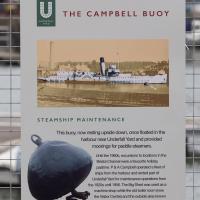
A trip to Imagine That coffee, so no fresh roads knocked off my list, but I stopped off to snap a couple of the engineering-related bits of the docks: the Campbell Buoy (used by P&A Campbell for mooring their paddle steamers) and Brunel's "other" bridge, the foot/horse swing bridge that now sits sadly disused in the shadow of the Plimsoll Bridge at Howard's Lock.
Tags: Bristol Places UK onemilematt united kingdom harbourside floating harbour harbour Spike Island engineering Buoy Campbell Buoy docks
Auto-Tags: Airship Blimp Vertebrate Aircraft Aerostat Motor vehicle Vehicle Aviation Zeppelin Air travel Font Gas Advertising Aerospace engineering Design
Text Recognition Tags: THE CAMPBELL BUOY STEAMSHIP MAINTENANCE This buoy, now resting upside down, once floated in the harbour near Underfal Yard and provided moorings for paddle steamers. Lrtil the 1980s, eounions to locations in the Brietol Channel werea tavourte hokday pastime. P&A Campbel operated a fleet of ships trom the hartbour and rented part of Udertal Yard for maintenance operations from the 1320s unti 1956. The Big Shed was used as a machine shop while the old boler room inow the Visitor Centrej and the outsicle are krown as the Knuckle wore ned as a foundry. THE CAMPBELL BUOY STEAMSHIP MAINTENANCE This buoy, now resting upside down, once floated in the harbour near Underfal Yard and provided moorings for paddle steamers. Lrtil the 1980s, eounions to locations in the Brietol Channel werea tavourte hokday pastime. P&A Campbel operated a fleet of ships trom the hartbour and rented part of Udertal Yard for maintenance operations from the 1320s unti 1956. The Big Shed was used as a machine shop while the old boler room inow the Visitor Centrej and the outsicle are krown as the Knuckle wore ned as a foundry.
One Albermarle Row, Granby Green and... People
12 Mar 2021
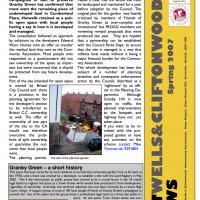
I was browsing some historical photos the other day, and came across "Rear of Unspecified House" in the Bristol Archives' John Trelawny Ross collection, and immediately recognised it as being the back of 1 Albermarle Row, just around the corner from me. I've not had much time to research the history of this odd little addition to Albermarle Row, or what happened to 1-4 Cumberland Place, number 4 of which used to be attached to the side of 1 Albermarle Row, but it was interesting to look at old maps for a few minutes and work out what used to be where.
That all connects with the little local bit of land at Granby Green, too, as it used to be numbers 1-3 Cumberland Place. There was something of a planning battle over Granby Green, and I've included an old edition of Hotwells & Cliftonwood News that I found online, a copy of which would have been popped through my letterbox at the time.
I was also inspired by some old pictures of Hotwell Road to try to put a few more people in my pictures, though I set my pre-focus a couple of extra metres out from normal to make sure I didn't get too close to anyone!
Tags: Bristol Places UK onemilematt united kingdom Hotwells Cumberland Place Granby Green
Auto-Tags: Tire Automotive tire Newspaper Publication Motor vehicle Tread Font Wheel Material property News Vehicle Automotive wheel system Advertising Tire care Screenshot
Text Recognition Tags: Decision time for new h&cca Open Space in Hotwells HOTWELLS & CLIFTONWOOD COMMUNITY ASSOCIATION A recent poll of the people who sion granted to Edward Ware Homes campaigned in vain to preserve makes it clear that the whole site must Granby Green has confirmed that be landscaped and maintained for a year most want the remaining piece of before adoption by the Council, The undeveloped land in Cumberland original plan for the garden was heavily Place, Hotwells retained as a pub- criticised by members of Friends of lic open space with local people Granby Green as over-complex and having a say in how it is developed 'institutional but FROGG members are reviewing revised proposals that were The consultation followed an approach produced last year. They are hopeful by solicitors to the developers Edward that a partnership can be established with the Council Parks Dept. to ensure the residual land they own to the Com that the site is managed in a way that munity Association. Most people who reflects local needs without it being a responded to a questionnaire did not major financial burden for the Commu- ed by and managed. Ware Homes with an offer to transfer see ownership of the space as impor- nity Association. tant but were concermed that it should The whole development has been the be protected from any future develop- subject of a number of planning breaches and consequent enforcement Part of the site intended for open space action by the Council, described as a 'nightmare by an offi- cer in the Planning De- Alkhough Granby Hill is now open to traffic, the planned improvements to the footpath and highway have not yet ment. is owned by Bristol City Council and there is a provision in the planning agreement for the developer's section to be transferred to partment. Bristol C.C. owmership as well. The offer of ownership of one part of the site to the CA taken place. If you want to be in- volved with the pro- posed garden or have any comment on the scheme contact Mike would not therefore overcome the prob lems of split ownership or guarantee the out- come that local people Timmins tel: 9291804 want. The planning permis- The s of the panned garden Granby Green -a short history This apace had cared for by local residents a an informal community garden from as far back as the 1970s unail a fance was erected by a develaper, to establiah a tde with the Land Ragistry in May 2002 Tha 4 day interruption to pubic access later proved to be a crudal factor in the IB legal battle to regster the space as Town Green which would have protected it from developmere, n renoved by a recent High pnenas of Graby Green) campagned to Ibeen regardiess of ownership (iroricaly. chis technical objection has now been Court rulng A support group of around 100 local people prevent the loss of the space and the group tced a professional legal team at a three day publik in In this edition: Community News Winning ideas - Meet Your Neighbour -6 Events & Activities - quiry At one point, Town Green satus wos con ferred by the Bristol CC Open Spaces committee but bear rescinded folawing thrests of legal action by the then ownieri, Etward Ware Homes. Local resident Mike Timmin has ggeed that the now smaler space below Walace Place, che new 4 block of Mats should be christened Gromit Gar. 7 dens Rey Smth Contacts 8 HOTWELLS&CLIFTONWOe Spring 2007 SM3N Published y Hetwells A CIenweed Cemmunity Aassetaten, Htepe Chapel, Hepe Chapel Hill, Hetwells, Brtatel. BSa 4ND Decision time for new h&cca Open Space in Hotwells HOTWELLS & CLIFTONWOOD COMMUNITY ASSOCIATION A recent poll of the people who sion granted to Edward Ware Homes campaigned in vain to preserve makes it clear that the whole site must Granby Green has confirmed that be landscaped and maintained for a year most want the remaining piece of before adoption by the Council, The undeveloped land in Cumberland original plan for the garden was heavily Place, Hotwells retained as a pub- criticised by members of Friends of lic open space with local people Granby Green as over-complex and having a say in how it is developed 'institutional but FROGG members are reviewing revised proposals that were The consultation followed an approach produced last year. They are hopeful by solicitors to the developers Edward that a partnership can be established with the Council Parks Dept. to ensure the residual land they own to the Com that the site is managed in a way that munity Association. Most people who reflects local needs without it being a responded to a questionnaire did not major financial burden for the Commu- ed by and managed. Ware Homes with an offer to transfer see ownership of the space as impor- nity Association. tant but were concermed that it should The whole development has been the be protected from any future develop- subject of a number of planning breaches and consequent enforcement Part of the site intended for open space action by the Council, described as a 'nightmare by an offi- cer in the Planning De- Alkhough Granby Hill is now open to traffic, the planned improvements to the footpath and highway have not yet ment. is owned by Bristol City Council and there is a provision in the planning agreement for the developer's section to be transferred to partment. Bristol C.C. owmership as well. The offer of ownership of one part of the site to the CA taken place. If you want to be in- volved with the pro- posed garden or have any comment on the scheme contact Mike would not therefore overcome the prob lems of split ownership or guarantee the out- come that local people Timmins tel: 9291804 want. The planning permis- The s of the panned garden Granby Green -a short history This apace had cared for by local residents a an informal community garden from as far back as the 1970s unail a fance was erected by a develaper, to establiah a tde with the Land Ragistry in May 2002 Tha 4 day interruption to pubic access later proved to be a crudal factor in the IB legal battle to regster the space as Town Green which would have protected it from developmere, n renoved by a recent High pnenas of Graby Green) campagned to Ibeen regardiess of ownership (iroricaly. chis technical objection has now been Court rulng A support group of around 100 local people prevent the loss of the space and the group tced a professional legal team at a three day publik in In this edition: Community News Winning ideas - Meet Your Neighbour -6 Events & Activities - quiry At one point, Town Green satus wos con ferred by the Bristol CC Open Spaces committee but bear rescinded folawing thrests of legal action by the then ownieri, Etward Ware Homes. Local resident Mike Timmin has ggeed that the now smaler space below Walace Place, che new 4 block of Mats should be christened Gromit Gar. 7 dens Rey Smth Contacts 8 HOTWELLS&CLIFTONWOe Spring 2007 SM3N Published y Hetwells A CIenweed Cemmunity Aassetaten, Htepe Chapel, Hepe Chapel Hill, Hetwells, Brtatel. BSa 4ND
Leigh Woods Walk
14 Mar 2021
An enormous walk today, or at least it felt enormous. My feet are sore, anyway. I started off recreating a couple of local historical photos in Hotwells, but then headed for my traditional walk along the towpath in the Avon Gorge to the far extreme of Leigh Woods, up and through the woods to the height of the Suspension Bridge, finally crossing into Clifton Village for a well-deserved vanilla latte.
I say "traditional" because this used to be a very regular route for me, first walking, years and years ago, and later jogging—this route combined with a circuit of the Downs on the other side used to be my way of making sure I was fit to do a half-marathon (I did six of them in total, between 2010 and 2014).
I miss the routine of this walk, even though it's a long way and it used to pretty much wipe me out when I did it—I'd come back home and collapse and do very little for the rest of the day. But perhaps that's what Sundays are for, and I should try to remember that.
Doing this walk regularly was quite a meditative experience. Not so much of that today, but once I got to the further extreme of the towpath, where the roar of the Portway traffic on the other side of the river dwindles and I turned into Leigh Woods to climb ever closer to birdsong and further from rushing cars, I did seem to recapture a little of the feeling of previous walks. (I would say my mind cleared, but I was mentally singing along to Life Without Buildings' The Leanover for most of the wander. There are worse songs to have stuck in one's head, though; it's a great track...)
Anyway. Apparently the walk made me more likely to ramble in words, too. I'll stop now :)
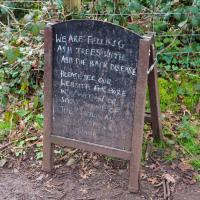
More details here
Ash dieback is caused by a fungus that originated in Asia. It doesn’t affect ash trees native to the region, but has had a devastating effect on European ash, which is found in the UK.
The fungus produces small fruiting bodies between July and October. The spores can blow many miles away, which is what makes it so difficult to control. Once it’s landed, the fungus grows inside the tree and blocks its water systems, causing the tree to die.
Tags: Bristol Places UK onemilematt united kingdom Leigh Woods forest woods
Auto-Tags: Plant Plant community Wood Grass Natural landscape Tree Trunk Groundcover Forest Font Landscape Commemorative plaque Signage Woodland Number
Text Recognition Tags: WE ARE FELLINS G ASH TREES WITI ASH DIE BACK NSEASE PLEASE SEE OUR HEBSITE. FeR HORE WE ARE FELLINS G ASH TREES WITI ASH DIE BACK NSEASE PLEASE SEE OUR HEBSITE. FeR HORE
I got interested in Bristol's medieval water supplies after poking around near Jacobs Wells Road and Brandon Hill. It was during that research I found out about a pipe that's still there today, and, as far as I know, still actually functioning, that was originally commissioned by Carmelite monks in the 13th century. They wanted a supply of spring water from Brandon Hill to their priory on the site of what's now the Bristol Beacon—Colston Hall, as-was. It was created around 1267, and later, in 1376, extended generously with an extra "feather" pipe to St John's On The Wall, giving the pipework its modern name of "St John's Conduit".
St John's on the Wall is still there, guarding the remaining city gate at the end of Broad Street, and the outlet tap area was recently refurbished. It doesn't run continuously now, like it did when I first moved to Bristol and worked at the end of Broad Street, in the Everard Building, but I believe the pipe still functions. One day I'd like to see that tap running...
There are a few links on the web about the pipe, but by far the best thing to do is to watch this short and fascinating 1970s TV documentary called The Hidden Source, which has some footage of the actual pipe and also lots of fantastic general footage of Bristol in the seventies.
On my walk today I was actually just going to the building society in town, but I decided to trace some of the route of the Carmelite pipe, including visiting streets it runs under, like Park Street, Christmas Street, and, of course, Pipe Lane. I also went a bit out of my way to check out St James' Priory, the oldest building in Bristol, seeing as it was just around the corner from the building society.
There are far too many pictures from this walk, and my feet are now quite sore, because it was a long one. But I enjoyed it.

20th Century Flicks were an established video rental shop up in Clifton, conveniently next to the University of Bristol Student Union, when I moved to Hotwells in 1999. They moved to Christmas Steps a few years back, and are still, amazingly, in business.
I'd guess they survive by having an immense stock of films (20,000 available for hire), great expertise, and a high-density local student population.
Tags: Bristol Places UK onemilematt united kingdom City Centre Christmas Steps
Auto-Tags: Font Poster Rectangle Signage Event Room Handwriting Advertising Sign Number Label Pattern Banner Paper
Text Recognition Tags: 19 20TH CENTURY FLICKS 20TH OPERA TINC INSTRUCTIONS LICKS Twe are rmtingmais vianur poial wkedaihalit troin The lilack Bes broesiag fohe ti bing ny .H posteture troigh the lettert 3. i thnadds. with your viewing estsT 4.You can oridit w aouat undne vi ir erttewwhcentueyilieks co.u Moe s per week ir ndi EK The chemes ane desedar thetli hetng THE SON Book Thank yuu icksterand pend luck WEB www.20thcenturyflicks.co.uk info@20thcenturyflicks.co.uk 0117 925 8432 19 20TH CENTURY FLICKS 20TH OPERA TINC INSTRUCTIONS LICKS Twe are rmtingmais vianur poial wkedaihalit troin The lilack Bes broesiag fohe ti bing ny .H posteture troigh the lettert 3. i thnadds. with your viewing estsT 4.You can oridit w aouat undne vi ir erttewwhcentueyilieks co.u Moe s per week ir ndi EK The chemes ane desedar thetli hetng THE SON Book Thank yuu icksterand pend luck WEB www.20thcenturyflicks.co.uk info@20thcenturyflicks.co.uk 0117 925 8432
An Evening Wander to the Gallows
06 Apr 2021
I'd originally intended just to pop up to the area around Alma Road, where I'd missed a few streets on earlier wanders. It was such a nice evening, though, I decided to extend my walk up to the very top of Pembroke Road, just outside my one mile radius, to take a few snaps of something intriguing I'd found in my researches.
I've driven, walked and jogged past the little triangle of land at the top of Pembroke road a great deal in my time in Bristol, but I didn't know that it used to be the site of a gibbet, in fact that the road itself there used to be called Gallows Acre Lane. According to the Durdham Down history trail, by Francis Greenacre (an excellent name for a Downs researcher!) among other sources:
...it was below this quarry near the top of Pembroke Road, once called Gallows Acre Lane, that a gibbet stood. It was sometimes occupied by those who had committed robberies on the Downs and was last used in 1783 to hang Shenkin Protheroe for the murder of a drover. Stories quickly spread that he descended from the gibbet at midnight every night and stalked through Clifton. Such was the alarm that his body was cut down and buried.
Also very close to this little triangle of land was one of the gates of the extensive turnpike system...
Anyway. Along the way I encountered a wooden tortoise and a real squirrel, among other things. It was a good walk, and more light in the evenings means I can move my wanders out of the ticking countdown clock of work lunch-hours and be a bit more leisurely.
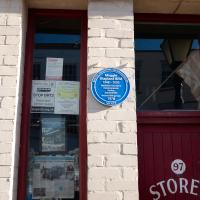
The late, great Maggie Shapland was a familiar feature to anyone interested in historical industry in Bristol.
I think the first time I saw her was on an Open Doors Day for the Clifton Rocks railway, the disused funicular from the Avon Gorge Hotel down to near the landing stage in Hotwells, and the last time was when she was helping to restore Brunel's Other Bridge at Howard's Lock.
Both times I think she'd driven there in one or other of the classic cars she maintained. Sometimes when the garage door here was open on the way past you could sneak a look at the collection.
The last thing I saw her drive was this Moss kit car.
An amazing person by all accounts, I never knew that we shared the profession of "Database Consultant"...
Tags: Bristol Places UK onemilematt united kingdom plaque Clifton Bristol Industrial Archaeological Society Maggie Shapland Princess Victoria Street Rocks Garage
Auto-Tags: Window Fixture Wood Building Brickwork Brick Neighbourhood Building material Font Facade Gas House Door Composite material City
Text Recognition Tags: STOP BRT2 there are better wiy stopbrt2.org.k 97 STORES STOP BRT2 there are better wiy stopbrt2.org.k 97 STORES
A London Wander in Southville
10 Apr 2021
There's a bit of Southville that I've been meaning to get to for some time, where the streets seem to take some strong inspiration from London. There's a Camden Road that crosses with an Islington Road, and a Dalston Road, even an Edgeware Road. For me these names are more evocative than the rather more exotic names I passed by to get there—Sydney Row or Hanover Place, say, because I've actually been to the places in London. The last time I was in Islington I saw Monkey Swallows the Universe play at The Angel, and I can't think of Camden without remembering a gondola trip with my friend Tara where a cheery youth played Beatles music for us on a saz...
I really liked this little area, with its mostly well-kept pretty houses and hints here and there of the creative side of the residents. It's arty and down-to-earth at the same time, and I wouldn't mind living there, I think.
On the way there I got the chance to walk through Underfall Yard for the first time in a while, and on the way back I had my first take-away hot food for many months, grabbing some crispy fried squid from the excellent Woky Ko at Wapping Wharf.
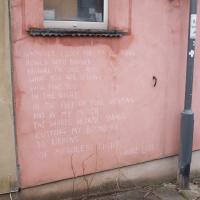
Audre Lorde (/ˈɔːdri lɔːrd/; born Audrey Geraldine Lorde; February 18, 1934 – November 17, 1992) was an American writer, feminist, womanist, librarian, and civil rights activist. She was a self-described "Black, lesbian, mother, warrior, poet," who dedicated both her life and her creative talent to confronting and addressing injustices of racism, sexism, classism, capitalism, heterosexism, and homophobia.
Tags: Bristol Places UK onemilematt united kingdom Bedminster graffiti street art Southville
Auto-Tags: Window Road surface Handwriting Building Brick Fixture Brickwork Asphalt Wall Font Gas Tints and shades Sidewalk House Art
Text Recognition Tags: wHE NEVLR I LO0OK FOR E HOWLS KITH DANGER REUARE THE TREE AS S WHAT YOU ARE SEERING WILL FIN YOU IN THE NIGHT IN THE FIST OF YOUR REAMING AND IN MY MUTH THE WORDS BECAME SABAES CUTTING MY BOUNDSKES 10 RIBBONS OF MERCILESSLIGT -ADRE LORNE wHE NEVLR I LO0OK FOR E HOWLS KITH DANGER REUARE THE TREE AS S WHAT YOU ARE SEERING WILL FIN YOU IN THE NIGHT IN THE FIST OF YOUR REAMING AND IN MY MUTH THE WORDS BECAME SABAES CUTTING MY BOUNDSKES 10 RIBBONS OF MERCILESSLIGT -ADRE LORNE