Tagged: automotive-parking-light
Swinging By Sydney Row
01 Apr 2021
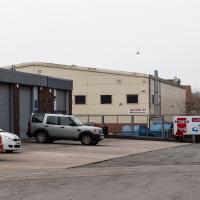
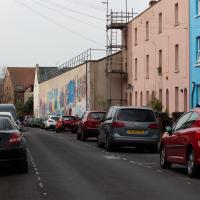
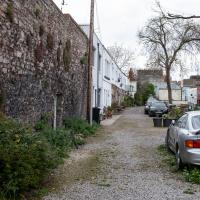
Another workday, another quick coffee excursion. This time I decided to swing past Sydney Row on the way back from the marina car park where Imagine That have their horsebox. I didn't know until recently that the terrace was built for workers at the adjacent dockyard.
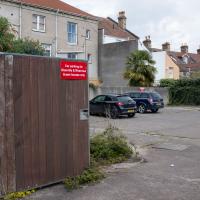
I've also gradually come to the conclusion that I don't really think very two-dimensionally when it comes to finding my way around or associating one place with another. I only realised in the last few days that the odd industrial building that takes up the other half of Syndey Row, the one that's always covered with graffiti, is the back of the dockyard works. In my defence, as it's tucked away in a corner of the little industrial estate that I've never ventured into (I rarely find I have a need for the products of safety valve manufacturers), I don't think I've ever seen the front of the building...
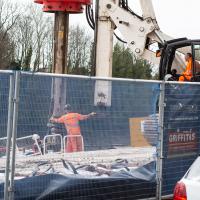
I made a "that doesn't auger well" pun on Twitter but hardly anyone noticed it. #dadjoke
An Evening Wander to the Gallows
06 Apr 2021
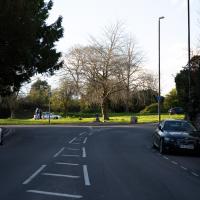
I'd originally intended just to pop up to the area around Alma Road, where I'd missed a few streets on earlier wanders. It was such a nice evening, though, I decided to extend my walk up to the very top of Pembroke Road, just outside my one mile radius, to take a few snaps of something intriguing I'd found in my researches.
I've driven, walked and jogged past the little triangle of land at the top of Pembroke road a great deal in my time in Bristol, but I didn't know that it used to be the site of a gibbet, in fact that the road itself there used to be called Gallows Acre Lane. According to the Durdham Down history trail, by Francis Greenacre (an excellent name for a Downs researcher!) among other sources:
...it was below this quarry near the top of Pembroke Road, once called Gallows Acre Lane, that a gibbet stood. It was sometimes occupied by those who had committed robberies on the Downs and was last used in 1783 to hang Shenkin Protheroe for the murder of a drover. Stories quickly spread that he descended from the gibbet at midnight every night and stalked through Clifton. Such was the alarm that his body was cut down and buried.
Also very close to this little triangle of land was one of the gates of the extensive turnpike system...
Anyway. Along the way I encountered a wooden tortoise and a real squirrel, among other things. It was a good walk, and more light in the evenings means I can move my wanders out of the ticking countdown clock of work lunch-hours and be a bit more leisurely.
Clifton Village Lunchtime Coffee
07 Apr 2021
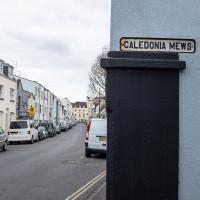
Unusually for my recent lunchtime coffee trips, I managed to find a new road to walk down: Caledonia Mews, which has a little entrance off Princess Victoria Street and runs between it and Caledonia Place. I've noticed it before a couple of times—if you look up from Princess Victoria Street you can see some of it, standing tall above the low buildings on the street itself—but until last night I'd not set foot in it, I think.
As well as focusing on this charming little mews, I looked in on the demolished site of the old WH Smith, and spotted what I think is part of the now-private-houses St Vincent Rocks Hotel that I'd not really noticed before, tucked away between Sion Lane and Sion Hill.
For some reason I always think of Princess Victoria Street as running north-to-south, but that's because of my terrible sense of direction, I suppose, as it's really more east-north-east.
A London Wander in Southville
10 Apr 2021
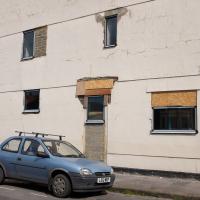
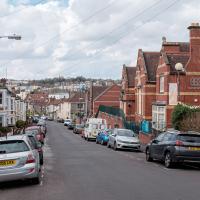
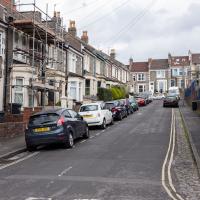
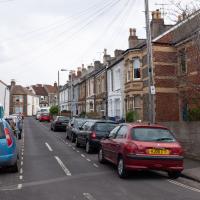
There's a bit of Southville that I've been meaning to get to for some time, where the streets seem to take some strong inspiration from London. There's a Camden Road that crosses with an Islington Road, and a Dalston Road, even an Edgeware Road. For me these names are more evocative than the rather more exotic names I passed by to get there—Sydney Row or Hanover Place, say, because I've actually been to the places in London. The last time I was in Islington I saw Monkey Swallows the Universe play at The Angel, and I can't think of Camden without remembering a gondola trip with my friend Tara where a cheery youth played Beatles music for us on a saz...
I really liked this little area, with its mostly well-kept pretty houses and hints here and there of the creative side of the residents. It's arty and down-to-earth at the same time, and I wouldn't mind living there, I think.
On the way there I got the chance to walk through Underfall Yard for the first time in a while, and on the way back I had my first take-away hot food for many months, grabbing some crispy fried squid from the excellent Woky Ko at Wapping Wharf.
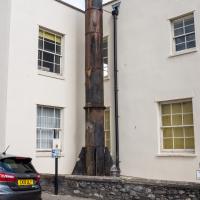
Or, I imagine, chimney. But the fins at the bottom really do make it seem quite rockety, and when I asked about it on Twitter someone did find a strong resemblance to some NASA hardware.
As to why Charles Hill & Sons apparently needed an industrial incinerator in the basement of their office, I've not yet found out.
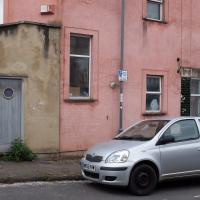
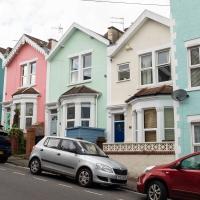
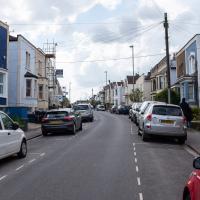
Long Bemmie Wander with Lisa
11 Apr 2021
My friend Lisa joined me again, this time for a long wander through "Bemmie". In fact, I tweeted recently using "Bedmo" as my abbreviation for Bedminster, and apparently there's something of a culture war going on. From what I can glean, the longer-term residents call it "Bemmie" and consider "Bedmo" a name made up by hipster gentrifiers.
I had no idea, but then I didn't grow up around here, and I don't live in Bedminster, and I'm not a hipster. I'm not sure I've ever gentrified anywhere, either; Hotwells was already quite gentrified by the time I arrived. I probably just lowered the tone a bit.
Anyway. Lisa and I entered Bemmie by the traditional toll gate (though actually you'd only have paid if you were coming from the Long Ashton direction, not merely nipping across from Hotwells) and then almost literally combed the streets to knock several new roads off my list of targets. Along the way we saw lots of street art, as you'd expect, and admired the area's panoply of gorgeous knockers.
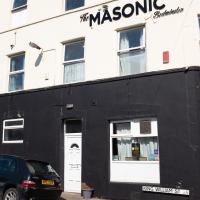
I love the Masonic's typography. Not been in myself, that I recall. I have the impression that it's more for locals than for visitors; more of a Merchants Arms than a Grain Barge, in Hotwells terms. The far side of the pub used to be a popular wall for street art until the new flats were built there. I remember one of Dan Kitchener's pieces most fondly.
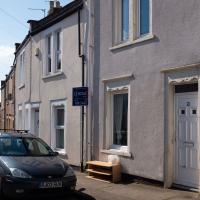
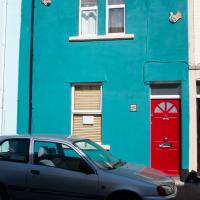
Just to give an idea of prices, that two-bedroom house is currently on sale for £345,000. It looks in excellent condition.
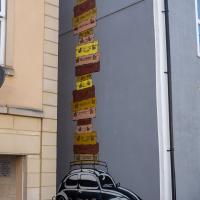
I couldn't find anything out about this little VW with the well-stacked roof rack. It's tucked away on Dartmoor Street
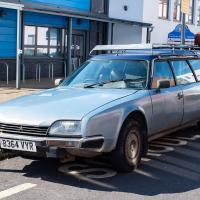
Lisa has apparently travelled in a (full up) Familiale seven-seater variant on a very long trip across Europe, and did not enjoy the experience much, from what she told me.
The CX-3 estate comes third on Honest John's Top Ten Classic estate cars to buy in 2021 in
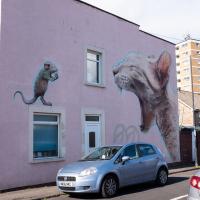
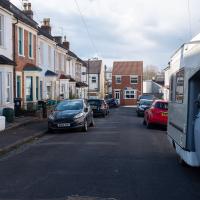
"Who on earth built that at the end?" said someone who shall remain anonymous in case the proud owner is watching...
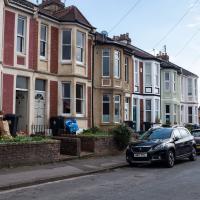
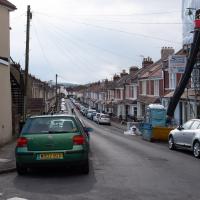
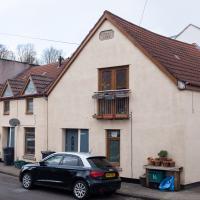
Better Look at an Extension
14 Apr 2021
Apart from a lovely coffee and a slice of Victoria sponge from Twelve, there weren't any new sights on this little lunchtime jaunt except for a slightly better look at the long raised extension at the back of the St Vincent's Rocks Hotel, where I at least got to see the arches it's raised up on. I also got a fair bit of exercise by walking up the Zig Zag to get there, and saw far more people out than I have in months, what with the lockdown having just been significantly lifted. As I walked past The Mall pub they were turning people away from their already-full garden, and the (outdoor) cafe tables were pretty full up.
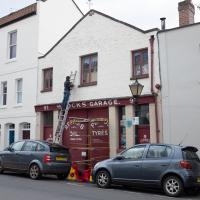
Nice to see someone keeping The Rocks Garage well-maintained. And they've safely wrapped Maggie Shapland's plaque in a carrier bag to protect it from paint drips, too. Excellent work.
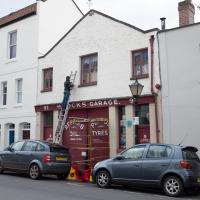
Nice to see someone keeping The Rocks Garage well-maintained. And they've safely wrapped Maggie Shapland's plaque in a carrier bag to protect it from paint drips, too. Excellent work.
Desultory Coffee Wander
16 Apr 2021
Another day, another quick dash out for a coffee. I did at least try to take a different route from normal, especially on the way back, where I yet again got a bit lost in the strange paths, flyovers and underpasses that make up the odd maze of pedestrian "infrastructure" among the concrete jungle between the west of Greville Smyth and my neck of the woods in Hotwells. I swear one day I'll take a turn I've not tried before and end up being gored by a Bristolian minotaur.
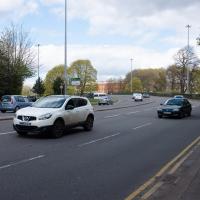
Even on a quieter day, the roar of the traffic is pretty amazing. I was listening to a podcast about electric cars on noise-cancelling headphones, while wishing there were already a few more on the roads...
Howard's Lock
27 Apr 2021
Bits of Entrance Lock have been coned off for ages, mostly the area with the lockkeepers' house on it. My friends Sarah and Vik mentioned at the weekend that it had recently been un-coned, so I wandered that way to cross the outermost lockgates for the first time this year. I don't know whether it's just my mood today or the weather, but it seemed a day for pushing a couple of photos in a more experimental direction in the post-processing...
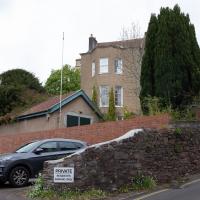
The last time I noticed this antenna, I wondered if this was some radio amateur's shed. As soon as they renovated it and stuck the rather utilitarian metal doors on the front, I managed to place it: it's an electrical substation. A lot of the local ones seem to have antenna masts; I suppose it's how they do remote monitoring, or something. In my defence, I'm not sure the sign on the gate with the electricity symbol was there before, either.
Leftovers with Lisa
01 May 2021
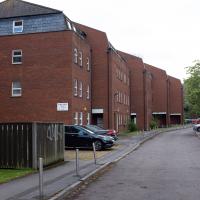
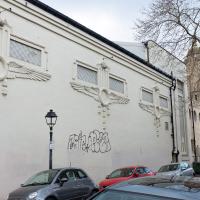
I didn't get to all the little leftover streets around the northeastern part of my area in today's wander, but I definitely knocked a few off the list, plus Lisa and I enjoyed the walk, and didn't get rained on too badly. We spotted the hotting-up of Wisteria season, checked out Birdcage Walk (both old and new), ventured onto the wrong side of the tracks1 and generally enjoyed the architecture.
1 Well, technically we probably shouldn't have been on the grounds of those retirement flats, but nobody started chasing us around the garden with a Zimmer frame
Sequel Injection
07 May 2021
I saw this tweet the other day and started thinking of my second Covid-19 vaccination as my "Sequel Injection" (to a geek, it's funny. You'll have to take my word for it.) Whatever you call it, this morning I went and got it.
It was in the same place I got my initial injection—my left arm! No, okay, it was at the Clifton College Prep School. I didn't take any photos of the event itself; the NHS production line is so efficient you barely have time to do anything else, even if the privacy of other patients wasn't a factor.
Along the way I mused at all the road resurfacing going on in Clifton, and also discovered a secret (okay, not-well-known and possibly slightly trespassey) way into Canynge Square, and on the way back I knocked off a few streets from my "leftovers list" of north-east Clifton. I've got much of Clifton done now, with the only obvious "to dos" on the east side of Whiteladies Road...
It was quite a long walk, and I'm feeling pretty tired now, though that might be the effects of the jab too, I suppose. Anyway. Tomorrow and Monday I'm walking outside Bristol, I think, and I imagine my feet will need some recovery time on Sunday, so it might be a while before I post another Wander.
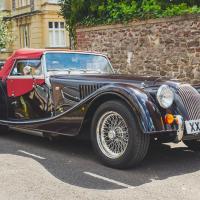
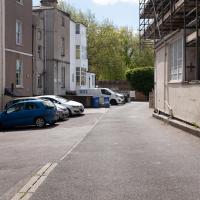
I didn't bother going down here, as it didn't look public and it didn't look interesting. But I figured I'd take a photo as a note-to-self that I hadn't actually missed a road.
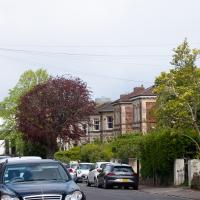
I think I've mentioned the rumour that there used to be a bungalow in a particular spot on Upper Belgrave Road, owned by Bristol Water, so the man running the pump here in Oakfield Road could get line of sight to the standpipe of the reservoir on the downs and stop pumping when it was full to overflowing.
I'm not sure there's any real evidence for this, but it's interesting that the pumping station here has direct line of sight to the structure dead centre in the distance on this photo—the Downs water tower, slap bang next to the reservoir. It wouldn't surprise me if the upper windows of the pumping station would have let you see a reservoir stand pipe...