Tagged: memorial
Easter Monday Gardens and Flowers
18 Apr 2022
I didn't really set out with a theme of flowers and gardens in mind for this walk. I just fancied heading up to Clifton Village to get lunch. As it turned out, though, Spring was springing, so a minor theme emerged as I started off with the graveyard flowers of Hope Chapel and wandered up to see the beginnings of the new wildflower garden at Clifton Hill Meadow.
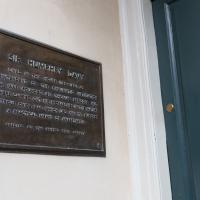
I first heard of Clerihews in the Times crossword: The Clerihew is:
a whimsical, four-line biographical poem invented by Edmund Clerihew Bentley.
The reason it's relevant to this plaque on a house just around the corner from mine is that the very first Clerihew was written about Sir Humphry Davy:
Sir Humphry Davy
Abominated gravy.
He lived in the odium
Of having discovered sodium.
(Sir Humphry is indeed credited with having been the first to isolate sodium, six years after moving out of this house...)
Tags: Bristol Places UK onemilematt united kingdom Hotwells Dowry Square Sir Humphry Davy
Auto-Tags: Building Wood Window Font House Door Commemorative plaque Facade Room Signage History Electric blue Number Rectangle Memorial
Text Recognition Tags: SIR HUMPHRY DAY LIVED IN THE HOUSE METGE IS SUPERINTENDENT OF THE ONERVSIC WARDne: WHICH WAS FOUNDED IY THOMAS HIPPSH US AND HERE CARRIED OF HERALASH INTE KERKU OF NITROUS OXIDE CAL WHICH LED HIM FO REGIS A PRACTICAL IMEANS OF ANALITIE FREEZER THE FRETCH FINS PREET SIR HUMPHRY DAY LIVED IN THE HOUSE METGE IS SUPERINTENDENT OF THE ONERVSIC WARDne : WHICH WAS FOUNDED IY THOMAS HIPPSH US AND HERE CARRIED OF HERALASH INTE KERKU OF NITROUS OXIDE CAL WHICH LED HIM FO REGIS A PRACTICAL IMEANS OF ANALITIE FREEZER THE FRETCH FINS PREET
I've been pretty awful at reading so far this year, apparently averaging about one book per month. That's a far cry from 2019, say, where I got through 41 books in the year. Today's wander was prompted by my rubbish reading, as I needed to go hand back some books to the library, because I'd managed to renew them so many times that I hit the limit on renewals. Oops. Several of them were still unread.
So, off to the Central Library for me, tail between my legs. On the way there I did my best to recreate a historical photo of Dowry Square; while I was in the area I walked under the adjacent Norman arch and poked around behind the Cathedral, and I also had a little diversion to the city centre and came back along the south side of the river, hitting some trouble with the lock gates as I finally crossed the harbour back towards home.
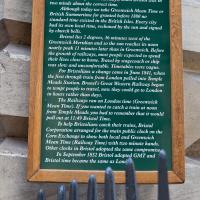
A bit more detail if you fancy it.
Tags: Bristol Places UK onemilematt united kingdom City Centre Saint Nicholas Market St Nicholas Market St. Nicholas Market Corn Street old city
Auto-Tags: Wood Font Wall Landmark Commemorative plaque Tree History Signage Memorial Metal Public utility Interior design Kitchen utensil Idiophone
Text Recognition Tags: THE CORN EXCHANGE CLOCK The clock on this building with an extra minute hand recalls early Victorian days, when Bristol was in two minds about the correct time. Although today we take Greenwich Mean Time or British Summertime for granted before 1880 no standard time existed in the British Isles. Every city had its own local time, reckoned by the sun and signed by church bells. Bristol lies 2 degrees, 36 minutes west of the Greenwich Meridian and so the sun reaches its noon nearly peak 11 minutes later than in Greenwich. Before the growth of railways, most people expected to spend their lives close to home. Travel by stagecoach or ship was slow and uncomfortable. Timetables were vague. For Bristolians a change came in June 1841, when the first through train from London pulled into Temple Meads Station. Brunel's Great Western Railway began to tempt people to travel, now they could go to London in hours rather than days. The Railways ran on London time (Greenwich Mean Time). If you wanted to catch a train at noon from Temple Meads you had to remember that it would pull out at 11:49 Bristol Time. To help Bristolians catch their trains, Bristol Corporation arranged for the main public clock on the Corn Exchange to show both local and Greenwich Mean Time (Railway Time) with two minute hands. Other clocks in Bristol adopted the same compromise, In September 1852 Bristol adopted GMT and Bristol time became the same as Lond THE CORN EXCHANGE CLOCK The clock on this building with an extra minute hand recalls early Victorian days , when Bristol was in two minds about the correct time . Although today we take Greenwich Mean Time or British Summertime for granted before 1880 no standard time existed in the British Isles . Every city had its own local time , reckoned by the sun and signed by church bells . Bristol lies 2 degrees , 36 minutes west of the Greenwich Meridian and so the sun reaches its noon nearly peak 11 minutes later than in Greenwich . Before the growth of railways , most people expected to spend their lives close to home . Travel by stagecoach or ship was slow and uncomfortable . Timetables were vague . For Bristolians a change came in June 1841 , when the first through train from London pulled into Temple Meads Station . Brunel's Great Western Railway began to tempt people to travel , now they could go to London in hours rather than days . The Railways ran on London time ( Greenwich Mean Time ) . If you wanted to catch a train at noon from Temple Meads you had to remember that it would pull out at 11:49 Bristol Time . To help Bristolians catch their trains , Bristol Corporation arranged for the main public clock on the Corn Exchange to show both local and Greenwich Mean Time ( Railway Time ) with two minute hands . Other clocks in Bristol adopted the same compromise , In September 1852 Bristol adopted GMT and Bristol time became the same as Lond