Tagged: sunlight
Outside the Zone
01 Nov 2020
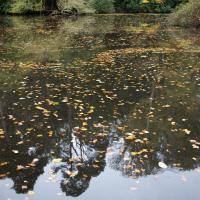
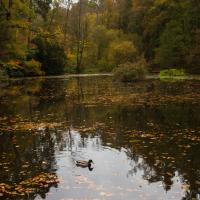
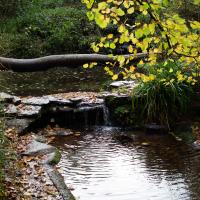
This started as a little local walk with my friend Lisa, but when we randomly met my friends Sarah and Vik at Ashton Court, turned into joining them for a very long wander out to Abbots Leigh Pool. Most of this was well outside my one-mile radius but it was a lovely walk.
Sunday Morning
15 Nov 2020
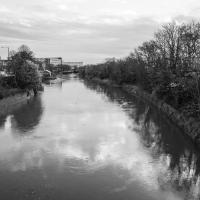
My friend Sarah mentioned the high tide and I managed to drag myself out early, though still a little late. We nearly drowned in torrential rain, but the weather changed quickly and we ended up walking over to Bedminster in sunshine.
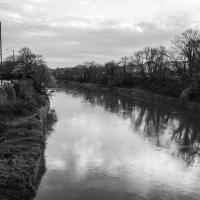
Not a terribly appropriate title, as it's from Monkey Swallows the Universe's Sheffield Shanty, and we're a long way from Sheffield. Still, the mood of that lovely song does rather fit with the morning.
Sunday Afternoon
15 Nov 2020
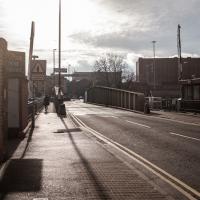
A walk back from Bedminster to my place, mostly down Duckmoor Road, which I found a little dull—probably because it reminded me a little of the suburbs I grew up in on the outskirts of London—then held up slightly by some filming on Ashton Avenue Bridge. They were trying not to let the crowds build up too much in between takes, it seems, so it wasn't a long delay.
Quick Coffee
19 Nov 2020
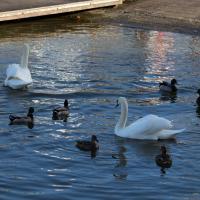
A sunny day, and though I should have probably headed for less well-travelled territory I just headed over to the Marina to grab a flat white from Imagine That's horsebox café.
Bedmo and Ashton Court
21 Nov 2020
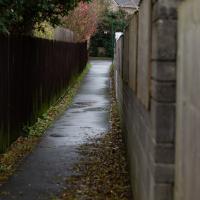
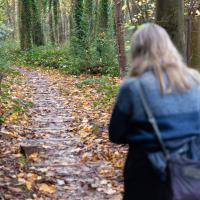
A rather more wide-ranging weekend wander with Sarah and Vik, taking in some mock Tudor bits of Bedmo (I should note that I've subsequently been corrected to "Bemmie", but I'm an outsider and have been calling it "Bedmo" for short for decades...), a chunk of Ashton, a path up Rownham Hill called Dead Badger's Bottom(!), The Ashton Court estate, a bit of the UWE campus at Bower Ashton, and some of the Festival Way path.
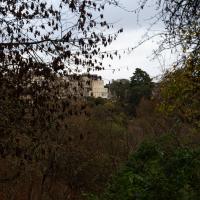
That's the end of Prince's Buildings in Clifton Village you can see peeking out on the far side of the gorge.
I have no idea how anyone managed to smack this street furniture so hard, or what direction they came from to do it. It's a pretty straight 30mph road right there, and this is only one side of the dual carriageway. Never seen so much as a near-miss there.
Avoiding the Accounts
26 Nov 2020
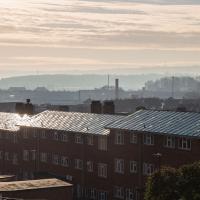
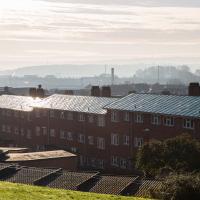
I took the day off my day job to do my accounts—or at least do enough bookkeeping to send them to my accountant. I hate doing the books. I woke up late, tired and with a headache and decided to bunk off for a walk around Cliftonwood, Clifton Village and Clifton instead, taking in a couple of good coffees along the way. Thanks, Foliage Café, and Twelve for the flat whites.
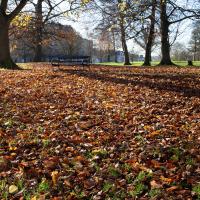
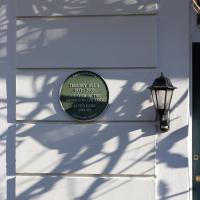
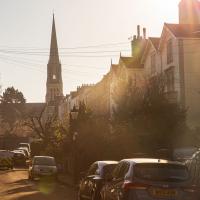
The Long Lunchtime at the End of the World
27 Nov 2020
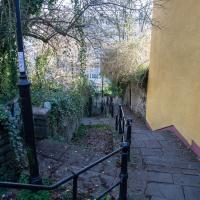
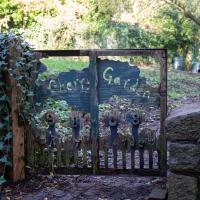
I took an extra-long break at lunchtime today as I'd taken the day off my normal day-job to do the accounts for my previous side-job, which is still generating paperwork, though not much in the way of money. This took me through some undiscovered bits of Cliftonwood, including Worlds End Lane, which unexpectedly leads to White Hart Steps. That's certainly not where I expected the end of the world to lead to...
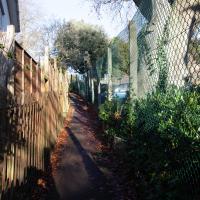
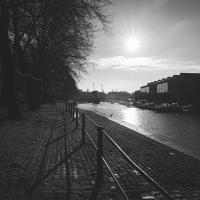
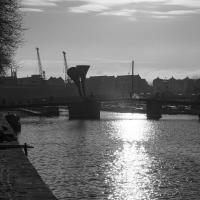
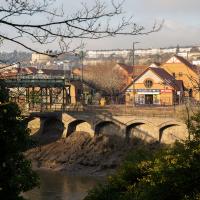
From what I can work out, the name of Vauxhall Bridge may be derived from the Vauxhall Pleasure Gardens that were, for a while, somewhere in the Dowry Square vicinity, themselves named for the famous London original (as mentioned in Fanny Burney's Evelina, among other books) Not sure what the through line is, though, as the pleasure gardens in Bristol weren't that long-lived, and of course the New Cut is significantly newer, so it's not like there would have been a bridge here back then.
Ten O'Clock Shop and Can't Dance Coffee
30 Nov 2020
I had to return a faulty AirPod Pro to Apple (there's a first-world problem!) so I just took a quick trip up the hill to the nearest UPS drop-off point, The Ten O'Clock Shop, which is famously open until 11pm. Unfortunately it's a fairly cramped little place and neither of the staff were wearing masks, so I made it a very quick drop indeed and got out of there as quickly as I could.
I grabbed a quick coffee from Can't Dance, a stall that's—as of yesterday—in a tiny converted cargo container on the edge of Victoria Square; up until this week they were running from a little trike parked in the same place. Hopefully the new premises will let them see out the winter without worrying quite so much about the weather.
I tried to fit in a few extra streets from the surrounding area on my there and back, but that was basically my wander today: a quick little shopping trip.
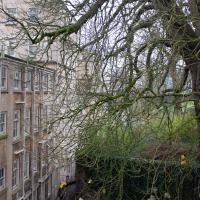
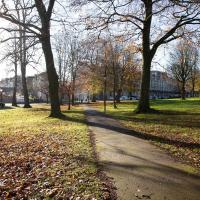
It's a pretty impressive tree, as is the fact that a giant building like Manor Hall is so unobtrusive that you could wander past it at this level without ever paying it much attention. I did, for years.
Quick Hopper Coffee
11 Dec 2020
No new streets today—just out for a quick coffee from Hopper in Greville Smyth. Got caught in a bit of a rainstorm on the way out, but it didn't last long enough to bother me much.