Tagged: leisure
Library, Bookshop, Coffee
03 Jul 2021
I was headed into town to return RA Gilbert's biography of AE Waite to the library and along the way I noticed that Dreadnought had finished their refurbishment, but wouldn't be open until midday. That left me some time to kill, so I bimbled around the old St Augustine's/Gaunt's area for a while, then headed up Park Street for a coffee and a snack to eat on Brandon Hill before heading home the way I'd came so I could pop in and buy a pamphlet on the Hot Well I'd been interested in for a while.
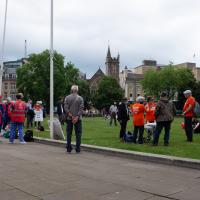
A protest was starting to form on College Green on my way past. As well as this one, there was also a Kill the Bill march that closed the M32 followed by "delirious" England fans having a mass celebration in the city centre, so I'm glad I wandered home pretty early. I wouldn't fancy being the Bristol Waste cleaning team as I write this, on Sunday morning...
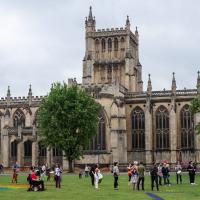
When a samba band turns up, I leave. Several of my friends have greatly enjoyed performing in samba bands, and I find virtually everything about them makes me want to run in the opposite direction.
A Cliftonwood Revisit with Lisa
10 Jul 2021
Lisa had a couple of hours to spare before going up in a hot air balloon (exciting!) so we went for a quick local walk, revisiting a bit of Cliftonwood we've seen before, exploring the secret garden I'd visited before that I thought she'd enjoy (I didn't take any new photos there) and then pushing on to another garden, Cherry Garden. Last time we passed this way, I'd noticed the gate, but we hadn't gone in as I'd assumed it was private. I'd since found it on CHIS's list of communal gardens in Clifton, so I wanted to have a look inside this time, and try to figure out whether it was private-communal or public, and possibly Council-owned, like several of the other gardens in Clifton.
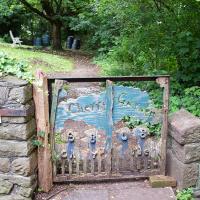
Someone clearly put some good work in on the gate, but thirteen years of weather has taken its toll.
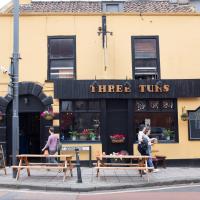
Seemed to be open and busy, which is good. It's always been a good, friendly pub, but I understand it's been on the verge of closure a couple of times recently.
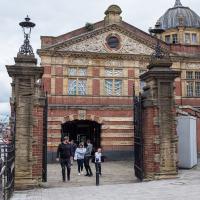
...with the end of "Jacobethan" Transit Shed "E". The end facing and baroque tower were apparently created to make looking this way from the centre a bit more pleasant; it's fairly plain further down. This is a smidge outside my one mile, but I was interested in the gates, having spotted them in a historic photo in one of my research books—see next pic.
There are some other pics from earlier times on the Watershed's web site, including one from 1981, not long before the E and W sheds were transformed into the complex that houses the excellent Watershed Cinema, their Cafe Bar, the Pervasive Media Studio and other modern features.
Autonomous Vehicle
14 Jul 2021
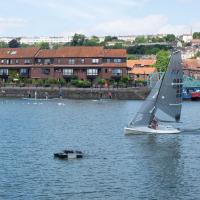
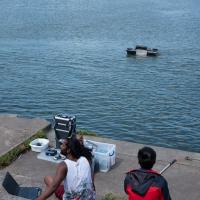
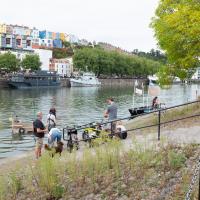
As it turned out, I didn't manage to get a coffee on my lunchtime coffee trip, as Imagine That were briefly shut down by a Covid-19 exposure notification (false alarm, it seems.) On the plus side, my trip was made worthwhile by spotting a couple of people from the University of Bath Mechanical Engineering Department testing an autonomous body-finding catamaran, which isn't a phrase I was ever expecting to write...
Pastures New!
17 Jul 2021
Okay, not much in the way of actual pasture to be had in Bedminster these days, like most of Bristol, but I did take advantage of the current rather toasty weather in Bristol to go and sit under a tree in Greville Smyth Park to read a book for a while before firing up the GPS and taking a little detour around some back streets of Ashton and Bedminster rather than going straight to Coffee #1 for an espresso frappé. This is the first walk in a while where I've actually crossed off an entire new street (the frankly unexciting Carrington Road) as well as exploring a couple of back alleys, just because they were there, really. Along the way I spotted a few examples of graffiti of various qualities, including a live work-in-progress by SNUB23 on Ashton Road and the finished Six Sisters project on North Street.
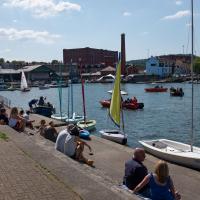
On a gorgeous summer's Saturday like this the steps by the Cottage pub would normally have been absolutely rammed with people drinking. I suppose there's still plenty of social distancing going on. Doesn't look like anyone's got a drink, either, so perhaps the Cottage have had to stop letting people take beer out here for the duration? I did pass their outside bar a minute later, though so perhaps not.
I'm so un-used to drinking now that I'd probably be laid out by a single beer in the sunshine. My Covid months have been largely dry.
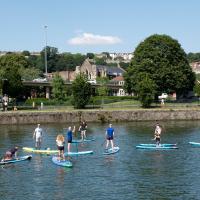
I can barely stand up from kneeling without falling over on my living room floor; I doubt I'd manage it on a paddleboard.
A Journey to the Far East
25 Jul 2021
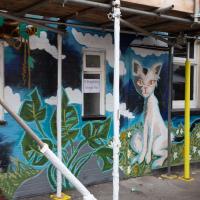
The far east of the intersection of my one-mile radius and Bedminster, anyway. I was feeling a bit tired this morning, so I motivated myself to get out of the door by imagining one of Mokoko's almond croissants. That got me on my way, and I wandered across to Bedminster, through Greville Smyth Park, along most of the length of North Street (looking out for new Upfest 75-pieces-in-75-days artwork as I went) and then onto some new roads at the far end.
I only wanted to knock a few streets off my "to do" list, but by the time I'd diverted here and there to check out various bits of graffiti and other attractions and come back via the aforementioned purveyors of Bristol's finest croissants, I'd walked 7.4km. Not bad for someone who woke up tired, and at least I've done something with my day. I'm very glad the weather broke (we had tremendous thunderstorms yesterday), even if some of the pictures might've looked better with a blue sky. I was getting fed up with walking around in 29°C heat...
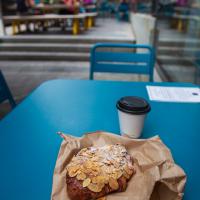
The whole wander was about 7.4km, so I feel I probably worked off the calories of a croissant and a flat white.
Green Squares and Secret Gardens
31 Jul 2021
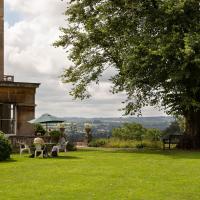
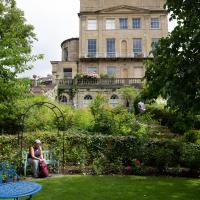
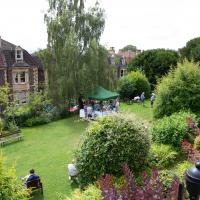
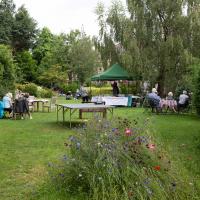
At the end of July I went to have a look around some of the private gardens opened up by the annual Green Squares and Secret Gardens event. Sadly it was compressed into a single day this year, for various Covid-related reasons, it seems, so I didn't get to poke around too many places. I went to:
- A talk by the oldest resident of Victoria Square
- The St Vincent's Rocks Hotel garden
- The Paragon garden
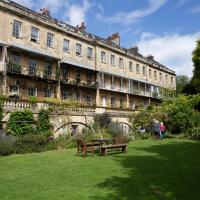
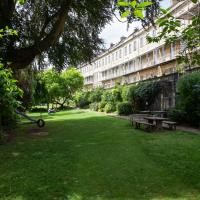
- Cornwallis Crescent gardens, both east and west
- The Polygon garden
And snapped a few things in between, too. It was a lovely day—a bit too hot, if anything—and it was interesting to get into a few places I'd only ever seen from the outside, especially The Paragon and Cornwallis gardens, which are the least visible to passing strangers of all of them.
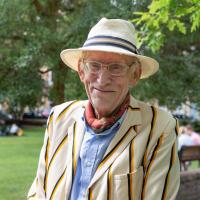
Kicked off my Clifton "secret gardens" visit by attending a talk by Victoria Square's "oldest resident", who is 95 and has lived there all his life. He did mention his family name in passing, but I've got a memory like a sieve, and his name's not on the event details. Ah well.
He really brought the square to life, with memories of the children playing in the square, making their way between the two halves using the tunnel—which I learned also had enough room to store the gardener's equipment, so must have been bigger than I thought!—and with the oldest child having a garden key hanging around their neck on a bit of string, ready to use when each family used a distinctive sound—anything from a whistle to a cowbell—to call the kids back home. He also touched on delivery men, including horsedrawn milk carts that would fill maids' jusgs from their churns, and the Walls ice cream boy who would visit houses who had hung the distinctive "W" sign in their windows on a Sunday, and gave many other amazing details. I really wish I'd recorded the event.
Among other new tidbits I can recall:
- Number 4 was blown to smithereens during WWII, hit so badly by a German bomb that bodies were blown into Mortimer Road. Grim.
- The "pinch point" made by the railings below the Arch House were motivated by a battle between the residents, and the Council and Merchant Venturers (who basically built/owned the Square, hence the adjacent Merchants Road) over a road that was planned to run diagonally through the square (as actually happened with Queen Square). The pinch point was constructed to preserve the maximum width of the existing right of way through the corner, making it too narrow for cars.
- The Victora Square Hotel used to be the vicarage for St Andrew's Church. Our Oldest Resident attended Sunday School there.
- The old [Church/Church Hall](htt
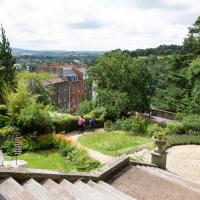
From one crescent to another. Here I peer over the railings for a preview of Royal York Crescent garden.
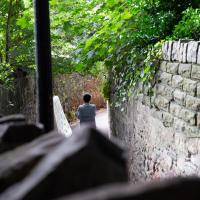
Aforementioned tall walls to the alleyway above the Polygon. Nice of someone to dump a mattress there. Sigh.
A Long Wander Of Miscellany and Magick
08 Aug 2021
This was a wide-ranging wander. I started off crossing the river to Bedminster, to walk a single little cul-de-sac, Hardy Avenue, that I'd managed to miss on at least one previous walk. Then, pausing only to explore a few back alleyways, I headed for a few destinations related mostly by the Hughes family, who I've been researching a little as part of background for a possible novel, as several of them were involved in the Stella Matutina.
However, mostly it's the artistic side of the family I wanted to explore today, as that's where most of their public history lies (as you might expect, there's often not much in the public record about the workings of an occult organisation.) First I visited College Green, where the façade of the Catch 22 Fish & Chip shop still bears the work of Catherine Edith Hughes. Then I wandered up to the top of Park Street to pop into the Clifton Arts Club's annual exhibition, as Catherine, her half-brother Donald, his wife Hope and at least two other Hugheses were members. Donald was chairman for 40 solid years; Hope was Secretary for eight, and Ellard and Margaret Hughes, two more Hughes siblings, were members along with Catherine.
Finally I walked home with a small diversion to Berkeley Square, to confirm the location of Donald Hughes's house by checking for a particular plaque by the front door.
I must admit I'm not entirely sure where all this research is really leading me, but I'm finding it quite interesting to bump across the faint lines of history that link the Hermetic Order of the Golden Dawn, founded in 1888, to modern, quotidian Bristol.
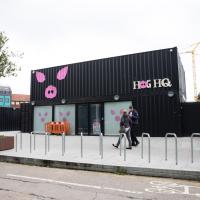
The logo tells me that this is related to Pigsty, the pig-related food place on the end of Cargo 1. And apparently I'm right—this is The Jolly Hog HQ, and The Jolly Hog—butchers, and sausage specialists—own and run the Pigsty. I hadn't realised that they were such a big business.
Museum of the Moon, and a Bit of Redland
21 Aug 2021
Lisa and I mostly went out to have a look at Luke Jerram's Museum of the Moon as its tour hit Bristol Cathedral—I missed it when it was previously in town, at Wills Hall, I think—but we also took a trek up to Redland. Lisa's kind enough to indulge my strange current fascination with the Edwardian eccentrics that made up the Stella Matutina, so we swung by a couple of places with a vague connection to the Bristol branch of the organisation. Well, it was good walking, anyway...
As a stunning bonus, one of the picture's descriptions has more information than you'd probably want on the Bristol Port Railway and Pier's Clifton Extension Railway line, but I did happen to coincidentally write up this wander after reading about the extension line during my lunch hour at work today. It's a thrilling life, I tell you...
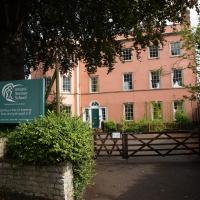
I don't know if there's any connection between the Bristol Hermes Temple and the Bristol Steiner School specifically, but I know that at least one of the Temple Chiefs met Rudolf Steiner and became quite enamoured of anthroposophy, so it's interesting that the school is so close to where Catherine Hughes, one of the first three chiefs, used to live, just down the road from here.
A Morning of Research and a Cafe in a Castle
25 Sep 2021
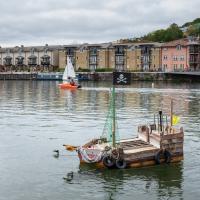
I needed to pop to the library, as they'd kindly dug a book out of the reserve store at the B Bond warehouse for me and emailed me to let me know it was ready. So, I took a little trip to town, straight down the Hotwell Road, and spent a few hours reading before stretching my legs with a walk to a new cafe in the actual castle (or remnants thereof, anyway) of Castle Park, before heading back home down the other side of the harbour. As well as books and coffee, I bumped into a remote-controlled pirate ship, which isn't something you see every day, even in Bristol.
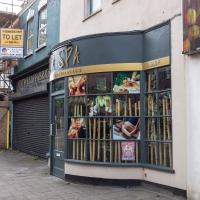
It's nice to see a new business open up on this stretch of the Hotwell Road. Since Asia Channel disappeared (and took with it my favourite local source of crispy beef) and the Hotwells Pine folks retired, it's all been looking a bit tatty.
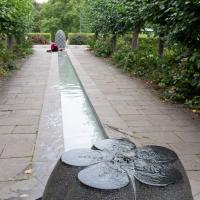
I like this little watery installation at Castle Park, so I try to cut through here if it's on my way.
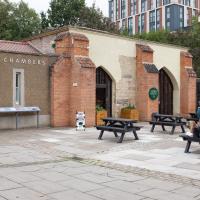
The chambers were apparently once the entrance to the castle's great hall. Historic England has this section of the castle at 13-14th century
I was interested to see it, but a little underwhelmed, if I'm honest. A fairly bland interior and a perfectly adequate flat white—not much "wow" factor.
Docks Heritage Weekend Day One
09 Oct 2021
I could spend a lot of time at the Docks Heritage Weekend, poking my nose into industrial places along the harbourside that are usually closed off, but throw open their doors once a year to show off a bit of the backstage area of Bristol's floating harbour. In fact, I warn you: the next wander is a long one, and will have quite a few photos.
However, for today's wander, on the Saturday, my friend Lisa needed a shorter walk than our usual long rambles, as she's recovering from an operation and still a little under the weather, so we just wandered into town for some food and back, with me making mental notes of the places I wanted to come back to on the Sunday... We walked through Underfall Yard, along to the L Shed (this is the warehouse next to the M Shed museum, where they still have the kind of fun old industrial stuff that used to be crammed into the M Shed's predecessor, the old Industrial Museum), through the street food market in town to Ahh Toots for cake and then back home. So, still quite a walk, but no hills and not so much of Lisa having to hang around waiting for me to fool around taking photos as usual, at least...
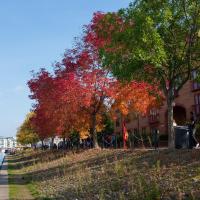
They're among the first to show autumn colour in Bristol, so by early October they're in full effect.