Tagged: symmetry
Gardens and Cottages
17 Dec 2020
I think the cute little Duncan Cottage was my favourite bit of this wander up the hill to get coffee and a pain-au-raisin from Twelve, though I did enjoy gently musing on the public and private gardens of Clifton, inspired by a closer pass than usual to Royal York Crescent's garden.
I managed absent-mindedly to clear my GPS track before saving it, so this hand-created track-log may cause me problems in the future. I suppose we'll see.
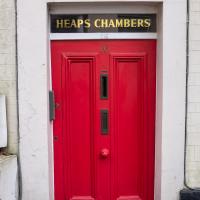
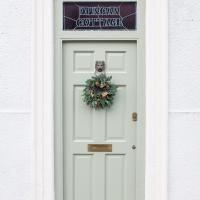
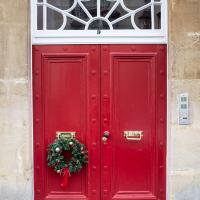
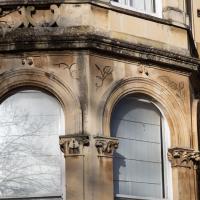
Ususally the cobweb-patterened ones seem to be proper fan-shaped fanlights in Clfiton, so this rectangle caught my eye.
To Bedminster
19 Dec 2020
Despite a mild headache, I enjoyed this wander over to Bedminster. The light was lovely, especially toward the end. I always enjoy the view down the streets south of North Street at this time of day/year, with the distant hills backdropping the Victorian terraces.
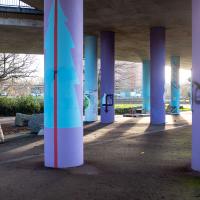
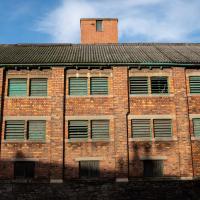
Sunday Bedmo
20 Dec 2020
A long meander around bits of Bedminster, from the river to the north to Winterstoke Road to the south, taking a few roads I've seen before, and a few I haven't. The Christmas decorations were an extra bonus.
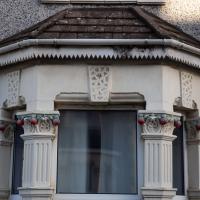
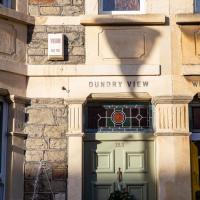
This is the second house called DUNDRY VIEW I've found on my wanders. The first is on Cornwallis Avenue, much nearer to me.
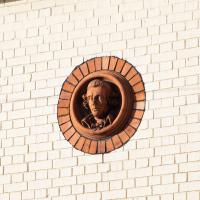
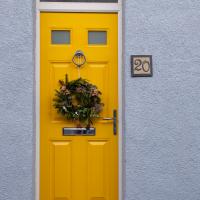
Solstice Rain
21 Dec 2020
Despite the weather, Sarah and Vik and I wandered around Ashton Court a bit as the sun rose. Not that you could really tell. Sadly, the bit we wanted to watch the sunrise from was closed, because people hadn't been treating the deer with appropriate respect. Ah well, at least it was some exercise.
On Christmas Day in the Morning
25 Dec 2020
A Christmas Day walk with my friends Sarah and Vik, taking in the shipwrecked Shadow and a hilly chunk of Leigh Woods.
I went to have a peep at the giant sinkhole that's opened up in Canynge Square—ironically, having recently discovered the gardens were public I'd had the (triangular!) square on my list to re-visit for a few days, but now there's no entrance to the gardens due to the danger. The area was well fenced-off for safety, but I tried to get a couple of photos from behind the barriers.
I also explored the area around Camp Road, an real melange of architectures, one of the most mixed-up areas I've seen in Clifton, in fact, and confirmed my friend Claire's suspicion that an earlier snap of a sign from Manilla Road was in fact for a fire hydrant. Nice.
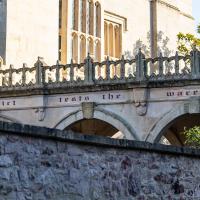
Nobody knows much about this motto on the side of the covered walkway here.
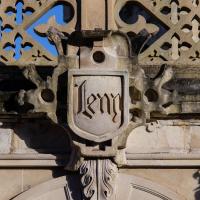
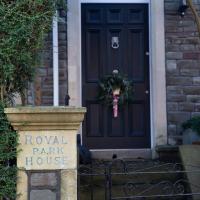
As a Lovecraft fan, I had of course read this as "Leng", but it's actually "Leny". LENY AND ATTACHED GATEWAY AND FRONT GARDEN WALLS AND RAILINGS
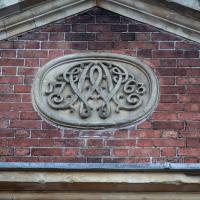
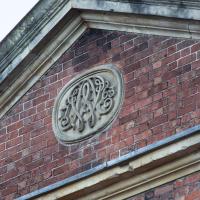
Historically, Albermarle Row was spelled "Albemarle", after George Monck, 1st Duke of Albemarle who was arrested and imprisoned in Bristol in 1642 when he refused to swear an oath supporting the Royalists during the Civil War. Most (but not all) of its street signs are now spelled "Albermarle", apparently after a mistake was perpetuated by a typo in a Council database a while back, and the spelling has spread to Google Maps and the Royal Mail database.
Other incorrect information on the internet about Albe(r)marle Row includes Historic England's listing, which says that this tympanum has "Webb's monogram with 1762."
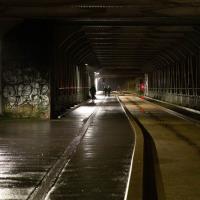
My historical research took a wander underground recently, partly inspired by the Canynge Square sinkhole, partly by St Vincent's (Ghyston's) cave and its tunnel to the Observatory, and I was surprised to find that there might be an intact tunnel from the Bristol Port Railway and Pier still just sitting there under Bridge Valley Road. A quick search turned up this recent video by an intrepid explorer, so it's definitely still there.
I went looking for the entrances today, and definitely found the south entrance, at the start of the Bridge Valley Path, the footpath that starts with steps at the bottom of Bridge Valley Road. It's easy to miss if you're not looking for it. I think I've figured out where the north entrance is, too, but it was getting dark at that stage and the Portway was still busy enough that crossing the road was still the normal nuisance, so I thought I'd leave further explorations for another day.
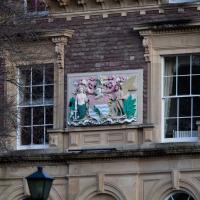
A fragment from Horace's Odes: "not taught to suffer poverty."
Wikipedia says that the defunct Bristol magazine Venue once did a bit of investigative journalism on them:
Venue claimed that the Merchant Venturers control 12 charities and 40 trust funds, and also a private unlimited company, SMV Investments, that has major investments in defence contracting, tobacco, genetically modified agriculture and the petroleum industry. Merchant Venturers serve on the boards of many local charitable and cultural organisations, and are guaranteed seats on the University of Bristol Court and the Downs Committee. It quotes Paul Burton of the University's School of Policy Studies as saying, "they exert quite a bit of influence and we, the people of Bristol, don't know much about them and can't hold them to account"
A Promenade on New Year's Day
01 Jan 2021
I wandered along the gorge today and found the entrance to the disused Portnalls Number 1 railway tunnel of the Bristol Port Railway and Pier. The door was unlocked, but as soon as I opened it I felt a sense of current habitation and decided discretion was the best option. There's a lot of people homeless in Bristol at the moment, and they don't need disturbing. For the same reason, I've omitted posting some pictures of a little encampment somewhat off the beaten track of the new Zig Zag, where I reversed direction as soon as I realised I'd come across a current habitation of some sort.
Up in Clifton it took me a little while to work out that the picture of the Promenade I was trying to reproduce was taken from the viewpoint I'd thought, it was just that the Alderman's fountain was moved from the top of Bridge Valley Road to the other side of the promenade in 1987, so trying to use it as my initial landmark wasn't very helpful!
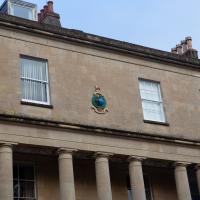
Finally I swung past the Society of Merchant Venturers, who presumably still own most of Clifton, having bought the entire manor, including Clifton Down, in 1676, and I imagine aren't in much danger of running out of money. That's true to their motto: indocilis pauperiem pati is apparently from the Odes of Horace, and translates as "will not learn to endure poverty"...
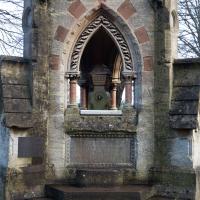
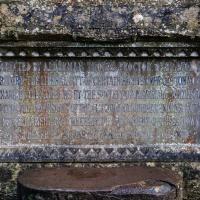
Erected by Alderman Thomas Proctor of Bristol to record the liberal gift of certain rights over clifton down made to the citizens by the Society of Merchant Venturers under the provisions of the Clifton and Durdham Downs Acts of Parliament 1861 whereby the enjoyment of these Downs is preserved to the citizens of Bristol for ever.
They get about, these Merchant Venturers.
Prince's Lane
06 Jan 2021
The International Grotto Directory website says:
Prince’s Lane might have been one of the original ancient tracks from Hotwells to Clifton, in the Avon Gorge. The site later formed part of Rownham Woods which comprised some thirteen acres. By the end of the 18th century and the early 19th century, the Society of Merchant Venturers granted to Samuel Powell a building lease, for The Colonnade (1786), St. Vincent’s Parade (1790), Prince’s Buildings (1796), and Rock House. Rock House is generally considered to be the oldest surviving building associated with the Hotwell (see Chapter 20). John Power conveyed part of the woods to William Watts for the construction of Windsor Terrace (1790-1808).
The above development of the Avon Gorge cleared Rownham Woods, and created a triangle of land on the north side of the gorge, that became enclosed as a result, by Mansion Houses, whose garden walls all entered on to Prince’s Lane. The Lane started at the bottom of the gorge, at the base rock of Windsor Terrace, and came out half way up Sion Hill. It is clearly shown as a public footpath, dotted with trees, in Ashmead’s map of 1828. Some of the gardens were quite steep in parts and therefore, had to be terraced, because of the gradient of the gorge.
I've passed Prince's Lane literally thousands of times in my life, every time I've walked past the Avon Gorge Hotel, which itself started (in 1898) as the Grand Clifton Spa and Hydropathic Institution and pumped water up from the Hot Well for its hydropathic treatments. I've never actually ventured down it until today, or at least nothing like as far down it as I did this afternoon—I may have poked my head around the back of the hotel to see the original pump rooms at some point in the past.
This was a great wander, though it does very much feel like a private road, and frankly I may have been pushing my luck a bit by winding my way between the astoundingly big back gardens of the houses of some presumably very wealthy Cliftonites, but I felt vaguely justified in exploring the history of one of the oldest footpaths in my part of Bristol...
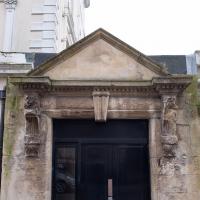
This building is 1894, but commemorates the original Hot Well House down in actual Hotwells, built in 1694.
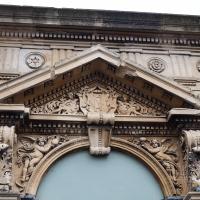
"Built 1894, designed by Philip Monro for Sir George Newnes, the promoter of the scheme", hence the GN in the pediment. He also funded the Clifton Rocks Railway, apparently.
Mirror Maze
10 Jan 2021
Went for a wander with my friend Lisa—the current lockdown rules seem to be that one local walk for exercise per day with a maximum of one person not in one's "bubble" is fine—up to the University of Bristol area right at the edge of my one-mile perimeter to see the Jeppe Hein Mirror Maze, among other things. On the way we mused about Merchant Venturers, the slave and tobacco trades, and dating in the time of Covid.
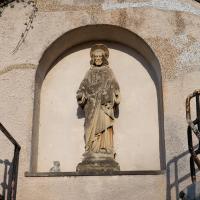
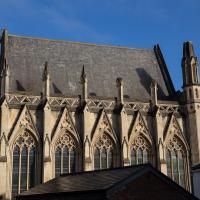
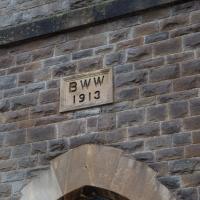
Bristol Water Works, I'm thinking. This grid square of Clifton is basically the reservoir and waterworks, both historic and modern.
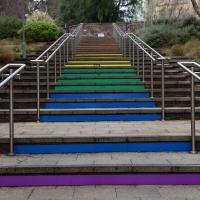
The Cantock Steps annoyed me from the get-go. Walking down them it was apparently they'd not been designed by anyone with an anounce of anthropometric sense, and it's pleasant to find that someone else hates them enough for the same reason that they wrote this diatribe about them.