Tagged: vehicle
Gothic Revival
08 Dec 2020
I had a chance to dash down a few new roads during my lunchtime jaunt today. My favourite feature was 7 Wetherell Place, at the corner of Frederick Place, one street behind the University of Bristol Students' Union building. Apparently I'm a sucker for gothic revival, which seems appropriate for this little project, which is reviving my interest in the local area.
The listing starts "1860. By JA Hansom. For himself".
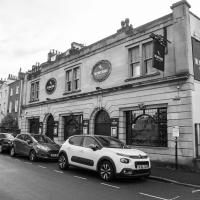
I think when I first drank here, it was called The Richmond Spring. I should've taken more advantage of their comedy evening before Covid came along.
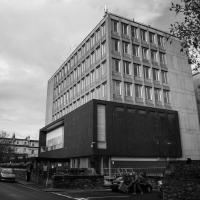
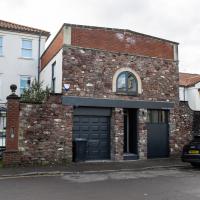
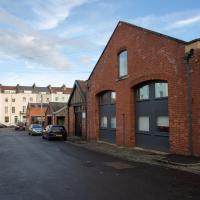
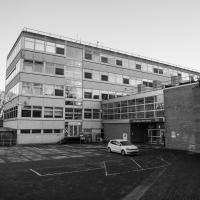
This is one of those streets you don't really go down unless you have a reason, which is why I always forget there's a busy garage right here. The nearest building seems to be offices, but I don't know if they're connected to the garage.
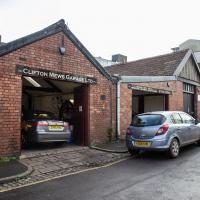
From the little white sign you can't read, they seem to be linked in some way to Automotive Solutions Ltd, who used to occupy the E Edwards building in Alma Vale Road I took a photo of at the weekend.
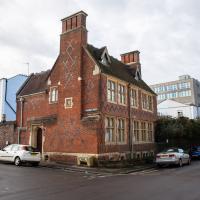
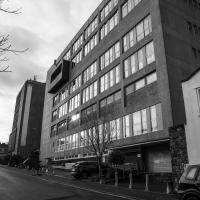
The back of the Union. I've been inside a few times — I had a summer pass to the swimming pool for a while, and I saw Alabama 3 in the Anson Rooms once.
Nowhere New
10 Dec 2020
I didn't have any time to find a new place to go today, so I'm treading old ground here. I did buy a tub of duck food from Amazon last week and today I remembered to take a little bagful of it with me on my trip to Imagine That coffee, and spent a few minutes feeding the marina slipway ducks on the way back. This is a Bristol tradition I've seen other people doing many times, but never tried myself. It was quite genteel until the seagulls cottoned on, then it became something of a brawl.
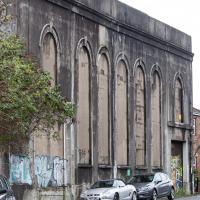
"A dramatic modern space behind a conventional facade; The Underfall Yard electricity substation on Avon Crescent was begun in 1905. It was probably the first reinforced concrete building in the city, and one of the earliest in the UK." — via KYPBristol
Bedminster, Ashton, Ashton Court sunset walk
12 Dec 2020
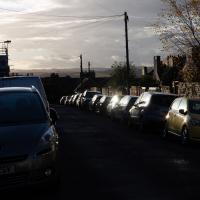
A walk with Sarah focusing on Ashton and the surrounds, taken on a day with really nice light around sunset. Just what I needed.
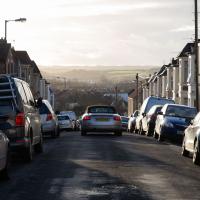
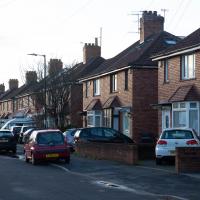
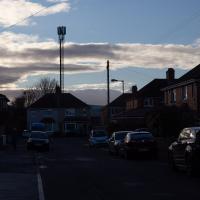
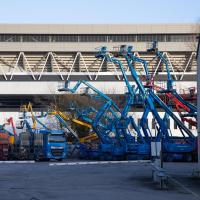
Fury as huge phone mast is erected without planning permission just a few feet from residents' homes, according to the Evening Post.
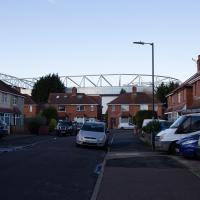
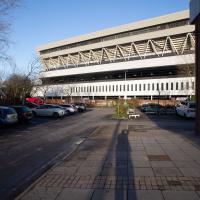
Rainy Clifton
13 Dec 2020
A long walk around Cliftonwood and Clifton with my friend Lisa, taking in some of the 12 Days of Christmas display at Queens Parade, picking up a take-away coffee from Pinkmans of Park Street, and poking our heads up against the glass of SS Peter and Paul Catholic Cathedral.
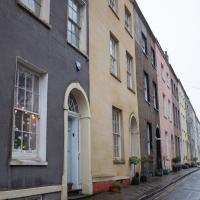
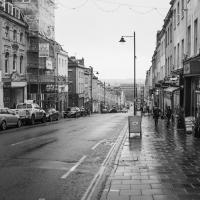
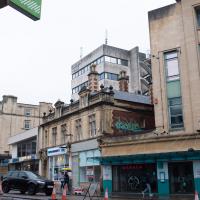
There's a lot of architecture going on at the top of Park Street. I'm not sure it's a conversation so much as a shouting match.
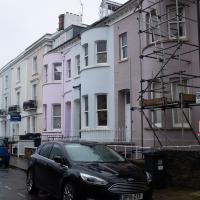
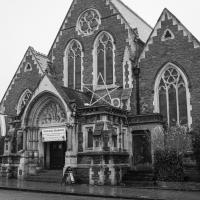
Apparently the tympanum depicts Saint Peter, teaching. You'd have thought they might've gone for Saint Paul...
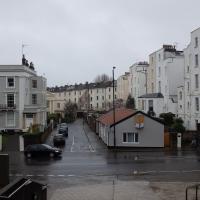
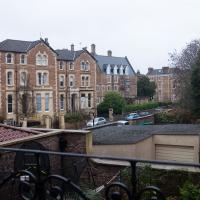
Last time I visited (the triangular!) Canynge Square, I didn't venture up this corner as there was a bin lorry doing its job and I didn't want to get in the way. Today Lisa and I walked out to the very end, which pokes out onto a view of Percival Road.
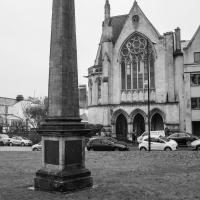
I did make out the names Pitt and Chatham on this obelisk, but a lot of it was in Latin and I coudln't quite work out what it was about. Apparently it was created to honour William Pitt (the Elder), who I didn't know was Earl of Chatham, by Sir William Draper, who was living in nearby Manilla Hall. When Manilla Hall was demolished and replaced by Manilla Road, the obelisk was moved here.
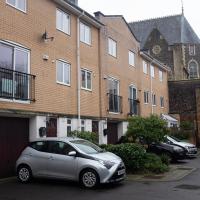
Cliftonwood and Clifton Village Lunchtime Stroll
14 Dec 2020
The lunchtime walk has been feeling a bit of a chore lately, especially as I only have an hour and have to keep a mental watch out for my "bingo" point or risk being late back. Today I went for a deliberately brief local walk and got home in time to have lunch on my sofa rather than while I was back at work.
It's interesting filling in the gaps in my Clifton Village knowledge, especially starting to "see" the bits I can't see, the negative spaces. The size of both Fosseway Court and the Bishop's House gardens (check out the latter on Google Maps for an idea) are both something I've noticed by just getting to know the areas around them. I may also have to walk into the driveway of the very well-hidden Nuffield hospital to get an idea of how big it is.
None of those are anything compared to the trick of hiding the gargantuan public school that is Queen Elizabeth's Hospital so well that I keep on forgetting it's there, until a glimpse of it from somewhere like Lower Clifton Hill reminds me about it, of course...
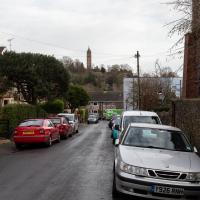
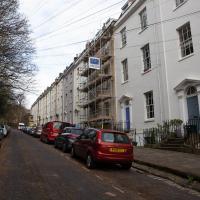
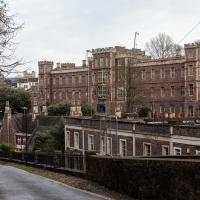
Queen Elizabeth's Hospital is not, of course, a hospital. That would be too simple. Founded (like Christ's Hospital) in the 16th century—1586 to be precise—it was and remains an independent school.
I'm always surprised how easy it is not to notice this giant grand building, set back and screened off by a tall wall along most of its border along Jacobs Wells Road, and backing onto the park at Brandon Hill.
Drained Basin
15 Dec 2020
On the down side, I got to Bedminster and found long enough queues at both Mark's Bread and Hopper Coffee that I gave up on the idea of buying a drink and a pasty (from the former) or a mince pie flapjack (from the latter.) On the up side, I got to take some pictures of Cumberland Basin being drained and sluiced out, part of its regular maintenance cycle.
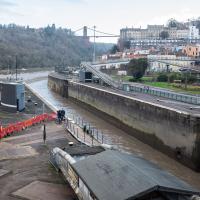
As a regular walker here, I just head for the spiral staircase up to the Plimsoll Bridge and cross that way if both lock gates are open (though of course you still have to wait if there's a bridge swing, too.) However, the spiral staircases are narrow, tall and annoying if you have to carry a bike. Here the cyclist is chatting to the lock operator, presumably finding out how long he might have to wait.
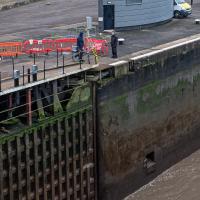
Just looking at this scares me a little. In an episode of Columbo featuring a flying instructor (I think), someone asks the scruffy detective if he's scared of heights. "I don't even like being this tall," he replies, and I can sympathise.
Clifton Hill
23 Nov 2020
I've just got to the bit in Fanny Burney's Evelina where our eponymous heroine visit a grand house on Clifton Hill during her stay in Hotwells. It was interesting to wonder if it could be any of the places I passed in my lunchtime jaunt, which took in both Clifton Hill and Lower Clifton Hill.
From Evelina (1778):
"Yes, Ma'am; his Lordship is coming with her. I have had certain information. They are to be at the Honourable Mrs. Beaumont's. She is a relation of my Lord's, and has a very fine house upon Clifton Hill."
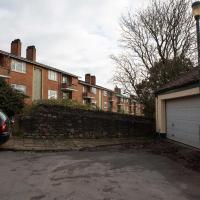
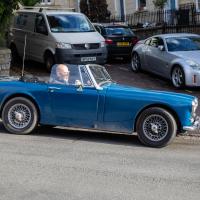
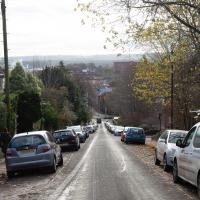
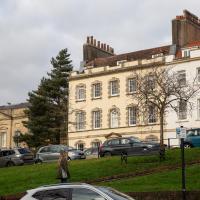
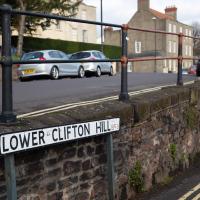
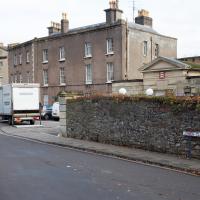
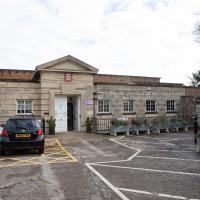
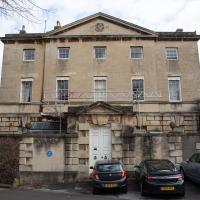
"From 1851 until 1877 it was occupied by the family of John Addington Symonds (1840-93), Bristol’s most important gay historical figure." — OutStoriesBristol
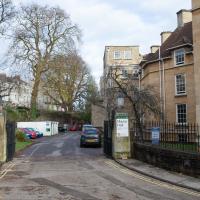

Gardens and Cottages
17 Dec 2020
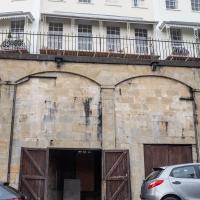
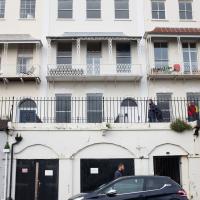
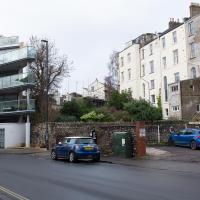
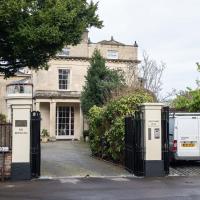
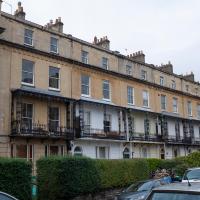
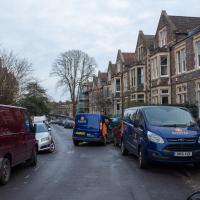
I think the cute little Duncan Cottage was my favourite bit of this wander up the hill to get coffee and a pain-au-raisin from Twelve, though I did enjoy gently musing on the public and private gardens of Clifton, inspired by a closer pass than usual to Royal York Crescent's garden.
I managed absent-mindedly to clear my GPS track before saving it, so this hand-created track-log may cause me problems in the future. I suppose we'll see.
Coffee
18 Dec 2020
Another work lunchtime, another expedition to get coffee, but not down any new road. The walk around the haroubourside was nicer than usual, though, possibly because the day was dull and rainy, which stopped the most boring bit of the walk also being crowded.
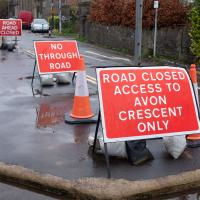
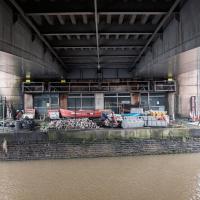
The most boring bit of the walk is the bit where you can't go through Underfall Yard, closed due to Covid-19, so have to divert through Avon Crescent to the bit of Cumberland Road where there's just a narrow pavement next to a high wall on the one side, and the railings next to the river, where there's no pavement so you generally don't get close enough to it to see much. There would be another option, the Chocolate Path, if it hadn't fallen into the river last year, but the repair work following that landslip is currently making things even worse by forcing a stretch of Cumberland Road into a traffic-light-controlled single-lane system. This means that the narrow pavement is hard to escape as traffic could be coming past right next to you in either direction.
So, narrow, boring, plus it's not just my natural introversion that's causing me not to want to be forced into close contact with other people at the moment, of course. Maybe this will become my go-to coffee place on rainy days, just because there are fewer people on the streets.
Only a couple of photos today, and none of the boring bit, because I didn't know I was going to want to talk about it here until I got home!
To Bedminster
19 Dec 2020
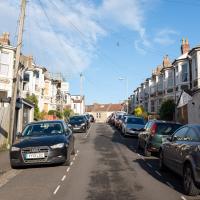
Despite a mild headache, I enjoyed this wander over to Bedminster. The light was lovely, especially toward the end. I always enjoy the view down the streets south of North Street at this time of day/year, with the distant hills backdropping the Victorian terraces.