Tagged: concrete
Clifton Village Mini Wander
20 Nov 2020
Just a quick wander up the hill to get a flat white from Twelve. I really enjoyed the spooky mannequin (?) in the window.
Bedmo and Ashton Court
21 Nov 2020
A rather more wide-ranging weekend wander with Sarah and Vik, taking in some mock Tudor bits of Bedmo (I should note that I've subsequently been corrected to "Bemmie", but I'm an outsider and have been calling it "Bedmo" for short for decades...), a chunk of Ashton, a path up Rownham Hill called Dead Badger's Bottom(!), The Ashton Court estate, a bit of the UWE campus at Bower Ashton, and some of the Festival Way path.
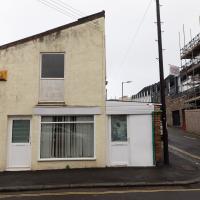
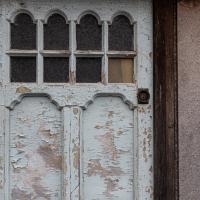
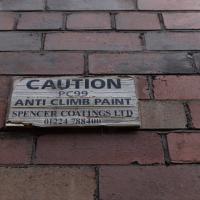
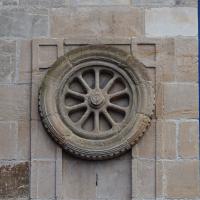
It used to be a garage. My friends Sarah and Vik tell me that it was a much, much grander building before succumbing to modernisation, at which point only a couple of details like this were preserved.
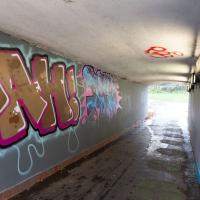
Underpass
25 Nov 2020
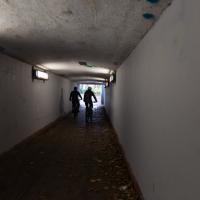
A quick lunchtime jaunt for coffee. I've often wondered about the dots on the wall of the underpass. Apparently they're not intelligible Braille. Maybe it's Marain :D
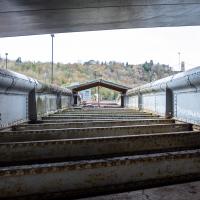
A swinging footbridge, designed by Brunel, but not quite as famous, or these days as functional, as its counterpart in the distance.
Up for the flu jab
21 Nov 2020
A trip up the hill to get my winter flu jab. I'm not sure I really needed it this year, what with avoiding Covid—I haven't had so much as a sniffle in more than a year—but seeing as they offered... Instead of the doctor's surgery on Pembroke Road, they'd taken over Christ Church, presumably to give more room and ventilation for the necessary social distancing at the moment. As usual, it was their typically efficient operation, and I was in and out in about three minutes.
On the way there and back I snapped as much as I could, but I wanted to be home in time for the first online Times Crossword Championship. As it turned out, I needn't have bothered, as the technology at the Times couldn't keep up with the demand from competitors, and their system just collapsed under the weight of page-views. They tried again the day after, and it collapsed just as badly. Maybe next year...
This wander is split into two parts, as I turned my tech off to go into Christ Church for my jab. The walk home can be found over here.
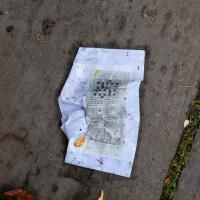
This was meant to be the day of the first online Times Cryptic Crossword Championship. Sadly the Times's web servers let them down, so the event was a washout, and I dashed back from my flu jab to take part for no good reason, as it turned out.
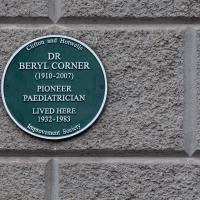
Avoiding the Accounts
26 Nov 2020
I took the day off my day job to do my accounts—or at least do enough bookkeeping to send them to my accountant. I hate doing the books. I woke up late, tired and with a headache and decided to bunk off for a walk around Cliftonwood, Clifton Village and Clifton instead, taking in a couple of good coffees along the way. Thanks, Foliage Café, and Twelve for the flat whites.
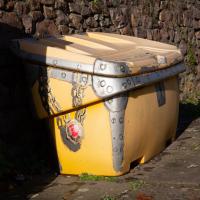
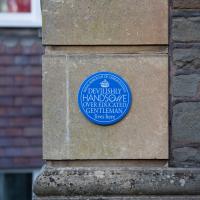
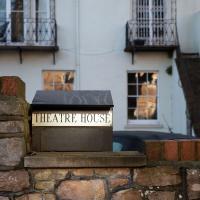
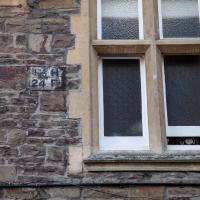
I wasn't sure what this faded sign was for, but my friend Claire suggested on Twitter that it's a sign for a fire hydrant, 24 feet in front of the building, and I immediately thought, "Oh, of course it is..." Thank you, Claire.
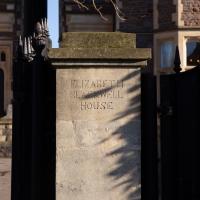
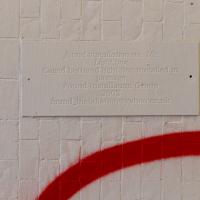
Elizabeth Blackwell, born in Bristol in 1821, was the the first female physician on the medical register of the General Medical Council, and the first woman to receive a medical degree in the United States.
The Elizabeth Blackwell Medal is awarded annually to a woman who has made significant contribution to the promotion of women in medicine
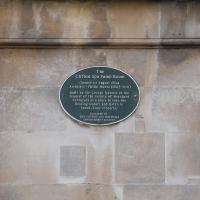
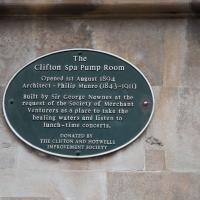
Another place that wasn't there in Fanny Burney's time—Evelina visits the Hot Well and Pump Rooms, but this would have been the original building down on the bank of the Avon below, long before the upper pump room or the funicular railway from here, next to the Avon Gorge hotel, that linked to the Portway below, existed.
In the novel Evelina in fact stayed in Hotwells, from what I can work out, rather than Clifton, as getting from Clifton to the Hot Well itself every day would have been too much travelling at the time.
The Long Lunchtime at the End of the World
27 Nov 2020
I took an extra-long break at lunchtime today as I'd taken the day off my normal day-job to do the accounts for my previous side-job, which is still generating paperwork, though not much in the way of money. This took me through some undiscovered bits of Cliftonwood, including Worlds End Lane, which unexpectedly leads to White Hart Steps. That's certainly not where I expected the end of the world to lead to...
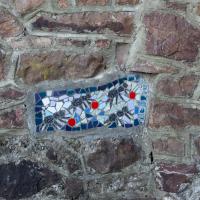
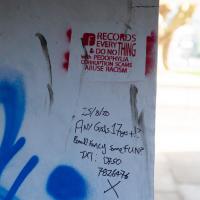
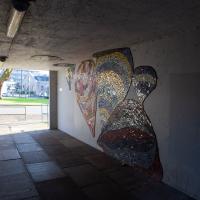
Saint Peter's House was designed in 1952. Architecture of this era often seems to go hand-in-hand with wildly optimistic mosaics that try to make a low-ceilinged grey concrete block a bit more attractive.
A long ramble, starting with trying to find the Hot Well of Hotwells and leading up the side of the Avon Gorge to the Downs and then through Clifton for coffee.
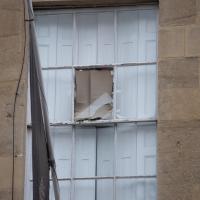
Has some local socialist been throwing rocks through the Clifton Club windows? Or maybe some descendant of WG Grace (a former member) was re-enacting some cricketing action a little too animatedly at the dinner table...
Ten O'Clock Shop and Can't Dance Coffee
30 Nov 2020
I had to return a faulty AirPod Pro to Apple (there's a first-world problem!) so I just took a quick trip up the hill to the nearest UPS drop-off point, The Ten O'Clock Shop, which is famously open until 11pm. Unfortunately it's a fairly cramped little place and neither of the staff were wearing masks, so I made it a very quick drop indeed and got out of there as quickly as I could.
I grabbed a quick coffee from Can't Dance, a stall that's—as of yesterday—in a tiny converted cargo container on the edge of Victoria Square; up until this week they were running from a little trike parked in the same place. Hopefully the new premises will let them see out the winter without worrying quite so much about the weather.
I tried to fit in a few extra streets from the surrounding area on my there and back, but that was basically my wander today: a quick little shopping trip.
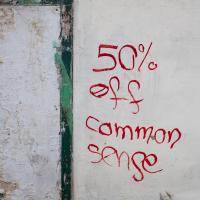
Nothing New
02 Dec 2020
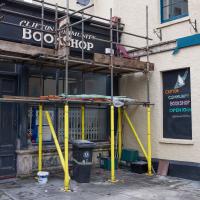
This may be the very first time I've gone for a One Mile Matt wander and not actually gone down any new roads, trod any new steps. I just wanted a coffee, frankly, so I went the same old way to Imagine That in the marina and back again.
Strangers' Burial Ground
04 Dec 2020
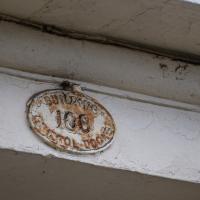
I tried to find the Strangers' Burial Ground the last time was up in Clifton, but I'd not realised that Lower Clifton Hill continues further on after the turning with Constitution Hill. Sadly it was chained shut, but it still looks beautifully-maintained, perhaps by the same man referenced by this story from John Hodgson, which helped me find it. Apparently Thomas Beddoes is buried here.
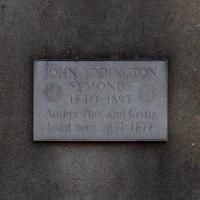
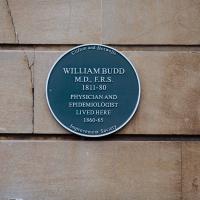
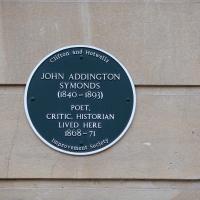
He sounds... a little unusual. Just to be clear, it's the pederasty I'm frowning at, not the homosexuality.
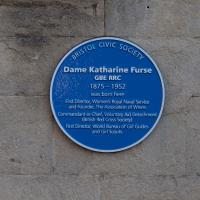
Now that's some serious achievement:
Dame Katharine Furse, GBE, RRC (née Symonds; 23 November 1875 – 25 November 1952) was a British nursing and military administrator. She led the British Red Cross Voluntary Aid Detachment force during the First World War, and served as the inaugural Director of the Women's Royal Naval Service (1917–19). Furse was also the first Director of the World Association of Girl Guides and Girl Scouts (1928–38).