Tagged: car
I went out simply wanting to knock off the very last little unwalked section of Clanage Road, over by Bower Ashton, which has been annoying me for a while as it's quite close by and I've walked the other bits of it several times. So, my plan was to nip over to Greville Smyth Park via a slightly unusual route to wander Clanage Road and tick it off.
Along the way, though, I inevitably got a bit distracted. I took a few photos of Stork House, a grand Hotwell Road building that's recently been done up a bit (I imagine it's student lets, though I'm not sure) and which I found a reference to in a book about the Port Railway and Pier the other week, and also tried to match up a historical photo of Hotwells before the Cumberland Basin Flyover System laid it waste, which included some interesting markers I'll have to do a bit more digging into...
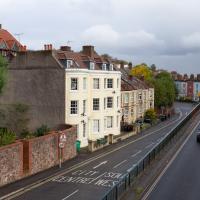
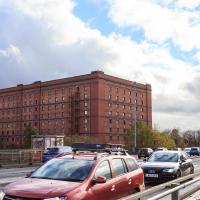
That historical photo seems to have been taken from a higher vantage point. The most likely place seems to be the B Bond, perhaps from that fire escape, or maybe the roof? Something tells me it's unlikely they'd let me up there, but you never know, maybe one day I'll ask an archivist; I think that area's part of the Bristol Archives stores...
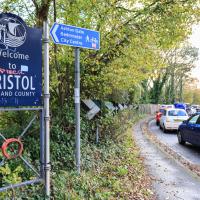
Because yes, we have just had a little excursion into Somerset, technically. So welcome back to Bristol, home of traffic jams.
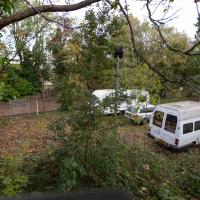
Or possibly a caravan-park-to-be. This is the old Police stables and kennels, and dog-training ground, I think. There are plans afoot for the Baltic Wharf caravan park, forced out of its home by the plan to redevelop the area as flats (which I imagine will be touted as "affordable" and then turn out to be luxury apartments with at most 5% barely-"affordable" apartments around the back), to this site.
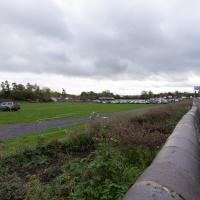
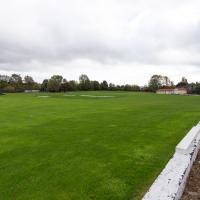
I think it's mostly used for sport, but the only thing I've ever used it for is the Clifton Car Boot Sale.
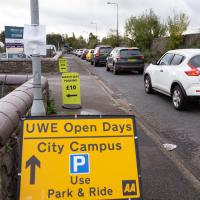
So that's why all the cars are there—not for the Open Day, it turned out; it's the other signs that are the giveaway. Somewhere, some people are committing a sport.
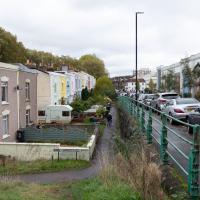
I find something intrinsically nice about this modest little terrace sandwiched in among the rather more industrial surroundings.
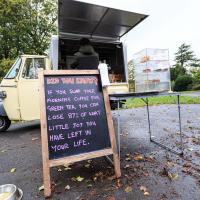
Apparently the proprietor's other half loves tea and can't stand coffee. I hope very much this turns into a sitcom where she runs a rival tea stall on the other side of the park with a big A-board that disses coffee.
The more I research it, the more I find that Hotwells had far better transport links back in Victorian and Edwardian times than it has today. Along with buses that went to more useful places than the City Centre, there were trams, the funicular up to Clifton, the landing stage for paddle steamer services and two railway stations all within easy walking distance of me.
Today I took a day off work as preparation for doing the bookkeeping for my tax return1, and took a wander along to the site of what would have been my nearest station, Hotwells (or Clifton, as it started out in life), nestled in the shadow of the suspension bridge, the Bristol terminus of the Bristol Port Railway and Pier.
From there I wandered down the Portway, following the original line, until I got to the area around Sneyd Park Junction, where the tunnel from the slightly later Clifton Extension Railway joined up with this originally-isolated BPR line. Then I headed up to Clifton through the "goat gully" at Walcombe Slade, seeing the few above-ground bits of evidence of the tunnel (which is still in regular use) along the way.
It was a lovely day, and a good walk, and it was interesting to daydream of the times when I could have walked a few minutes from my flat down to Dowry Parade, caught a short tram ride to Hotwells Stations, and then headed from there to Avonmouth, perhaps even to board a transatlantic passenger service. The completion of the Clifton Extension Railway that linked the Avonmouth station with Temple Meads made relatively direct transatlantic travel from London via Bristol possible, with passengers travelling up from Paddington to Temple Meads, on to Avonmouth on the Clifton Extension Railway and Port Railway and Pier line, then perhaps catching a Cambpell's paddle steamer—which sometimes acted as tenders for large steamers—to a larger ship that was headed out for Canada, say.
1 I've learned that the best approach is to take two days off and deliberately do something that's not my bookkeeping on the first day, as otherwise I just inevitably end up procrastinating and feeling guilty on the first day no matter what. I have an odd brain, but at least I'm learning strategies for dealing with its strange ways as I get older...
2 Information mostly gleaned from Colin Maggs' The Bristol Port Railway & Pier and the Clifton Extension Railway, The Oakwood Press, 1975.
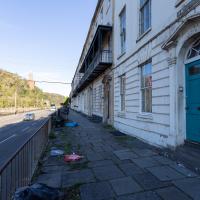
St Vincent's Parade looking a bit more run-down than normal. This street, like the one I live in, was built as lodging houses for visitors to the hot wells. I imagine it was quite a pleasant aspect before later developments like the building of the Portway.
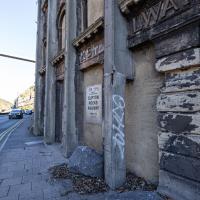
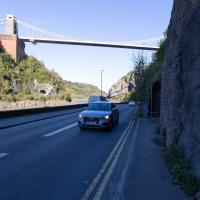
One of the many problems with the Hotwell Road and Portway is the complete dearth of places to safely cross this road, with a varying number of lanes and a speed limit that hits 50mph for stretches.
You can stand for a very long time looking both ways before taking your life into your hands and scurrying across. It took me quite some time to dash to the other pavement at the point where this one runs out and your only choice is to head up the Zig Zag or cross.
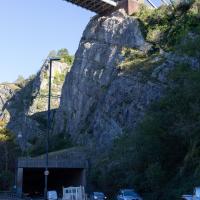
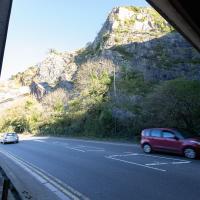
It doesn't look like much, because it isn't much any more. However, this used to be the site of Hotwells Station (formely Clifton Station, before the opening of Clifton Down and the continued existence of Clifton Bridge meant the proliferation of stations with "Clifton" in the name warranted some disambiguation.)
Nestled in this little nook underneath the suspension bridge, it was the Bristol terminus of the Port Railway and Pier, whose aim was to avoid increasingly big ships having to wait for the right tides to come into Bristol and unload. They ran a line from Hotwells Station, here, to a deep-water pier at Avonmouth so the ships could moor there regardless of the tide, and transport cargo and/or passengers to and from Bristol, with this being the Bristol terminus. Work started at Shirehampton in 1863.
Originally this was an isolated line, but it was later hooked up to the rest of the rail network by the Clifton Extension Railway, and a tunnel under Clifton. That's a connection we'll be exploring a bit today, at least with a few of its visible above-ground bits.
The line saw its biggest use during the First World War, as dockers, munition workers, hospital trains and so forth ran back and forth between Bristol and the port. They even added an entire extra platform, Hotwells Halt, just down the road, to cope with the increase in traffic, platform space being at something of a premium in this unexpandable little nook, which runs from the bridge to the first of two tunnels in the cliff face to head onward to Sea Mills.
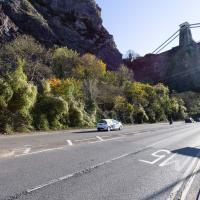
From the other angle. It was a single short platform, squeezed in to this little inset in the cliff face. Here you'd have been looking at the station wall, with the entrance and office at the far end. In this photo on Pinterest you can see the three tracks—the main platform track, a run-around loop so the engine could make its way around the carriages and onto the other end of the train, and a siding. At the far end is the station master's house, just behind a turntable that would have been used to turn the engine fully around for the return journey.
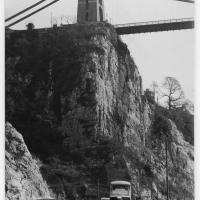
Here we see the Portway road, presumably fairly shiny and new, after many, many things, including the railway line from Hotwells to Sea Mills, were removed to make way for it. As you can see, they've done a splendid job of redeveloping the space where the station was into a little mini-park area, back in the day when the traffic wasn't a constant rush of noise and fumes and you didn't have to scamper across like you were playing a game of Frogger. It might well have been a pleasant place to sit. It certainly wouldn't be now.
Also, guess what there is fencing in the park area? Yes, some nice iron railings. I have no idea whether these are same ones I found—today's seem in surprisingly good nick considering this photo would have likely been taken almost a hundred years ago, and also how many railings were torn up during WWII.
This photo was taken before the war, as you can see a tram still running in the background—a Luftwaffe bomb took the tram system down in 1941 and it was never replaced. It also was obviously taken after 1926, as the Portway opened to traffic on 2 July 1926, having cost £800,000 to build, about £47m in today's money. So, that fixes it to a 15-year period, I think, but I'm not enough of a historian to be able to pin it down further.
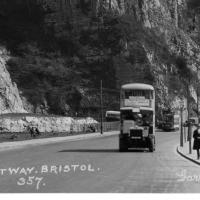
Bottom section of the postcard. I like the way there's a bus and a tram in it, but I'd quite like the bus not to be there so we can see the whole of the former station site. Motion blur makes it hard to figure out the bus and tram details.
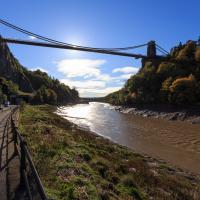
A last look back the way we came. Bristolians would have either walked to the station taken the tram; the tram rails ended just this side of the Gallery, from what I can make out from other pictures I've seen.
Here's one more interesting thing: it's just as well for me personally that the railway terminated in Hotwells. One of the original plans, which you can see in beautiful detail here, by clicking on the Community Layer pop-up in Know Your Place was for a tunnel under Clifton that would pop out about where Hotwells Primary School is and then run on to Temple Meads. Why would that be bad for me? Well, I reckon the tunnel would pass directly through my bathroom, bedroom and living room...
(That map, incidentally, by John Lavars, was popped on the Community Layer of KYP by my friend Dave. It's a shame that there doesn't seem to be a way to see who uploaded an item to the community layer, or see any more details about it...)
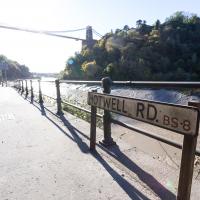
Not many people realise that it's still the Hotwell Road even out this far. It only becomes the Portway at the junction with Bridge Valley Road.
Bower Ashton is an interesting little area just south of the river from me—in fact, the Rownham Ferry used to take people over from Hotwells to Bower Ashton, operating from at least the twelfth century to around the 1930s.
It's a strangely contradictory little area, with a cluster of old and new houses sandwiched in between the busy A-roads and significantly more industrial area of Ashton and the bucolic country estate of Ashton court roughly east to west, and also between Somerset and Bristol, north to south.
I've been around here before, mostly poking around Bower Ashton's arguably most well-known bit, the Arts faculty campus of the University of the West of England, but I'd missed at least Parklands Road and Blackmoors Lane, so I initially planned just to nip across briefly and wander down each in turn. On a whim, though, I texted my friends Sarah and Vik in case they were out and about, and ended up diverting to the Tobacco Factory Sunday market first, to grab a quick flat white with them, extending my journey a fair bit.
To start with, though, I nipped to a much more local destination, to see something that you can't actually see at all, the Gridiron...
(I also used this wander as a test of the cameras in my new phone. I finally upgraded after a few years, and the new one has extra, separate wide and telephoto lenses compared to the paltry single lens on my old phone. Gawd. I remember when speed-dial was the latest innovation in phones...)
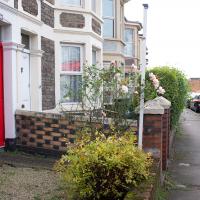
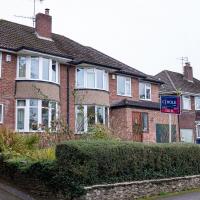
Most of the front gardens on this little stretch retain what's presumably the original garden walls, all rather nicely put together in a chequerboard pattern of bricks.
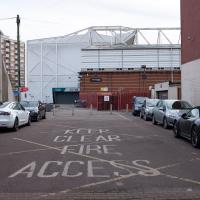
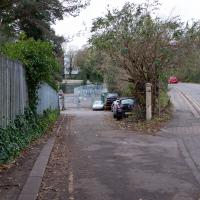
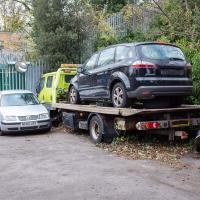
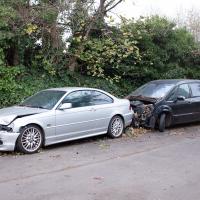
One of the businesses on this little estate of random things is Rob Perry Salvage, which presumably explains the odd row of wrecked cars parked in the access lane.
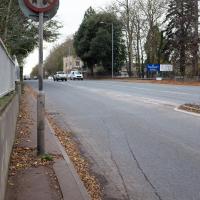
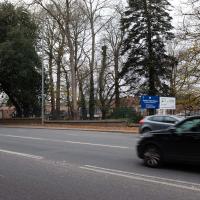
This happens to me all the time in this area. I try to get somewhere by aiming in the most obvious direction, and the pavement just peters out leaving me with the options of either going back the way I came or dashing across four or five lanes of traffic.
The entire area is very pedestrian-hostile. I assume the parents and kids making their way to the school opposite know all the right routes to avoid this kind of problem, but as a visitor it's very annoying.
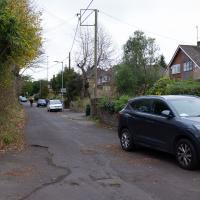
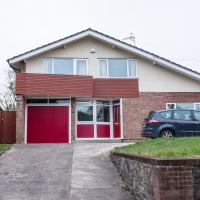
I sort-of like what the architect has done with the odd angles of the porch and balcony, and I do like the asymmetric roof, but on the whole I don't think the oddities are bold enough to really do it for me.
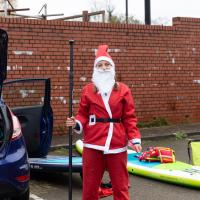
My friend Lisa texted me to see if I wanted to pop down and take a photo or two of the event she was taking part in: Santa SUP. SUP Bristol organise stand-up paddleboarding on the floating harbour, and their annual Santas-on-paddlboards event is quite the sight.
On the way there, I grabbed a historical photo I'd been wanting to recreate for a while of the shiny and new Cumberland Basin flyovers back in 1965, because I reckoned I could fit finding the same viewpoint into my outbound journey. Also, after having only used it on a wander for the very first time yesterday, I managed two crossings in the cross-harbour ferry today to get to the best locations for snapping the paddleboarders...
So, then, this wander is mostly a bunch of photos of paddleboarding Santas. Tis the season... Enjoy!
A Constitutional to Burwalls and Back
21 Dec 2021
The recent lack of posts here is mostly due to my feeling very run down following having a couple of wisdom teeth extracted. Having had an emergency appointment yesterday1, hopefully I'll be on the mend now, though it does mean I'm on the kind of antibiotics where you can't touch alcohol for the whole of the Christmas period. I have tried to keep myself a little distracted from the pain by working on the nuts and bolts of this website—you should notice that the front page loads rather faster now than it used to, and that there's a shiny new statistics page that I'll probably be continuing to work on. Oh, and you should find that the tags below the photos are now clickable and will take you to a page of all other wanders that have photos with the same tag.
Today I felt like I needed to drag myself out of the house, but I didn't want to go too far, and I needed to get to the Post Office up in Clifton Village to post a Christmas card (spoiler for my parents: it's going to be late. Sorry.) As luck would have it, idly looking at the map I spotted that I'd missed off a section of Burwalls Road in the past, and that's basically one of the long-ways-round to Clifton Village, crossing the river to Rownham and walking up the hill on the Somerset side before coming back across the Suspension Bridge.
As I was heading for Burwalls Road I decided to make Burwalls itself the focal point of the walk, but unfortunately the mansion grounds are private and the place is hard to snap. Still, at least it gave me a destination. Burwalls was the mansion built by Bristol press magnate Joseph Leech, who I've mentioned before after buying a vintage book he wrote on a previous wander. There's a good article about the house on House and Heritage which has some photos from angles I couldn't ever get to. (Well, maybe with a drone, but it seems like the kind of area where they may be kitted out for clay pigeon shooting, so I probably wouldn't risk it.)
1 My dentist admitted that she probably needed to keep her internal monologue a bit more internal after we started the appointment with her staring into my mouth and immediately saying, "oh, *that's* weird." These are words one doesn't want to hear from a medical professional.
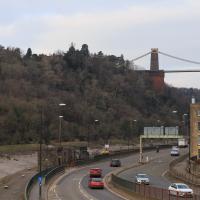
As my plan was to knock off the remaining section of Burwalls Road, my first photo is the small segment of Burwalls itself that you can see from near my house. Burwalls is the mansion on the hilltop, peeping out about halfway from the left edge of the photo and the Suspension Bridge.
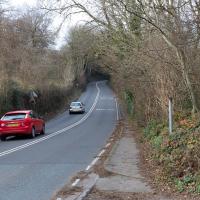
Speaking of major roads, this is why you wont' see a track down the actual road here on my maps: no pavements. On the plus side, there's the forested path with the amazing name of Dead Badger's Bottom starting on my right, and a little raised off-road walkway in the trees on the left, starting about where you can see the speed limit sign.
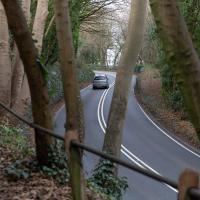
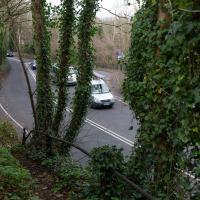
A delightful little return to the road, which peters out in a disconcerting rough slope in between two blind bends on a busy road with no pavement. It's not spectacularly pedestrian-friendly over here. This might explain why I never walked down the bit of Burwalls Road opposite. The forest path up Dead Badger's Bottom1 on the far side of the road skips the first section.
1 No, I will never get tired of saying that.
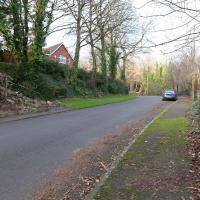
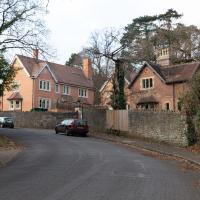
The Burwalls site is split into two halves, according to some of the estate agents' details I've looked at. This read section has some more modern-looking places where you can buy an entire house, if you're rich.
The mansion itself has been divided up into "lateral apartments". If you don't know what those are, you probably can't afford one.
A Random New Year's Day Wander
01 Jan 2022
I picked a fairly arbitrary reason for a wander today. Really, I just wanted to do a New Year's Day wander just to get out of the house and to set a precedent for the year to come.
My ostensible reason was to investigate what looked like a road on my map that quartered the lawn in front of the Ashton Court mansion. As it turned out, this is just a muddy footpath/desire line similar to a half-dozen other tracks nearby, and must be some kind of bug or misclassification with the mapping system I'm using, but that's not important. What's important is that I went for a little walk on the first day of the year. As a bonus, I did happen to wander down a couple of sections of new footpath, so technically I broke some new ground too, which is nice.
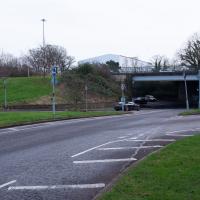
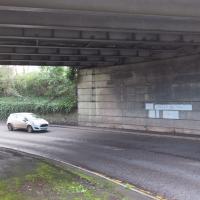
Last time I walked over the top of this I noticed that there was at least a vestige of pavement along the side of the underpass, so given the quiet New Year's Day traffic I figured I'd try getting over there and walking under for the first time in my life...
Near and Far
05 Jan 2022
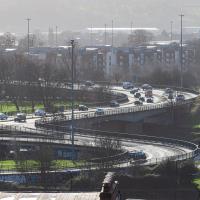
I took advantage of a rare recent day where it wasn't tipping down with rain to get away from my desk on a lunchtime workday and head up to Clifton Village. I'd hoped to snap a reproduction of historical photo which I'd worked out had been taken from the Suspension Bridge, but the gods were not smiling on me. Still, taking only a nice long lens with me worked out very well as the lovely haze of the day made more distant views quite dramatic...
Quick Clifton Jaunt Finishing with Southville
09 Jan 2022
It's been pretty dismal recently, weather-wise, so when Sarah called up to say that she and Vik had just left the swimming pool at the student union building up in Clifton, and would I like to join them for a trip to the Last Bookshop, also known as The £3 Bookshop, for reasons you can probably deduce, I leapt at the chance.
Not many photos on this walk, but I did manage to get down a little road I'd never been to before, basically just the access road to a car park at a block of flats, but it was on the map looking all tempting, so I figured I'd knock it off the list as we were passing.
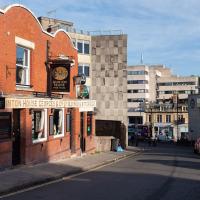
Lunchtime Reproduction (of an old photo...)
17 Jan 2022
This was basically the quick lunchtime jaunt I tried to do at the beginning of January, only this time I actually managed to get to roughly the viewpoint I'd been hoping for to recreate a historical photo of the Bristol International Exhibition.
I did this walk about a month ago, but I've been a bit poorly and not really up to doing much in my spare time, and it's taken me this long to even face processing even these few photos. Hopefully normal service will be resumed at some point and I can carry on trying to walk any roads and paths that I need to do to make this project feel complete...
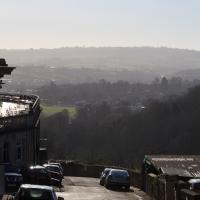
We've been as far as we can go down there on an earlier wander. From the top you'd just think it led to the Hotel car park.
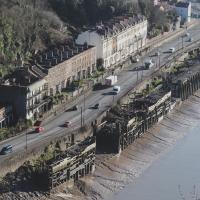
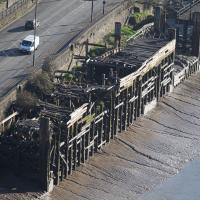
The Colonnade, the Rock House, St Vincent's Parade and the old landing stages for Campbell's paddle steamers. The leftover fruit of bygone boom years.
Lunchtime Cliftonwood Wander
18 Jan 2022
Another workday, another quick lunchtime trip to get me out of the house. This time my flimsy pretext is a tiny bit of Clifton Vale Close that I'd apparently not walked, and the fact that although I'd walked down Church Lane at least once before I still hadn't taken a single photo of it. Really I just fancied a mosey through Cliftonwood in the sunshine, with the promise of a coffee from Clifton Village at the top of the hill.
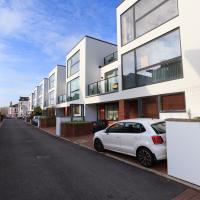
I really do like these little houses. Hate to think how much you'd have to pay for them, though.
Ouch. Just looked it up. Apparently the average property sale price over the last year was £750,000. I suppose the Tesla parked to the left there should have given away the income level; the Model S sells for about £75,000 in the UK.
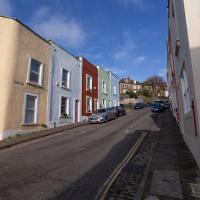
This is the road I didn't have many (or any) snaps of that inspired my route today, not that I need much of an excuse to traipse around Cliftonwood on a sunny lunchtime.
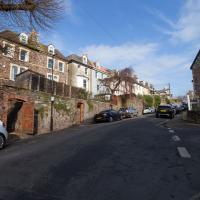
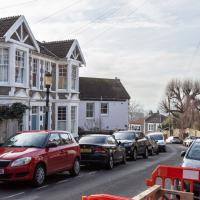
It's a perfectly nice street, but there's nothing too photogenic in it. I suppose that's why I didn't feel the need to raise the camera too much on previous occasions.
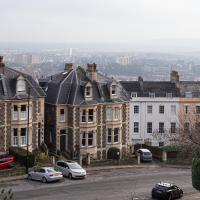
I've always really liked the big mansard-roofed houses along this stretch. There's something big and dignified about them.
And that's the end of another lunchtime jaunt. I don't know if there's any trips left in the backlog. Hopefully at some point the weather will let up a bit (we've just been through Storm Eunice and there's more heavy weather on the way, apparently) and I'll feel like heading out for a wander again.