Tagged: for
Ten O'Clock Shop and Can't Dance Coffee
30 Nov 2020
I had to return a faulty AirPod Pro to Apple (there's a first-world problem!) so I just took a quick trip up the hill to the nearest UPS drop-off point, The Ten O'Clock Shop, which is famously open until 11pm. Unfortunately it's a fairly cramped little place and neither of the staff were wearing masks, so I made it a very quick drop indeed and got out of there as quickly as I could.
I grabbed a quick coffee from Can't Dance, a stall that's—as of yesterday—in a tiny converted cargo container on the edge of Victoria Square; up until this week they were running from a little trike parked in the same place. Hopefully the new premises will let them see out the winter without worrying quite so much about the weather.
I tried to fit in a few extra streets from the surrounding area on my there and back, but that was basically my wander today: a quick little shopping trip.
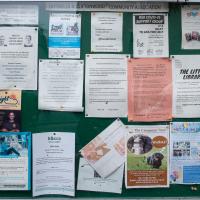
Tags: Bristol Places UK onemilematt united kingdom Clifton Village community noticeboard
Auto-Tags: Font Poster Poster session Display board Bulletin board Event Advertising Publication Signage Transport Machine
Text Recognition Tags: HOTWELLS & CLIFTONWOOD COMMUNITY ASSOCIATION niSTOL FRUIT S VEd BOKES BSB COVID-19 SUPPORT GROUP IT'S fo OKAY TO ASK FOR HELP NO TO Ohecabristol CEN foodar THE LITTLE LIBRARY bright The Cinnamon Trust HCCA & the 0 club h&cca The Pano Toher Walkies? tr fer Guie HOTWELLS & CLIFTONWOOD COMMUNITY ASSOCIATION niSTOL FRUIT S VEd BOKES BSB COVID-19 SUPPORT GROUP IT'S fo OKAY TO ASK FOR HELP NO TO Ohecabristol CEN foodar THE LITTLE LIBRARY bright The Cinnamon Trust HCCA & the 0 club h&cca The Pano Toher Walkies? tr fer Guie
Nothing New
02 Dec 2020
This may be the very first time I've gone for a One Mile Matt wander and not actually gone down any new roads, trod any new steps. I just wanted a coffee, frankly, so I went the same old way to Imagine That in the marina and back again.

Tags: Bristol Places UK onemilematt united kingdom coffee NOT COFFEE
Auto-Tags: Handwriting Green Font Menu Blackboard Chalk Wood Vehicle Tree Motor vehicle Signage Commemorative plaque Sign Slate Advertising
Text Recognition Tags: ROASTED LOCALLY BY COFFFF BASTED OCOLYBY EXTRACT COFFEE V ESPRESSO AMERICANO {200 {230 LATTE : 24 RE ISABLE f7 80 CUP DISCOUNT- FLAT WHITE f7 80 {2 80 E3 00 AX FOK DECAF / OAT MILKI CAPPUCCINO MOCHA g me +40, fOR NOT COFFEE EI 00 (I 50 (2.50 £2 50 BUILDERS TEA HERBAL TEA REEN/ Cmus Aoites MINT/ANGER LEMenS HOT CHOCOLATE. CHAI LATTE W ormON ROASTED LOCALLY BY COFFFF BASTED OCOLYBY EXTRACT COFFEE V ESPRESSO AMERICANO {200 {230 LATTE : 24 RE ISABLE f7 80 CUP DISCOUNT- FLAT WHITE f7 80 {2 80 E3 00 AX FOK DECAF / OAT MILKI CAPPUCCINO MOCHA g me +40, fOR NOT COFFEE EI 00 (I 50 (2.50 £2 50 BUILDERS TEA HERBAL TEA REEN/ Cmus Aoites MINT/ANGER LEMenS HOT CHOCOLATE. CHAI LATTE W ormON

This is the current plan to replace the caravan park
Tags: Bristol Places UK onemilematt united kingdom baltic wharf
Auto-Tags: Property Light World Architecture Font Line Sky Material property Natural landscape Publication Real estate Adaptation Landmark Landscape Travel
Text Recognition Tags: BALTIC WHARFI NEW HOMES FOR BALTIC WHARF Hew the propesed deveinpmemt cend oek frem the Flating Harter WHAT IS PROPOSEO FOR BALTIC WHARF? WHY DO WE NEED MORE NEW HOMES? Goram Homes, Bristol City Council's housing company, has partnered with Hil to propose transformational plans for Baltic Whart This would provide approsimately 165 new homes, including 406 affordable. It is widety acknowledged that the curent housing crisis has led to the under provision of housing and particularly atfordable housing within Bristol. Although much is being done in the City to address the crisis, there are key issues with affordability, rough sleeping, and lack of social housing Bristol currently has over 13,000 famlies on the affordable housing register and a further 710 people in temporary accommodation. The aim is to create a vibrant destination on the Floating Harbour with homes, retail, restaurants and commercial spece, one that is well connected to local walking and cycling routes, seamiessly integrates with the historic setting and capitalises on the waterfrort setting with expansive views across the lamous Bristol townscape. Comparing house prices in Bristol to those in other Core Cities in the decade between 2008 and 2018 indicated that Bristol had the highest average housing costs of all the Core Cities in this period, and also the highest percentage Increase - over S6, compared to a UK average increase in costs of just over 32 The site is the Boltik Wharf Carian Club, The site is owned by Bristol City Counci and as part of the overarching ambition to deliver high quality homes, this site has been identified as a site capable of providing bomes for Bristal. GORAM HOMES 出Hill Goram Homes was founded in 2018 as part ol an initiative from Bristol City Counci, wich the ambition to increase the provision of nea hemes in the city and to meet affordable housing requirements without compromising on build quality Goram Homes is a subsidary of Bristol Holding Ltd, HIl is an award-winning 5 star housebuilder, creating a range of beautiful and awardwinning new homes across the south of England. They are a leading partnership developer, delivering distinctive and award-winning new homes, having been named Housebuilder of the Year, medium and large, in 2018. which is wholly owned by Bristol City Council Goram is set up to deliver mised tenure housing on a joint ventune basis and our share of profit wil feed back into the funding of council servicel BALTIC WHARFI NEW HOMES FOR BALTIC WHARF Hew the propesed deveinpmemt cend oek frem the Flating Harter WHAT IS PROPOSEO FOR BALTIC WHARF? WHY DO WE NEED MORE NEW HOMES? Goram Homes, Bristol City Council's housing company, has partnered with Hil to propose transformational plans for Baltic Whart This would provide approsimately 165 new homes, including 406 affordable. It is widety acknowledged that the curent housing crisis has led to the under provision of housing and particularly atfordable housing within Bristol. Although much is being done in the City to address the crisis, there are key issues with affordability, rough sleeping, and lack of social housing Bristol currently has over 13,000 famlies on the affordable housing register and a further 710 people in temporary accommodation. The aim is to create a vibrant destination on the Floating Harbour with homes, retail, restaurants and commercial spece, one that is well connected to local walking and cycling routes, seamiessly integrates with the historic setting and capitalises on the waterfrort setting with expansive views across the lamous Bristol townscape. Comparing house prices in Bristol to those in other Core Cities in the decade between 2008 and 2018 indicated that Bristol had the highest average housing costs of all the Core Cities in this period, and also the highest percentage Increase - over S6, compared to a UK average increase in costs of just over 32 The site is the Boltik Wharf Carian Club, The site is owned by Bristol City Counci and as part of the overarching ambition to deliver high quality homes, this site has been identified as a site capable of providing bomes for Bristal. GORAM HOMES 出 Hill Goram Homes was founded in 2018 as part ol an initiative from Bristol City Counci, wich the ambition to increase the provision of nea hemes in the city and to meet affordable housing requirements without compromising on build quality Goram Homes is a subsidary of Bristol Holding Ltd, HIl is an award-winning 5 star housebuilder, creating a range of beautiful and awardwinning new homes across the south of England. They are a leading partnership developer, delivering distinctive and award-winning new homes, having been named Housebuilder of the Year, medium and large, in 2018. which is wholly owned by Bristol City Council Goram is set up to deliver mised tenure housing on a joint ventune basis and our share of profit wil feed back into the funding of council servicel
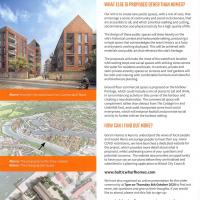
This is the current plan to replace the caravan park
Tags: Bristol Places UK onemilematt united kingdom baltic wharf
Auto-Tags: Property Architecture Font Line Urban design Real estate Landmark Screenshot Publication Facade Cloud Landscape Advertising City History
Text Recognition Tags: BALTIC WHARF WHAT ELSE IS PROPOSED OTHER THAN HOMES? Our aim is to create new public spaces, with a mix of uses, that encourage a sense of community and social inclusiveness, that are accessible to all, and which prioritise walking and cycling. social interaction and physical activity for a high quality of ife. The design of these public spaces wil draw heavily on the site's historical contet and harbournide setting, producing a unique space that acknowledges the area's history as a busy and dynamic working dockyard. This will be achieved with materials and public art that reference the site's heritage. The proposals will make the most of the waterfront location with seating steps and social spaces with striking views across the water for residents and locats. in contrast, private and semi-private amenity spaces on terraces and roof gardens will be calm and relasing with comfortable furniture and colourful and biodiverse planting. Ground floor commercial space is proposed on the harbour frontage, which could include a mix of places to eat and drink, in turn enhancing activity in this comer of the harbour and creating a new destination. The commercial space will complement rather than detract from The Cottage Inn and Underlall Yard, and could incorporate some local social enterprises, which will enhance footfal and promote social activity to further eniven the harbour setting Above: How theo cite cou lockhom Cumberlard Hoad HOW CAN I FIND OUT MORE? Goram Homes is keen to understand the views of local people and would like to encourage people to have their say. Given COMD restrictions, we have launched a dedicated website for the project, which provides more detail about what is proposed, whilst addressing some ef your questions and potential concems. The website also provides an opportunity to have your say on our plans before they are finalised and submitted in a planning application to Bristol City Councit Abover The proposals withintheir contot Belaw: The emergng site layout www.balticwharfhomes.com We have also organised an ontine presentabion for the wider community at Tpm on Thursday Bth October 2020 1o find out more, ask questions and give us their thoughts, Ifyou would like to attend, please visit this link to sign-up: www.balticwharfhomes.com/presentation If you are unable to visit either website, please give our Co Isultation team a call on 07342 039 444 (during office hours), who can book you in and make olternative amangements to get involved in the session, or provide all information in an alternative fomat appropriate for you BALTIC WHARF WHAT ELSE IS PROPOSED OTHER THAN HOMES? Our aim is to create new public spaces, with a mix of uses, that encourage a sense of community and social inclusiveness, that are accessible to all, and which prioritise walking and cycling. social interaction and physical activity for a high quality of ife. The design of these public spaces wil draw heavily on the site's historical contet and harbournide setting, producing a unique space that acknowledges the area's history as a busy and dynamic working dockyard. This will be achieved with materials and public art that reference the site's heritage. The proposals will make the most of the waterfront location with seating steps and social spaces with striking views across the water for residents and locats. in contrast, private and semi-private amenity spaces on terraces and roof gardens will be calm and relasing with comfortable furniture and colourful and biodiverse planting. Ground floor commercial space is proposed on the harbour frontage, which could include a mix of places to eat and drink, in turn enhancing activity in this comer of the harbour and creating a new destination. The commercial space will complement rather than detract from The Cottage Inn and Underlall Yard, and could incorporate some local social enterprises, which will enhance footfal and promote social activity to further eniven the harbour setting Above: How theo cite cou lockhom Cumberlard Hoad HOW CAN I FIND OUT MORE? Goram Homes is keen to understand the views of local people and would like to encourage people to have their say. Given COMD restrictions, we have launched a dedicated website for the project, which provides more detail about what is proposed, whilst addressing some ef your questions and potential concems. The website also provides an opportunity to have your say on our plans before they are finalised and submitted in a planning application to Bristol City Councit Abover The proposals withintheir contot Belaw: The emergng site layout www.balticwharfhomes.com We have also organised an ontine presentabion for the wider community at Tpm on Thursday Bth October 2020 1o find out more, ask questions and give us their thoughts, Ifyou would like to attend, please visit this link to sign-up: www.balticwharfhomes.com/presentation If you are unable to visit either website, please give our Co Isultation team a call on 07342 039 444 (during office hours), who can book you in and make olternative amangements to get involved in the session, or provide all information in an alternative fomat appropriate for you
More Cliftonwood
05 Dec 2020
Back to Cliftonwood for a wander that included some of the belle views of Bellevue Crescent and other bits of the easternmost part. Highlights included watching someone bump-starting an elderly Nissan Micra in the narrow confines of Bellevue Crescent.
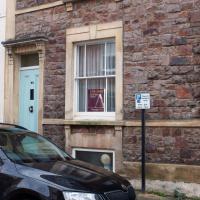
I was curious about house prices; this was a reminder to look them up!
Mark's Bread
07 Dec 2020
I realised that if Hopper Coffee in Greville Smyth Park was in reach during my lunch hour, then perhaps Mark's Bread at the end of North Street would be do-able, too. And I was right. I also managed to cross Clift Road, with its pretty gable bargeboards, off my list, and encounter a dapper gent walking his dogs while playing loud jazz music from somewhere under his jacket. That's North Street for you.

Tags: Bristol Places UK onemilematt united kingdom Bedminster community noticeboard Southville
Auto-Tags: Wood Font Brickwork Brick Facade Building Poster Signage Landscape Display board Bulletin board Hardwood Advertising Rectangle Window
Text Recognition Tags: Ashton Gate Triangle COMMUNITY NOTICES TOR MBY AND niME FOR YOU FLUTE LESSONS Ashton Gate Triangle COMMUNITY NOTICES TOR MBY AND niME FOR YOU FLUTE LESSONS

Tags: Bristol Places UK onemilematt united kingdom Bedminster community noticeboard Southville
Auto-Tags: Font Handwriting Bulletin board Display board Poster Advertising Event Design Publication Room Signage Stationery Poster session Document Paper product
Text Recognition Tags: PAS STY AIA MAKE CLOTHES FOR BABY AND FIME FOR YOU e Vist thebristolstncherg.cor for more infe Kthe Sristol Kalitcheru FLUTE LESSONS TUTO er to pt iet 44 743 96 1309 sabristel se fen PAS STY AIA MAKE CLOTHES FOR BABY AND FIME FOR YOU e Vist thebristolstncherg.cor for more infe Kthe Sristol Kalitcheru FLUTE LESSONS TUTO er to pt iet 44 743 96 1309 sabristel se fen
Rainy Clifton
13 Dec 2020
A long walk around Cliftonwood and Clifton with my friend Lisa, taking in some of the 12 Days of Christmas display at Queens Parade, picking up a take-away coffee from Pinkmans of Park Street, and poking our heads up against the glass of SS Peter and Paul Catholic Cathedral.
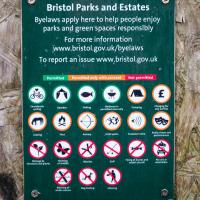
We wondered how often someone applied for consent to perform Archery on Brandon Hill.
Tags: Bristol Places UK onemilematt united kingdom
Auto-Tags: Plant Font Wood Terrestrial plant Recreation Signage Poster Soil Sign Sports equipment Traffic sign Advertising Trunk Landscape Number
Text Recognition Tags: Bristol Parks and Estates Byelaws apply here to help people enjoy parks and green spaces responsibly For more information www.bristol.gov.uk/byelaws To report an issue www.bristol.gov.uk Permitted Permitted only with consent Not permitted Cenete pcing Raberse peted cone asly Chaging for ey ty Gaba Tshing Camping Puhawnd Ging Anhery Fesports Evee No can Harng fwie Pyingeld nd n at Gelf ing ef water co Dag Faing Uting Bristol Parks and Estates Byelaws apply here to help people enjoy parks and green spaces responsibly For more information www.bristol.gov.uk/byelaws To report an issue www.bristol.gov.uk Permitted Permitted only with consent Not permitted Cenete pcing Raberse peted cone asly Chaging for ey ty Gaba Tshing Camping Puhawnd Ging Anhery Fesports Evee No can Harng fwie Pyingeld nd n at Gelf ing ef water co Dag Faing Uting

Well played, Forbidden Planet, well played.
Tags: Bristol Places UK onemilematt united kingdom Forbidden Planet funny
Auto-Tags: Shelf Bookcase Building Product Shelving Publication Interior design Retail Flooring Customer Wood Font Hardwood Room Book
Text Recognition Tags: FIRE EXIT PLEASE KEEP CLEAR AT ALL TIMES THIS IS NOT THE DOOR YOU'RE LOOKING FOR SALE FIRE EXIT PLEASE KEEP CLEAR AT ALL TIMES THIS IS NOT THE DOOR YOU'RE LOOKING FOR SALE
Clifton Hill
23 Nov 2020
I've just got to the bit in Fanny Burney's Evelina where our eponymous heroine visit a grand house on Clifton Hill during her stay in Hotwells. It was interesting to wonder if it could be any of the places I passed in my lunchtime jaunt, which took in both Clifton Hill and Lower Clifton Hill.
From Evelina (1778):
"Yes, Ma'am; his Lordship is coming with her. I have had certain information. They are to be at the Honourable Mrs. Beaumont's. She is a relation of my Lord's, and has a very fine house upon Clifton Hill."

Tags: Bristol Places UK onemilematt united kingdom Clifton Village Clifton Hill
Auto-Tags: Building Daytime Window Property Plant Fixture Neighbourhood Residential area Font Line Wall Public space Real estate House Road surface
Text Recognition Tags: age in car park for further details Nuffield Health Vilia enpance Deliveries HSSU age in car park for further details Nuffield Health Vilia enpance Deliveries HSSU
To Bedminster
19 Dec 2020
Despite a mild headache, I enjoyed this wander over to Bedminster. The light was lovely, especially toward the end. I always enjoy the view down the streets south of North Street at this time of day/year, with the distant hills backdropping the Victorian terraces.

Tags: Bristol Places UK onemilematt united kingdom Hotwells shop sign Rose of Denmark
Auto-Tags: Wheel Tire Car Vehicle Plant Handwriting Automotive lighting Automotive tire Asphalt Motor vehicle Sky Rolling Road surface Gas Personal luxury car
Text Recognition Tags: A LIEAL SHOP FOR LOCAL FEORLE 10-10 AM A LIEAL SHOP FOR LOCAL FEORLE 10-10 AM
I went to have a peep at the giant sinkhole that's opened up in Canynge Square—ironically, having recently discovered the gardens were public I'd had the (triangular!) square on my list to re-visit for a few days, but now there's no entrance to the gardens due to the danger. The area was well fenced-off for safety, but I tried to get a couple of photos from behind the barriers.
I also explored the area around Camp Road, an real melange of architectures, one of the most mixed-up areas I've seen in Clifton, in fact, and confirmed my friend Claire's suspicion that an earlier snap of a sign from Manilla Road was in fact for a fire hydrant. Nice.

Tags: Bristol Places UK onemilematt united kingdom Clifton Village
Auto-Tags: Tire Wheel Motor vehicle Automotive tire Vehicle Automotive exterior Tread Automotive wheel system Font Fender Bumper Commercial vehicle News Vehicle door Truck
Text Recognition Tags: Dear negbour od 14 aund 1 ene unknoun tomeit the extensebuling wo ur wy on the house t to umber, damag ringwide truc/orry the d t eoistently parked at the te for seeal wee ng and aown and iemrahing ut you to ask i you can al e regivtration number of any detavsal regarding thê truck, bu yourself have hat yeur demaged recently as lythis ne an isolated moa rm what remenber itwosa uck wth aopen ar ba end for toading up scatfording etc, uimilar to this steckiel Wiknson The driver contacted my partrer aver the interc o seek the owner before breakin offand SL alter being informed the persen te wistalng too couid put him in comt with me herefore ey that if this persan has degnother cars uch as yours. he is kely t repeat behavidur in the future and nat act to infem you 00 have had amy dimage to yaur car recently or an emember and share any details of the Tack in question or if you saw what haupened t would be enainouly acoreciated f you would Lotact me va teatical 0766994321. Orvamall at simonmattheapayne@nai.com Althe best, Mecry Christmaes and stay sale Smbeumbi The Fosseway Dear negbour od 14 aund 1 ene unknoun tomeit the extensebuling wo ur wy on the house t to umber, damag ringwide truc/orry the d t eoistently parked at the te for seeal wee ng and aown and iemrahing ut you to ask i you can al e regivtration number of any detavsal regarding thê truck, bu yourself have hat yeur demaged recently as lythis ne an isolated moa rm what remenber itwosa uck wth aopen ar ba end for toading up scatfording etc, uimilar to this steckiel Wiknson The driver contacted my partrer aver the interc o seek the owner before breakin offand SL alter being informed the persen te wistalng too couid put him in comt with me herefore ey that if this persan has degnother cars uch as yours. he is kely t repeat behavidur in the future and nat act to infem you 00 have had amy dimage to yaur car recently or an emember and share any details of the Tack in question or if you saw what haupened t would be enainouly acoreciated f you would Lotact me va teatical 0766994321. Orvamall at simonmattheapayne@nai.com Althe best, Mecry Christmaes and stay sale Smbeumbi The Fosseway
Saint Vincent's Spring
28 Dec 2020
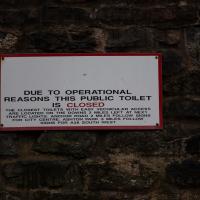
Fractionally outside my one-mile zone, but I got curious about Saint Vincent's spring, whose last remnants you can see in a defunct drinking fountain on the Portway. Along the way I passed Gyston's cave, sometimes called St Vincent's cave, in the sheer wall of the gorge. It's now accessible by a tunnel from the observatory—I tried it about twenty years ago, I think, and still recall the vertiginous moment of looking down from the protruding balcony and realising that you could see straight through the grille floor to the drop below—but from what I can work out the tunnel is relatively recent. Before the tunnel was dug it was accessible only by access across the cliff face, which must have been even more terrifying.
This cave was first mentioned as being a chapel in the year AD 305 and excavations, in which Romano-British pottery has been found, have revealed that it has been both a holy place and a place of refuge at various times in its history.
A few different sources say that the cave became a hermitage and chapel to St Vincent following Bristol's early trading in Iberian wines; St Vincent of Saragossa is Lisbon's patron saint, and a lot of nearby things bear the name.
I'm not sure where the crossover of Vincent and Ghyston happens, though. On the giants Goram and Vincent (or Ghyston), Wikipedia says:
The name Vincent for one of the giants rests on the fact that at Clifton, at the narrowest point of the Avon Gorge, there was formerly an ancient hermitage and chapel dedicated to St Vincent, at or near the present cave in the cliff-face which bears his name. Another (apparently modern) version of the story calls the Clifton giant Ghyston, which is in fact the name, of obscure origin, for the whole of the cliff-face of the Avon Gorge at least as early as the mid-fifteenth century, in the detailed description of the Bristol area by William Worcestre. The place-name was personified to produce the giant's name. Vincent's Cave is called Ghyston cave or The Giant’s Hole in an article in the July 1837 issue of Felix Farley’s Bristol Journal.
In my research on the original Hot Well House, I've seen quite a few contemporary paintings which state their viewpoint as "from St. Vincent's Rock", so in the 16th century it seems the cliff-face name was typically St Vincent Rock rather than Ghyston's Rock, perhaps.
I am, as you can tell, no historian!
On the way, I also wandered around the base of the popular climbing area, which I think is the site of the old Black Rock quarry.
Tags: Bristol Places UK onemilematt united kingdom A4 Avon Gorge Portway road St Vincent's Rocks
Auto-Tags: Brown Wood Font Groundcover Signage Landscape Bedrock Soil Rock Carmine Sign Concrete Natural material Grass Brick
Text Recognition Tags: DUE TO OPERATIONAL REASONS THIS PUBLIC TOILET IS CLOSED THE CLOSEST TOILETS WITH EASY VECHICULAR A CCESS ARE LOCATED ON THE D OWNS 2 MILES LEFT AT NEXT TRAFFIC LIGHTS. ANCHOR ROAD 2 MILES FOLLOW SIGNS FOR CITY CENTRE. ASHTrON PARK a MILE S FOLLOW SIGNS FOR A38 SOUTH WEST DUE TO OPERATIONAL REASONS THIS PUBLIC TOILET IS CLOSED THE CLOSEST TOILETS WITH EASY VECHICULAR A CCESS ARE LOCATED ON THE D OWNS 2 MILES LEFT AT NEXT TRAFFIC LIGHTS. ANCHOR ROAD 2 MILES FOLLOW SIGNS FOR CITY CENTRE. ASHTrON PARK a MILE S FOLLOW SIGNS FOR A38 SOUTH WEST
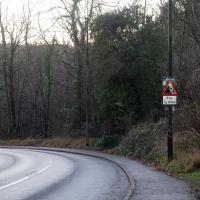
My historical research took a wander underground recently, partly inspired by the Canynge Square sinkhole, partly by St Vincent's (Ghyston's) cave and its tunnel to the Observatory, and I was surprised to find that there might be an intact tunnel from the Bristol Port Railway and Pier still just sitting there under Bridge Valley Road. A quick search turned up this recent video by an intrepid explorer, so it's definitely still there.
I went looking for the entrances today, and definitely found the south entrance, at the start of the Bridge Valley Path, the footpath that starts with steps at the bottom of Bridge Valley Road. It's easy to miss if you're not looking for it. I think I've figured out where the north entrance is, too, but it was getting dark at that stage and the Portway was still busy enough that crossing the road was still the normal nuisance, so I thought I'd leave further explorations for another day.
Tags: Bristol Places UK onemilematt united kingdom Bridge Valley Road
Auto-Tags: Plant Natural landscape Infrastructure Natural environment Road surface Tree Branch Thoroughfare Sky Vegetation Wood Asphalt Grass Woody plant Road
Text Recognition Tags: For a mile For a mile