Tagged: sky
Victoria Square Underpass
06 May 2021
I'm meant to be taking a little break from this project, but in my Victoria Square researches after my last walk I noticed a curiosity I wanted to investigate. The community layer on Know Your Place has a single photograph captioned, "The remains of an 'underpass' in Victoria Square".
Looking back through the maps, I could see that there really did used to be an underpass across what used to be Birdcage Walk. I can only guess that it was there to join the two halves of the square's private garden that used to be separated by tall railings that were taken away during WWII. Maybe it was a landscaping curiosity, maybe it was just to save them having to un-lock and re-lock two gates and risk mixing with the hoi polloi on the public path in the middle...
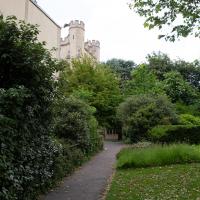
Anyway. Intrigued, I popped up to Clifton Village this lunchtime for a post-voting coffee, and on the way examined the remains of the underpass—still there, but only if you know what you're looking for, I'd say—and also visited a tiny little road with a cottage and a townhouse I'd never seen before, just off Clifton Hill, and got distracted by wandering the little garden with the war memorial in St Andrew's churchyard just because the gate happened to be open.
EDIT: Aha! Found this snippet when I was researching something completely different, of course. From the ever-helpful CHIS website:
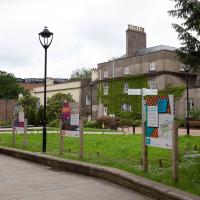
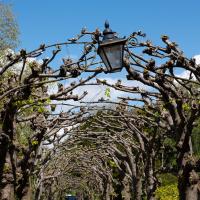
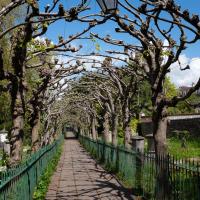
When there were railings all round the garden and down the central path, in order that the children could play together in either garden there was a tunnel for them to go through. This was filled in during the 1970s but almost at the south east end of the path if one looks over the low wall the top of the arches can still be seen.
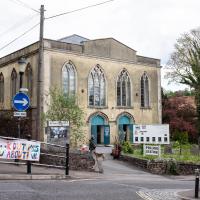
At some point, the local polling station stopped being at Holy Trinity and moved here.
Speaking of elections, one of the four elections happening today is the Bristol mayoral election; current enumbent Marvin Rees, an Evangelical of some variety, met church leaders here on the first day of his first term: “We prayed, and we invited the spirit of God into the city."
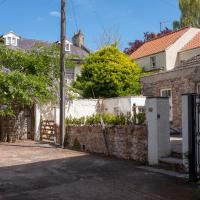
I wander on impulse down a little side-street I'd never really noticed before and find a curious cottage (Prospect Cottage, right) and a big 18th century listed house I've never seen before (Clifton Retreat, hidden behind the wisteria and other foliage ahead/left.)
If you'd shown me this photo before today, of a place I've been within spitting distance of thousands of times, I'd have not had a clue where it was. Bristol's fractal nature never ceases to amaze me.
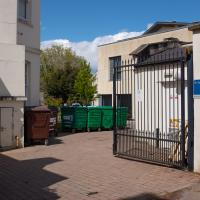
And opposite Prospect Cottage, as if to give some direct contrast, the modern and anything-but-quaint goods entrance to the Nuffield Hospital.
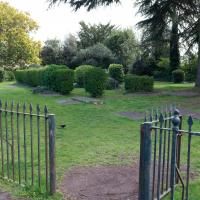
I'm going to call this the memorial garden. Don't know if it has an official name, but it's a railinged-off area with the war memorial in it...
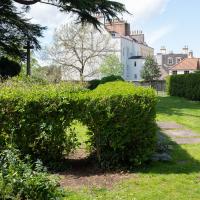
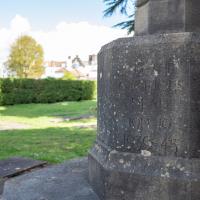
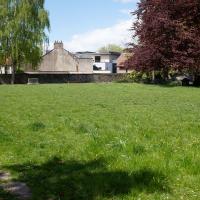
Up until WWII, anyway. The outline of the church remains around this square of land; the stones you can see bottom left are one of its walls. Among the many interesting images accompanying Bristol 24/7's story about the Bristol Blitz you can see an image of St Andrew's Church after the bombing raid of November 1940. I'd call it an interior shot, but most of the interior had become the exterior by that point...
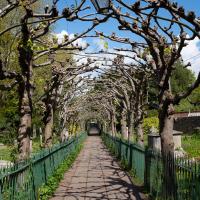
Sequel Injection
07 May 2021
I saw this tweet the other day and started thinking of my second Covid-19 vaccination as my "Sequel Injection" (to a geek, it's funny. You'll have to take my word for it.) Whatever you call it, this morning I went and got it.
It was in the same place I got my initial injection—my left arm! No, okay, it was at the Clifton College Prep School. I didn't take any photos of the event itself; the NHS production line is so efficient you barely have time to do anything else, even if the privacy of other patients wasn't a factor.
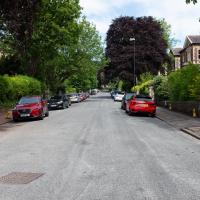
Along the way I mused at all the road resurfacing going on in Clifton, and also discovered a secret (okay, not-well-known and possibly slightly trespassey) way into Canynge Square, and on the way back I knocked off a few streets from my "leftovers list" of north-east Clifton. I've got much of Clifton done now, with the only obvious "to dos" on the east side of Whiteladies Road...
It was quite a long walk, and I'm feeling pretty tired now, though that might be the effects of the jab too, I suppose. Anyway. Tomorrow and Monday I'm walking outside Bristol, I think, and I imagine my feet will need some recovery time on Sunday, so it might be a while before I post another Wander.
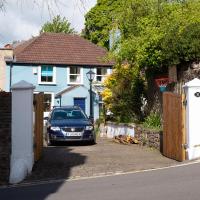
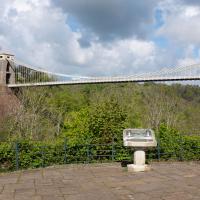
The Fujifilm X100T that I mostly use for these trips is a great camera, but it's also a fixed lens, approximately that of a 35mm focal length on a full-frame camera. So I quite often can't fit in whole buildings, whole terraces, or whole suspension bridges :D
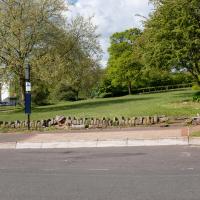
I tried to figure out what this used to be—didn't have a lot of luck, but the next snap is taken from an old OS map showing that this area has been a stand for public transport since long before the modern bus stop here.
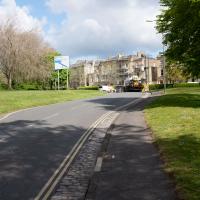
There were a lot of closed roads in Clifton this morning. I watched the white van at the end make its way carefully around the ROAD CLOSED signs at the village end of Observatory Road, drive past me, and get to where you can see it in the distance here before the driver was sent back with a flea in his ear from the workman on "stop the idiots driving through the newly-laid tarmac" duty.
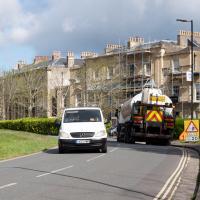
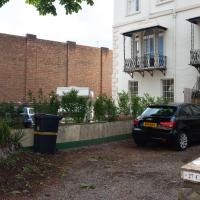
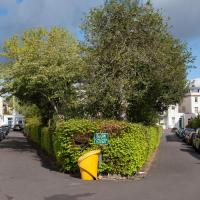
I'd spotted in my Canynge Square researches that there might be a cut-through from a gate I'd seen in previous excursions to the side of the Regrave Theatre.
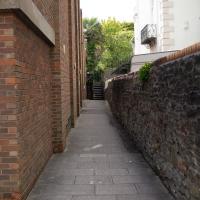
Yup, what I thought led to a back garden or something is actually a strange little cut-through to the back of the Redgrave.
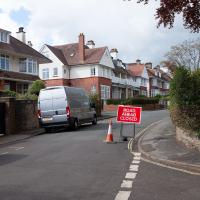
Told you they were doing a lot of resurfacing.
Here's a related fun fact to go with a dull picture, at least: the "greatest advance in road construction since Roman times" is the process of "Macadamisation": crushed stone bound with gravel on a firm base of large stones, with a camber, raised above the surrounding ground. It was invented by Bristol Turnpike Trust surveyor John McAdam, and was later refined by the addition of tar as a binding agent, giving us tarmacadam, or "tarmac", as we generally call it today.
So, basically, this ROAD CLOSED AHEAD sign, due to resurfacing, can be traced back to 1820s Bristol, where the very idea of surfacing roads was invented.
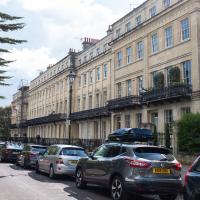
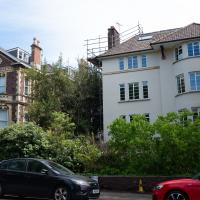
I vaguely remembered having "get better picture of Worcester Terrace" on my "to-do" list, so of course it's got scaffolding up now.
Whistle Stop Tour Via a Hansom
12 May 2021
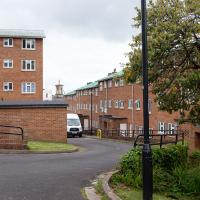
I wanted to take another snap of an interesting Gothic Revival place in Clifton, having found out a bit more about the owner. On the way I walked through the Clifton Vale Close estate, idly wondering again whether it might've been the site of Bristol's Vauxhall Pleasure Gardens (I've not researched further yet.) On the way back I knocked off the last remaining bit of Queens Road I had yet to walk and tried to find the bit of communal land that Sarah Guppy bought so as not to have her view built on...
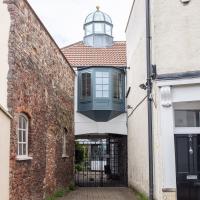
It's an odd little nook. I imagine there's a quite expensive property back there. I've also never noticed the "OTF" carved into the near door pillar before.
Between the gate and the oriel, the keystone reads "The Mew House 1995".
The bricked-up door to the left seems to be an outbuilding in the incredibly grand-looking back garden of the Bishop's House. Speaking of which, here's a bonus pic of the Vicar of Clifton standing at the front door.
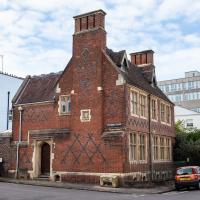
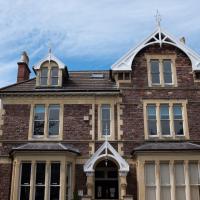
I love this Gothic Revival pile. I've snapped it before, but I recently found out something interesting...
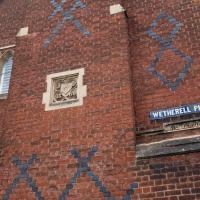
"House. 1860. By JA Hansom. For himself."
Does the name Joseph Hansom sound familiar? As well as being the architect of this house, and, to pick a couple of things at random, Arundel Cathedral and Brimingham Town Hall, he also found the time to invent the Hansom Cab.
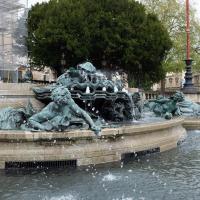
From the listing:
By Edwin Rickards and Henry Poole. Pennant ashlar, limestone balustrades, cast-iron railings and lamps, bronze statues. Raised forecourt with curved steps and a large fountain with bronze aquatic statues and granite urns; flanking plinths with flagstaffs on moulded bases, turned balustrades with lamps, curved railings with urn finials to the front, bronze lions couchant to the rear, piers to outer gateways with lamps on moulded bases. Rickards and Poole were a notable partnership of the Edwardian period, and this is a particularly good example of their work.
It's nice to see it running. It was dormant the last time we saw it, possibly closed down for winter?
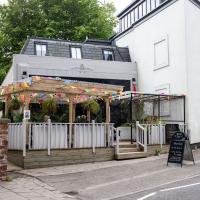
Bocye's Avenue Windows
19 May 2021
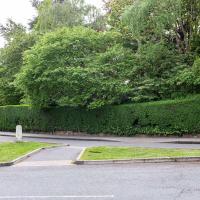
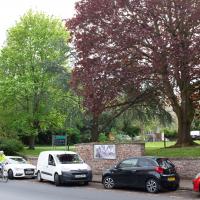
I just nipped up to Clifton Village to get a coffee, though I did manage to walk down a little alleyway I'd not really noticed before. Or perhaps I had noticed it and it looked private, but today I felt like wandering up its twenty or so feet anyway... The reflections in the shop windows on Boyce's Avenue gave me the idea to take a few snaps of them, so that's the majority of my small amount of snapping today.
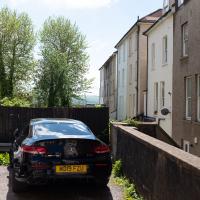
I'd quite likely been down this little alleyway (that leads to the back of the Clifton Medi-spa where I used to have acupuncture) before, but it's so nondescript I coudln't remember. Better safe than sorry. It has a view of some cars and the back of Royal York Villas
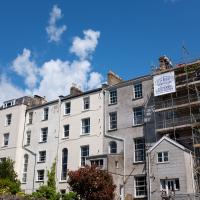
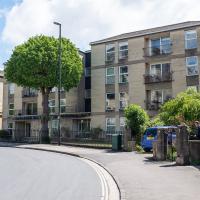
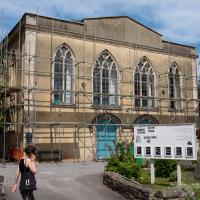
Well, not now it isn't. The church was demolished (after spending some post-war time deconsecrated as St Andrew's Hall) to make way for flats in 1975. There are some photos of how it used to look on ChurchCrawler.
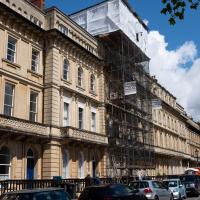
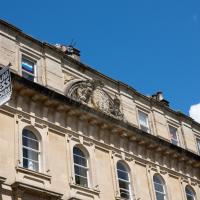
Not that you can get much of a view of it with a little camera and with it behind a bunch of netting. Looks rather friable. Apparently it was part of a scheme to attract Queen Victoria to visit that never came to fruition.
Shop Fronts of Regent Street
22 May 2021
I didn't even think I'd manage to get out today, such was the weather forecast. As it turned out, it's been quite a nice day, and I managed to nip up to Clifton Village to pop to the Post Office. As with my last outing, I decided after snapping one shop-front on Regent Street that I might as well snap the whole row, and muse on a few of them, the only service I really offer over and above Google Street View for a lot of my pictures 😀
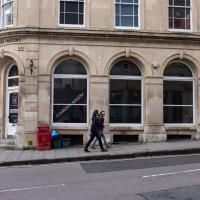
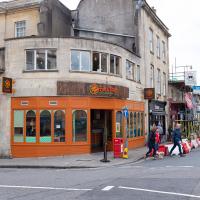
I've not been in since it changed from a Boston Tea Party, but I may have to try it just to sit upstairs and watch the world go by like I used to...
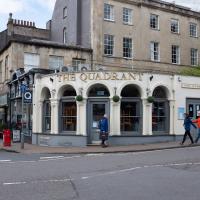
Named after its cross-section from above, I've always assumed. Anyway. That's the last shop on that side of the road, so apart from the one I missed on the starting corner, Awakn, that's snaps of all the shops on the west side of Regent Street for you.
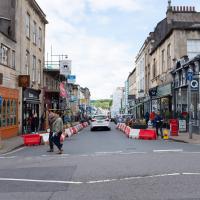
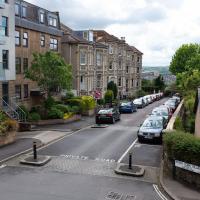
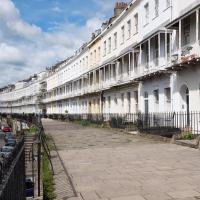
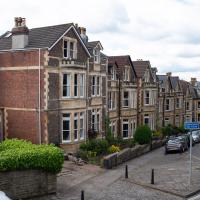
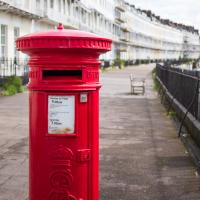
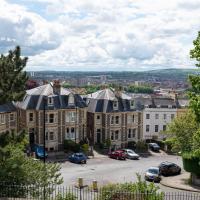
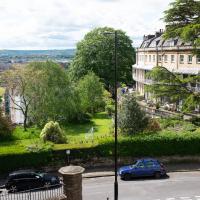
So the Paragon kids play football? I'd sort of assumed there would be miniature Rugby posts, or perhaps a fives court.
Coffee, Coronation and Clift House Road
28 May 2021
Another dash to Greville Smyth Park for a coffee from Rich at Hopper, but at least this time I managed to divert a bit and knock off a small section of Cumberland Road I'd managed to miss on previous excursions. Along the way I muse on a strange residence in between a warehouse and a tannery, and wonder if the Mayor might be deliberately letting the Cumberland Road Flyover area go to seed...
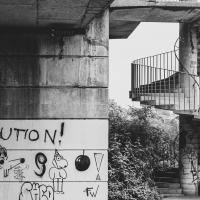
Though originally it was a revAlution, it seems. I think they missed a chance to turn the "A" into the anarchy symbol, which would have styled it out nicely...
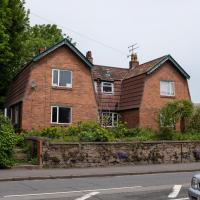
Perched between the C Bond and the Thomas Ware tannery, I've always been curious about this odd residence with its tall mansards and unusual layout. It is, apparently, 8 and 9 Clift House Road. If it wasn't for the big busy route in front it could be in the middle of the countryside, really.
I imagine having that both the road and the tannery—operating since 1840 and still going strong, apparently—rather detracts from property value, but perhaps it's actually owned by the tanners and tenanted by people who are used to the smell anyway...
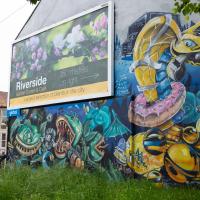
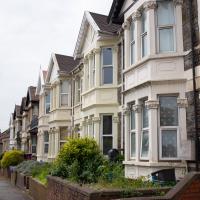
This is the bit of Coronation Road I came to wander down specifically, one of the little bits of road I'd missed on previous walks. It features the same nice Victorian terraces as much of the rest of Bedminster, including individual house names. I imagine the constant traffic reduces the appeal of this stretch, though.

Another Day, Another 50 Metres
29 May 2021
I met my friends Sarah and Vik at Riverside Garden Centre today; I needed to buy some compost for repotting my wildly-overgrowing aloe vera, and I went a little bit out of my way to knock off a stretch of Ashton Road. It was a pleasant enough walk in the surprisingly warm (and surprising-not-tipping-it-down-on-a-Bank-Holiday-weekend) weather.
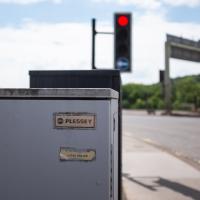
Traffic light control box, I assume. It's about as far from home as I am, as Plessey's headquarters were in Ilford, not far from where I grew up. Guessing this might be original gear from the late 1960s, when the flyover system was built.
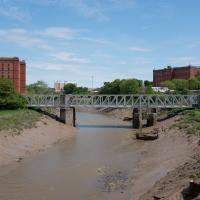
It looked pretty amazing back in the day; it was a double-decker swing bridge with a control tower raised over the swing point. Here's another old snap, this one from a more similar viewpoint to mine.
When I moved to Hotwells, it was a pedestrian-only bridge, though one half of it still had the overgrown rail tracks from when it was a bottom-deck railway and top-deck road bridge. Since then it's been refurbished and is now combined pedestrian and Metrobus, with a guided channel for the buses. Amusingly, when it was first put in, they managed to make it too narrow for the buses. In fact, it's closed right now for "works on the guideway" so presumably they're still having problems.
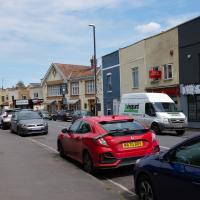
Interesting mixture. Behind Ashton Road, to the right and behind me in this pic, is Ashton Gate stadium, home to Bristol City, which goes some way to explaining the two big pubs (next two photos) on this stretch.
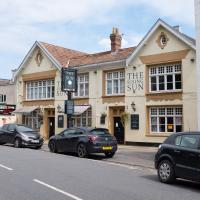
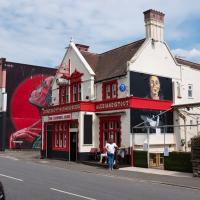
There's an arguably better snap of it on an earlier wander, but at least you get a glimpse of the cool street art on the end of Baynton Road with this one. I still need to walk down Baynton Road, so perhaps I'll save talking about that piece for later...
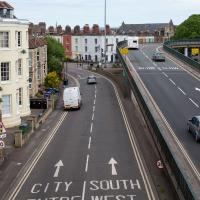
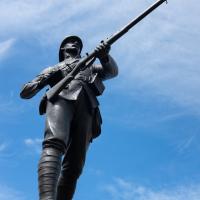
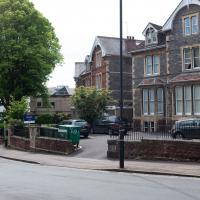
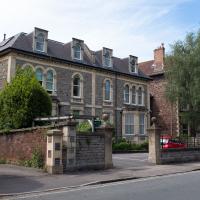
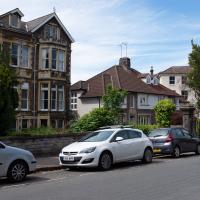
I managed to knock off a reasonable chunk of the roads I had left to walk around the University at the north-eastern extremity of my mile on this nice sunny walk. As well as being impressed by the number of big townhouses now occupied by various departments, I took some time on my way there to check out a war memorial, and some time on the way back to do a little extra wandering of Berkeley Square.
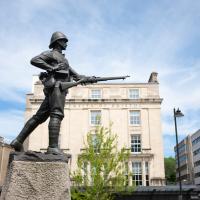
With a Lee-Metford rifle. The Lee Enfield was already in production when the Second Boer War started, but clearly this fella was still on the previous issue...
You'll notice he's also wearing puttees. They'd mostly died out as military wear by the end of WWII.
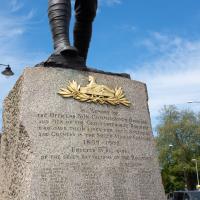
What's Egypt got to do with South Africa, you ask? It's the badge of the Gloucester Regiment.
The Glosters were the only regiment in the British Army to wear a cap badge on both the front and the back of their caps, and it's unsurprising that it references Egypt. At the Battle of Alexandria in 1801:
The front and rear ranks of the 28th were simultaneously engaged, whereby the soldiers received the order "Front rank stay as you are, rear rank about turn" and in commemoration the regiment later adopted a second cap badge, the 'Back Number,' worn at the back of their head-dress.
The Glosters were later merged with a couple of other regiments, but their successors, the Rifles, still wear the back badge.
Bank Holiday Street Art
31 May 2021
A nice warm Bank Holiday Monday saw me walk back over to Bedminster to do justice to something we glimpsed on my last wander. Along the way I spotted a couple of new pieces of street art tucked away on the south side of the Cumberland Basin Flyover system, so this turned into a micro-graffiti walk.
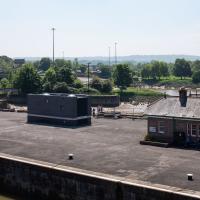
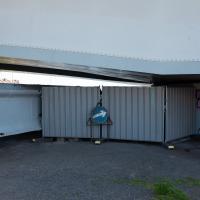
I guess they must be doing something to the Plimsoll Bridge—the door to the pivot mechanism base is behind there, I think.
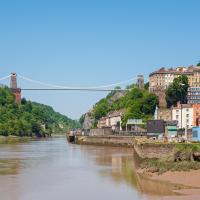
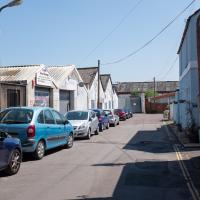
We'll get to my main reason for coming here in a minute, but for now let's just have a little poke around this semi-industrial, semi-residential alleyway.
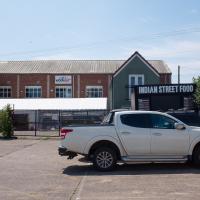
I imagine I've seen the stall there at places like the Tobacco Factory Market, but I've got a terrible memory for things like that.
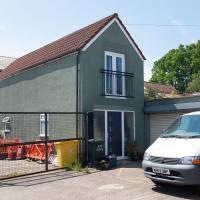
Apparently this is 34 Baynton Road. Looks like just a tiny, isolated house, stuck in a very odd little corner.
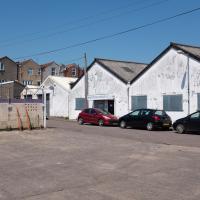
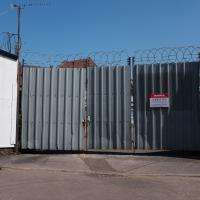
It used to be an Auction Rooms, for both Dreweatts and BCVA, from what I recall. I went to my very first auction there, in fact, back when I had a year of "Artist Dates" in 2013.
I should start doing those again, now we're (hopefully) going to be able to go places more freely again.
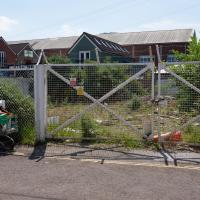
I imagine this derelict site would be worth quite a lot. Odd that it's just sitting there mouldering.
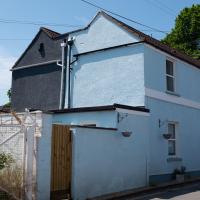
Set back behind the shops on the main road is this little pair of houses. All well-kept and tidy, and not quite as odd a place to be as the one that's isolated in the car park behind them, but still quite a strange location.
A Longer-than-it-looks Walk With Lisa
06 Jun 2021
The track on the map doesn't tell the whole story of this walk with Lisa around and about Clifton, Berkeley Square, Brandon Hill and the harbourside, because the batteries on my GPS ran out while we were on the roof of Trenchard Street car park, it seems. Oh well. I think I did most of the area I was interested in finishing off around the University; there were only a few new bits around Brandon Hill that won't be on the track, and I can easily do them again.
Still, technology woes aside it was a nice walk, albeit a bit warm for climbing all those hills, and sat on the harbourside watching the world go by for a while, too. It was good to see the Bristol Ferry Boats carrying people around again, especially.
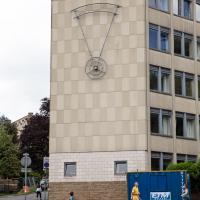
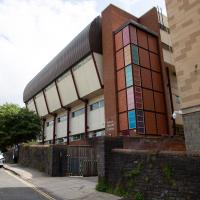
I've sometimes idly wondered what this thing on the side of Richmond Heights is. I'm told by KYP Bristol (who certainly know their local history) that it used to have the name of the building on it, but the letters fell off.
This means that somewhere out there, a student almost certainly has all the letters they need to make a large sign saying "CHERISH MID THONG"...
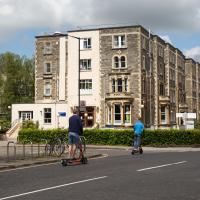
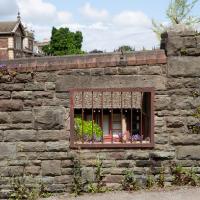
No idea why there's a window in this wall. The wall looks a lot older than everything surrounding it, so perhaps it's just some historical vestige leftover in between bits of University development.
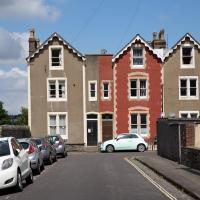
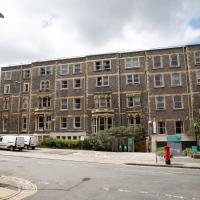
We're just outside my mile radius here, but Osborne Villas Looked too tempting to just walk past.
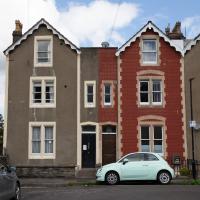
Looked a bit to me like number 16 had tilted over to the left a bit since it was built...