Tagged: building
The more I research it, the more I find that Hotwells had far better transport links back in Victorian and Edwardian times than it has today. Along with buses that went to more useful places than the City Centre, there were trams, the funicular up to Clifton, the landing stage for paddle steamer services and two railway stations all within easy walking distance of me.
Today I took a day off work as preparation for doing the bookkeeping for my tax return1, and took a wander along to the site of what would have been my nearest station, Hotwells (or Clifton, as it started out in life), nestled in the shadow of the suspension bridge, the Bristol terminus of the Bristol Port Railway and Pier.
From there I wandered down the Portway, following the original line, until I got to the area around Sneyd Park Junction, where the tunnel from the slightly later Clifton Extension Railway joined up with this originally-isolated BPR line. Then I headed up to Clifton through the "goat gully" at Walcombe Slade, seeing the few above-ground bits of evidence of the tunnel (which is still in regular use) along the way.
It was a lovely day, and a good walk, and it was interesting to daydream of the times when I could have walked a few minutes from my flat down to Dowry Parade, caught a short tram ride to Hotwells Stations, and then headed from there to Avonmouth, perhaps even to board a transatlantic passenger service. The completion of the Clifton Extension Railway that linked the Avonmouth station with Temple Meads made relatively direct transatlantic travel from London via Bristol possible, with passengers travelling up from Paddington to Temple Meads, on to Avonmouth on the Clifton Extension Railway and Port Railway and Pier line, then perhaps catching a Cambpell's paddle steamer—which sometimes acted as tenders for large steamers—to a larger ship that was headed out for Canada, say.
1 I've learned that the best approach is to take two days off and deliberately do something that's not my bookkeeping on the first day, as otherwise I just inevitably end up procrastinating and feeling guilty on the first day no matter what. I have an odd brain, but at least I'm learning strategies for dealing with its strange ways as I get older...
2 Information mostly gleaned from Colin Maggs' The Bristol Port Railway & Pier and the Clifton Extension Railway, The Oakwood Press, 1975.
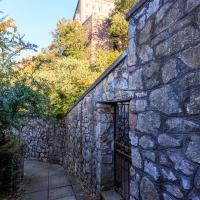
I'm pretty sure from looking at some maps that this is the gate that would have led to Prince's Lane, if it were still passable.
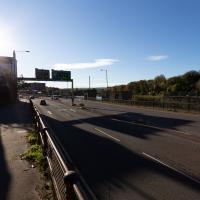
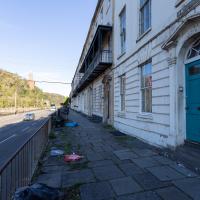
St Vincent's Parade looking a bit more run-down than normal. This street, like the one I live in, was built as lodging houses for visitors to the hot wells. I imagine it was quite a pleasant aspect before later developments like the building of the Portway.
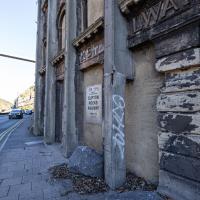
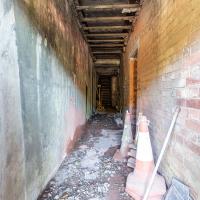
I didn't go inside, just shot through the gate with a steady hand. I have been in there, though, on one of the open day tours.
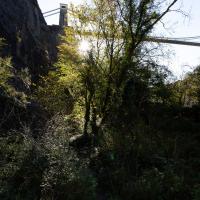
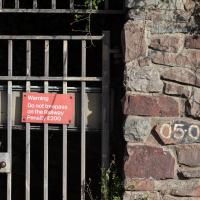
Yup, this is an access gate for the railway folk, presumably an easy route to this end of the tunnel. It's possible there's somewhere public to snap the tunnel from—there's a bridge further out of town toward Sea Mills, and there's a chance you could see the tunnel from there, but today's walk is already quite long enough, thank you.
From here the Clifton Extension Railway (from 1877) would have joined up with the line from Hotwells (completed twelve years earlier) at Sneyd Park Junction, a few hundred feet further out of town, and then proceeded to Sea Mills and beyond, terminating at Avonmouth. That bit of the line still runs; it's only the bit from Hotwells to here that was pulled up to make room for the Portway road, making Sneyd Park Junction no longer a junction.
Here a little fact I like: when the Bristol Port Railway ran out to Avonmouth from both Clifton Down station at the high far end of the tunnel near Whiteladies Road, and also from Hotwells, they offered a special splilt return ticket that let you walk down the hill from your home to Hotwells, take the train out to Avonmouth, then return to Clifton Down instead, so you could walk down the hill to home rather than walking back up. A lot of the dockworkers took this option, and it gladdens me to find that even these hardy folk were so put off by the hills of Bristol that they went for the lazy option!
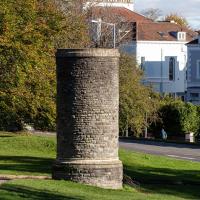
This is the Pembroke Road ventilation tower, sometimes known as the "pound tower", as it's next to the pound the Downs maintenance people use for equipment storage.
From To Keep Open and Unenclosed, the Management of the Durdham Down Since 1861, Bristol Branch of the Historical Association, 2005:
...construction of the tunnel began immediately at Cooks Folly Wood, the top of Pembroke Road and two other points. The Pembroke Road shaft was subsequently retained to ventilate the tunnel. The sinking of this shaft had reached rail level by May 1872 when Captain Beaumont's compressed air diamond drilling machine came into use. Most of the machinery associated with the diamond drilling machine was on the surface: the machine had a 4" diameter compressed air service from a 50 hp steam engine at the surface. By comparison, the engine to lift spoil and water from the tunnel was only 20 hp. The drill had to be cooled by water which was run into trucks and presumably wound to the surface. Dynamite charges were set in the holes after the dynamite had been softened by steam before use! On 10th May 1872 four pounds of dynamite exploded while being 'softened' at 2.30 a.m. blowing off the engine-house roof and smashing windows in the three houses facing the Downs at the top of Pembroke Road. Fortunately no-one was injured and when the glazier called at one house he found that the occupant had slept through the whole episode!
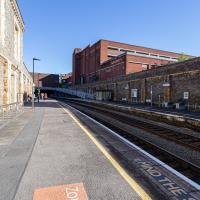
I think this is the very first time I've set foot on Clifton Down Station platform. I believe this is the platform for the "up" trains, if I'm getting my terminology right, but I think it's a fairly arbitrary choice, as much of the line is single track.
The Gridiron and Bower Ashton Part Two
03 Dec 2021
On my last wander, to Bower Ashton, I was intending to knock Blackmoors Lane off my list "to-do" list, but got a bit diverted. I also took a little look into the history of the Gridiron, once a cheaper alternative to dry dock that was nestled just south of North Entrance Lock.
Today I had to go to send a parcel off somewhere, so I decided on going to the North Street Post Office via Blackmoors Lane. I didn't have much intention of anything else, but as luck would have it I walked out both at low tide and also as some lockkeepers seemed to be having a bit of a training session, and one of the more senior people was (a) happy to answer a few random questions on the Gridiron and (b) actually knew a lot about it, as Gridiron maintenance had been one of his jobs, more than twenty years ago...
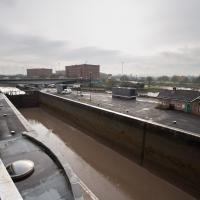
If you look at the lock wall, about halfway between the lock gates and the inset ladder, you'll see a little square hole. I had no idea what it was for until today, and I had no idea I was going to find out...
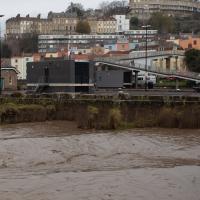
This used to be a view of the Gridiron, the structure I mentioned on yesterday's wander.
I got curious and went back to ask one of the lockkeepers about it. As it turned out, he knew lots about it as he'd previously been responsible for cleaning it! More about that when I come back (including a historical photo of a boat on the Gridiron for some context) as some of the things he told me needed me to retrace my steps for some more photos.
First, though, we'll nip over to Bower Ashton and North Streeet for a quick bit of shopping and to knock Blackmoors Lane of my "to do" list.
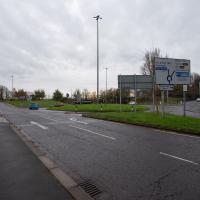
The delights of the Bower Ashton roundabout. Here's a picture of it under construction in the 1960s from the Bristol Archives. Don't tell me I don't know how to show you a good time.
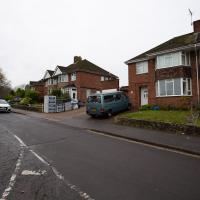
Here it is: my target road to tick off the list.
These are the houses in that archive photo.
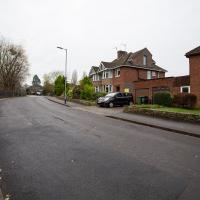
Some of the houses along here are definitely 1950s, as you can hear in this oral history, where Eileen Pimm describes the process of watching the house she still lives in being built in 1957.
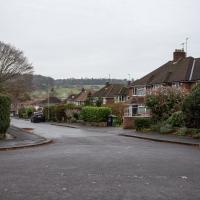
Although we're heading towards the trafficky roar of the A370, it's still more of a subdued hum from here, and you could almost convince yourself that you were on the outskirts of a little town in the country.
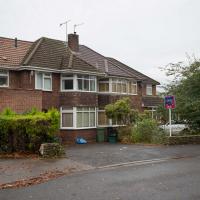
Bigger than Sunday's nearby semi, today's is a four-bedroom (it's the left-hand house) and has just sold for £725,000. It all looks very well-put-together and modernised throughout, mind.
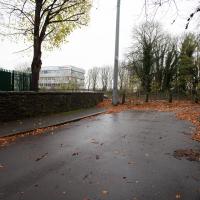
Opposite Country Gates, which is the rather aspirational name for the office block there.
Out of sight to my right is Ashton Park School, which accounts for quite a few things that look like roads on the map, but which aren't public and which I'm not going to wander down.
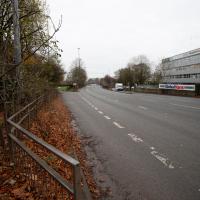
As usual around here, I want to go that way but there's no crossing and no pavement, so we'll head back through this little green and head for that bridge you can see that spans the left-hand lane here.
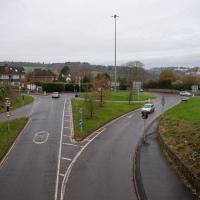
Considering I didn't know there was a historical photo to copy when I shot this, it's not too far off the same viewpoint.
A Door, a Square, a Few Night Shots
04 Dec 2021
I didn't take many pictures on this quite long wander, partly because Lisa and I wandered across to Bedminster via Bower Ashton, which I've snapped quite a lot of on the last couple of walks, and also because we lost the light fairly quickly, though spending a half-hour drinking mulled wine in the Ashton might have had a little to do with that...
Before we left Hotwells I wanted to visit a door I'd heard about on Cornwallis Crescent and also take a little look at a couple of houses in Dowry Square to consider the 1960s regeneration of Hotwells.
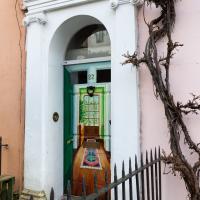
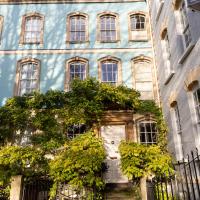
When it's three doors in one! Apparently this door has had this trompe-l'œil effect since the summer, but the vine was only recently cut back, which might explain why I've not noticed it before...
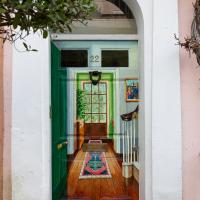
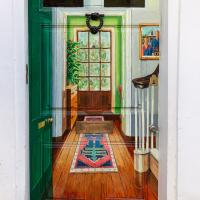
Favourite detail: the American Gothic style family portrait. (Though I'm guessing it depicts the husband and wife of the family, as opposed to father and daughter, like the original...)
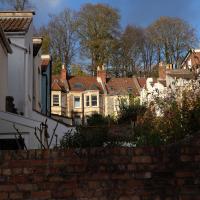
A glimpse of Cornwallis Avenue across the back gardens between St Vincent's Road and Dowry Road.
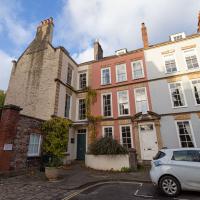
I've snapped this before, too: the home of Humphry Davy, but here it again for context, as it's currently on the market for £1,200,000...
And here, at the other end of the terrace, is Peter Ware's old house. According to Hotwells - Spa to Pantomime, during the area's regeneration:
One house in Freeland Place was bought for £250 and Peter Ware, a charismatic local architect, bought a stunning corner house in Dowry Square for £200 including bed bugs!
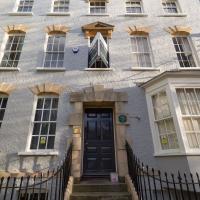
It's currently set up as a set of separate serviced offices. If you're interested in buying the freehold, they're looking for offers in excess of £1m.
As well as being the former home of Master of Ceremonies of the Hot Well, William Pennington, it was for a while The Hotwells Nursery and School for Mothers. Later it looks like it turned into Social Services' Hotwells Day Nursery, if the footage in this BBC documentary, starting at around the 20-minute mark.
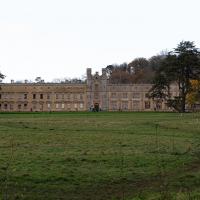
Site of a manor house since the 11th Century. Last time I was in there it was also with Lisa, my companion for this walk, as a team of storytellers from Red Rope Theatre read us ghost stories just before Halloween. It was excellent.
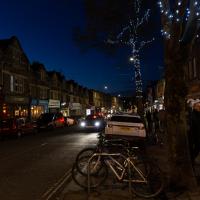
Night fell fairly fast on our way from our mulled wine at The Ashton to North Street to have a poke around the stock of Storysmith bookshop in their new location—they've just moved here from much further east along the road.
A Water-Based Wander
11 Dec 2021
I woke up on this Saturday with a headache, feeling like I'd not slept at all. As well as that, I'm still in some pain from the wisdom tooth extraction I had a few weeks ago. I moped about the flat for a while and then decided that the best thing to do was to force myself out on at least a small walk to get some fresh air and coffee.
Was there anywhere I could walk locally that I'd never been? Actually, yes! Although it's not a road, and I didn't walk it, there is actually one route that I've not travelled so far in my wanders. And it even had coffee near its far end...
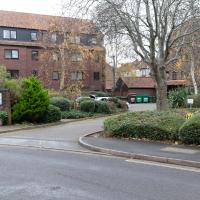
Built on the site of Champions Dock, 1982, it says on the sign.
I walked through this little estate every weekday for years, on my way to catch the commuter ferry into town when I used to work on Victoria Street (in the days before the ripples of the global financial crash finally swept away the council subsidy for the beloved early-morning boat service.)
The Society of Merchant Venturers did, of course, own this dock, like most of the rest of Bristol. Perhaps the most curiosity-inducing document in the Bristol Archives for Champions Dock is "Papers re the Quays & Nuisances, 1751 - 1784", including "Proposals to cleanse the quays to take on Champions Dock and to deal with nuisances in the river". Well, I'm sure there are fewer nuisances now they've filled it in and built an estate on it, but it took them a while...
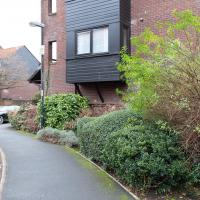
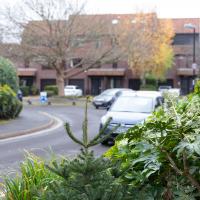
It took me some time to realise that it's the well-planned and well-cared-for plants around this estate that really improves it as a place. It's less of a fairly bland 1980s housing estate, and more of a rampant shrubbery that just happens to have a fairly bland 1980s housing estate inside it. There's a huge variety of greenery, a lot of shrubs and trees and some lovely well-kept individual gardens to boot.
It's also been quite cleverly thought out with a view to defending against such dangers as tagging—much of the ample wall-space is protected by cubic yard upon cubic yard of dense and often prickly planting.
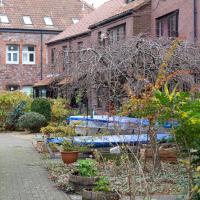
And boats. And bird-feeders. We're only one street back from the Hotwell Road and it's already quite a different feeling.
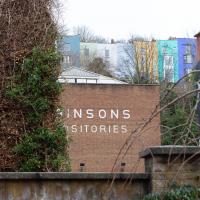
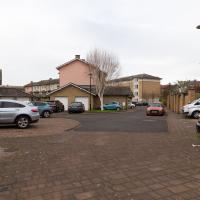
I came this way on a whim, assuming that I'd be able to find my way back out to the Hotwell Road. At this point we've moved from Rownham Mead to Pooles Wharf Court, who always feel like they're a bit more protective of their space, so a quick exit seemed only polite...
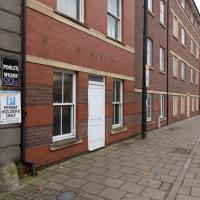
...but you can't tell that it's not a house from the Hotwell Road. I wonder how many times I've walked past the windows and front door and not realised that they're just the frontage of the car park?
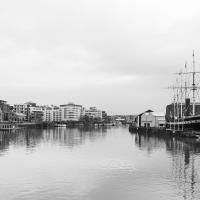
I'm heading for a coffee from Imagine That, in the Bristol Marina. Which is on the other side of harbour. Normally I'd have walked down that side to get there, but today...
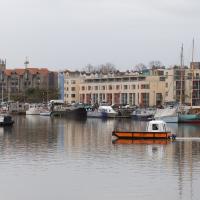
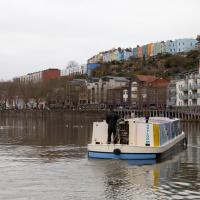
First, though, we'll take a poke around the Harbour Inlet. Here's Skyloom just pulling away from the pump-out station.
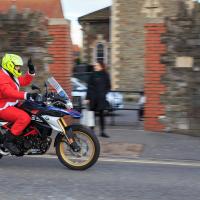
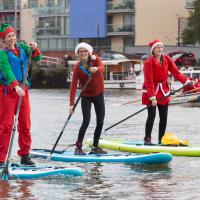
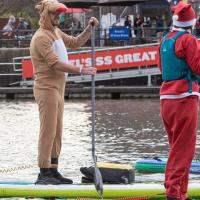
My friend Lisa texted me to see if I wanted to pop down and take a photo or two of the event she was taking part in: Santa SUP. SUP Bristol organise stand-up paddleboarding on the floating harbour, and their annual Santas-on-paddlboards event is quite the sight.
On the way there, I grabbed a historical photo I'd been wanting to recreate for a while of the shiny and new Cumberland Basin flyovers back in 1965, because I reckoned I could fit finding the same viewpoint into my outbound journey. Also, after having only used it on a wander for the very first time yesterday, I managed two crossings in the cross-harbour ferry today to get to the best locations for snapping the paddleboarders...
So, then, this wander is mostly a bunch of photos of paddleboarding Santas. Tis the season... Enjoy!
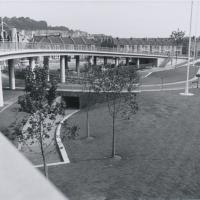
So, mostly this wander will be a panoply of photos of my friend Lisa and her paddleboarding friends making their way around the harbour dressed in Christmas outfits. But, on the way, I figured I'd try to reproduce another historical photo.
This one's from the Bristol Archives' collection of council Public Relations photos. Its title is "The northern side of the Cumberland Basin Bridges Scheme: Completed and landscaped, 1965".
I find that this actually looks quite nice, all clean and shiny and new. It probably looks very similar to the architect's drawing and scale models and what-have-you that they produce for these sorts of things.
Via Bristol Archives/Know Your Place.
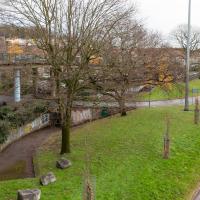
And here's the site today. The weathered concrete and tagging doesn't really improve things, but at least it looks like one of the original trees has thrived.
It's less so much the look of the road system, perhaps, and more that on a busy day it's just an urban hellscape of traffic and noise. On a Sunday like this you could actually believe that children could play here (there was originally a playground to go with the fountain and other features I'm mentioned in the past...)
However, most of the time, just like with the Portway, the sheer weight and (acoustic) volume of the traffic and its accompanying fumes and danger has clearly increased beyond anything the original planners ever envisaged.
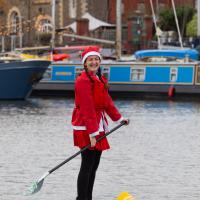
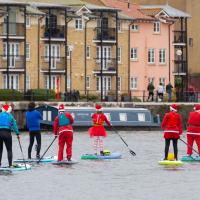
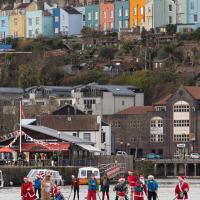
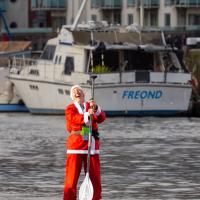
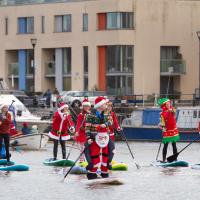
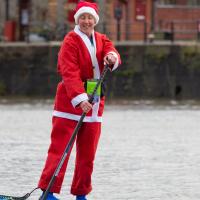
They do make it look quite easy. I'd have definitely fallen in about a hundred times by now.
A Constitutional to Burwalls and Back
21 Dec 2021
The recent lack of posts here is mostly due to my feeling very run down following having a couple of wisdom teeth extracted. Having had an emergency appointment yesterday1, hopefully I'll be on the mend now, though it does mean I'm on the kind of antibiotics where you can't touch alcohol for the whole of the Christmas period. I have tried to keep myself a little distracted from the pain by working on the nuts and bolts of this website—you should notice that the front page loads rather faster now than it used to, and that there's a shiny new statistics page that I'll probably be continuing to work on. Oh, and you should find that the tags below the photos are now clickable and will take you to a page of all other wanders that have photos with the same tag.
Today I felt like I needed to drag myself out of the house, but I didn't want to go too far, and I needed to get to the Post Office up in Clifton Village to post a Christmas card (spoiler for my parents: it's going to be late. Sorry.) As luck would have it, idly looking at the map I spotted that I'd missed off a section of Burwalls Road in the past, and that's basically one of the long-ways-round to Clifton Village, crossing the river to Rownham and walking up the hill on the Somerset side before coming back across the Suspension Bridge.
As I was heading for Burwalls Road I decided to make Burwalls itself the focal point of the walk, but unfortunately the mansion grounds are private and the place is hard to snap. Still, at least it gave me a destination. Burwalls was the mansion built by Bristol press magnate Joseph Leech, who I've mentioned before after buying a vintage book he wrote on a previous wander. There's a good article about the house on House and Heritage which has some photos from angles I couldn't ever get to. (Well, maybe with a drone, but it seems like the kind of area where they may be kitted out for clay pigeon shooting, so I probably wouldn't risk it.)
1 My dentist admitted that she probably needed to keep her internal monologue a bit more internal after we started the appointment with her staring into my mouth and immediately saying, "oh, *that's* weird." These are words one doesn't want to hear from a medical professional.
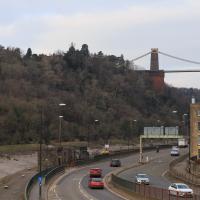
As my plan was to knock off the remaining section of Burwalls Road, my first photo is the small segment of Burwalls itself that you can see from near my house. Burwalls is the mansion on the hilltop, peeping out about halfway from the left edge of the photo and the Suspension Bridge.
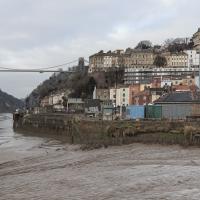
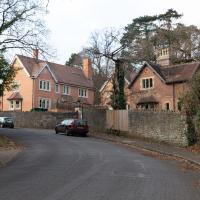
The Burwalls site is split into two halves, according to some of the estate agents' details I've looked at. This read section has some more modern-looking places where you can buy an entire house, if you're rich.
The mansion itself has been divided up into "lateral apartments". If you don't know what those are, you probably can't afford one.
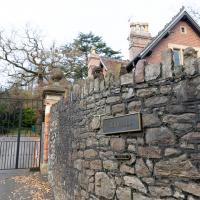
Maybe if I'd got interested in this project before the university sold the place, I'd have been able to pop in and have a look around. Still, I can't blame them; when the estate was on the market in 2012 it was Bristol's most expensive house, valued at £5m, according to the Daily Mail.
That was for the main house and the old stables and lodge, which have been converted to the housing we're looking at. Given that by 2017, just a single one of the five aforementioned lateral apartments in the main manor house was on the market for £1.5, I think the developers probably did quite well...
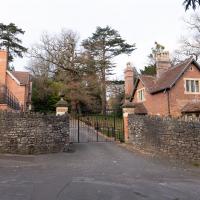
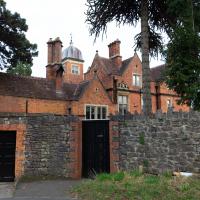
Our first close-up sight. Sadly the main building is disappointingly hard to take a photo of. Still, I suppose if I'd just bought a flat for one-and-a-half million quid I'd probably not want some plebe with a camera being nosy around the place.
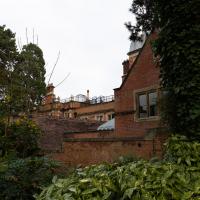
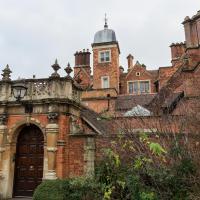
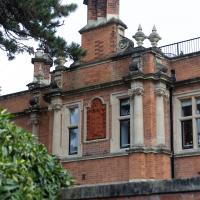
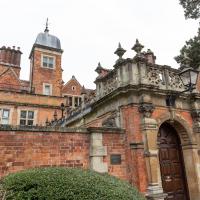
The manor was originally built by Joseph Leech, a fascinating man who was owner of the Bristol Times. Among other fun things, he used to be the "Bristol Church-goer", publishing an anonymous and apparently quite funny column as a "mystery shopper"-style reviewer of church services.
There's a bit more about him on my blog, prompted by my buying a lovely old book by him in a secondhand shop on a previous wander.
A Random New Year's Day Wander
01 Jan 2022
I picked a fairly arbitrary reason for a wander today. Really, I just wanted to do a New Year's Day wander just to get out of the house and to set a precedent for the year to come.
My ostensible reason was to investigate what looked like a road on my map that quartered the lawn in front of the Ashton Court mansion. As it turned out, this is just a muddy footpath/desire line similar to a half-dozen other tracks nearby, and must be some kind of bug or misclassification with the mapping system I'm using, but that's not important. What's important is that I went for a little walk on the first day of the year. As a bonus, I did happen to wander down a couple of sections of new footpath, so technically I broke some new ground too, which is nice.
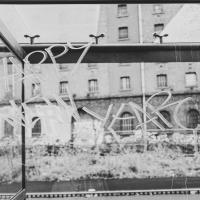
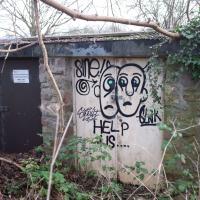
It didn't take long for someone to scrawl the sentiments of the season on a bus shelter.
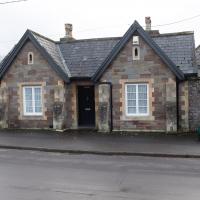
...and this is the Kennel Lodge itself. Presumably you'd want to keep your hounds a fair distance from the house just to keep the racket out of earshot.
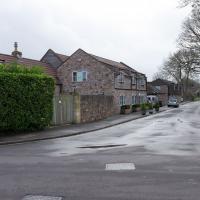
Which seems a bit odd, given that it's not in Hotwells wouldn't really lead there in either direction. Looks like a fairly modern development; maybe it's just one of those roads where the developers picked a roughly local name of out a hat.
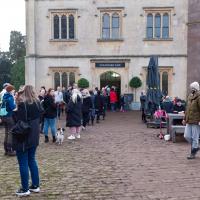
I was tempted up by the thought of a mulled wine stall, or something, but in the end the lengthy queue for anything immediately put me off the idea.
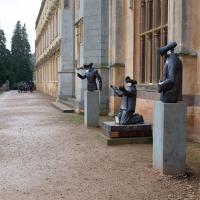
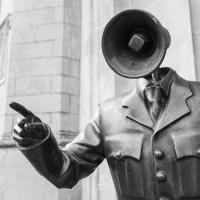
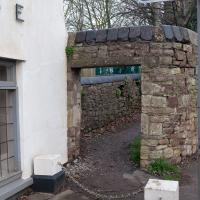
I don't think I noticed this when passing the Ashton pub the last couple of times, but this time a family emerged from it as I was walking in the other direction. It doesn't lead anywhere spectacular, but it was a footpath I'd managed to miss, and the start of it is pleasingly intriguing, at least.
Near and Far
05 Jan 2022
I took advantage of a rare recent day where it wasn't tipping down with rain to get away from my desk on a lunchtime workday and head up to Clifton Village. I'd hoped to snap a reproduction of historical photo which I'd worked out had been taken from the Suspension Bridge, but the gods were not smiling on me. Still, taking only a nice long lens with me worked out very well as the lovely haze of the day made more distant views quite dramatic...
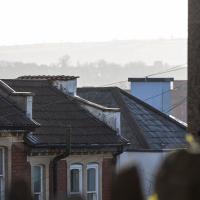
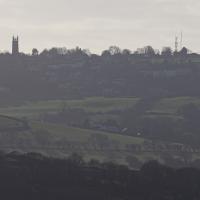
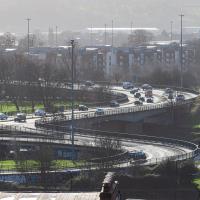
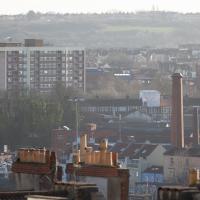
The Nova Scotia pub bottom right, then behind it the chimney of the previously coal-fired pump house at Underfall Yard. In the background behind that and to the right is the Tobacco Factory, with what looks like a little red shed on its roof that I presume is actually a stairwell exit to the roof. On the left-hand side at about the same distance away is the large council block of Little Cross House. It always seems quite calm and tidy when I pass it, which is very regularly, but the Bristol Post painted a different picture in 2019 in their story headlined "Residents of 'forgotten' tower block demand council action over 'nightmare' living conditions":
People living in Little Cross House, a 13-storey council tower block in Southville, said their lives are plagued by poor living conditions, damp and mould, and neighbours from hell, drug dealers, discarded needles, vandalism and anti-social behaviour.
In the far distance, across the Southville rooftops, are the green hills of the Knowle West Health Park, I think.
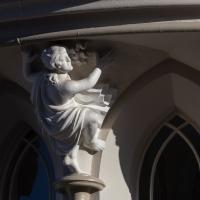
I swear this caryatid must've been modelled on Stephen Fry. This is St Vincent's Priory, a very strange building on Sion Hill that's just been renovated. Next time I pop up I'll try and get a photo of it looking clean and shiny now the scaffolding's down, but I only took a telephoto lens with me on this trip.
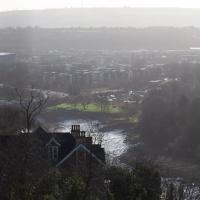
This is almost the photo I wanted to take, but the historical photo I want to reproduce was definitely taken from further to my right, on the bridge, and you should still be able to see the remains of Clifton Bridge Station (hidden from here by the trees on the right) and the last bit of slipway of the Rownham Ferry (hidden by the prominent house in the foreground.) This snap is also a bit marred by the temporary safety fencing I had to shoot through.
Ah well, another day, I suppose.
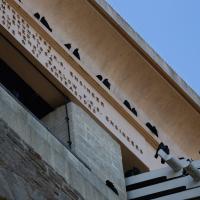
Quick Clifton Jaunt Finishing with Southville
09 Jan 2022
It's been pretty dismal recently, weather-wise, so when Sarah called up to say that she and Vik had just left the swimming pool at the student union building up in Clifton, and would I like to join them for a trip to the Last Bookshop, also known as The £3 Bookshop, for reasons you can probably deduce, I leapt at the chance.
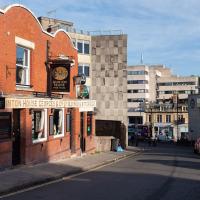
Not many photos on this walk, but I did manage to get down a little road I'd never been to before, basically just the access road to a car park at a block of flats, but it was on the map looking all tempting, so I figured I'd knock it off the list as we were passing.
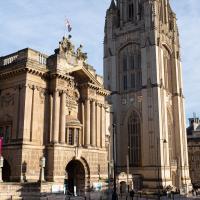
The museum and the Wills Memorial looking resplendent. Behind me on this chilly morning was someone sleeping in a doorway under a quilt, with a plastic suitcase presumably containing their entirely worldly possessions. It's a place of contrasts, Clifton.
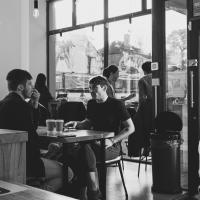
I love Coffee Under Pressure's coffee, so I usually grab something from them when I'm passing. I've got to admit, though, being in a relatively confined space with a bunch of other people is giving me the heebie-jeebies a bit in the time of the Omicron variant. I got a quick take-out, wearing my mask, and ran.
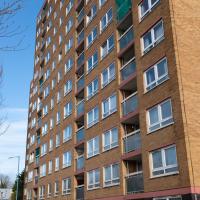
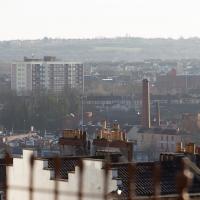
By complete coincidence, I took a photo of this block last week from a great distance (well, a mile, anyway) and then noticed that I hadn't actually walked along its access road and back. So here it is, rather closer up.
After this Sarah and Vik and I nipped to the Tobacco Factory Market where I managed to resist buying a copy of the Cowboy Junkies' The Trinity Session in great condition on the original vinyl. After resisting buying any books in the £3 bookstore earlier this pretty much depleted my reserves of energy for the day, so I headed back home without snapping any more pictures :)
Lunchtime Reproduction (of an old photo...)
17 Jan 2022
This was basically the quick lunchtime jaunt I tried to do at the beginning of January, only this time I actually managed to get to roughly the viewpoint I'd been hoping for to recreate a historical photo of the Bristol International Exhibition.
I did this walk about a month ago, but I've been a bit poorly and not really up to doing much in my spare time, and it's taken me this long to even face processing even these few photos. Hopefully normal service will be resumed at some point and I can carry on trying to walk any roads and paths that I need to do to make this project feel complete...
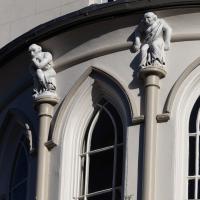
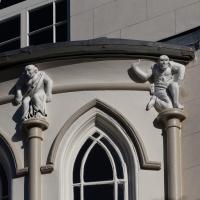
Gargoyles? Caryatids? Gargyatids? Caryoyles? There's probably a proper name for them, knowing architecture...
This is St Vincent's Priory, a very odd building on Clifton Hill. According to Maurice Fells' excellent Clifton: History You Can See:
Its name conjures up visions to the sounds of monastic of an ancient religious foundation with its hallowed walls echoing chanting. But St Vincent's Priory is a private house and the likelihood is that it was built as such and probably conceived as an architectural folly...
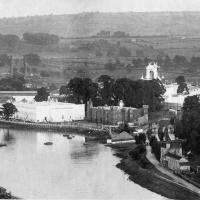
From Bristol's Lost City, by Clive Burlton, available from Bristol Books; photograph from the author's own collection.
(And extra credit goes to my parents for buying me the book for my birthday! Thanks!)
The Bristol International Exhibition site, presumably around 1914 or not long after. You can see the Rownham Ferry in use, too. I still find it pretty amazing that there used to be a busy ferry and a significant railway station on this little scrap of land that I just used to know as the grassy bit at the start of the towpath, let alone a replica of Bristol Castle!
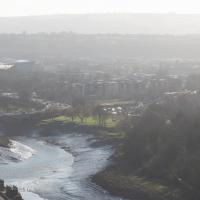
Unlike my last attempt I successfully managed to get somewhere near the vantage point of the historic photo this time...
I should probably have tried to get it at high tide to make it a bit more comparable, but you can't have everything.
You can see the White City Allotments—those glints of light toward the middle are mostly reflections from greenhouses—where the "White City" of the Exhibition used to stand. There's still a glimpse or two of the railway line to Portishead to be seen, too, along with a vestige of the Rownham Ferry slipway.
Mostly though it's the modern things that stand out—the long line of flats along Paxton Drive, the curve of Brunel Way across the river, and the roof of Ashton Gate Stadium...
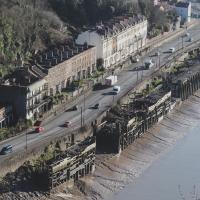
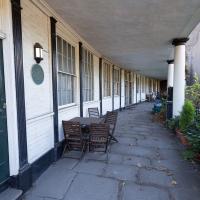
The Colonnade, the Rock House, St Vincent's Parade and the old landing stages for Campbell's paddle steamers. The leftover fruit of bygone boom years.
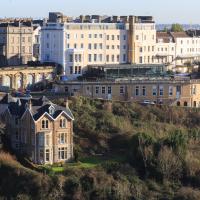
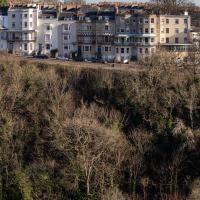
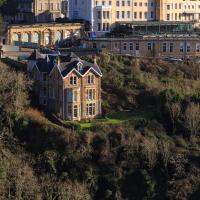
Just think, I could upgrade to a flat just up the hill from me, with an extra bedroom, for only about three quarters of a million quid...
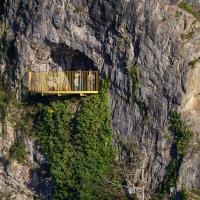
There's a couple on the balcony taking a selfie in this direction. I wonder if I've been immortalised as a few pixels in the background of their photo...