Tagged: facade
One Albermarle Row, Granby Green and... People
12 Mar 2021
I was browsing some historical photos the other day, and came across "Rear of Unspecified House" in the Bristol Archives' John Trelawny Ross collection, and immediately recognised it as being the back of 1 Albermarle Row, just around the corner from me. I've not had much time to research the history of this odd little addition to Albermarle Row, or what happened to 1-4 Cumberland Place, number 4 of which used to be attached to the side of 1 Albermarle Row, but it was interesting to look at old maps for a few minutes and work out what used to be where.
That all connects with the little local bit of land at Granby Green, too, as it used to be numbers 1-3 Cumberland Place. There was something of a planning battle over Granby Green, and I've included an old edition of Hotwells & Cliftonwood News that I found online, a copy of which would have been popped through my letterbox at the time.
I was also inspired by some old pictures of Hotwell Road to try to put a few more people in my pictures, though I set my pre-focus a couple of extra metres out from normal to make sure I didn't get too close to anyone!
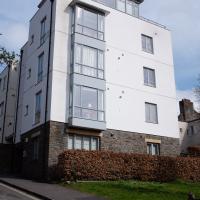
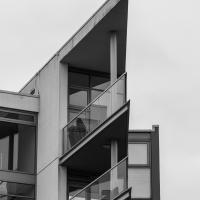
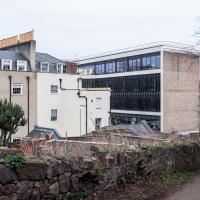
This modern block has appeared since I've lived in the area, so it must be newer than 1999, I think.
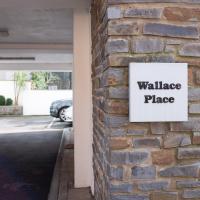
There was a suggestion that the new green space below Wallace Place be called "Gromit Green" :D
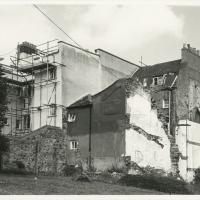
"Rear of unspecified house, Jun 1979"
As soon as I saw this photo, I thought, "That's not unspecified! That's 1 Albermarle Row!" I mean, it still looks like that today, and it's quite distinctive.
From the Bristol Archives, filed under "Bristol City Council: Urban Design and Conservation: Photographs by John Trelawny-Ross/ Photographs taken by John Trelawny Ross during the course of his work as conservation officer for Bristol City Council, within the Urban Design and Planning Department/Dowry Parade, Albermarle Row and St Vincents Parade"
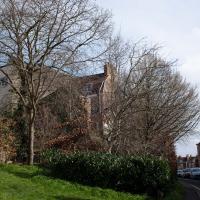
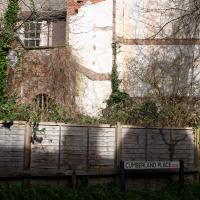
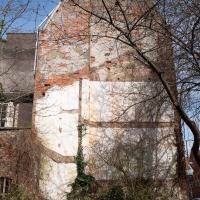
...or rather, the remaining imprint of 4 Cumberland Place on the side wall of 1 Albermarle Row. I don't know why the houses of Cumberland place on the right at the top of the hill disappeared. It seems to have been a gradual process; 1-4 are there on a 1946 aerial photo, then on the 1947-1965 OS maps number 1 has disappeared, and then in the jump to the modern day the whole lot's gone.
Leigh Woods Walk
14 Mar 2021
An enormous walk today, or at least it felt enormous. My feet are sore, anyway. I started off recreating a couple of local historical photos in Hotwells, but then headed for my traditional walk along the towpath in the Avon Gorge to the far extreme of Leigh Woods, up and through the woods to the height of the Suspension Bridge, finally crossing into Clifton Village for a well-deserved vanilla latte.
I say "traditional" because this used to be a very regular route for me, first walking, years and years ago, and later jogging—this route combined with a circuit of the Downs on the other side used to be my way of making sure I was fit to do a half-marathon (I did six of them in total, between 2010 and 2014).
I miss the routine of this walk, even though it's a long way and it used to pretty much wipe me out when I did it—I'd come back home and collapse and do very little for the rest of the day. But perhaps that's what Sundays are for, and I should try to remember that.
Doing this walk regularly was quite a meditative experience. Not so much of that today, but once I got to the further extreme of the towpath, where the roar of the Portway traffic on the other side of the river dwindles and I turned into Leigh Woods to climb ever closer to birdsong and further from rushing cars, I did seem to recapture a little of the feeling of previous walks. (I would say my mind cleared, but I was mentally singing along to Life Without Buildings' The Leanover for most of the wander. There are worse songs to have stuck in one's head, though; it's a great track...)
Anyway. Apparently the walk made me more likely to ramble in words, too. I'll stop now :)
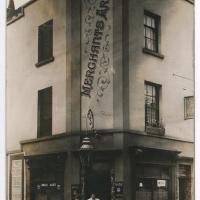
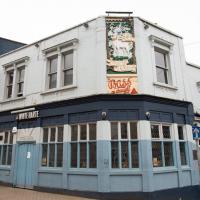
"Untitled. handwritten note on reverse 'Merchants Arms, Merchants Road, Hotwells. Licencee 1912 Mrs Florence Norris (over right hand door)'"
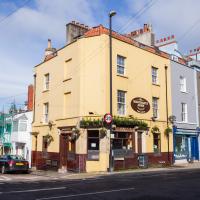
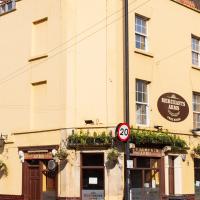
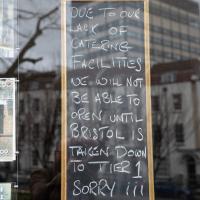
Sadly closed for lockdown at the moment, of course. Hopefully they'll weather the storm, because it's a great little pub and it's been there since at least 1847.

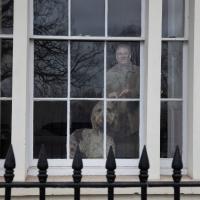
Presumably this is how David Icke views the British monarchy.
(It's Queen Lizzie, by sledone.)
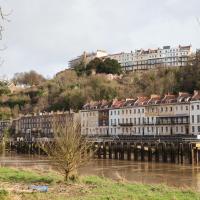
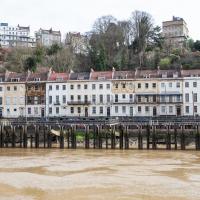
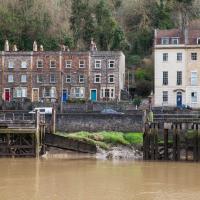
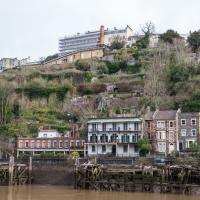
I love the terracing between the back of Rock House/the Colonnade and the heights of Clifton
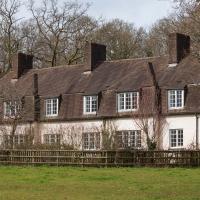
Amusingly, I think this technically fits some definitions of the word "bungalow", given that the upper half is a giant mansard roof with dormer windows.
John Carr's Terrace
16 Mar 2021
I wanted a nice simple lunch-hour walk that took me past a cafe today, and I managed to find the perfect road to knock off my list of targets to do it. Situated just off Jacobs Wells Road, right next to Queen Elizabeth's Hospital, John Carr's Terrace, and Rosebery terrace above it, which I'd completely forgotten existed, are a little cul-de-sac that many Bristolians will have wandered past a thousand times without ever seeing.
There's a reason it's next to QEH:
Known traditionally as "The City School", Queen Elizabeth's Hospital was founded by the will of affluent merchant John Carr in 1586, gaining its first royal charter in 1590.
John Carr's terrace itself isn't much to write home about, architecturally, but I like the secluded feel of it, and I really liked Rosebery Terrace with its little houses, commanding position and friendly, slightly tumbledown feel.
On the way home I popped into Foliage Cafe for a coffee and a very pleasant nutella and banana pastry, then walked home past the refurbishment of the old Thali Cafe into a new and interesting clinic...
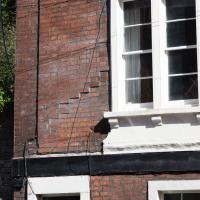
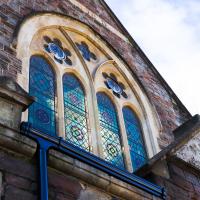
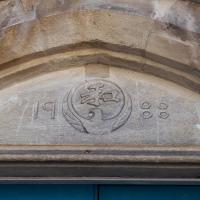
Among other things in its colourful history, the former Brandon Methodist Church was, for a while, the Japan Arts Centre, which probably explains this detail from its tympanum. I remember walking past when it had big adverts outside for martial arts. They used to teach Judo, Aikido and Karate, I think.
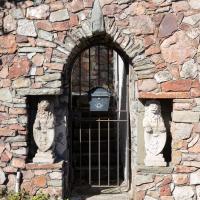
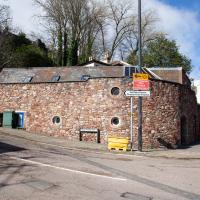
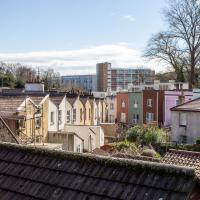
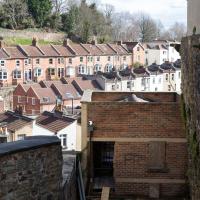
Seems odd that there's a nice pitched roof completely hidden by the square high walls on this little place.
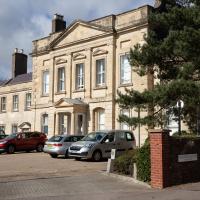
Adjacent to the hospital, this is apparently now a nursing home. The listing says:
Formerly known as: No.3 Clifton Court CLIFTON GREEN Clifton. House, now nursing home. 1742. Possibly by William Halfpenny
It's just the kind of grand old Clifton Hill house that got Clifton's posh houses off to a start in the mid-18th century. It sounds like it's remained rather posh inside, too:
Fully-panelled right-hand rooms connected by an arch with fluted Ionic pilasters, panelled, arched recesses, good marble fire surrounds with rocaille woodwork, an eared overmantel in the front room with foliate festoons and bracketed pediment; doorways with raised pediment, and 4-panel mahogany doors.
Harbourside Milestone
17 Mar 2021
The other day I realised (hello, Maggie!) that my next walk would be my hundredth, and that I'd done 393.4km so far. I figured it would be nice to get to 100 walks and 400km on the same walk, so I went for a nice long harbourside wander after work, rather than dashing out at lunchtime. As it turned out, we're just coming up to the time of year where I can leave the house at 5:30 in the evening and there's still just enough light to take photos by the time I've made it around the harbourside. Though only just, and mostly because I've got a full-frame camera that's not bad in low light...
Still, the evening light made a lovely change, and some of the photos turned out to be pretty good photos per se, rather than just record shots of my walk. I'm looking forward to more evening walks like this as summer approaches.
On the way around this evening I wandered through one of the oldest bits of the city to extend my walk and snapped some interesting bits of architecture, including an NCP car park(!) and a nighttime shot of one of my favourite subjects, the clock tower at the Albion dockyard.
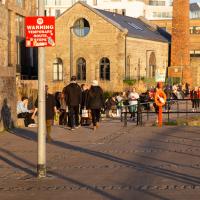
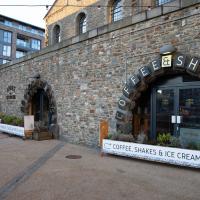
Spoke & Stringer were a long indoor cafe in the Beforetimes. Now there's three separate vending areas: fish & chips, brunch & tacos; coffee & shakes.
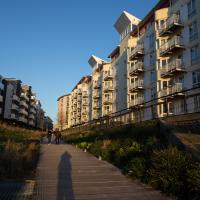
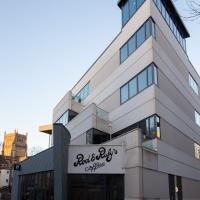
No, it's not a massively distorting wide-angle lens I'm using, that's just not ninety degrees!
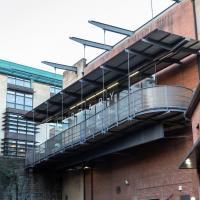
It's never occurred to me that when I"m wandering up the ramp at this entrace to the library that I'm also hanging suspended in mid-air
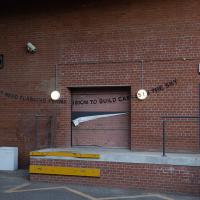
This is actually a Banksy work, not as well-known as many. Oddly, it seems like this loading bay may have been added after the graffiti was put there, and the graffit carefully transferred. I'll have to find out whether that's what actually happened...
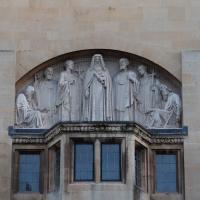
The listing says the library tympana show Bede, Alfred the Great and Chaucer. I don't know much about history, but I'd plum for the guy surrounded by crosses being the Venerable Bede, the bloke with the sword being Alfred and by a process of elimination, the bloke on the left being Geoff C.
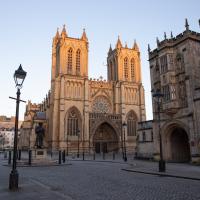
The Cathedral of the Holy and Undivided Trinity, in fact. An Augustinian abbey, given cathedral rank by Henry VIII in 1542. And also explaining why the row of shops on the Centre nearby is St Augustine's Parade, I imagine.
Augustinians follow the Rule of St Augustine:
The Rule of Saint Augustine, written about the year 400, is a brief document divided into eight chapters and serves as an outline for religious life lived in community.[1] It is the oldest monastic rule in the Western Church.[2]
The Rule, developed by Augustine of Hippo (354-430), governs chastity, poverty, obedience, detachment from the world, the apportionment of labour, the inferiors, fraternal charity, prayer in common, fasting and abstinence proportionate to the strength of the individual, care of the sick, silence and reading during meals. It came into use on a wide scale from the twelfth century onwards and continues to be employed today by many orders, including the Dominicans, Servites, Mercederians, Norbertines, and Augustinians.
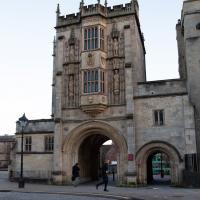
Archway for an Augustinian abbey, twelfth century. Apparently the upstairs has "rooms with Tudor-arched fireplaces, and oriels with tracery panels to the soffits; stone winder stair."
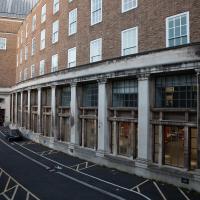
Rear of City Hall, which is still more normally known by its old name of the Council House.
Mardyke then and Now
18 Mar 2021
Reproducing historical photos seems to be a developing interest for me. On today's wander I just went for my normal coffee at Imagine That, but along the way I stopped at Baltic Wharf (the modern housing estate; historically-speaking, I was probably in between Canada Wharf and Gefle Wharf—about here, in fact) to reproduce a 1930s photo of the Mardyke area from the Tarring collection.
Mardyke, from what I can work out, means "a ditch along the margins". Before my researches, I only really knew the name from the Mardyke pub, a big place on the Hotwell Road. Everyone knows the Mardyke, partly because of its size and signage, but I've only been in once or twice, too long ago to remember much of what it was like. However, the wharf there used to be known as Mardyke Wharf, and the area in general as Mardyke. (I just found an 1826 painting by Thomas Leeson Rowbotham of "Mardyke seen from near Hilhouse's Dock, showing the 'Clifton Ark' floating chapel" that shows the area before much development had happened, incidentally, and now I feel like I need to find out a bit more about the floating chapel...)
I enjoyed snapping the "after" photo; the process involved moving a group of swans out of the place I needed to stand to get the photo; luckily I've started carrying waterfowl food along with my on my harbourside jaunts, so I could use bribery rather than a more confrontational approach. Not sure I'd fancy my chances against a swan, though I did once team up with another passerby to shoo a recalcitrant one off the Redcliffe bascule bridge so a busful of commuters could continue their journey to work...
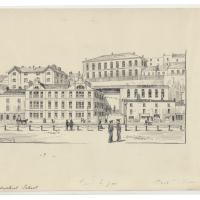
Showing both the Clifton Industrial School on the Hotwell Road, and the Clifton National Schools building on the hill above.
(via the Loxton Collection from Bristol Libraries on Flickr.)
Quick Around-the-Harbour Wander with Lisa
20 Mar 2021
My friend Lisa was meeting another friend for a walk near the suspension bridge, so we fitted in a quick harbourside loop from my place first. We discussed gardening (we're both envious of the gardening skills of the Pooles Wharf residents; we can just about keep herbs alive, whereas they're growing heartily-fruiting lemon trees outdoors in England along with everything from bonsai to magnolias), cafes, work and architecture, among other things.
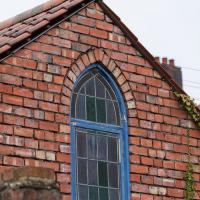
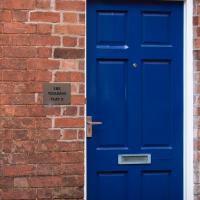
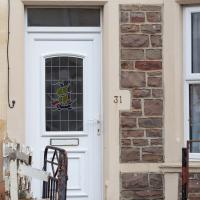
I've probably snapped this before, as it's just the kind of detail that catches my eye every time.
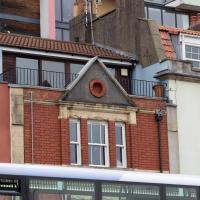
This was one of the details I used to line up my "after" pic of Mardyke with the 1930s "before" pic on my last wander.
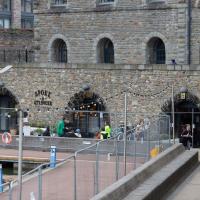
Something smelled very nice when we wandered past here. Maybe I'll have to give them a try for lunch one day this week.
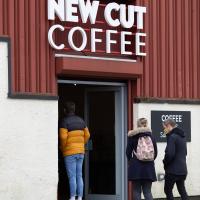
In what used to be the mediocre tea room for the Framing Factory/gallery. The new occupants are Jack Hudspith and Kate Evans, of Small Street Espresso fame. Small Street Espresso was one of my favourite cafes in town in the Beforetimes. Small Street Espresso is also the "sister" cafe to long-time Wapping Wharf resident Little Victories, just around the corner from here, but I'm not sure what's owned by who and/or still open right now.
My friend Lisa says that if you live here and don't try to recreate a certain scene from the film Titanic at least once, then you have no soul. (I've not seen Titanic, so the jury's still out on my soul.)
I wasn't going to take a very long walk on this nice spring evening; it just happened. I was going to knock off a path or two on Brandon Hill, home over centuries to hermits and windmills, cannons and Chartists, and then just wander home, stopping only to fill up my milk bottle at the vending machine in the Pump House car park.
However, when I heard a distant gas burner I stayed on the hill long enough to see if I could get a decent photo of both the hot air balloon drifting over with Cabot Tower in the same frame (spoiler: I couldn't. And only having the fixed-focal-length Fuji with me didn't help) and then, on the way home, bumped into my "support bubble", Sarah and Vik, and extended my walk even further do creep carefully down the slipway next to the old paddle steamer landing stage and get some photos from its furthest extreme during a very low tide...
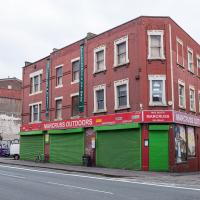
I've bought many things from Marcuss over the years. A pair of secondhand German para boots got me started, I think, and I've bought snowboarding gear, camping gear, winter coats and sundry other things like the Opinel No. 06 knife I use for hunting and skinning the geek's natural prey: Amazon parcels.
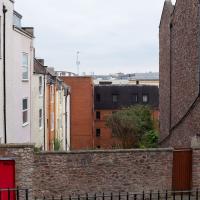
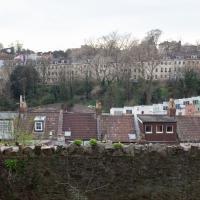
Looking this way you get to see the rear of the rooves of Rosebery Terrace first, which we saw the front of on an earlier wander.
Towpath Evening
25 Mar 2021
I was honestly just about to do the homework from my oh-so-thrilling ITIL course when my friends Sarah and Vik asked me if I'd like to come out for a wander down the towpath with them. I enjoyed the company, the evening light and the delicate clouds.
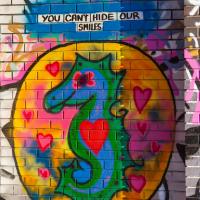
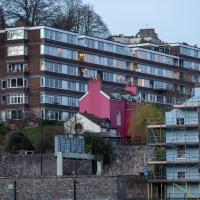
I got interested in Bristol's medieval water supplies after poking around near Jacobs Wells Road and Brandon Hill. It was during that research I found out about a pipe that's still there today, and, as far as I know, still actually functioning, that was originally commissioned by Carmelite monks in the 13th century. They wanted a supply of spring water from Brandon Hill to their priory on the site of what's now the Bristol Beacon—Colston Hall, as-was. It was created around 1267, and later, in 1376, extended generously with an extra "feather" pipe to St John's On The Wall, giving the pipework its modern name of "St John's Conduit".
St John's on the Wall is still there, guarding the remaining city gate at the end of Broad Street, and the outlet tap area was recently refurbished. It doesn't run continuously now, like it did when I first moved to Bristol and worked at the end of Broad Street, in the Everard Building, but I believe the pipe still functions. One day I'd like to see that tap running...
There are a few links on the web about the pipe, but by far the best thing to do is to watch this short and fascinating 1970s TV documentary called The Hidden Source, which has some footage of the actual pipe and also lots of fantastic general footage of Bristol in the seventies.
On my walk today I was actually just going to the building society in town, but I decided to trace some of the route of the Carmelite pipe, including visiting streets it runs under, like Park Street, Christmas Street, and, of course, Pipe Lane. I also went a bit out of my way to check out St James' Priory, the oldest building in Bristol, seeing as it was just around the corner from the building society.
There are far too many pictures from this walk, and my feet are now quite sore, because it was a long one. But I enjoyed it.
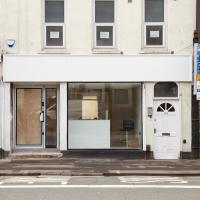
Looks like something's getting spruced up ready for opening. Good. This bit of the Hotwell Road needs some nice new shops, of any and all varieties.
This place was joined up with the shop to the left as a hot tub sales showroom, and before that it was the View art gallery. Before that it was a brothel for a while, oddly, but I think the general community reaction was a bit too hostile for it to survive. Looks like it's now been separated from the next door shop.
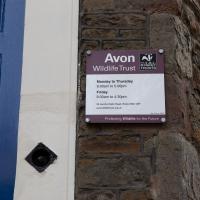
It's the home of the Avon Wildlife Trust now, but back in the day it was Brandon Hill Police Station. It's marked on maps as recent as the 1950s Bristol Town Plans. An interesting tidbit from Bristol Then and Now on Facebook:
One of the first police stations in Bristol, it was opened in 1836 - policemen from the station used the building housing the Jacob's Well as a bicycle store and many old bicycle lamp batteries were found in excavating the small entrance to the mikveh. The Police Station closed in 1967 and it is now the base of Avon Wildlife Trust.
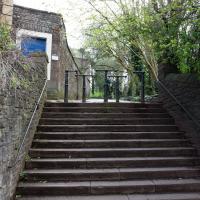
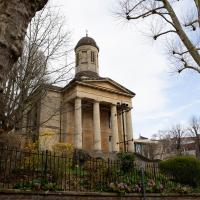
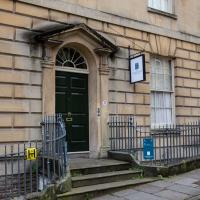
It's a museum in the form of a well-preseved Georgian house with appropriate fixtures and fittings. Well worth a visit, and when we can go back, I plan to. The thing I remember most is the grandfather clock, and the rest of my memory of the place is fairly scant, because it's been a long time.
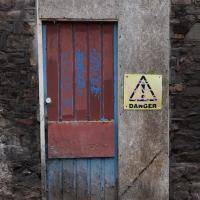
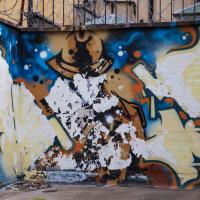

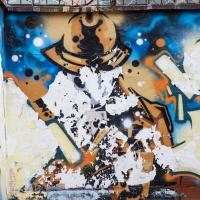
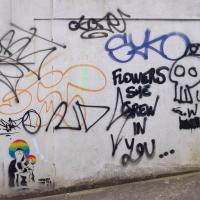
I feel like I can make out some kind of figure in the random blotches on this wall, but it might just be my imagination.
I bumped into my friend Lisa in town during yesterday's wander, and we decided to have a wander today, too. We managed quite a long ramble, starting up through Clifton and nipping down Park Row to investigate the two tower blocks I'd noticed popping up behind Park Street yesterday, then took in a few roads I'd not managed to get to before, including cutting through the grounds of Bristol Grammar School.
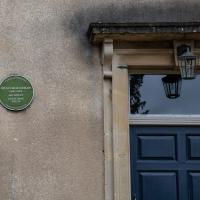
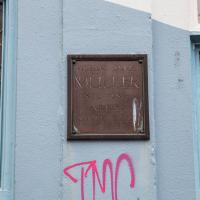
I have snapped this plaque before, but apparently I didn't look up the name. He designed the Wills Memorial Tower, one of Bristol's most significant landmarks, and one I snapped just yesterday.
This is apparently Jim from Friday Night Dinner. Lisa had to identify him for me.
The best-known artist of the Bristol School, apparently. We have something in common: we've both seen Bristol harbour frozen over, though I never saw anyone brave enough to ice skate on it.
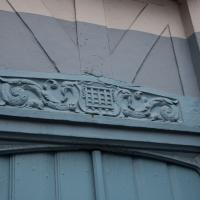
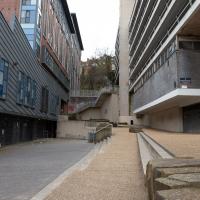
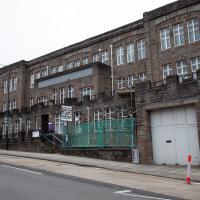
One of the world's largest archives of British Theatre History. I had no idea it was there.