Tagged: bristol
A Journey to the Far East
25 Jul 2021
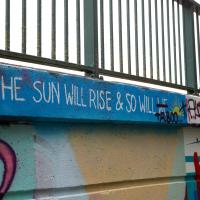
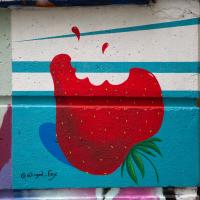
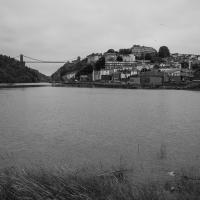
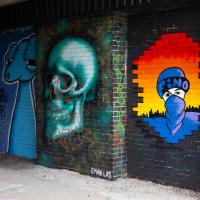
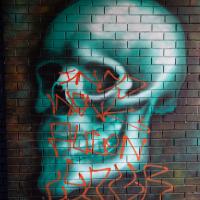
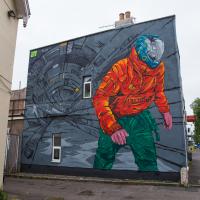
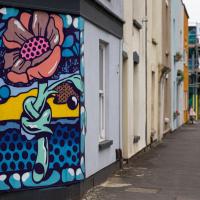
The far east of the intersection of my one-mile radius and Bedminster, anyway. I was feeling a bit tired this morning, so I motivated myself to get out of the door by imagining one of Mokoko's almond croissants. That got me on my way, and I wandered across to Bedminster, through Greville Smyth Park, along most of the length of North Street (looking out for new Upfest 75-pieces-in-75-days artwork as I went) and then onto some new roads at the far end.
I only wanted to knock a few streets off my "to do" list, but by the time I'd diverted here and there to check out various bits of graffiti and other attractions and come back via the aforementioned purveyors of Bristol's finest croissants, I'd walked 7.4km. Not bad for someone who woke up tired, and at least I've done something with my day. I'm very glad the weather broke (we had tremendous thunderstorms yesterday), even if some of the pictures might've looked better with a blue sky. I was getting fed up with walking around in 29°C heat...
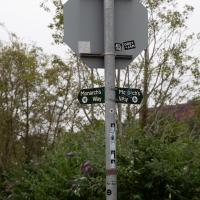
I had no idea this was part of the Monarch's Way, a modern route that tries to trace, as best it can, the path of King Charles II's escape following his defeat by Cromwell in 1651.
Mostly the Metal Animals of a Clifton Garden
30 Aug 2021
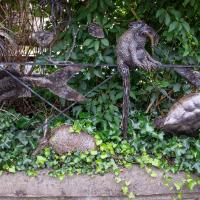
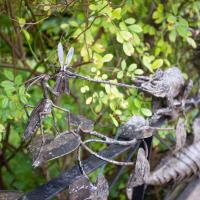
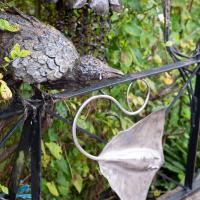
Lisa and I went for a longish walk, but I didn't take many photos. Mostly we just wandered and nattered. Unusually, my target was outside my 1-mile radius on Burlington Road in Redland, where I snapped quite a few photos of the collection of artistic animals by Julian Warren. This was mostly to provide a fairly arbitrary destination for a roundabout walk in Clifton...
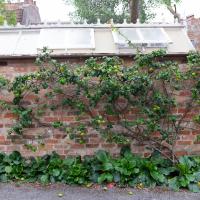
I don't know enough about fruit trees to know what this was, but I can tell you that the fruit was apple-ish and very sharp indeed.
Unusual to see an espalier on a north-facing wall. This one faces the little car park behind Freeland Place
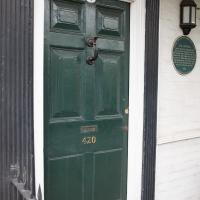
More dual numbering. I was curious, as I think the first couple of houses of the Colonnade were demolished at some point, so I wanted to see whether (a) the old numbers were there at all, rather than just the new Hotwell Road numbers, and (b) if they maybe started at number 3...
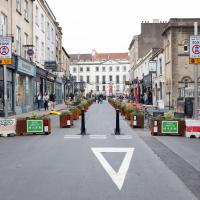
The controversy about the pedestrianisation of this section of Princess Victoria Street continues to rage on NextDoor (seriously; I just had a look and the most recent thread about it had more than three hundred comments!)
Anything to do with parking/people driving into Clifton Village is always an insanely hot topic. I've never been able to get that worked up about it, myself, but then I live within walking distance (and I'm not trying to run a business that relies on people driving to me...)
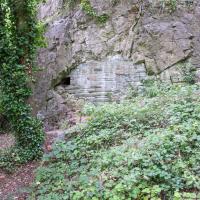
From an Avon Gorge Geology Excursion Guide I dug up:
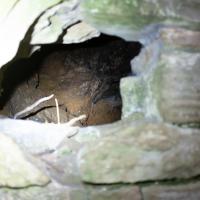
Just south of the Observatory, on the right of the path is a children’s playground [ST 5667 7325] in the remains of a limestone quarry. In the back wall is a bricked-up adit, presumably representing the entrance to a former iron ore or lead mine (Fig. 10C). The roof of the adit is fissured and sparry, crystalline calcite can be seen in fissures.
The playground itself is in one of the the quarries used for the Suspension Bridge materials.
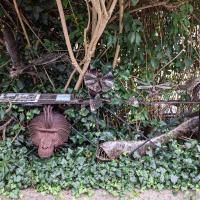
One of our mutual friends had mentioned that there was a house on Burlington Road with metalwork animals in the garden around here somewhere. It took us a while to find, but find it we did.
The artist is Julian Warren.
Short and Sweet
06 Sep 2021
As if to prove that I don't have to go on giant rambles, here's a quick four-photo trip up to Clifton Village for a bit of cake. No new streets, just a tiny slice of life.
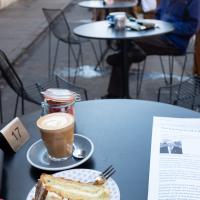
This is the first time I've properly tried the experimental pededstrianised bit of Princess Victoria Street. It was okay, though the table was on quite a tilt because of the camber of the road. Excellent cake from Spicer + Cole, of course.
I recently indulged myself by buying a little piece of history. I've mentioned Samuel Loxton and featured and linked to his drawings before, often in the eminently browsable Loxton Collection albums that Bristol Libraries has on Flickr. So when I saw a Loxton drawing of Hotwells pop up on eBay, I decided to get myself a little treat.
I don't think there's any Loxton drawing that features the road I actually live in—it's not very visible from anywhere else, not being one of these Clifton terraces that's perched at the top of a hill, or anything like that, and it's invisible in most views of the area. However, this Loxton drawing, Hotwells, Looking across the river from near the Clifton Bridge station, is probably the closest near-miss I've seen.
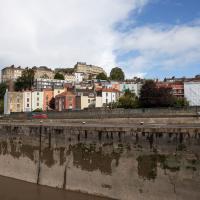
I decided to wander out one morning and see if I could reproduce the picture, and also take a photo or two of what's now become of the Clifton Bridge Station, which is still just about discernible in places.
(Then on an even stranger whim I decided to check out a possible little cut-through from Cumberland Road to the harbourside I'd been eyeing up on my commute to work, so walked to Wapping Wharf for a croissant via this potential new route, but that bit's not quite as interesting...)
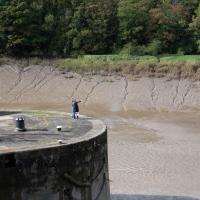
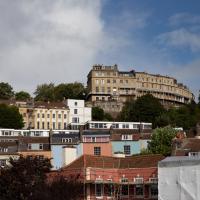
I'd broadly planned to figure out the vantage point Loxton had used for his drawing by lining up Windsor Terrace with The Paragon, so I started taking bearings fairly early.
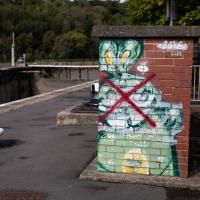
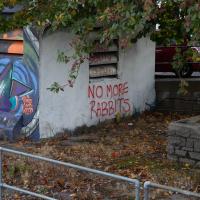
There's a frankly disturbing and gruesome reason why this rabbit has been crossed out. I'll tell you why in a few photos time.
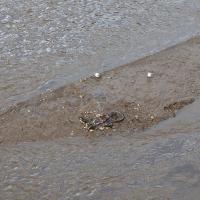
This must be some kind of invasive species. Normally the inhabitants of this island are the apprently-native shopping trolleys.
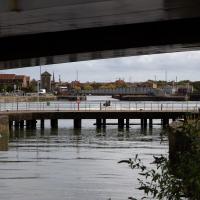
Every now and again some speedboat pops under Merchants Road Bridge and does a few quick loops of the Cumberland Basin. I guess that either they're allowed to go fast on the basin or they know they can get away with it...
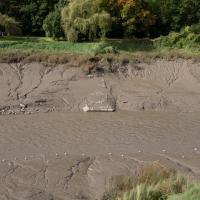
Site of the Rownham Ferry. Follow the link for a charming Loxton ink drawing on Know Your Place, also viewable at the Bristol Libraries Flickr collection.
This was a later site for the ferry, which earlier was a tad further out along the river. It would have been a key crossing point at this end of Bristol before the arrival of any bridges near here. Before the Ashton Swing Bridge and the Vauxhall footbridge arrived, the next-nearest crossing point would have been the Vauxhall ferry, which was where Vauxhaull Bridge stands now, I think.
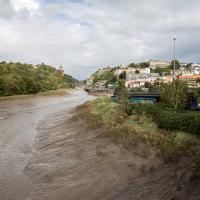
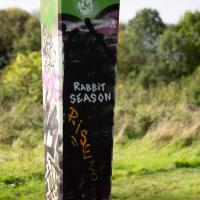
Okay, so here's the reason that the earlier rabbit had a big red cross through him, and that this one has been painted out. Bristol's graffiti community is currently trying to erase these rabbits after a terrible revelation about the man who had been painting them.
Here's the Bristol Post, on Damian Lasota, aka "Eldey" or "FollowMyRabbits":
A pervert with a penchant for grannies tried to rape one elderly woman in her home and sexually targeted another.
Damian Lasota was described by a judge as the "stuff of nightmares" after preying on the two lone females in Twerton, Bath.
His campaign of terror was halted after police installed CCTV at the women's homes and he was caught in action and arrested.
Lasota, 27, of Parry Close in Southdown, Bath, pleaded guilty to attempted rape, two charges of trespass with intent to commit a sex offence and two charges of exposure.
He appeared in the dock at Bristol Crown Court with a grey jumper draped over his head.
Judge Julian Lambert handed him a 20-year sentence, comprising of a 13-and-a-half year jail term and six-and-a-half years extended licence.
So, that's pretty damn terrifying, and also the reason why there won't be any more rabbits in Bristol. There's a little more info in this Somerset Live article.
Docks Heritage Weekend Day One
09 Oct 2021
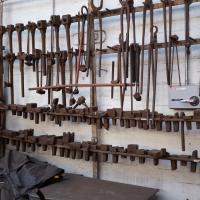
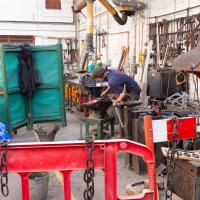
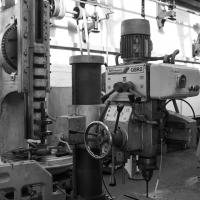
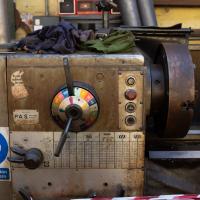
I could spend a lot of time at the Docks Heritage Weekend, poking my nose into industrial places along the harbourside that are usually closed off, but throw open their doors once a year to show off a bit of the backstage area of Bristol's floating harbour. In fact, I warn you: the next wander is a long one, and will have quite a few photos.
However, for today's wander, on the Saturday, my friend Lisa needed a shorter walk than our usual long rambles, as she's recovering from an operation and still a little under the weather, so we just wandered into town for some food and back, with me making mental notes of the places I wanted to come back to on the Sunday... We walked through Underfall Yard, along to the L Shed (this is the warehouse next to the M Shed museum, where they still have the kind of fun old industrial stuff that used to be crammed into the M Shed's predecessor, the old Industrial Museum), through the street food market in town to Ahh Toots for cake and then back home. So, still quite a walk, but no hills and not so much of Lisa having to hang around waiting for me to fool around taking photos as usual, at least...
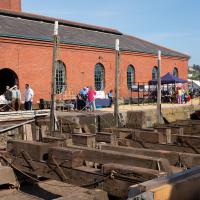
The Patent Slip is actually a grade II listed building. Personally I live in a II*-graded building myself; not sure I'd want to slum it down here.
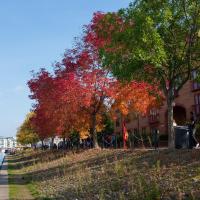
They're among the first to show autumn colour in Bristol, so by early October they're in full effect.
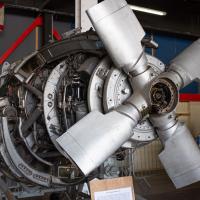
A Bristol Proteus in the L Shed, next to the M Shed museum, which houses a lot of industrial treasures.
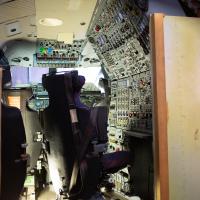
I thought it was a real Concorde nose at first, because I'm sure they used to have one in the Industrial Museum that was replaced by the M Shed. Lisa quickly pointed out the plywood shell. Apparently it was used for prototyping cockpit layouts. One day I may pop along to Aerospace Bristol to have a (big, white, pointy) nose around the real thing.
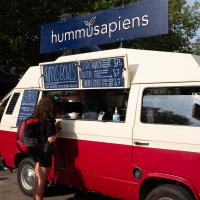
Fresh Fields
17 Oct 2021
For the first time in a while, I had the time and energy to go further afield and knock off some new roads from my "to do" list. I headed through the first Hotwells Festival to Ashton and Bedminster to cross off a few of the suburban roads south of North Street.
First, though, I decided to try to reproduce an old photo of the now-demolished Rownham Hotel just around the corner from where I live...
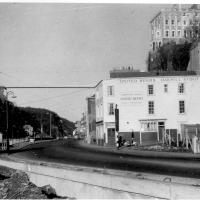
Here's the view I wanted to take a stab at reproducing. Bristol's Lost Pubs—a great website, which sadly currently seems to be lost itself—said:
Originally known as the Hotwells Tavern. Around 1873 when the entrance to Cumberland Basin was enlarged, a pub named the Rownham Tavern was demolished and Rownham ferry moved downstream towards the Hotwells Tavern, not long afterwards the name was changed to the Rownham Hotel. The pub was removed in 1969 for road Widening.
This particular image is from Brewerypedia; I'm afraid I don't know its original provenance.

Here's my version. I couldn't get to the exact original viewpoint without the railings on the far left being in the way of the picture, but this is pretty close.
So, presumably the house (or possibly two?) on the end of Freeland Place, which looks to my eye just as Georgian as the rest of the terrace, must've been built after the Rownham Hotel was demolished for the road widening in 1969...
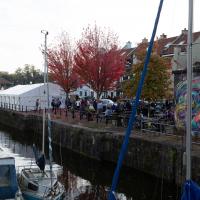
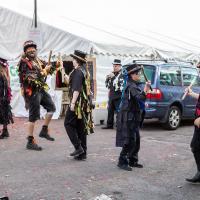
I wasn't in a particularly festive mood, so I decided mostly to bypass the Hotwells Festival. On a different day it might have been right up my street.
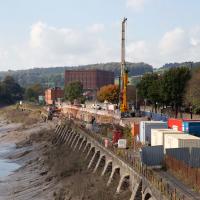
Apparently the repair of the Chocolate Path itself is now underway here. I won't hold my breath. Shame, as it's within my mile and one of my favourite walks and I've had no chance to walk down it since long before I started this little project.
To give you an idea of what it's like down on the path, here's a photo from 2017 from behind where I'm standing on Vauxhaull Bridge here.
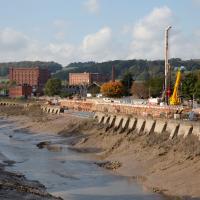
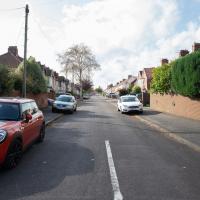
A Wide Angle View
30 Oct 2021
I had an unsuccessful wander last week, on Tuesday afternoon: my GPS died within about five minutes of leaving the house, and I didn't notice, plus I found hardly anything I'd been looking for. On the plus side, as I was wandering around Park Street I decided to nip into London Camera Exchange on the offchance they had a secondhand Canon 17-40mm lens. I've been thinking of buying one for around a year, I think.
Long story short: not only did they have one, but due to a mistake with their price labelling which they kindly honoured, I now have a shiny new (to me) wide-angle lens and it cost me less than £300, which is a very good price for one of these in good condition (and including a lens hood.)
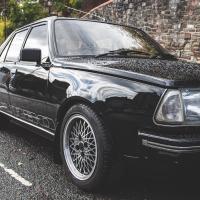
So, rather than try to salvage Tuesday's walk, here's a walk where I basically just bimbled up to Clifton Village for a coffee and wandered around taking photos of as many wide views as I could find. I took a lot more photos than these seventeen, but as you might expect, a new lens takes some practice getting used to, so most of them ended up in the "outtakes" pile.
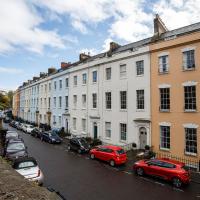
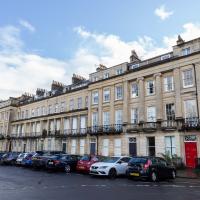
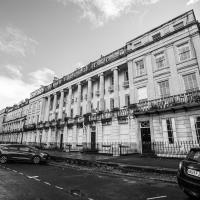
Pretty sure I couldn't have snapped the whole length of this terrace with my previous-widest lens, the 24-70. Fits fine in the 17-40.
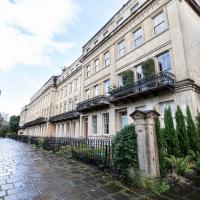
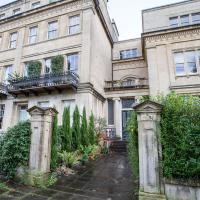
Set back on the end of Worcester Terrace is Worcester House. I've never succeeded in getting a good snap of it. Today does not seem to be an exception. Oh well.
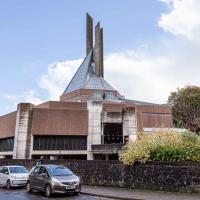
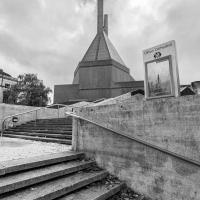
I've mentioned the spire before, I'm sure: colloquially known as the "three pin plug", it's apparently meant to represent the Holy Trinity.
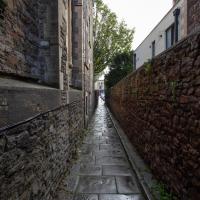
One of several odd short-cuts and alternative routes I worked out to vary my commute to work, when work was at the top of Whiteladies Road.
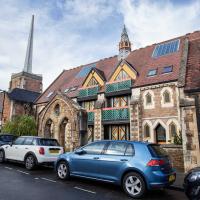
Ticking Off a Few Streets in Bedminster
31 Oct 2021
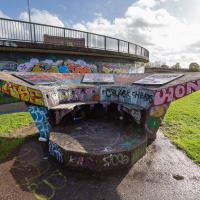
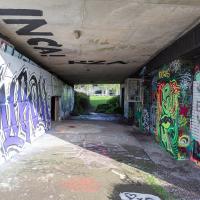
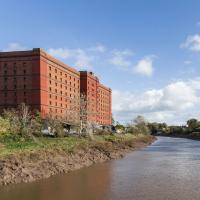
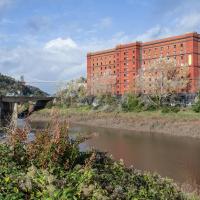
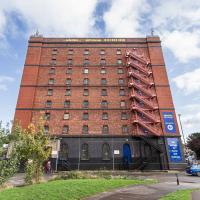
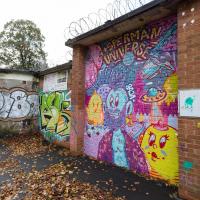
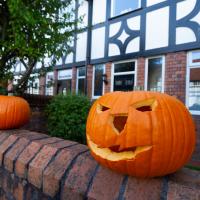
There were only a few streets left to wander in the more residential bit of Bedminster, so I thought I should target those today. The streets themselves weren't that notable, though Balfour Road has a contrasting mix of old and new housing. I tried to snap a few more interesting things along the way there and back, snapping all three of the familiar bond warehouses, nipping onto North Street to find some new street art, and finding a few pumpkins for good measure. It is hallowe'en, after all...
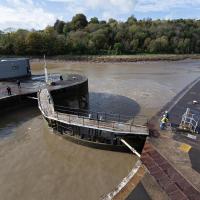
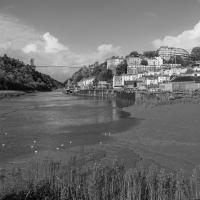
You can see the disturbance in the water on the river side as the sluices drain water from the lock to equalise the levels.
Recreating a Loxton Drawing on a Lunchtime Jaunt
05 Nov 2021
I did do a much longer wander earlier in the week, but that'll take me some time to process (and cast a plethora of photos into the "out-takes" pile!) In the meantime, here's my lunchtime jaunt, taken to give myself a break from doing the company bookkeeping to send to my accountant so the taxman doesn't sling me in chokey.
I've recently bought a slightly creased secondhand copy of Redcliffe Press's 1992 collection of Samuel Loxton drawings, Loxton's Bristol: The city's Edwardian years in black and white. It's a nice selection of Bristol Library's collection of the drawings. I'd noticed a drawing of 25 Royal York Crescent, a house I pass quite often, so I thought I'd wander up the crescent on the way to pick up some lunch and try to reproduce it.
On the way back I took a few photos of Clifton Hill Bank as the crowdfunder to make quite a lot of it into a wildflower meadow has just hit its target, so I figured some "before" shots might be a good investment for the future...
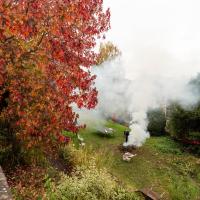
Autumn's a busy season in Royal York Crescent Gardens.
(This is also the reason the photos of Royal York Crescent that come along in a minute look slightly hazy! It's not my lens, honest...)
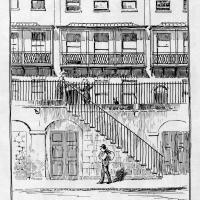
Loxton drawing from Bristol Library collection via Loxton's Bristol, Redcliffe Press, 1995 ISBN 1 872971 86 5.
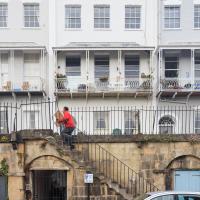
I tried to capture something of the feeling of the Loxton drawing by snapping a busy postman as part of the general scene :)
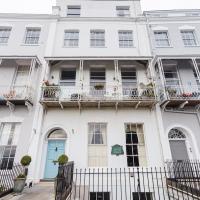
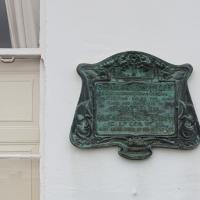
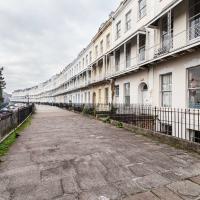
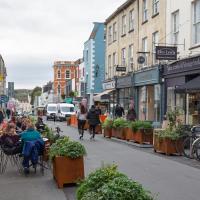
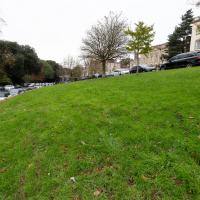
There's a plan to cover this with wildflowers, and I just heard that it has achieved funding, so I figured I'd take a chance on taking a few "before" photos, even though I didn't know where the planting will take place!
As it turns out, having read the crowdfunder info, this is roughly the "westernmost third" where the wildflower meadow will be planted.
The crowdfunding effort has blown past its original £1400 target and stands at £1775 so far. The original target was to cover:
- £300 for wildflower seed to sow in the next few weeks
- £100 for non-plastic signage explaining what’s happening – crucial for public support
- £1,000 for plug plants to go in next spring
They also say that most of the existing popular daffodils will stay, which is nice, as that was my favourite spring feature of the bank.
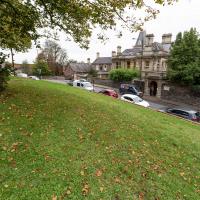
A Door, a Square, a Few Night Shots
04 Dec 2021
I didn't take many pictures on this quite long wander, partly because Lisa and I wandered across to Bedminster via Bower Ashton, which I've snapped quite a lot of on the last couple of walks, and also because we lost the light fairly quickly, though spending a half-hour drinking mulled wine in the Ashton might have had a little to do with that...
Before we left Hotwells I wanted to visit a door I'd heard about on Cornwallis Crescent and also take a little look at a couple of houses in Dowry Square to consider the 1960s regeneration of Hotwells.
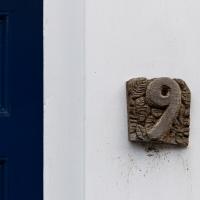
Not the front door we were looking for, but I like the hand-carved digit at 9 Cornwallis Crescent.
I have snapped this section of Cornwallis Crescent before, but apparently only en bloc.
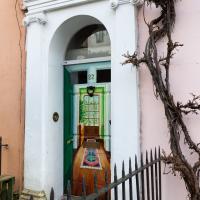
When it's three doors in one! Apparently this door has had this trompe-l'œil effect since the summer, but the vine was only recently cut back, which might explain why I've not noticed it before...
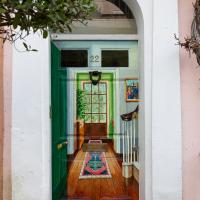
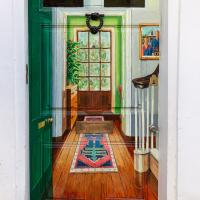
Favourite detail: the American Gothic style family portrait. (Though I'm guessing it depicts the husband and wife of the family, as opposed to father and daughter, like the original...)
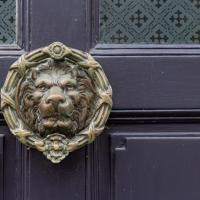
Well, seeing as we're snapping details. Lisa pointed this one out. It's pretty damn big.
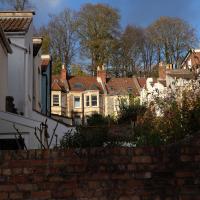
A glimpse of Cornwallis Avenue across the back gardens between St Vincent's Road and Dowry Road.

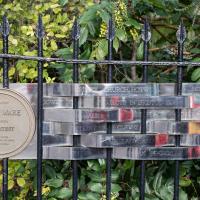
I've snapped this before, but I wanted to give it a bit of context. Peter Ware very much helped to save Dowry Square, as one of a group of "Newcomers" to the Hotwells area in the 1960s and 70s. Hotwells was basically a slum before then, with many of the buildings in a terrible state, including Dowry Square and Hope Square.
As I've recently been reading in Hotwells - Spa to Pantomime, these newcomers took their chances on a very dodgy area and decided to buy and do up a lot of the grand old houses that were almost ruins in some cases.
This early gentrification was important enough that John Boorman, of Excalibur fame made a BBC documentary about it called The Newcomers.)
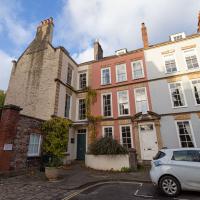
I've snapped this before, too: the home of Humphry Davy, but here it again for context, as it's currently on the market for £1,200,000...
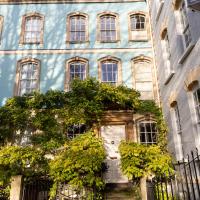
And here, at the other end of the terrace, is Peter Ware's old house. According to Hotwells - Spa to Pantomime, during the area's regeneration:
One house in Freeland Place was bought for £250 and Peter Ware, a charismatic local architect, bought a stunning corner house in Dowry Square for £200 including bed bugs!