Tagged: window
Another Day, Another 50 Metres
29 May 2021
I met my friends Sarah and Vik at Riverside Garden Centre today; I needed to buy some compost for repotting my wildly-overgrowing aloe vera, and I went a little bit out of my way to knock off a stretch of Ashton Road. It was a pleasant enough walk in the surprisingly warm (and surprising-not-tipping-it-down-on-a-Bank-Holiday-weekend) weather.
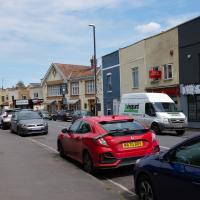
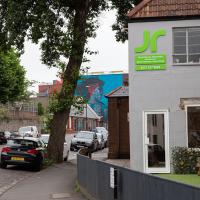
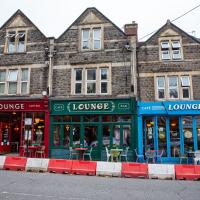
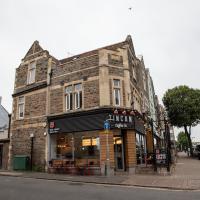
Interesting mixture. Behind Ashton Road, to the right and behind me in this pic, is Ashton Gate stadium, home to Bristol City, which goes some way to explaining the two big pubs (next two photos) on this stretch.
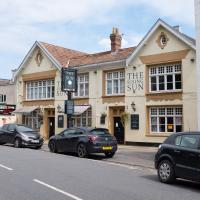
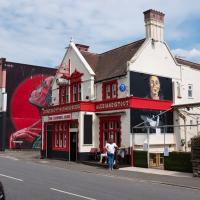
There's an arguably better snap of it on an earlier wander, but at least you get a glimpse of the cool street art on the end of Baynton Road with this one. I still need to walk down Baynton Road, so perhaps I'll save talking about that piece for later...
Bank Holiday Street Art
31 May 2021
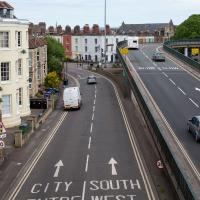
A nice warm Bank Holiday Monday saw me walk back over to Bedminster to do justice to something we glimpsed on my last wander. Along the way I spotted a couple of new pieces of street art tucked away on the south side of the Cumberland Basin Flyover system, so this turned into a micro-graffiti walk.
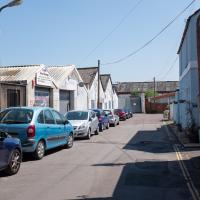
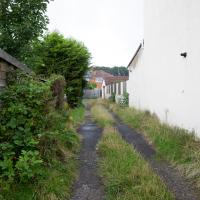
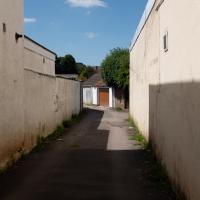
We'll get to my main reason for coming here in a minute, but for now let's just have a little poke around this semi-industrial, semi-residential alleyway.
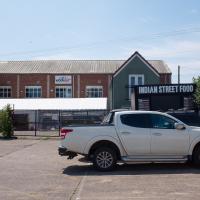
I imagine I've seen the stall there at places like the Tobacco Factory Market, but I've got a terrible memory for things like that.
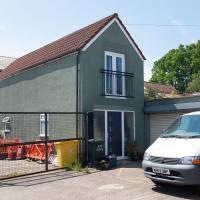
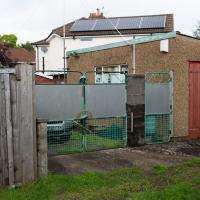
Apparently this is 34 Baynton Road. Looks like just a tiny, isolated house, stuck in a very odd little corner.
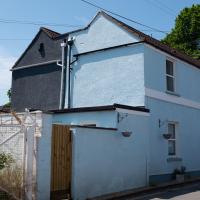
Set back behind the shops on the main road is this little pair of houses. All well-kept and tidy, and not quite as odd a place to be as the one that's isolated in the car park behind them, but still quite a strange location.
A Trip to the Library
08 Jun 2021
I had to return a book to the library—Ellic Howe's Magicians of the Golden Dawn, very interesting, thanks for asking—so I decided to pick the Central Library as my drop-off point and walk down a segment of Deanery Road that I've surprisingly overlooked so far. In any normal time I'd have been walking to work that way quite often, or heading through at the weekend on the way to do some shopping in the city centre, or for a coffee at St Nick's, but those excursions have been quite thin on the ground for the last year or so, for obvious reasons.
I've never been inside a single building on Deanery Road itself; the Library is technically on College Green and the rest is mostly student accommodation or Bristol College buildings, by the looks of things. It's a fairly mediocre street, used merely to get to other places. (St George's Road, which merges into it, at least has the distinction of several good shops verging from the practical and long-lived car radio fitters to the excellent little Dreadnought Books, sadly currently closed for refurbishment...)
After dropping off my book I came home via the harbourside, the better to enjoy the nice sunny blue skies of the day.
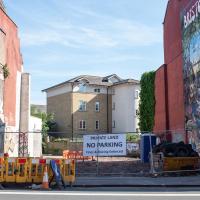
The last time we saw this bit of waste ground, I wondered if I was remembering correctly that it used to be a garage. Well, it's now being cleared out, and the skipful of old tyres would seem to be a clue that I was probably right...
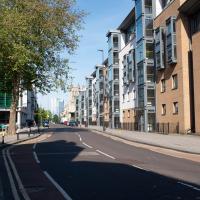
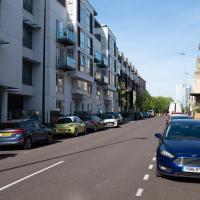
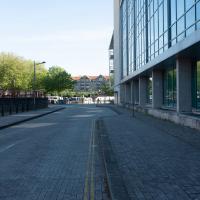
Or rather, a bit of St George's Road. At the corner there, St George's Road actually continues down the side street to the left. The road straight ahead, on the far side of the junction, is actually Deanery Road, which is the bit I've not walked yet.
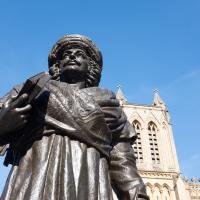
It's still a popular moustache style among Indian gentlemen, if erstwhile workmates from Mumbai and other places are anything to go by.
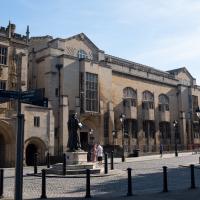
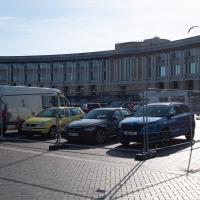
The arch on the left is the Great Gatehouse of St Augustine's Abbey, precursor to the Cathedral; you can see the Library entrance just behind the Ram Mohan Roy statue.
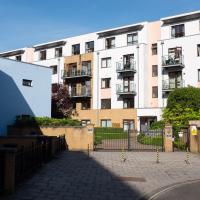
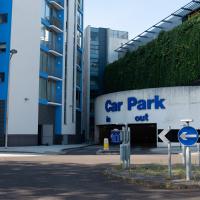
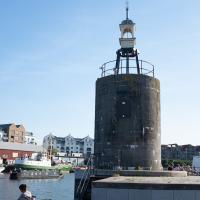
It's the remains of an old steam crane. It was fitted in 1891; not sure when it was scrapped. See next pic for what it used to look like.
Leigh Woods Solo
19 Jun 2021
I hadn't really planned to go out for a wander yesterday; I just got the urge and thought "why not?" (Well, the weather forecast was one possible reason, but I managed to avoid the rain, luckily.)
I wanted to finish off the A369—as it turns out I may still have a small section to go, but I've now walked the bulk of it out to my one-mile radius—and also a few random tracks in Leigh Woods. I'm still not really sure that I'm going to walk them all, especially after discovering today that "the map is not the territory" applies even more in the woods, where one of the marked tracks on the map wasn't really that recognisable as a track in real life... I'm glad I'd programmed the route into the GPS in advance!
Anyway. A pleasant enough walk, oddly bookended, photographically at least, by unusual vehicles. Leigh Woods was fairly busy, especially the section I'd chosen, which was positively dripping with teenage schoolkids with rah accents muttering opprobrium about the Duke of Edinburgh. I'm presuming the harsh remarks were more about taking part in his award scheme than the late Consort himself, but I didn't eavesdrop enough to be certain...
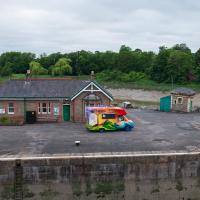
I'm not sure what's being delivered to the lock-keepers' house, but it looks like they'll probably all be a lot happier afterwards.
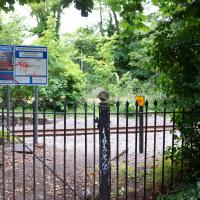
I don't think I've ever been next to these tracks when a train's gone down. I've sometimes seen it from the other side of the river, though. You can read a bit about the nearby disused station here; this used to be a passenger line, but it's freight-only now.
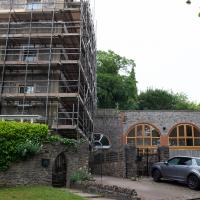
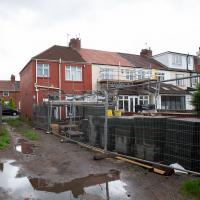
They've been working quickly. I'm pretty sure this house didn't have the extension when I last passed.
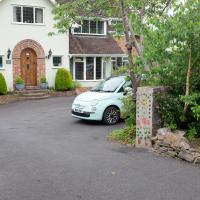
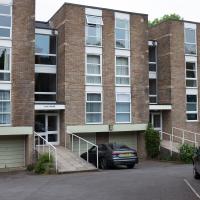
A little housing estate I've snapped before. I think it's an alternative spelling of "Fowey". Which frankly, being actually phonetic, should probably be the actual spelling.
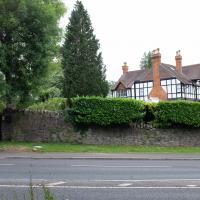
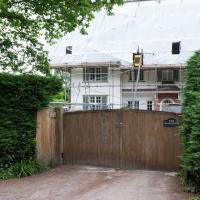
Or that's what is says on the gate, anyway. There are a lot of big posh hidden-behind-big-walls houses in this area.
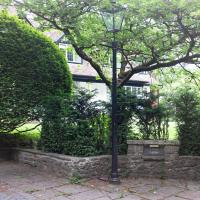
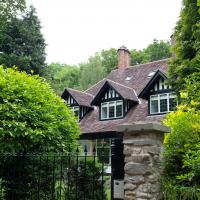
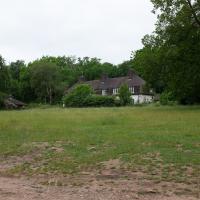
I believe this is "the plain"; the only surviving bit of this particular neck of the woods that was all once pasture that's not turned into forest. The main bit of the woods, to the east of the parish wall, is mostly ancient growth, I think.
A Cliftonwood Revisit with Lisa
10 Jul 2021
Lisa had a couple of hours to spare before going up in a hot air balloon (exciting!) so we went for a quick local walk, revisiting a bit of Cliftonwood we've seen before, exploring the secret garden I'd visited before that I thought she'd enjoy (I didn't take any new photos there) and then pushing on to another garden, Cherry Garden. Last time we passed this way, I'd noticed the gate, but we hadn't gone in as I'd assumed it was private. I'd since found it on CHIS's list of communal gardens in Clifton, so I wanted to have a look inside this time, and try to figure out whether it was private-communal or public, and possibly Council-owned, like several of the other gardens in Clifton.
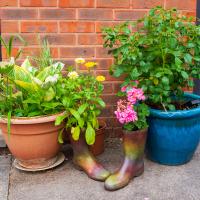
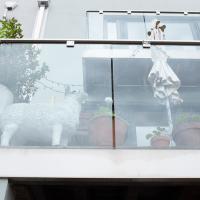
Using boots and shoes as flowerpots is a bit of a Cliftonwood signature, it seems.
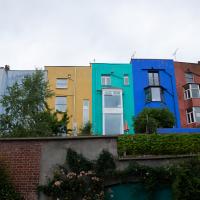
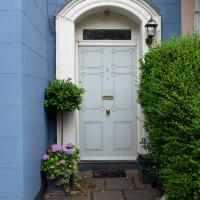
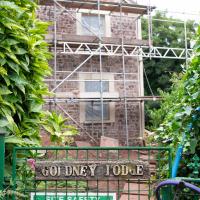
The rather tumbleodown letters remind me of the tricks played with both Fawlty Towers and Sunshine Desserts.
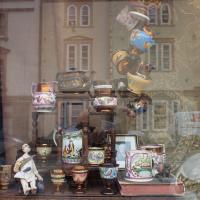
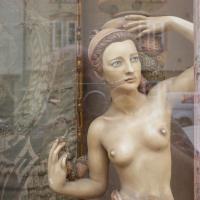
I'm not sure it would go well in my living room, but if this lamp takes your fancy, it's in the window of Relics furniture shop on St George's Road.
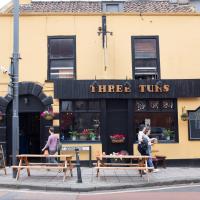
Seemed to be open and busy, which is good. It's always been a good, friendly pub, but I understand it's been on the verge of closure a couple of times recently.
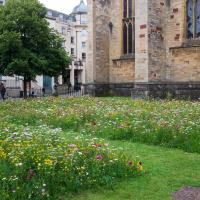
Next to the Cathedral. Which I've still never set foot inside. I should probably put that on the list...
Lunchtime Zig Zag Climb
13 Jul 2021
A snappy little trip up the Zig Zag to the shops. It's a steep old route, the Zig Zag, going from just over river level to about the height of the suspension bridge (101 metres) in a compact switchback of a footpath.
I was too busy struggling to breathe to take many snaps of the actual Zig Zag (I've been trying to make it up all the way without stopping the last few times, but I've not quite managed it yet). I did at least take a few snaps either side on this quick lunchtime jaunt to fetch coffee (Coffee #1) and a sarnie (Parsons) from Clifton Village...
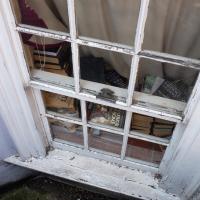
It's an untidy stack, but an interesting one. This is one of the basement windows of Granby House, on the corner of Hope Chapel Hill.
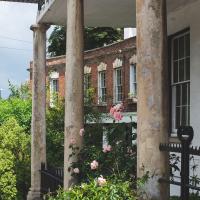
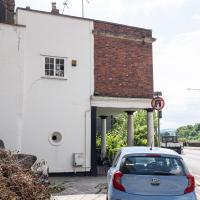
But I don't think it's the original end -- if you check this picture from a history pamphlet I posted on Twitter you'll see that it looks like the Colonnade used to curve around rather more, and there's an even better view on this drawing from the British Library collection of Hotwell Parade. Looking at the historic basemap layers there on KYP it certainly seems like sometime between 1855 and 1874 (both Ashmead maps) the first couple of houses in the terrace were lopped off, leaving only numbers 3, 4, 5 and 6. I imagine they were shaved off at the same time as the second Hot Well House was demolished, which was in 1867. It used to stand on Hotwell Point, sticking out into the river, and the whole lot was removed to ease navigation.
I've never actually looked at the Colonnade door numbers to see if they're still like that—I'll try to remember the next time I pass.
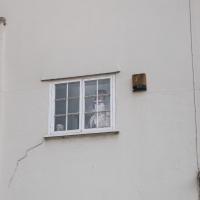
I will always enjoy the fact that Brunel looks out from this window. Have I ever noticed the smaller figure in the lower-left corner? Maybe it's new...
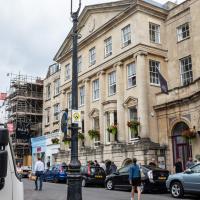
One of many fine old lamp posts in Clifton Village. The late, great Maggie Shapland apparently used to keep an eagle eye on them and make sure they were returned if they were ever carted off for repair. The Clifton Club lurks grandly in the background.
Although you may immediately think "gas lamp", here's an extract from Electric Arc Lamps in Bristol by Peter Lamb, published as a supplement to the Histelec News, newsletter of the Western Power Electricity Historical Society:
In looking at old photographs of late Victorian or early Edwardian scenes, many of you may have noticed very decorative street lights gracing the foregrounds. These lamp standards had long cylindrical shapes above the lamp, which distinguished them as being electric arc lamps. You may have wondered, like me, what was inside these housings. These cylinders, known colloquially at the turn of the century as “chimneys” were not chimneys at all, but housed the complex mechanisms regulating the carbon electrodes. Only two lamp standards of this distinctive design remain as street furniture on the Bristol streets and these are situated at The Mall, Clifton Village.
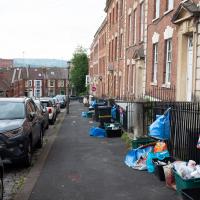
Apparently one of the reasons that collections are being missed (this lot's been on Albermarle Row for nearly a fortnight) is a shortage of drivers. There's a general HGV driver shortage at the moment, as well as a backlog of testing for new drivers.
Pastures New!
17 Jul 2021
Okay, not much in the way of actual pasture to be had in Bedminster these days, like most of Bristol, but I did take advantage of the current rather toasty weather in Bristol to go and sit under a tree in Greville Smyth Park to read a book for a while before firing up the GPS and taking a little detour around some back streets of Ashton and Bedminster rather than going straight to Coffee #1 for an espresso frappé. This is the first walk in a while where I've actually crossed off an entire new street (the frankly unexciting Carrington Road) as well as exploring a couple of back alleys, just because they were there, really. Along the way I spotted a few examples of graffiti of various qualities, including a live work-in-progress by SNUB23 on Ashton Road and the finished Six Sisters project on North Street.
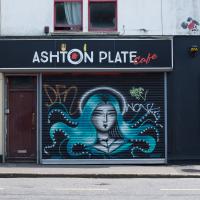
By all accounts a fine cafe in the greasy spoon archetype. Top right you can see a little tribute to Ashton Gate football stadium, a stone's throw away. Currently the stadium is being used as a Covid-19 vaccination centre.
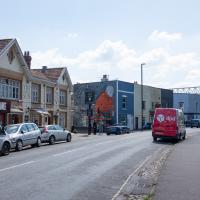
It was actually the sound of Six Underground, the astoundingly good Sneaker Pimps number, coming from this direction that caught my ear before the in-progress mural caught my eye, but they both had the same source, as it turned out...
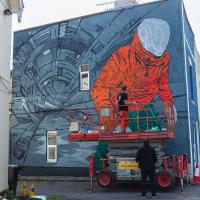
I think I'm right in saying that that's snub_23 popping up a new piece, but I'm only really basing that off some quick Instagram research and some assumptions; I'm not exactly plugged into the Bristol graff scene and I didn't want to interrupt the conversation.
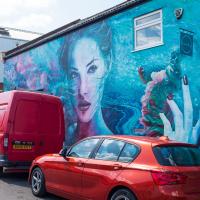
...on Bendy Studio, by Nick Harvey. Shame I couldn't get a clear shot. I do like a Siamese fighting fish...
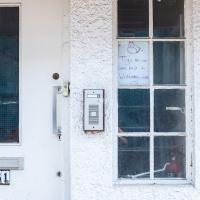
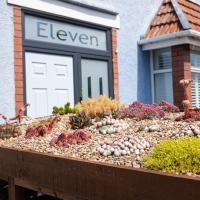
With bonus transom. I thought I might have snapped the transom before, but I think I was thinking of this one.
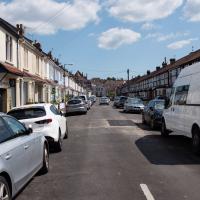
Not much to say, really. The strange mock-Tudor upper halves of the right-hand-side of the street were about the only distinguising feature, and personally I'm not sure that's distinguishing in a good way.
I've clearly sniped this one from the end of the road on a previous pass, but this is definitely the first time I've actually walked the length of it.

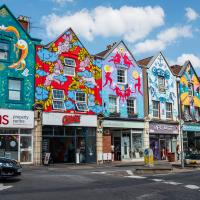
This was a work in progress last time I passed. Now all Six Sisters of this female-led graffiti project are finished and fair glowing in the sunshine.
A Journey to the Far East
25 Jul 2021
The far east of the intersection of my one-mile radius and Bedminster, anyway. I was feeling a bit tired this morning, so I motivated myself to get out of the door by imagining one of Mokoko's almond croissants. That got me on my way, and I wandered across to Bedminster, through Greville Smyth Park, along most of the length of North Street (looking out for new Upfest 75-pieces-in-75-days artwork as I went) and then onto some new roads at the far end.
I only wanted to knock a few streets off my "to do" list, but by the time I'd diverted here and there to check out various bits of graffiti and other attractions and come back via the aforementioned purveyors of Bristol's finest croissants, I'd walked 7.4km. Not bad for someone who woke up tired, and at least I've done something with my day. I'm very glad the weather broke (we had tremendous thunderstorms yesterday), even if some of the pictures might've looked better with a blue sky. I was getting fed up with walking around in 29°C heat...
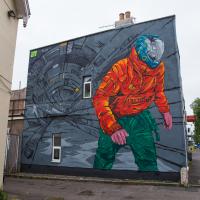
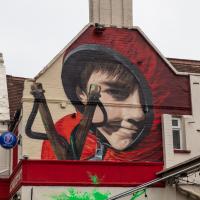
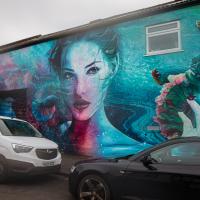
Well, like last time there's still a van and a car in the way, but at least the van's smaller this time.
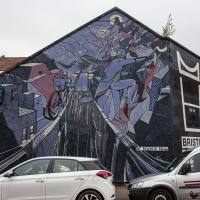
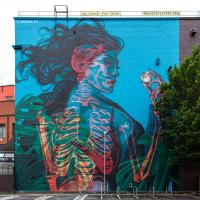
I don't normally edit photos to the extent of doing perspective correction, but I thought it would be interesting to see this piece straight-on.
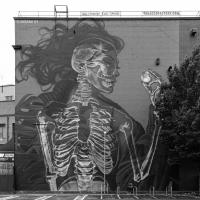
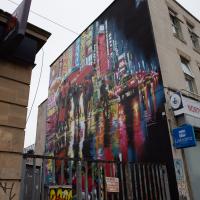
Best coffee on North Street, for my money. I made the practical choice and abstained, though, as it's hard to take photos with a coffee in one hand.
Green Squares and Secret Gardens
31 Jul 2021
At the end of July I went to have a look around some of the private gardens opened up by the annual Green Squares and Secret Gardens event. Sadly it was compressed into a single day this year, for various Covid-related reasons, it seems, so I didn't get to poke around too many places. I went to:
- A talk by the oldest resident of Victoria Square
- The St Vincent's Rocks Hotel garden
- The Paragon garden
- Cornwallis Crescent gardens, both east and west
- The Polygon garden
And snapped a few things in between, too. It was a lovely day—a bit too hot, if anything—and it was interesting to get into a few places I'd only ever seen from the outside, especially The Paragon and Cornwallis gardens, which are the least visible to passing strangers of all of them.
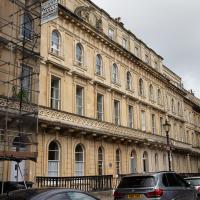
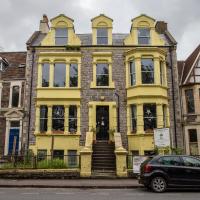
This section of Victoria Square, the second side to be built (Lansdown Road is the oldest—Regency—bit) is called Royal Promenade, and it built to resemble a palace. William Batemen Reed built it, then went on to build the Queens Hotel opposite the Victoria Rooms, which every Bristolian I know would more likely recognise by the description "the old Habitat at the top of Park Street" :D
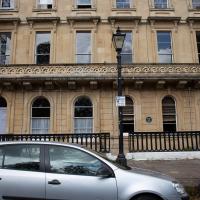
Apparently if the Royal Promenade were symmetrical, the windows of 7 and 8 would be the same size. As it is, 8 is clearly very slightly grander.
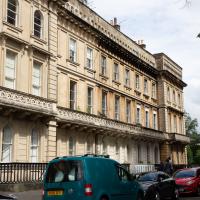
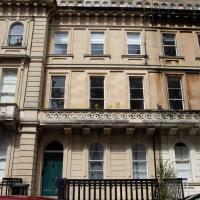
You can't see the join. Number 4 was obliterated when a bomb hit it in 1941, taking significant chunks of numbers 3 and 5 with it. Clearly they did a good job of the post-war restoration. There's a mention of the bombing on one of the BBC's People's War pages.
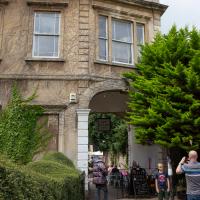
You can just about see the profile of Queen Victoria in the keystone; apparently it's the same image as used on the Penny Black.
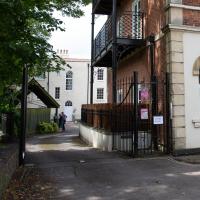
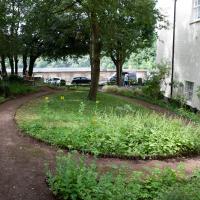
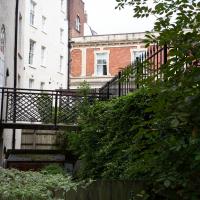
I've been wanting to go through these gates for a while; you can only get tantalising glimpses of the listed extension from the bit of grass adjacent.
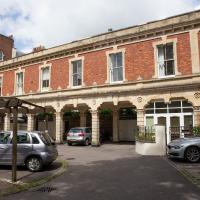
A Long Wander Of Miscellany and Magick
08 Aug 2021
This was a wide-ranging wander. I started off crossing the river to Bedminster, to walk a single little cul-de-sac, Hardy Avenue, that I'd managed to miss on at least one previous walk. Then, pausing only to explore a few back alleyways, I headed for a few destinations related mostly by the Hughes family, who I've been researching a little as part of background for a possible novel, as several of them were involved in the Stella Matutina.
However, mostly it's the artistic side of the family I wanted to explore today, as that's where most of their public history lies (as you might expect, there's often not much in the public record about the workings of an occult organisation.) First I visited College Green, where the façade of the Catch 22 Fish & Chip shop still bears the work of Catherine Edith Hughes. Then I wandered up to the top of Park Street to pop into the Clifton Arts Club's annual exhibition, as Catherine, her half-brother Donald, his wife Hope and at least two other Hugheses were members. Donald was chairman for 40 solid years; Hope was Secretary for eight, and Ellard and Margaret Hughes, two more Hughes siblings, were members along with Catherine.
Finally I walked home with a small diversion to Berkeley Square, to confirm the location of Donald Hughes's house by checking for a particular plaque by the front door.
I must admit I'm not entirely sure where all this research is really leading me, but I'm finding it quite interesting to bump across the faint lines of history that link the Hermetic Order of the Golden Dawn, founded in 1888, to modern, quotidian Bristol.
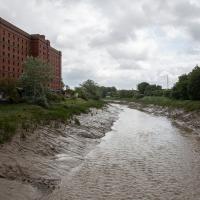
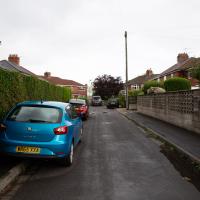
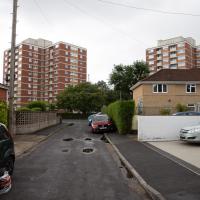
This may be a more interesting view than you'd think at first sight. Whitemead and Winterstoke House, with Southbow House out of sight on the far side, were finished in 1962, as the post-War housing crisis continued. There's a fascinating article in the Bristol Post about them, especially Whitemead House, the block on the left here, which was famously used for external scenes in Only Fools and Horses after filming moved to Bristol, standing in for the fictional Nelson Mandela House in Peckham where the Trotters lived.