Tagged: facade
I recently indulged myself by buying a little piece of history. I've mentioned Samuel Loxton and featured and linked to his drawings before, often in the eminently browsable Loxton Collection albums that Bristol Libraries has on Flickr. So when I saw a Loxton drawing of Hotwells pop up on eBay, I decided to get myself a little treat.
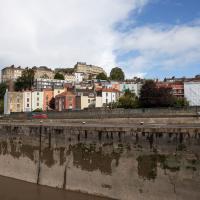
I don't think there's any Loxton drawing that features the road I actually live in—it's not very visible from anywhere else, not being one of these Clifton terraces that's perched at the top of a hill, or anything like that, and it's invisible in most views of the area. However, this Loxton drawing, Hotwells, Looking across the river from near the Clifton Bridge station, is probably the closest near-miss I've seen.
I decided to wander out one morning and see if I could reproduce the picture, and also take a photo or two of what's now become of the Clifton Bridge Station, which is still just about discernible in places.
(Then on an even stranger whim I decided to check out a possible little cut-through from Cumberland Road to the harbourside I'd been eyeing up on my commute to work, so walked to Wapping Wharf for a croissant via this potential new route, but that bit's not quite as interesting...)
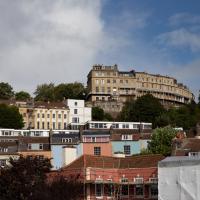
I'd broadly planned to figure out the vantage point Loxton had used for his drawing by lining up Windsor Terrace with The Paragon, so I started taking bearings fairly early.

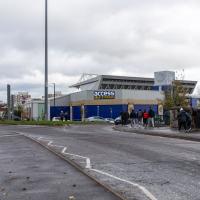
I don't actually know what "we cap £" means. I do know that it always seemed irritating that the Metrobus worked by having to buy a ticket in advance at fiddly little machines next to the stops, and that being able to just buy a ticket by tapping a card once you were on the bus would seem wildly futuristic if I hadn't had a Oyster card decades ago in London...
Having just tried to read the 2,500-ish word explanation of Tap & Cap, I'm still not sure exactly how to use it, but hopefully it at least means that Bristol bus drivers will no longer swear at you if you don't happen to have exactly the right change sorted out in advance...
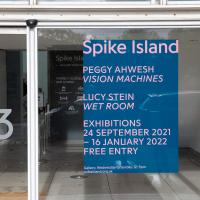
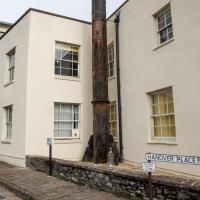
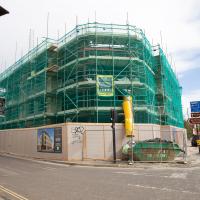
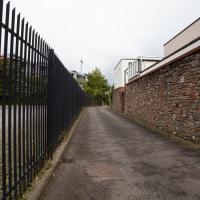
Most days on my way to work I pass, at a little distance, an intriguing-looking set of steps that run from the back of the modern housing development on the harbourside to somewhere around here. I've been getting increasingly curious about whether they're a way from the harbourside through to Cumberland Road that I've never discovered. So here I am, on the Cumberland Road side, about to find out.
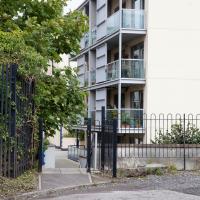
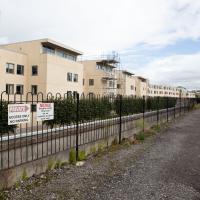
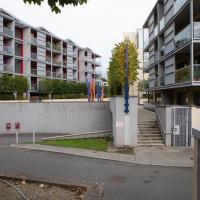
And that, on the far side, is my regular commuting route in the mornings (and often the evenings—I only walk along the north side of the harbour if I'm late for work or if I fancy a change, as the Hotwell Road is a bit too trafficky to be that pleasant.)
Docks Heritage Weekend Day One
09 Oct 2021
I could spend a lot of time at the Docks Heritage Weekend, poking my nose into industrial places along the harbourside that are usually closed off, but throw open their doors once a year to show off a bit of the backstage area of Bristol's floating harbour. In fact, I warn you: the next wander is a long one, and will have quite a few photos.
However, for today's wander, on the Saturday, my friend Lisa needed a shorter walk than our usual long rambles, as she's recovering from an operation and still a little under the weather, so we just wandered into town for some food and back, with me making mental notes of the places I wanted to come back to on the Sunday... We walked through Underfall Yard, along to the L Shed (this is the warehouse next to the M Shed museum, where they still have the kind of fun old industrial stuff that used to be crammed into the M Shed's predecessor, the old Industrial Museum), through the street food market in town to Ahh Toots for cake and then back home. So, still quite a walk, but no hills and not so much of Lisa having to hang around waiting for me to fool around taking photos as usual, at least...
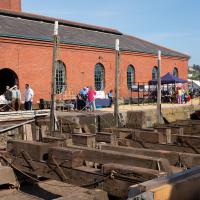
The Patent Slip is actually a grade II listed building. Personally I live in a II*-graded building myself; not sure I'd want to slum it down here.

Of course, it's not on the quay any more, because they moved the quay. However, St Mary's Facebook page has at least one picture of it from when this strip of the city centre was still the river.
I'm afraid that this is a bit of a badly-curated wander, where I mostly just popped out to find out a little of the history of Underfall Yard and poke around the various open workshops, and, in hindsight, really didn't take pictures in any kind of coherent order. So there's a lot of pictures, but they don't really tell the story that, in hindsight, I seem to have been trying to tell, of the unusual electrical substation in Avon Crescent, the Bristol Electricity that predates the National Grid but is still in use, the history of the hydraulic power house... It's a bit of a mess.
But I suppose sometimes these wanders—always chronologically presented in the order I walked and took photos—simply will sometimes be a bit of a mess. Let's hope you still get something out of it, anyway...
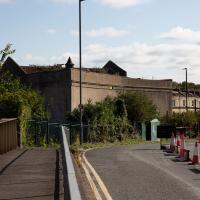
It's very hard to get a decent look at this building. This is the top half of the back of it.
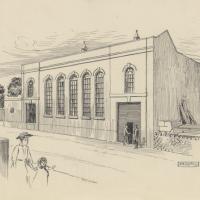
And here's the Loxton picture of the exterior, from the Bristol Libraries collection. Seems such a shame to have bricked up those lovely windows.
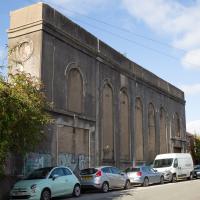
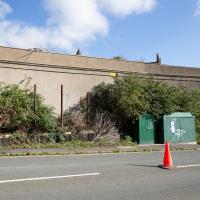
You can see this once apparently bright and airy building has had every window bricked up.
I understand that something in or around this building still supplies the odd electrical requirements (specifically, 360V "Bristol voltage") for some bits of Underfall Yard, which is our next stop, so more about that when we get there.
While it's not a listed building, is is notable: it's one of the earliest reinforced concrete buildings in the UK, apparently, construction starting in 1905. I assume it was up by 1907, as that's when Undefall Yard installed their electric pumps.
This oddity of history predates the National Grid and was originally fed from Feeder Road power station (well, Avonbank, on Feeder Road, to be precise. We've seen a bit of that history before, as a line marker for the line from Portishead to Feeder Road.) It was connected to Feeder Road by 1906, with a 6,600V line.
I've added a couple of historic views of the building as the next two photos in the wander, but I'll also pop this link to a Loxton drawing of the Avonbank electricity works, 1908 here.
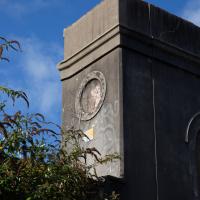
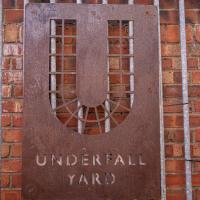
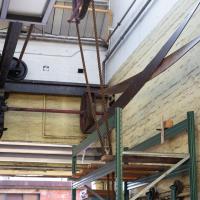
Most of the gear in this docks machine room is belt driven from a motor we'll see in a bit. The motor is electric but the drive system is pretty much the same as it was in the days of steam.
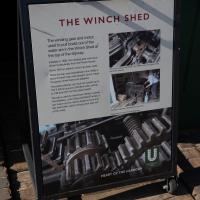
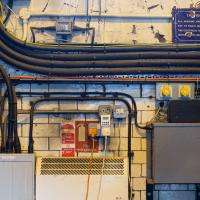
You can tell the pumps use some fairly hefty electric just from the size of those top cables.
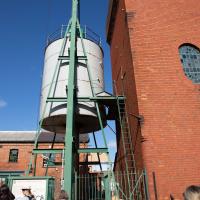
A hydraulic accumulator, (similar to its namesake in electronics, now more commonly known as a capacitor) stores the energy. (This is done rather than just using the pumps directly as, say, you can use these weaker pumps over a long period of time to store a large amount of energy that the accumulator can release more quickly to do a job that requires more power.)
All that pumping next door has raised this accumulator—basically a big drum full of 80 tons of scrap metal—high off the ground where it normally sits these days. This is the stored energy that's sitting on top of the water in the hydraulic system, ready to be diverted to anything around the docks that needs power. Up until as recently as 2010, this was the power source that opened and closed the main Cumberland Basin lock gates. Without it no ship could have entered or left the harbour.
Fresh Fields
17 Oct 2021
For the first time in a while, I had the time and energy to go further afield and knock off some new roads from my "to do" list. I headed through the first Hotwells Festival to Ashton and Bedminster to cross off a few of the suburban roads south of North Street.
First, though, I decided to try to reproduce an old photo of the now-demolished Rownham Hotel just around the corner from where I live...
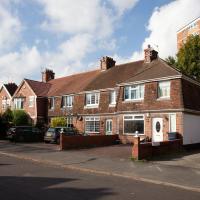
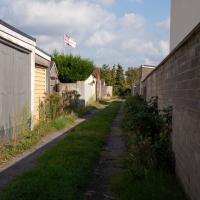
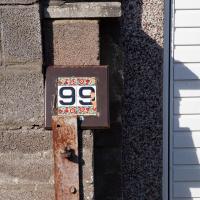
And I was right, the alleyway didn't really lead anywhere apart from people's garages and back gates, but at least 99 Smyth Road had a nice decorative number on the garage to look at.
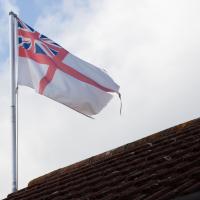
So presumably this isn't just the back of 107 Smyth Road, but the back of HMS 107 Smyth Road.
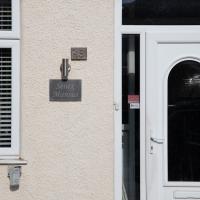
Old house? I think the dwelling of an old man would probably mansus senis, but I was never very good with Latin at the best of times. For all I know it's a highbrow joke on Milton's panegyric to Manso...
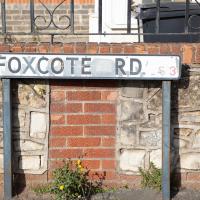
I presume a foxcote is like a dovecote, only for foxes. Nice to imagine them all there in their array of little foxholes.
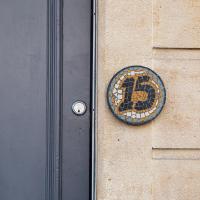
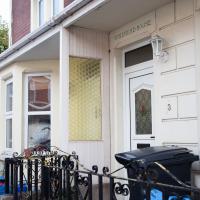
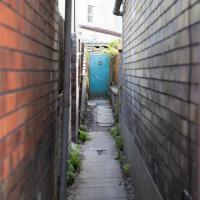
A Wide Angle View
30 Oct 2021
I had an unsuccessful wander last week, on Tuesday afternoon: my GPS died within about five minutes of leaving the house, and I didn't notice, plus I found hardly anything I'd been looking for. On the plus side, as I was wandering around Park Street I decided to nip into London Camera Exchange on the offchance they had a secondhand Canon 17-40mm lens. I've been thinking of buying one for around a year, I think.
Long story short: not only did they have one, but due to a mistake with their price labelling which they kindly honoured, I now have a shiny new (to me) wide-angle lens and it cost me less than £300, which is a very good price for one of these in good condition (and including a lens hood.)
So, rather than try to salvage Tuesday's walk, here's a walk where I basically just bimbled up to Clifton Village for a coffee and wandered around taking photos of as many wide views as I could find. I took a lot more photos than these seventeen, but as you might expect, a new lens takes some practice getting used to, so most of them ended up in the "outtakes" pile.
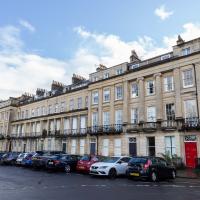
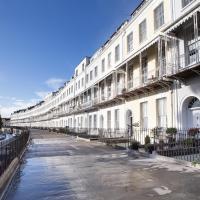
Pretty sure I couldn't have snapped the whole length of this terrace with my previous-widest lens, the 24-70. Fits fine in the 17-40.
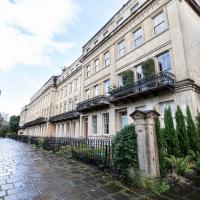
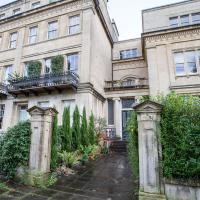
Set back on the end of Worcester Terrace is Worcester House. I've never succeeded in getting a good snap of it. Today does not seem to be an exception. Oh well.
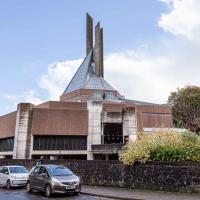
I've mentioned the spire before, I'm sure: colloquially known as the "three pin plug", it's apparently meant to represent the Holy Trinity.
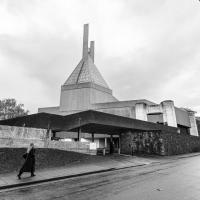
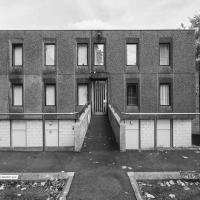
I'm not a fan of the asymmetry of the front door and, erm, garden path? Drawbridge? Skywalk?
Ticking Off a Few Streets in Bedminster
31 Oct 2021
There were only a few streets left to wander in the more residential bit of Bedminster, so I thought I should target those today. The streets themselves weren't that notable, though Balfour Road has a contrasting mix of old and new housing. I tried to snap a few more interesting things along the way there and back, snapping all three of the familiar bond warehouses, nipping onto North Street to find some new street art, and finding a few pumpkins for good measure. It is hallowe'en, after all...
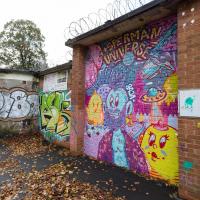
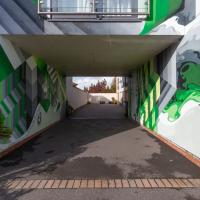
I'd been looking at the map and wondering if I needed to walk down this, as it looked like a road. I'd say it's private, though.
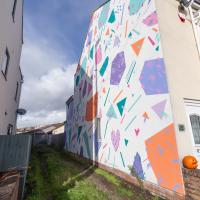
Again, pretty sure this isn't a public road, and frankly it didn't look like I'd see anything interesting even if I did risk venturing to the end...
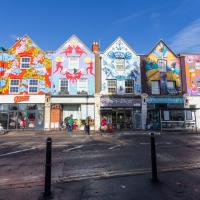
Trying a new angle with my new wide lens, but even that can barely fit them in square-on. Plus I could do with a higher sun to avoid the shadows, tricky to come by at this time of year.
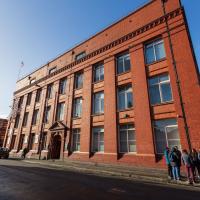
Why yes, I'm still trying out the new wide-angle lens. Never mind the quality, feel the width.
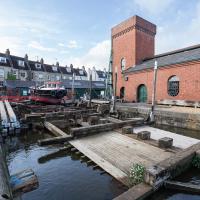
Recreating a Loxton Drawing on a Lunchtime Jaunt
05 Nov 2021
I did do a much longer wander earlier in the week, but that'll take me some time to process (and cast a plethora of photos into the "out-takes" pile!) In the meantime, here's my lunchtime jaunt, taken to give myself a break from doing the company bookkeeping to send to my accountant so the taxman doesn't sling me in chokey.
I've recently bought a slightly creased secondhand copy of Redcliffe Press's 1992 collection of Samuel Loxton drawings, Loxton's Bristol: The city's Edwardian years in black and white. It's a nice selection of Bristol Library's collection of the drawings. I'd noticed a drawing of 25 Royal York Crescent, a house I pass quite often, so I thought I'd wander up the crescent on the way to pick up some lunch and try to reproduce it.
On the way back I took a few photos of Clifton Hill Bank as the crowdfunder to make quite a lot of it into a wildflower meadow has just hit its target, so I figured some "before" shots might be a good investment for the future...
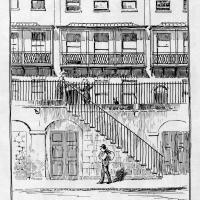
Loxton drawing from Bristol Library collection via Loxton's Bristol, Redcliffe Press, 1995 ISBN 1 872971 86 5.
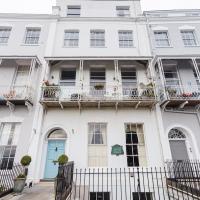
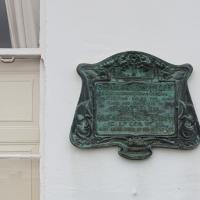
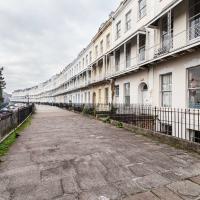
I went out simply wanting to knock off the very last little unwalked section of Clanage Road, over by Bower Ashton, which has been annoying me for a while as it's quite close by and I've walked the other bits of it several times. So, my plan was to nip over to Greville Smyth Park via a slightly unusual route to wander Clanage Road and tick it off.
Along the way, though, I inevitably got a bit distracted. I took a few photos of Stork House, a grand Hotwell Road building that's recently been done up a bit (I imagine it's student lets, though I'm not sure) and which I found a reference to in a book about the Port Railway and Pier the other week, and also tried to match up a historical photo of Hotwells before the Cumberland Basin Flyover System laid it waste, which included some interesting markers I'll have to do a bit more digging into...
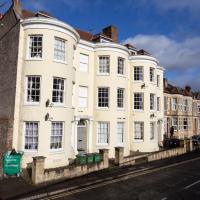
I've always loved the bow windows; if you look closely you'll see the window frames are slightly curved to match the curvature of the walls. Must be quite pricey to have repairs done, I'll wager.
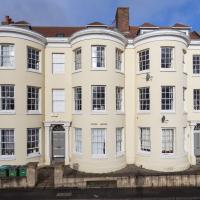
Stork House was the Stork Hotel back when the Bristol Port Railway and Pier, which connected Hotwells with a deep-water pier at Avonmouth, was in its heyday.
The Stork Family Hotel at Hotwells sought custom by advertising to seamen on ships arriving at Avonmouth, a combined rail ticket to Bristol and meal in this hotel. The same concern also advertised bed, breakfast, hot evening meal and seven days’ ticket to Avonmouth by BPR for sixteen shillings a week.
— Colin Maggs, The Bristol Port Railway & Pier, Oakwood Press, 1975
I imagine this would have been quite an attractive deal to a sailor, who could stay in Hotwells with its vast plethora of pubs and other entertainments and pop back to his ship in the comparative wastelands of Avonmouth when necessary. (There would also have been plenty of sailors who were already quite used to hanging around in Hotwells while their ship was in town rather than waiting around at the new pier at Avonmouth, and familiar with the local facilities. Thinking about what other "facilities" there may have been for sailors makes me wonder again if the bit of the Hotwell Road that ended up being called "Love Street" might've been a bit of euphemism at some stage or other...)
...and I was right.
Incidentally, a brief aside for a rant: why the hell are self-storage places just like sodding gyms? You can't get a straight answer about how much storage costs from any of their websites. They just take your details and then you have to talk to some bloody salesman, and play each site off against each other to get what's alleged to be the best price. I think it must be some kind of price-fixing racket.
The more I research it, the more I find that Hotwells had far better transport links back in Victorian and Edwardian times than it has today. Along with buses that went to more useful places than the City Centre, there were trams, the funicular up to Clifton, the landing stage for paddle steamer services and two railway stations all within easy walking distance of me.
Today I took a day off work as preparation for doing the bookkeeping for my tax return1, and took a wander along to the site of what would have been my nearest station, Hotwells (or Clifton, as it started out in life), nestled in the shadow of the suspension bridge, the Bristol terminus of the Bristol Port Railway and Pier.
From there I wandered down the Portway, following the original line, until I got to the area around Sneyd Park Junction, where the tunnel from the slightly later Clifton Extension Railway joined up with this originally-isolated BPR line. Then I headed up to Clifton through the "goat gully" at Walcombe Slade, seeing the few above-ground bits of evidence of the tunnel (which is still in regular use) along the way.
It was a lovely day, and a good walk, and it was interesting to daydream of the times when I could have walked a few minutes from my flat down to Dowry Parade, caught a short tram ride to Hotwells Stations, and then headed from there to Avonmouth, perhaps even to board a transatlantic passenger service. The completion of the Clifton Extension Railway that linked the Avonmouth station with Temple Meads made relatively direct transatlantic travel from London via Bristol possible, with passengers travelling up from Paddington to Temple Meads, on to Avonmouth on the Clifton Extension Railway and Port Railway and Pier line, then perhaps catching a Cambpell's paddle steamer—which sometimes acted as tenders for large steamers—to a larger ship that was headed out for Canada, say.
1 I've learned that the best approach is to take two days off and deliberately do something that's not my bookkeeping on the first day, as otherwise I just inevitably end up procrastinating and feeling guilty on the first day no matter what. I have an odd brain, but at least I'm learning strategies for dealing with its strange ways as I get older...
2 Information mostly gleaned from Colin Maggs' The Bristol Port Railway & Pier and the Clifton Extension Railway, The Oakwood Press, 1975.
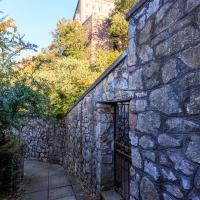
I'm pretty sure from looking at some maps that this is the gate that would have led to Prince's Lane, if it were still passable.
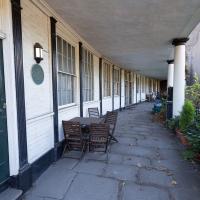
From The Bristol Hotwell, by Vincent Waite, ISSN 1362 7759, Bristol Branch of the Historical Association, 2002 reprint.
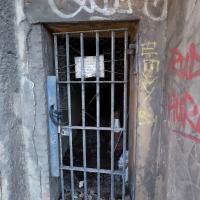
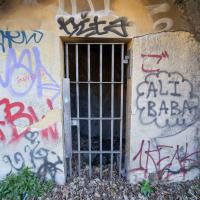
...in 1867 the new Pump Room was in turn demolished so that Hotwell Point could be removed and river navigation made safer. Thus the spring was lost after a long and eventful history. After much public agitation and complaining in the local press the spring was enclosed and piped to a small grotto hollowed out in the rock. Here a pump was set up in 1877 and an attendant provided by the Bristol Docks committee. In 1880 Dr. Griffin wrote a warning letter to the newspapers claiming that his analysis of this pump water proved that it was not from the original spring which in any case was too far away to retain its correct temperature. Yet up to 1913 the pump was still in use, and sometimes supplied as many as 350 persons a day. Then the long-threatened pollution of the water by the river became too obvious to be ignored and the pump was closed. The entrance, blocked up by a small wooden door, can still be seen in Hotwells Road near the Suspension Bridge.
The wooden door is no longer here, but this is definitely the place.
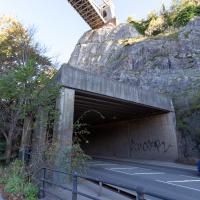
It's a (glass-fibre reinforced, I think) concrete roof to keep falling rocks from blocking the road at this particularly friable bit of the cliff face.
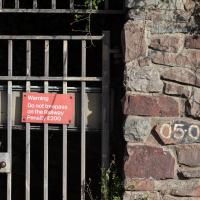
Yup, this is an access gate for the railway folk, presumably an easy route to this end of the tunnel. It's possible there's somewhere public to snap the tunnel from—there's a bridge further out of town toward Sea Mills, and there's a chance you could see the tunnel from there, but today's walk is already quite long enough, thank you.
From here the Clifton Extension Railway (from 1877) would have joined up with the line from Hotwells (completed twelve years earlier) at Sneyd Park Junction, a few hundred feet further out of town, and then proceeded to Sea Mills and beyond, terminating at Avonmouth. That bit of the line still runs; it's only the bit from Hotwells to here that was pulled up to make room for the Portway road, making Sneyd Park Junction no longer a junction.
Here a little fact I like: when the Bristol Port Railway ran out to Avonmouth from both Clifton Down station at the high far end of the tunnel near Whiteladies Road, and also from Hotwells, they offered a special splilt return ticket that let you walk down the hill from your home to Hotwells, take the train out to Avonmouth, then return to Clifton Down instead, so you could walk down the hill to home rather than walking back up. A lot of the dockworkers took this option, and it gladdens me to find that even these hardy folk were so put off by the hills of Bristol that they went for the lazy option!
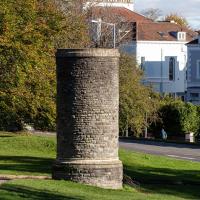
This is the Pembroke Road ventilation tower, sometimes known as the "pound tower", as it's next to the pound the Downs maintenance people use for equipment storage.
From To Keep Open and Unenclosed, the Management of the Durdham Down Since 1861, Bristol Branch of the Historical Association, 2005:
...construction of the tunnel began immediately at Cooks Folly Wood, the top of Pembroke Road and two other points. The Pembroke Road shaft was subsequently retained to ventilate the tunnel. The sinking of this shaft had reached rail level by May 1872 when Captain Beaumont's compressed air diamond drilling machine came into use. Most of the machinery associated with the diamond drilling machine was on the surface: the machine had a 4" diameter compressed air service from a 50 hp steam engine at the surface. By comparison, the engine to lift spoil and water from the tunnel was only 20 hp. The drill had to be cooled by water which was run into trucks and presumably wound to the surface. Dynamite charges were set in the holes after the dynamite had been softened by steam before use! On 10th May 1872 four pounds of dynamite exploded while being 'softened' at 2.30 a.m. blowing off the engine-house roof and smashing windows in the three houses facing the Downs at the top of Pembroke Road. Fortunately no-one was injured and when the glazier called at one house he found that the occupant had slept through the whole episode!
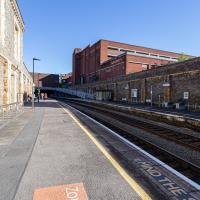
I think this is the very first time I've set foot on Clifton Down Station platform. I believe this is the platform for the "up" trains, if I'm getting my terminology right, but I think it's a fairly arbitrary choice, as much of the line is single track.
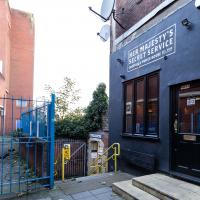
I have, however, spent an evening in there. They do a good Old Fashioned and an excellent Manhattan, from (somewhat hazy) memory.
Bower Ashton is an interesting little area just south of the river from me—in fact, the Rownham Ferry used to take people over from Hotwells to Bower Ashton, operating from at least the twelfth century to around the 1930s.
It's a strangely contradictory little area, with a cluster of old and new houses sandwiched in between the busy A-roads and significantly more industrial area of Ashton and the bucolic country estate of Ashton court roughly east to west, and also between Somerset and Bristol, north to south.
I've been around here before, mostly poking around Bower Ashton's arguably most well-known bit, the Arts faculty campus of the University of the West of England, but I'd missed at least Parklands Road and Blackmoors Lane, so I initially planned just to nip across briefly and wander down each in turn. On a whim, though, I texted my friends Sarah and Vik in case they were out and about, and ended up diverting to the Tobacco Factory Sunday market first, to grab a quick flat white with them, extending my journey a fair bit.
To start with, though, I nipped to a much more local destination, to see something that you can't actually see at all, the Gridiron...
(I also used this wander as a test of the cameras in my new phone. I finally upgraded after a few years, and the new one has extra, separate wide and telephoto lenses compared to the paltry single lens on my old phone. Gawd. I remember when speed-dial was the latest innovation in phones...)
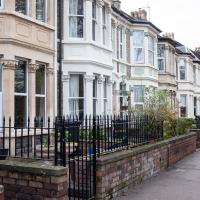
It's a nice little terrace, but given that it backs onto the city ground, I'd imagine you have to be a football fan to really enjoy it here.
At this point I've already abandoned my original plan of heading straight to Parklands Road, as some friends had texted me to say there were at the tobacco factory market and would I like to join them for a coffee? Best laid plans, so forth...
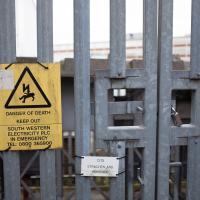
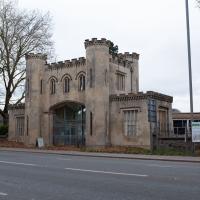
The original entrance to the Ashton Court Estate, apparently. The Clifton Lodge entrance is rather grander.
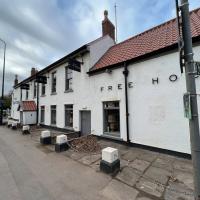
I'm not sure I've ever walked or even driven past the Ashton before, and it's only a mile away from me—in fact, my mile radius line divides it roughly in half. Tripadvisor suggests that its solid 3-star review average is made up of people having either one-star or five-star experiences, which is sometimes the hallmark of a great place that's happy to be rude to idiots...
Maybe this is the place to have a celebratory meal when I finally decide I've actually walked all the roads within my mile...
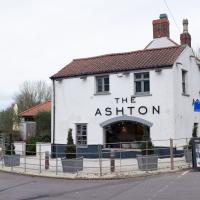
It's got the grazing field at the front and school playing fields at the back, and the road it's on isn't manic. Does this count as a Somerset "country" pub I can walk to?
This used to be called The Dovecote, but was gutted by fire in 2014 and re-opened under the new name the following year.
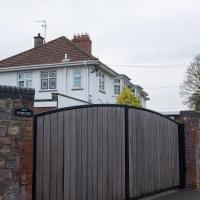
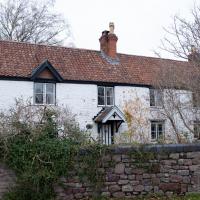
It really is quite countrified all of a sudden. There used to be a couple of barns next to this house; the Bower Ashton Website has some interesting old pictures up.
Jersey Cottage is, unsurprisingly, the place the "cow man" used to live, according to this interesting bit of oral history you can listen to on the Ashton Gate House site.
Away from the A road it's very quiet, the loudest sound along this lane was the squabbling of the hosts of sparrows and other tiny bramble-dwelling birds.
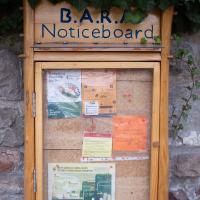
Got to be Bower Ashton Residents Association, right? No particularly hot gossip, sadly. I'm always on the lookout for some local undercurrents on a community noticeboard.