Tagged: on
In Between
06 Feb 2021
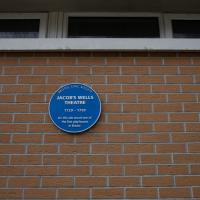
A lovely walk in the early spring sunshine with my friend Lisa. We headed directly for Jacobs Wells Road, to start off around the scene of one of our earlier walks, but this time took in Jacobs Wells from QEH upward, stopping to snap some photos of a Bear With Me, some interesting areas between Park Street and Brandon Hill including a peculiarly quiet enclave with a ruined old build I'd never found before, then crossed the Centre to grab take-away pies from Pieminister (I had the Heidi Pie) and head back to my place down the harbourside.
Tags: Bristol Places UK onemilematt united kingdom Clifton Jacobs Well Road
Auto-Tags: Daytime Property Fixture Brickwork Brick Building Font Rectangle Building material Composite material Facade Symmetry Window Electric blue Engineering
Text Recognition Tags: NIC SOCI RISTO JACOB'S WELLS THEATRE 1729-1799 On this sie stood one of the first playhous in Bristol NIC SOCI RISTO JACOB'S WELLS THEATRE 1729-1799 On this sie stood one of the first playhous in Bristol
Arlington Villas and WH Smith Destruction
10 Feb 2021
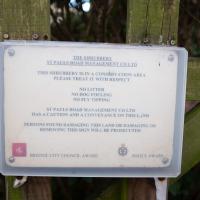
I actually dashed up to Clifton to take a look at Arlington Villas, just around the back of St Paul's Road, one of those slightly odd little enclaves of overlooked housing that you know is there, but you never have a reason to visit or travel down. As it turned out, interesting though the (public) garden is, I actually took far more pictures of the now-completely-demolished site bounded by King's Road, Boyce's Avenue and Clifton Down Road where WH Smith and other places used to stand.
It's interesting to imagine how nice this little area would be if turned into a permanent public square, but of course the developers already have their planning permission to build it right back up again.
Tags: Bristol Places UK onemilematt united kingdom Clifton Arlington Villas
Auto-Tags: Plant community Plant Botany Leaf Wood Natural environment Terrestrial plant Vegetation Grass Biome Trunk Font Woody plant Groundcover Forest
Text Recognition Tags: THE SHRUBBERY ST PAULS ROAD MANAGEMENT CO LTD THIS SHRUBBERY IS IN A CONSBRVATION AREA PLEASE TREAT IT WITH RESPECT NO LITTER NO DOG FOULING NO FLY TIPPING ST PAULS ROAD MANAGEMENT CO LTD HAS A CAUTION AND A CONVEYANCE ON THIS LAND PERSONS FOUND DAMAGING THIS LAND OR DAMAGING OR REMOVING THIS SIGN WILL BE PROSECUTED HRISTOL CITY COUNCIL AWARE POLICE AWARE THE SHRUBBERY ST PAULS ROAD MANAGEMENT CO LTD THIS SHRUBBERY IS IN A CONSBRVATION AREA PLEASE TREAT IT WITH RESPECT NO LITTER NO DOG FOULING NO FLY TIPPING ST PAULS ROAD MANAGEMENT CO LTD HAS A CAUTION AND A CONVEYANCE ON THIS LAND PERSONS FOUND DAMAGING THIS LAND OR DAMAGING OR REMOVING THIS SIGN WILL BE PROSECUTED HRISTOL CITY COUNCIL AWARE POLICE AWARE
Since setting up a search for Hotwells on eBay I've mostly managed to restrain myself from buying much (or in one case, was outbid, luckily for my finances.) However, I couldn't resist a 1902 flyer for a singalong at the Terrett Memorial Hall, which would have stood five minutes' walk from my flat, overlooking Howard's Lock.
I've found out a fair bit about this non-denominational seaman's mission, including tracking down both a Loxton drawing and an aerial photo of it. The main thing that's eluded me, ironically enough, is finding out who Terrett was, so as a Memorial Hall it didn't do a very good job 😀.
EDIT: Ah! Did a little more digging and found that the Bristol Archives has a Bristol Dock Company document on file called "William Terrett, Esq.; corresp. etc. re proposed erection of a Mission Hall at Cumberland Basin, 1892", so that might be worth a look once the Archives are properly open again. Given that:
Sarah Terrett died suddenly on 25 November 1889, aged 53, after speaking at a meeting of the White Ribbon Army, the temperance organization she had founded in 1878. Following her death many people sent letters of sympathy to her bereaved husband, William. One of these, from the Rev. W. F. James, a minister of the Bible Christians, makes for especially interesting reading. The Bible Christian denomination, to which Sarah and William belonged, was one of the smaller Methodist connexions, and had its heartland in rural Devon, the area where she had grown up. James recalled the hospitality he enjoyed when visiting the Terretts’ home, Church House, in Bedminster, south Bristol...
...I wonder if William Terrett built the hall in memory of his late wife. They were clearly just the kind of temperance movement people who would've founded a seaman's mission to get people together to have a nice non-alcoholic singsong rather than a night out on the tiles.
Anyway. This walk to grab a coffee from Hopper Coffee in Greville Smyth Park was mostly an excuse to post the leaflet, a few other things I found related to it, and some pictures of how the site looks now. I would suggest that the present day is not an improvement.

I find the adverts fascinating. My first optician in Bristol was Dunscombe's on St Augustine's Parade, so they were there a long time. They've closed now (or at least moved) but were still there as recently as 2008, I think. Interesting to see gas lighting systems being advertised, too!
Tags: Bristol Places UK onemilematt united kingdom Hotwells Cumberland Basin Flyover System Cumberland Piazza Cumberland Basin Terrett Memorial Hall
Auto-Tags: Newspaper Font Paper Menu Document Paper product Publication
Text Recognition Tags: M. W. DUNSCOMBE, F.B.0.A.,e d WHY DO THE PEOPLE Spectaele Specielist and Optician, 5, St. AUGUSTINE'S PARADE, BRISTOL. Barber &Company's Teas and THE INTERNATIONAL BOOT CO FOR B0OTS? Coffees Photograplie Apparatus, Opes snd Field Glae Telescopen, Magniticn Microscopes Theenameters. Barometers, Drawing lostruments. Optial Laterns, ete. LIMELIGHT, DISSOLVING VIEW A CINEMATOGRAPH ENTERTAINMENTS. Because they know they will get Honest Value tor their money. AT POPULAR PRICES. ONE MUSDED TEAB ALL GASH PIORS. The International Boot Co., Bristol Addreas 33, BRIDGE STREET. 2a, Hetvell Rd., BRISTOL. PROGRAMME – Saturday, Januaty 4th, at 7.30. Estalilahed 1834. IF YOU WANT SHIRTING COLE&POTTOW,Ltd. 15 to 18, Lower Maudlin St., FLANNELETTE, W. AXTENS, 219. 221, 223, Hlotwell Road. LION Brand at 6 d. "TIGER" eter ne range. 2 Tia. ialld by a. Derpasd y NOSE, Astcar THY ৰ । Des t BRISTOL Seripture. Pianoforte Solo. Prayer. Chairman's Remarks. READY-MADE AND BESPOKE TAILORS. Mi FireucoaIL Mr LoA TATLO The Amoec daktal "The HoBhrine" In the thening Grey *How llortlue ie Beidge "Oh! kliheful" Song Song at 5{d. Miss TuK Sti Porata Mis F. Hanter Duet Largast Stock of Ready-Made Clothing in the Wet ol Eagland. Scamen's Complete Ourfits. Recital Song TEMPERANCE ADDRESS M lowan REV. LEONARD W. PARRY ELANNELK, BLANKETS. QUILS, Duet Musinal Selootions Song Song Song Annoaneoments and Colleetion. The aina Acdion "The Te Cities" When the ande g by "Antie anrie Doxology. Mis Fo LI Mr. E IL Do A Gross of Watches for London PREPAUE TO THE MINTER SEASON "WELSBACH Mis Tter Mater LaA TAXton EVELLERT, INCANESCENT GAN LIT SSTEM emar te RELABACE KERN BUN ngecres el er ot- the A PLEDGE BOOK WILL BE FOUND ON THE HALL TABLE. The Lacal Cemmitta t the lntorpated seamen and Boatmes's Friend foclety arnestly appeal te the Mambers t the Chrlatlan Chuncho nd all frienda of Temperince te ugpot thee goteria in every passible way. Thone dentring te help, ether In providinprgremme or canvaalng, e requostad to communicate with the Supertetendent, ke EW, Parry, Avenhurat, Cumhertand Road A Preper Mastin held a Wednerday, at8 pm. Hithe lacl iur il T10 Tarslays, and aday Teeat 11 a 30t ioel r Ant WILSACE HARTRA Muity e Riches i Apply fir paminla te Welsbech Inndescent Gas Light Co, A Titoria Strest, Bristal WATTS & C Ld., p Stokes Croft. M. W. DUNSCOMBE, F.B.0.A.,e d WHY DO THE PEOPLE Spectaele Specielist and Optician, 5, St. AUGUSTINE'S PARADE, BRISTOL. Barber &Company's Teas and THE INTERNATIONAL BOOT CO FOR B0OTS? Coffees Photograplie Apparatus, Opes snd Field Glae Telescopen, Magniticn Microscopes Theenameters. Barometers, Drawing lostruments. Optial Laterns, ete. LIMELIGHT, DISSOLVING VIEW A CINEMATOGRAPH ENTERTAINMENTS. Because they know they will get Honest Value tor their money. AT POPULAR PRICES. ONE MUSDED TEAB ALL GASH PIORS. The International Boot Co., Bristol Addreas 33, BRIDGE STREET. 2a, Hetvell Rd., BRISTOL. PROGRAMME – Saturday, Januaty 4th, at 7.30. Estalilahed 1834. IF YOU WANT SHIRTING COLE&POTTOW,Ltd. 15 to 18, Lower Maudlin St., FLANNELETTE, W. AXTENS, 219. 221, 223, Hlotwell Road. LION Brand at 6 d. "TIGER" eter ne range. 2 Tia. ialld by a. Derpasd y NOSE, Astcar THY ৰ । Des t BRISTOL Seripture. Pianoforte Solo. Prayer. Chairman's Remarks. READY-MADE AND BESPOKE TAILORS. Mi FireucoaIL Mr LoA TATLO The Amoec daktal "The HoBhrine" In the thening Grey *How llortlue ie Beidge "Oh! kliheful" Song Song at 5{d. Miss TuK Sti Porata Mis F. Hanter Duet Largast Stock of Ready-Made Clothing in the Wet ol Eagland. Scamen's Complete Ourfits. Recital Song TEMPERANCE ADDRESS M lowan REV. LEONARD W. PARRY ELANNELK, BLANKETS. QUILS, Duet Musinal Selootions Song Song Song Annoaneoments and Colleetion. The aina Acdion "The Te Cities" When the ande g by "Antie anrie Doxology. Mis Fo LI Mr. E IL Do A Gross of Watches for London PREPAUE TO THE MINTER SEASON "WELSBACH Mis Tter Mater LaA TAXton EVELLERT, INCANESCENT GAN LIT SSTEM emar te RELABACE KERN BUN ngecres el er ot- the A PLEDGE BOOK WILL BE FOUND ON THE HALL TABLE. The Lacal Cemmitta t the lntorpated seamen and Boatmes's Friend foclety arnestly appeal te the Mambers t the Chrlatlan Chuncho nd all frienda of Temperince te ugpot thee goteria in every passible way. Thone dentring te help, ether In providinprgremme or canvaalng, e requostad to communicate with the Supertetendent, ke EW, Parry, Avenhurat, Cumhertand Road A Preper Mastin held a Wednerday, at8 pm. Hithe lacl iur il T10 Tarslays, and aday Teeat 11 a 30t ioel r Ant WILSACE HARTRA Muity e Riches i Apply fir paminla te Welsbech Inndescent Gas Light Co, A Titoria Strest, Bristal WATTS & C Ld., p Stokes Croft.
One Albermarle Row, Granby Green and... People
12 Mar 2021
I was browsing some historical photos the other day, and came across "Rear of Unspecified House" in the Bristol Archives' John Trelawny Ross collection, and immediately recognised it as being the back of 1 Albermarle Row, just around the corner from me. I've not had much time to research the history of this odd little addition to Albermarle Row, or what happened to 1-4 Cumberland Place, number 4 of which used to be attached to the side of 1 Albermarle Row, but it was interesting to look at old maps for a few minutes and work out what used to be where.
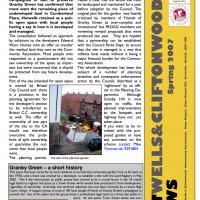
That all connects with the little local bit of land at Granby Green, too, as it used to be numbers 1-3 Cumberland Place. There was something of a planning battle over Granby Green, and I've included an old edition of Hotwells & Cliftonwood News that I found online, a copy of which would have been popped through my letterbox at the time.
I was also inspired by some old pictures of Hotwell Road to try to put a few more people in my pictures, though I set my pre-focus a couple of extra metres out from normal to make sure I didn't get too close to anyone!
Tags: Bristol Places UK onemilematt united kingdom Hotwells Cumberland Place Granby Green
Auto-Tags: Tire Automotive tire Newspaper Publication Motor vehicle Tread Font Wheel Material property News Vehicle Automotive wheel system Advertising Tire care Screenshot
Text Recognition Tags: Decision time for new h&cca Open Space in Hotwells HOTWELLS & CLIFTONWOOD COMMUNITY ASSOCIATION A recent poll of the people who sion granted to Edward Ware Homes campaigned in vain to preserve makes it clear that the whole site must Granby Green has confirmed that be landscaped and maintained for a year most want the remaining piece of before adoption by the Council, The undeveloped land in Cumberland original plan for the garden was heavily Place, Hotwells retained as a pub- criticised by members of Friends of lic open space with local people Granby Green as over-complex and having a say in how it is developed 'institutional but FROGG members are reviewing revised proposals that were The consultation followed an approach produced last year. They are hopeful by solicitors to the developers Edward that a partnership can be established with the Council Parks Dept. to ensure the residual land they own to the Com that the site is managed in a way that munity Association. Most people who reflects local needs without it being a responded to a questionnaire did not major financial burden for the Commu- ed by and managed. Ware Homes with an offer to transfer see ownership of the space as impor- nity Association. tant but were concermed that it should The whole development has been the be protected from any future develop- subject of a number of planning breaches and consequent enforcement Part of the site intended for open space action by the Council, described as a 'nightmare by an offi- cer in the Planning De- Alkhough Granby Hill is now open to traffic, the planned improvements to the footpath and highway have not yet ment. is owned by Bristol City Council and there is a provision in the planning agreement for the developer's section to be transferred to partment. Bristol C.C. owmership as well. The offer of ownership of one part of the site to the CA taken place. If you want to be in- volved with the pro- posed garden or have any comment on the scheme contact Mike would not therefore overcome the prob lems of split ownership or guarantee the out- come that local people Timmins tel: 9291804 want. The planning permis- The s of the panned garden Granby Green -a short history This apace had cared for by local residents a an informal community garden from as far back as the 1970s unail a fance was erected by a develaper, to establiah a tde with the Land Ragistry in May 2002 Tha 4 day interruption to pubic access later proved to be a crudal factor in the IB legal battle to regster the space as Town Green which would have protected it from developmere, n renoved by a recent High pnenas of Graby Green) campagned to Ibeen regardiess of ownership (iroricaly. chis technical objection has now been Court rulng A support group of around 100 local people prevent the loss of the space and the group tced a professional legal team at a three day publik in In this edition: Community News Winning ideas - Meet Your Neighbour -6 Events & Activities - quiry At one point, Town Green satus wos con ferred by the Bristol CC Open Spaces committee but bear rescinded folawing thrests of legal action by the then ownieri, Etward Ware Homes. Local resident Mike Timmin has ggeed that the now smaler space below Walace Place, che new 4 block of Mats should be christened Gromit Gar. 7 dens Rey Smth Contacts 8 HOTWELLS&CLIFTONWOe Spring 2007 SM3N Published y Hetwells A CIenweed Cemmunity Aassetaten, Htepe Chapel, Hepe Chapel Hill, Hetwells, Brtatel. BSa 4ND Decision time for new h&cca Open Space in Hotwells HOTWELLS & CLIFTONWOOD COMMUNITY ASSOCIATION A recent poll of the people who sion granted to Edward Ware Homes campaigned in vain to preserve makes it clear that the whole site must Granby Green has confirmed that be landscaped and maintained for a year most want the remaining piece of before adoption by the Council, The undeveloped land in Cumberland original plan for the garden was heavily Place, Hotwells retained as a pub- criticised by members of Friends of lic open space with local people Granby Green as over-complex and having a say in how it is developed 'institutional but FROGG members are reviewing revised proposals that were The consultation followed an approach produced last year. They are hopeful by solicitors to the developers Edward that a partnership can be established with the Council Parks Dept. to ensure the residual land they own to the Com that the site is managed in a way that munity Association. Most people who reflects local needs without it being a responded to a questionnaire did not major financial burden for the Commu- ed by and managed. Ware Homes with an offer to transfer see ownership of the space as impor- nity Association. tant but were concermed that it should The whole development has been the be protected from any future develop- subject of a number of planning breaches and consequent enforcement Part of the site intended for open space action by the Council, described as a 'nightmare by an offi- cer in the Planning De- Alkhough Granby Hill is now open to traffic, the planned improvements to the footpath and highway have not yet ment. is owned by Bristol City Council and there is a provision in the planning agreement for the developer's section to be transferred to partment. Bristol C.C. owmership as well. The offer of ownership of one part of the site to the CA taken place. If you want to be in- volved with the pro- posed garden or have any comment on the scheme contact Mike would not therefore overcome the prob lems of split ownership or guarantee the out- come that local people Timmins tel: 9291804 want. The planning permis- The s of the panned garden Granby Green -a short history This apace had cared for by local residents a an informal community garden from as far back as the 1970s unail a fance was erected by a develaper, to establiah a tde with the Land Ragistry in May 2002 Tha 4 day interruption to pubic access later proved to be a crudal factor in the IB legal battle to regster the space as Town Green which would have protected it from developmere, n renoved by a recent High pnenas of Graby Green) campagned to Ibeen regardiess of ownership (iroricaly. chis technical objection has now been Court rulng A support group of around 100 local people prevent the loss of the space and the group tced a professional legal team at a three day publik in In this edition: Community News Winning ideas - Meet Your Neighbour -6 Events & Activities - quiry At one point, Town Green satus wos con ferred by the Bristol CC Open Spaces committee but bear rescinded folawing thrests of legal action by the then ownieri, Etward Ware Homes. Local resident Mike Timmin has ggeed that the now smaler space below Walace Place, che new 4 block of Mats should be christened Gromit Gar. 7 dens Rey Smth Contacts 8 HOTWELLS&CLIFTONWOe Spring 2007 SM3N Published y Hetwells A CIenweed Cemmunity Aassetaten, Htepe Chapel, Hepe Chapel Hill, Hetwells, Brtatel. BSa 4ND
Leigh Woods Walk
14 Mar 2021
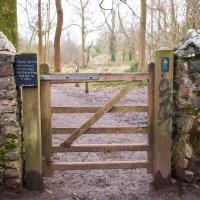
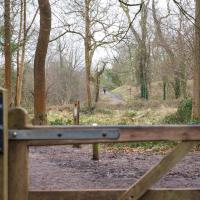
An enormous walk today, or at least it felt enormous. My feet are sore, anyway. I started off recreating a couple of local historical photos in Hotwells, but then headed for my traditional walk along the towpath in the Avon Gorge to the far extreme of Leigh Woods, up and through the woods to the height of the Suspension Bridge, finally crossing into Clifton Village for a well-deserved vanilla latte.
I say "traditional" because this used to be a very regular route for me, first walking, years and years ago, and later jogging—this route combined with a circuit of the Downs on the other side used to be my way of making sure I was fit to do a half-marathon (I did six of them in total, between 2010 and 2014).
I miss the routine of this walk, even though it's a long way and it used to pretty much wipe me out when I did it—I'd come back home and collapse and do very little for the rest of the day. But perhaps that's what Sundays are for, and I should try to remember that.
Doing this walk regularly was quite a meditative experience. Not so much of that today, but once I got to the further extreme of the towpath, where the roar of the Portway traffic on the other side of the river dwindles and I turned into Leigh Woods to climb ever closer to birdsong and further from rushing cars, I did seem to recapture a little of the feeling of previous walks. (I would say my mind cleared, but I was mentally singing along to Life Without Buildings' The Leanover for most of the wander. There are worse songs to have stuck in one's head, though; it's a great track...)
Anyway. Apparently the walk made me more likely to ramble in words, too. I'll stop now :)
Tags: Bristol Places UK onemilematt united kingdom Leigh Woods forest woods
Auto-Tags: Plant Natural landscape Wood Tree Split-rail fence Land lot Fence Home fencing Trunk Grass Landscape Rural area Door Sky Forest
Text Recognition Tags: TANK OFOR ITMS AREA ANDE DR bee ON LEAC TANK OFOR ITMS AREA ANDE DR bee ON LEAC
Tags: Bristol Places UK onemilematt united kingdom Leigh Woods forest woods
Auto-Tags: Plant Tree Wood Natural environment Natural landscape Sky Split-rail fence Fence Grass Landscape Trunk Forest Woodland Road Home fencing
Text Recognition Tags: TANK YOUR UNG AREA AOPRVEEPNG Yut Doe ON A LEAD TANK YOUR UNG AREA AOPRVEEPNG Yut Doe ON A LEAD
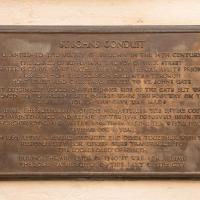
I got interested in Bristol's medieval water supplies after poking around near Jacobs Wells Road and Brandon Hill. It was during that research I found out about a pipe that's still there today, and, as far as I know, still actually functioning, that was originally commissioned by Carmelite monks in the 13th century. They wanted a supply of spring water from Brandon Hill to their priory on the site of what's now the Bristol Beacon—Colston Hall, as-was. It was created around 1267, and later, in 1376, extended generously with an extra "feather" pipe to St John's On The Wall, giving the pipework its modern name of "St John's Conduit".
St John's on the Wall is still there, guarding the remaining city gate at the end of Broad Street, and the outlet tap area was recently refurbished. It doesn't run continuously now, like it did when I first moved to Bristol and worked at the end of Broad Street, in the Everard Building, but I believe the pipe still functions. One day I'd like to see that tap running...
There are a few links on the web about the pipe, but by far the best thing to do is to watch this short and fascinating 1970s TV documentary called The Hidden Source, which has some footage of the actual pipe and also lots of fantastic general footage of Bristol in the seventies.
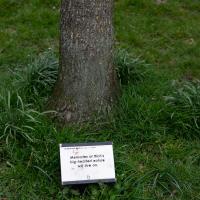
On my walk today I was actually just going to the building society in town, but I decided to trace some of the route of the Carmelite pipe, including visiting streets it runs under, like Park Street, Christmas Street, and, of course, Pipe Lane. I also went a bit out of my way to check out St James' Priory, the oldest building in Bristol, seeing as it was just around the corner from the building society.
There are far too many pictures from this walk, and my feet are now quite sore, because it was a long one. But I enjoyed it.
Tags: Bristol Places UK onemilematt united kingdom Brandon Hill
Auto-Tags: Plant Trunk Terrestrial plant Grass Groundcover Wood Grass family Tree Natural material Natural landscape Font Deciduous Soil
Text Recognition Tags: Memories of Rich's big-hearted nature will Hve on. Memories of Rich's big-hearted nature will Hve on.

Tags: Bristol Places UK onemilematt united kingdom City Centre St Augustine's
Auto-Tags: Sky Daytime Building Property Architecture Billboard Font Window Real estate Facade City Metropolitan area Signage Poster Human settlement
Text Recognition Tags: THE SHOWS WILL GO ON. PLEASE SUPPORT BRITISH THEATRE AS SOON AS WE'RE BACK. ATG www THE SHOWS WILL GO ON. PLEASE SUPPORT BRITISH THEATRE AS SOON AS WE'RE BACK. ATG www
Tags: Bristol Places UK onemilematt united kingdom City Centre St John on the Wall St John's Church St. John's Conduit old city
Auto-Tags: Brown Wood Font Commemorative plaque History Interior design Rectangle Memorial Hardwood
Text Recognition Tags: STUOHNS CONDUIT GRANTED TO THE VESTRY OF S JOHN IN THE 14TH CENTURY THE SOARCE OB SOPPLY LS AT TEE FO O AK STREET WATER IS CONVEYED SY TER DIRE OROM THE CARMBLITE PRIORY CISTERN- DN THE COLSTON ALL SITE-TEROUGH 2OST STREET AND CHRISTNLAS STREET TO ST. JOHNS GATE T ORIGINAIEY STOOD ON THE INNER SIDE OF THE GATE BUT WS MOVED TO TS RESENI SITE IN L WHEN THE FOOTWAY ON THE BASTERN SIDE OR TASGATE WAS MADE AFTER THE SUPPRESSION OF THE KORASTEUIS THE INTIRE COST OF MAINTENANCE AND REPAIR CFTRE PIPE DEVOLVED UPON THE CHURCHWARDENS AND VESTRY SONETIAEN YAKINE HE WHOLE PARISH REVENJE BO AYBAR IN 1365 AFTER SEVERE DROUCHT THE DEEDS TOGETHER WITH THE RESPONSIBILTTY SOR UPKEBE WERE TRANSFERRED TO THE LOCAL BORRD OR EBALTH DURING THE AIR RAIDS OF 1940T WAS FOR A TIME THE SOLE WATER SAPPLYN THE FART OF THE CTY STUOHNS CONDUIT GRANTED TO THE VESTRY OF S JOHN IN THE 14TH CENTURY THE SOARCE OB SOPPLY LS AT TEE FO O AK STREET WATER IS CONVEYED SY TER DIRE OROM THE CARMBLITE PRIORY CISTERN- DN THE COLSTON ALL SITE-TEROUGH 2OST STREET AND CHRISTNLAS STREET TO ST. JOHNS GATE T ORIGINAIEY STOOD ON THE INNER SIDE OF THE GATE BUT WS MOVED TO TS RESENI SITE IN L WHEN THE FOOTWAY ON THE BASTERN SIDE OR TASGATE WAS MADE AFTER THE SUPPRESSION OF THE KORASTEUIS THE INTIRE COST OF MAINTENANCE AND REPAIR CFTRE PIPE DEVOLVED UPON THE CHURCHWARDENS AND VESTRY SONETIAEN YAKINE HE WHOLE PARISH REVENJE BO AYBAR IN 1365 AFTER SEVERE DROUCHT THE DEEDS TOGETHER WITH THE RESPONSIBILTTY SOR UPKEBE WERE TRANSFERRED TO THE LOCAL BORRD OR EBALTH DURING THE AIR RAIDS OF 1940T WAS FOR A TIME THE SOLE WATER SAPPLYN THE FART OF THE CTY
A London Wander in Southville
10 Apr 2021
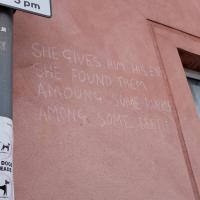
There's a bit of Southville that I've been meaning to get to for some time, where the streets seem to take some strong inspiration from London. There's a Camden Road that crosses with an Islington Road, and a Dalston Road, even an Edgeware Road. For me these names are more evocative than the rather more exotic names I passed by to get there—Sydney Row or Hanover Place, say, because I've actually been to the places in London. The last time I was in Islington I saw Monkey Swallows the Universe play at The Angel, and I can't think of Camden without remembering a gondola trip with my friend Tara where a cheery youth played Beatles music for us on a saz...
I really liked this little area, with its mostly well-kept pretty houses and hints here and there of the creative side of the residents. It's arty and down-to-earth at the same time, and I wouldn't mind living there, I think.
On the way there I got the chance to walk through Underfall Yard for the first time in a while, and on the way back I had my first take-away hot food for many months, grabbing some crispy fried squid from the excellent Woky Ko at Wapping Wharf.
Tags: Bristol Places UK onemilematt united kingdom Bedminster graffiti street art Southville
Auto-Tags: Handwriting Brick Brickwork Wood Font Paint Building material Fixture Window Tints and shades Gas Art Facade Signage Writing
Text Recognition Tags: pm SHE GIVES HIM HIS EE SHE FOUND THEM AMOUNG SOME R KEEP DOG ON LEADS pm SHE GIVES HIM HIS EE SHE FOUND THEM AMOUNG SOME R KEEP DOG ON LEADS
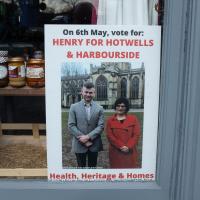
On the right there, Thangam Debonnaire, our MP and Shadow Secretary of State for Housing. On the left, Henry. Apparently.
Tags: Bristol Places UK onemilematt united kingdom pub Hotwells Rose of Denmark politics
Auto-Tags: Product Sleeve Smile Barrel Gas Door Font Advertising Suit Engineering Event Banner Signage Job Publication
Text Recognition Tags: On 6th May, vote for: HENRY FOR HOTWELLS & HARBOURSIDE m coe Health, Heritage & Homes On 6th May, vote for: HENRY FOR HOTWELLS & HARBOURSIDE m coe Health, Heritage & Homes
Long Bemmie Wander with Lisa
11 Apr 2021
My friend Lisa joined me again, this time for a long wander through "Bemmie". In fact, I tweeted recently using "Bedmo" as my abbreviation for Bedminster, and apparently there's something of a culture war going on. From what I can glean, the longer-term residents call it "Bemmie" and consider "Bedmo" a name made up by hipster gentrifiers.
I had no idea, but then I didn't grow up around here, and I don't live in Bedminster, and I'm not a hipster. I'm not sure I've ever gentrified anywhere, either; Hotwells was already quite gentrified by the time I arrived. I probably just lowered the tone a bit.
Anyway. Lisa and I entered Bemmie by the traditional toll gate (though actually you'd only have paid if you were coming from the Long Ashton direction, not merely nipping across from Hotwells) and then almost literally combed the streets to knock several new roads off my list of targets. Along the way we saw lots of street art, as you'd expect, and admired the area's panoply of gorgeous knockers.
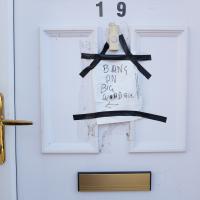
Not everyone can afford a dragonfly or a pineapple for their door knocker.
Tags: Bristol Places UK onemilematt united kingdom Bedminster
Auto-Tags: White Wood Door Grey Fixture Wall Font Home door Triangle Art Room Religious item Door handle Signage Number
Text Recognition Tags: 19 BANG ON BIG 19 BANG ON BIG
Better Look at an Extension
14 Apr 2021
Apart from a lovely coffee and a slice of Victoria sponge from Twelve, there weren't any new sights on this little lunchtime jaunt except for a slightly better look at the long raised extension at the back of the St Vincent's Rocks Hotel, where I at least got to see the arches it's raised up on. I also got a fair bit of exercise by walking up the Zig Zag to get there, and saw far more people out than I have in months, what with the lockdown having just been significantly lifted. As I walked past The Mall pub they were turning people away from their already-full garden, and the (outdoor) cafe tables were pretty full up.
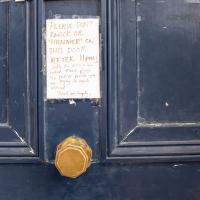
Tags: Bristol Places UK onemilematt united kingdom Hotwells
Auto-Tags: Fixture Rectangle Gas Wood Tints and shades Font Electric blue Paint Metal Symmetry Concrete Still life photography Transport
Text Recognition Tags: FLEAISE DONIT KNOCK OR "HAMMER' ON 7HIS DOOR HFTER Ilpm int Pleasa phans the tht m pm y ying a re ndead Thand FLEAISE DONIT KNOCK OR "HAMMER' ON 7HIS DOOR HFTER Ilpm int Pleasa phans the tht m pm y ying a re ndead Thand
Desultory Coffee Wander
16 Apr 2021
Another day, another quick dash out for a coffee. I did at least try to take a different route from normal, especially on the way back, where I yet again got a bit lost in the strange paths, flyovers and underpasses that make up the odd maze of pedestrian "infrastructure" among the concrete jungle between the west of Greville Smyth and my neck of the woods in Hotwells. I swear one day I'll take a turn I've not tried before and end up being gored by a Bristolian minotaur.
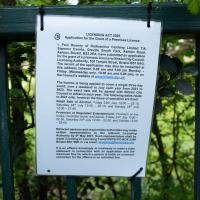
I'd heard there was going to be something of a wild party in Greville Smyth to mark the end of lockdown. It seems it may be the start of a regular thing, with a dance festival bringing 8,000 people to the park. I imagine I'll be able to hear it from my place, and therefore safely avoid it.
Tags: Bristol Places UK onemilematt united kingdom Bedminster Greville Smyth Park Ashton sign festival party
Auto-Tags: Plant community Plant Botany Natural landscape Terrestrial plant Vegetation Biome Grass Groundcover Font Forest Wood Shrub Signage Landscape
Text Recognition Tags: LICENSING ACT 2003 Application for the Grant of a Premises Licence & Paul Rooney of Radiosctive Clothing Limited TIA Slammin Events. Greville Smyth Park, Ashton Road, Ashton, Bristol, BS3 ZEA have submitted an application for the grant of a premises licence to Bristol City Council Licensing Authority, 100 Temple Street, Bristol BS1 SAG The record of the applicaeion may also be inspected at this address between .00 am and 6.00a pm Monday Friday. (Wednesday only. 10.00 am and 5.00 pm or on the Council's website at www.belatol.gox.uk The licence is being applied to cover a single three day avent, over a weekend in July ach year from 2021 te 2023. The esact date will be agreed with Bristol City Council in advance each year. The following dates relade to 2021 only. howevor the Bimes of operatlon are ed: Retail Saie of Alcohol Friy 23h uy 12:00 -22:10 Saturday 24 July 1200-22 10 and unday 25 July 12:00 -2140, Provision of Regulated Entertainment: Proviion of ve music recorded music wnd dance Fry 23 July 1200 22:30 Baturday 24 July 12:00-2230, and Bunday 1200 -22:00 Relevant persons and responsible authorities may make written reprenantation te the relevant Lconsing Authority by 4 May 2021. Such rapresentation shall be made in writing to Licensing Teameor PO BOK 339 Brienel B1 9NE vie smai Aano at.uk Ris an offence knowingy or reklessy to make a faise statement in connestion wh en oplcation and the masimum fine for which a peron is iable on summery conviction for the offence is an unmited e LICENSING ACT 2003 Application for the Grant of a Premises Licence & Paul Rooney of Radiosctive Clothing Limited TIA Slammin Events. Greville Smyth Park, Ashton Road, Ashton, Bristol, BS3 ZEA have submitted an application for the grant of a premises licence to Bristol City Council Licensing Authority, 100 Temple Street, Bristol BS1 SAG The record of the applicaeion may also be inspected at this address between .00 am and 6.00a pm Monday Friday. (Wednesday only. 10.00 am and 5.00 pm or on the Council's website at www.belatol.gox.uk The licence is being applied to cover a single three day avent, over a weekend in July ach year from 2021 te 2023. The esact date will be agreed with Bristol City Council in advance each year. The following dates relade to 2021 only. howevor the Bimes of operatlon are ed: Retail Saie of Alcohol Friy 23h uy 12:00 -22:10 Saturday 24 July 1200-22 10 and unday 25 July 12:00 -2140, Provision of Regulated Entertainment: Proviion of ve music recorded music wnd dance Fry 23 July 1200 22:30 Baturday 24 July 12:00-2230, and Bunday 1200 -22:00 Relevant persons and responsible authorities may make written reprenantation te the relevant Lconsing Authority by 4 May 2021. Such rapresentation shall be made in writing to Licensing Teameor PO BOK 339 Brienel B1 9NE vie smai Aano at.uk Ris an offence knowingy or reklessy to make a faise statement in connestion wh en oplcation and the masimum fine for which a peron is iable on summery conviction for the offence is an unmited e