Tagged: uk
A Water-Based Wander
11 Dec 2021
I woke up on this Saturday with a headache, feeling like I'd not slept at all. As well as that, I'm still in some pain from the wisdom tooth extraction I had a few weeks ago. I moped about the flat for a while and then decided that the best thing to do was to force myself out on at least a small walk to get some fresh air and coffee.
Was there anywhere I could walk locally that I'd never been? Actually, yes! Although it's not a road, and I didn't walk it, there is actually one route that I've not travelled so far in my wanders. And it even had coffee near its far end...
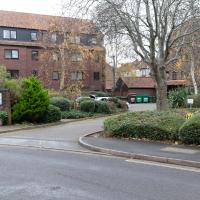
Built on the site of Champions Dock, 1982, it says on the sign.
I walked through this little estate every weekday for years, on my way to catch the commuter ferry into town when I used to work on Victoria Street (in the days before the ripples of the global financial crash finally swept away the council subsidy for the beloved early-morning boat service.)
The Society of Merchant Venturers did, of course, own this dock, like most of the rest of Bristol. Perhaps the most curiosity-inducing document in the Bristol Archives for Champions Dock is "Papers re the Quays & Nuisances, 1751 - 1784", including "Proposals to cleanse the quays to take on Champions Dock and to deal with nuisances in the river". Well, I'm sure there are fewer nuisances now they've filled it in and built an estate on it, but it took them a while...
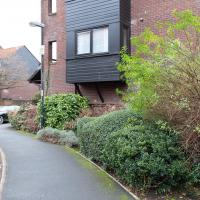
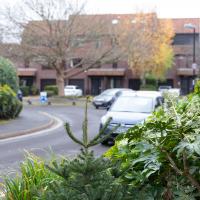
It took me some time to realise that it's the well-planned and well-cared-for plants around this estate that really improves it as a place. It's less of a fairly bland 1980s housing estate, and more of a rampant shrubbery that just happens to have a fairly bland 1980s housing estate inside it. There's a huge variety of greenery, a lot of shrubs and trees and some lovely well-kept individual gardens to boot.
It's also been quite cleverly thought out with a view to defending against such dangers as tagging—much of the ample wall-space is protected by cubic yard upon cubic yard of dense and often prickly planting.
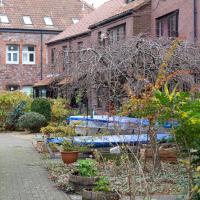
And boats. And bird-feeders. We're only one street back from the Hotwell Road and it's already quite a different feeling.
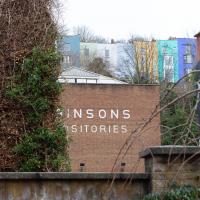
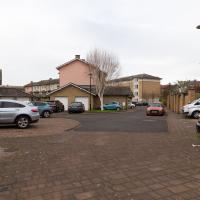
I came this way on a whim, assuming that I'd be able to find my way back out to the Hotwell Road. At this point we've moved from Rownham Mead to Pooles Wharf Court, who always feel like they're a bit more protective of their space, so a quick exit seemed only polite...
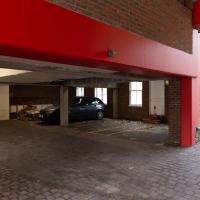
I've walked down this alley once before, but in the other direction, so I don't think I've ever noticed this before. This is a car park, but ...
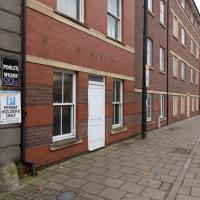
...but you can't tell that it's not a house from the Hotwell Road. I wonder how many times I've walked past the windows and front door and not realised that they're just the frontage of the car park?
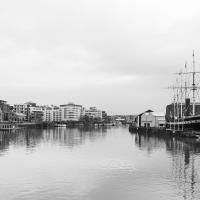
I'm heading for a coffee from Imagine That, in the Bristol Marina. Which is on the other side of harbour. Normally I'd have walked down that side to get there, but today...
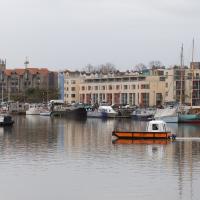
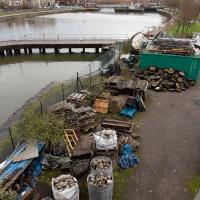
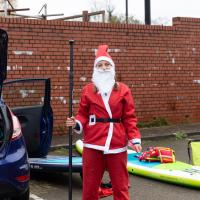
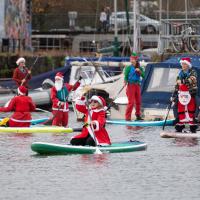
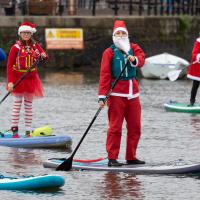
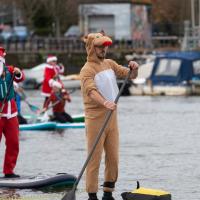
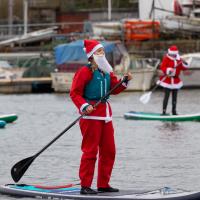
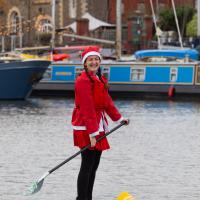
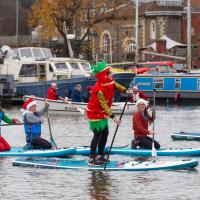
My friend Lisa texted me to see if I wanted to pop down and take a photo or two of the event she was taking part in: Santa SUP. SUP Bristol organise stand-up paddleboarding on the floating harbour, and their annual Santas-on-paddlboards event is quite the sight.
On the way there, I grabbed a historical photo I'd been wanting to recreate for a while of the shiny and new Cumberland Basin flyovers back in 1965, because I reckoned I could fit finding the same viewpoint into my outbound journey. Also, after having only used it on a wander for the very first time yesterday, I managed two crossings in the cross-harbour ferry today to get to the best locations for snapping the paddleboarders...
So, then, this wander is mostly a bunch of photos of paddleboarding Santas. Tis the season... Enjoy!
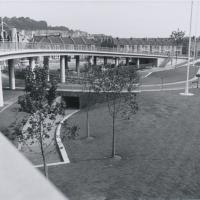
So, mostly this wander will be a panoply of photos of my friend Lisa and her paddleboarding friends making their way around the harbour dressed in Christmas outfits. But, on the way, I figured I'd try to reproduce another historical photo.
This one's from the Bristol Archives' collection of council Public Relations photos. Its title is "The northern side of the Cumberland Basin Bridges Scheme: Completed and landscaped, 1965".
I find that this actually looks quite nice, all clean and shiny and new. It probably looks very similar to the architect's drawing and scale models and what-have-you that they produce for these sorts of things.
Via Bristol Archives/Know Your Place.
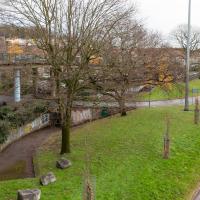
And here's the site today. The weathered concrete and tagging doesn't really improve things, but at least it looks like one of the original trees has thrived.
It's less so much the look of the road system, perhaps, and more that on a busy day it's just an urban hellscape of traffic and noise. On a Sunday like this you could actually believe that children could play here (there was originally a playground to go with the fountain and other features I'm mentioned in the past...)
However, most of the time, just like with the Portway, the sheer weight and (acoustic) volume of the traffic and its accompanying fumes and danger has clearly increased beyond anything the original planners ever envisaged.
A Constitutional to Burwalls and Back
21 Dec 2021
The recent lack of posts here is mostly due to my feeling very run down following having a couple of wisdom teeth extracted. Having had an emergency appointment yesterday1, hopefully I'll be on the mend now, though it does mean I'm on the kind of antibiotics where you can't touch alcohol for the whole of the Christmas period. I have tried to keep myself a little distracted from the pain by working on the nuts and bolts of this website—you should notice that the front page loads rather faster now than it used to, and that there's a shiny new statistics page that I'll probably be continuing to work on. Oh, and you should find that the tags below the photos are now clickable and will take you to a page of all other wanders that have photos with the same tag.
Today I felt like I needed to drag myself out of the house, but I didn't want to go too far, and I needed to get to the Post Office up in Clifton Village to post a Christmas card (spoiler for my parents: it's going to be late. Sorry.) As luck would have it, idly looking at the map I spotted that I'd missed off a section of Burwalls Road in the past, and that's basically one of the long-ways-round to Clifton Village, crossing the river to Rownham and walking up the hill on the Somerset side before coming back across the Suspension Bridge.
As I was heading for Burwalls Road I decided to make Burwalls itself the focal point of the walk, but unfortunately the mansion grounds are private and the place is hard to snap. Still, at least it gave me a destination. Burwalls was the mansion built by Bristol press magnate Joseph Leech, who I've mentioned before after buying a vintage book he wrote on a previous wander. There's a good article about the house on House and Heritage which has some photos from angles I couldn't ever get to. (Well, maybe with a drone, but it seems like the kind of area where they may be kitted out for clay pigeon shooting, so I probably wouldn't risk it.)
1 My dentist admitted that she probably needed to keep her internal monologue a bit more internal after we started the appointment with her staring into my mouth and immediately saying, "oh, *that's* weird." These are words one doesn't want to hear from a medical professional.
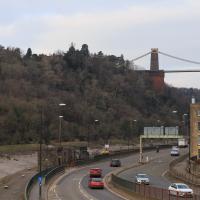
As my plan was to knock off the remaining section of Burwalls Road, my first photo is the small segment of Burwalls itself that you can see from near my house. Burwalls is the mansion on the hilltop, peeping out about halfway from the left edge of the photo and the Suspension Bridge.
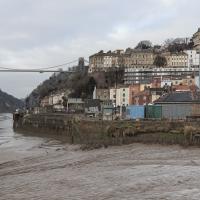
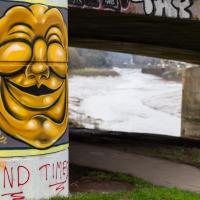
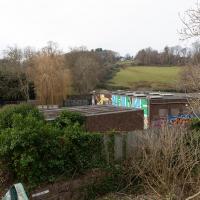
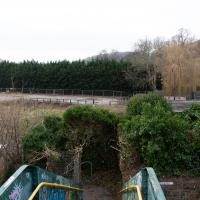
There was a notice of seeking possession on the gate when I got around to the far side. Looks like it's definitely going to be the replacement for the caravan park at Baltic Wharf. Shame for the caravan folk, really; this is sandwiched between major roads and not anything like as close to the pubs and other tourist-friendly places around the harbourside.
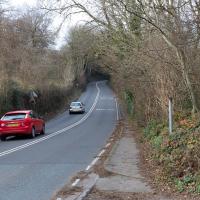
Speaking of major roads, this is why you wont' see a track down the actual road here on my maps: no pavements. On the plus side, there's the forested path with the amazing name of Dead Badger's Bottom starting on my right, and a little raised off-road walkway in the trees on the left, starting about where you can see the speed limit sign.
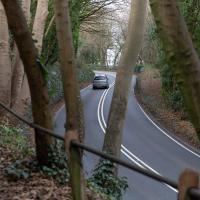
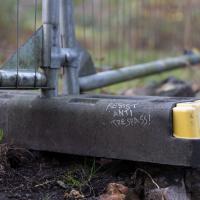
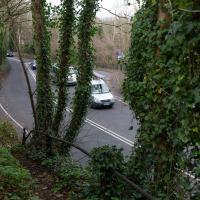
A delightful little return to the road, which peters out in a disconcerting rough slope in between two blind bends on a busy road with no pavement. It's not spectacularly pedestrian-friendly over here. This might explain why I never walked down the bit of Burwalls Road opposite. The forest path up Dead Badger's Bottom1 on the far side of the road skips the first section.
1 No, I will never get tired of saying that.
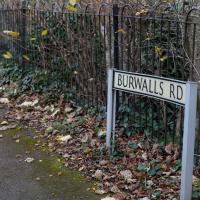
I was just about starting to feel better—the antibiotics seemed to have kicked in for my dental issues, and it had been some days since I'd left the house, and I was at last starting to get itchy feet. So, a wander. But where? Well, there were a few industrial bits near Winterstoke Road in the Ashton/Ashton Vale areas of Bristol that needed walking. I knew they were likely to be quite, well, unattractive, frankly. So why not do them while I wasn't feeling exactly 100% myself? Maybe it would fit my mood. Hopefully you're also in the mood for a bit of post-industrial wasteland, for that's what some of this feels like...
Then, at the last minute, I thought again about the Bristol International Exhibition—I've got a book about it on the way now—and that gave me another goal, which could just about be said to be in the same direction, and I decided to walk significantly further than my normal 1-mile limit and try recreating another historical photo...
Sadly I don't know much about the Ashton area; it's just on the edges of my mile and I rarely have cause to go there. It's brimming with history, I'm sure: the whole South Bristol area rapidly developed from farmland to coal mines to factories to its current interesting mixture of suburbs and industrial work over the last few hundred years. As a more working class area less attention was paid to it by historians, at least historically-speaking, than the Georgian heights of Clifton, and much of it has been knocked down and reinvented rather than listed and preserved. I see here and there some of this lack is being addressed, but I'm afraid I'll be very light on the history myself on this wander, as most of my usual sources aren't throwing up their normal reams of information as when I point them at Clifton, Hotwells or the old city.
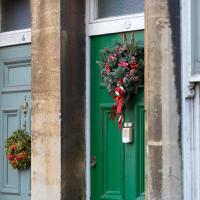
I think the whole of (admittedly-short) Albemarle Terrace had wreathes on the doors. Nice.
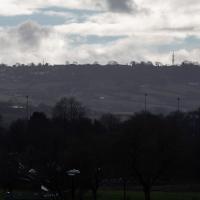
These are some hills I'm not heading for today, but I love the distant view of Dundry from Hotwells. The silhouetted church towards the left is St MIchael's Church, Dundry, whose tower was built in 1481.
The other towers around Dundry have more recent heritage. I believe Dundry East transmitter still sends out the analogue signal for BBC Radio 4, and lets me listen to The Archers on an old Roberts radio when I'm doing my cleaning on a Sunday morning. Some bits of my life are still quite old-fashioned.
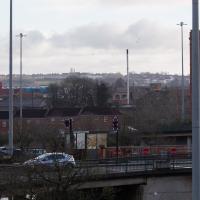
This may be somewhere around my actual destination today, though perhaps a little too much toward the east.
The buildings and green space on the hill in the background are the Knowle West Health Park. I'm pleased to have figured this out by using an OS map and a ruler and projecting a line from where I'm standing through the Tobacco Factory flag that you can just see poking up from Bedminster (you can see it on the corner of the building in this earlier pic](https://omm.gothick.org.uk/image/7175), then looking for densely-packed contour lines further out of town. Very old-school, but it worked!
I'm probably heading in more of a Bedminster Down direction. It's a similarly elevated green space further west, which is hidden behind the bond warehouse on the right in this pic.
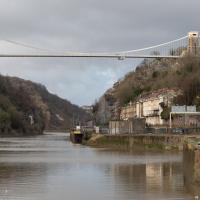
I nearly didn't take this photo, having snapped this view so many times before, but I do find it almost completely irresistible.
I've often wondered about writing some kind of neural-computing based app that could look through all of my photos for snaps of this view and mash them all together into a time-lapse, or something, but that would be quite the project.
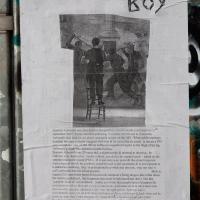
Here's the BBC report. This was posted on a telephone junction box in the "Daveside" area, the little strip of Festival Way that's used as a skate park in between the old railway depot and the White City allotments.
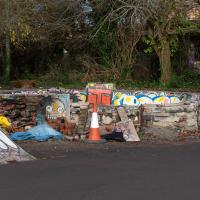
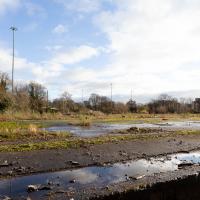
A better view of the ex-railway depot and part of the former Bristol International Exhibition site that I've mused about before. That's why we're on this wander, in fact: curiosity about an old photo of the site. But not a photo from round here: one taken from quite a ways beyond my normal mile radius. It's going to be a bit of a hike.
There will also be some terrifyingly industrial bits of south Bristol along the way, so be prepared for a bit of urban decay and industrial scenes.
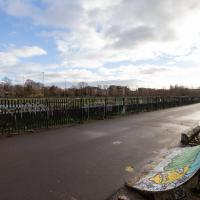
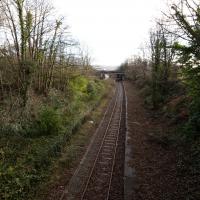
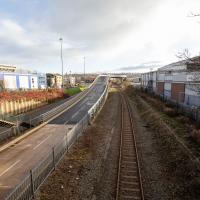
Raised section of the Metrobus route. I've been this way before on a Wander, but also, on a day when there weren't any buses, actually walked that ramp. It was fairly underwhelming.
A Random New Year's Day Wander
01 Jan 2022
I picked a fairly arbitrary reason for a wander today. Really, I just wanted to do a New Year's Day wander just to get out of the house and to set a precedent for the year to come.
My ostensible reason was to investigate what looked like a road on my map that quartered the lawn in front of the Ashton Court mansion. As it turned out, this is just a muddy footpath/desire line similar to a half-dozen other tracks nearby, and must be some kind of bug or misclassification with the mapping system I'm using, but that's not important. What's important is that I went for a little walk on the first day of the year. As a bonus, I did happen to wander down a couple of sections of new footpath, so technically I broke some new ground too, which is nice.
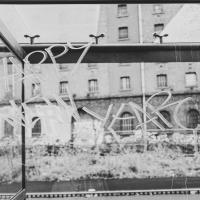
It didn't take long for someone to scrawl the sentiments of the season on a bus shelter.
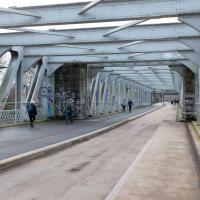
Strange to think that there was once, briefly, a castle here. More on that on some future wander, when I try to recreate another historical photo of the Bristol International Exhibition.
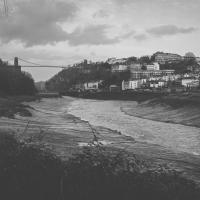
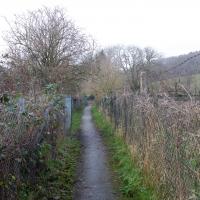
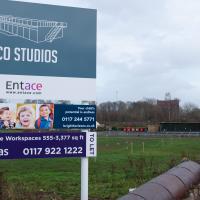
I still have no really clear idea what this place is, and their website's not much enlightenment, either. They seem to think this is ten minutes' walk from the city centre; I'd love to know what kind of space/time warp technology they're using. Seven-league boots, perhaps?
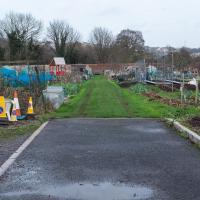
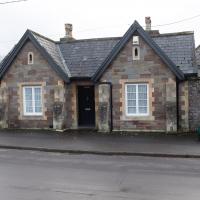
...and this is the Kennel Lodge itself. Presumably you'd want to keep your hounds a fair distance from the house just to keep the racket out of earshot.
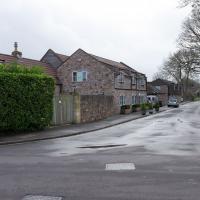
Which seems a bit odd, given that it's not in Hotwells wouldn't really lead there in either direction. Looks like a fairly modern development; maybe it's just one of those roads where the developers picked a roughly local name of out a hat.
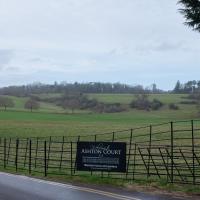
Near and Far
05 Jan 2022
I took advantage of a rare recent day where it wasn't tipping down with rain to get away from my desk on a lunchtime workday and head up to Clifton Village. I'd hoped to snap a reproduction of historical photo which I'd worked out had been taken from the Suspension Bridge, but the gods were not smiling on me. Still, taking only a nice long lens with me worked out very well as the lovely haze of the day made more distant views quite dramatic...
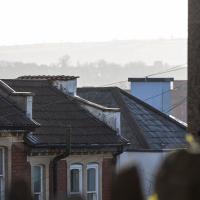
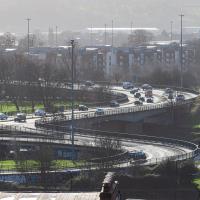
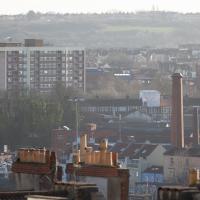
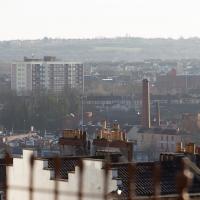
The Nova Scotia pub bottom right, then behind it the chimney of the previously coal-fired pump house at Underfall Yard. In the background behind that and to the right is the Tobacco Factory, with what looks like a little red shed on its roof that I presume is actually a stairwell exit to the roof. On the left-hand side at about the same distance away is the large council block of Little Cross House. It always seems quite calm and tidy when I pass it, which is very regularly, but the Bristol Post painted a different picture in 2019 in their story headlined "Residents of 'forgotten' tower block demand council action over 'nightmare' living conditions":
People living in Little Cross House, a 13-storey council tower block in Southville, said their lives are plagued by poor living conditions, damp and mould, and neighbours from hell, drug dealers, discarded needles, vandalism and anti-social behaviour.
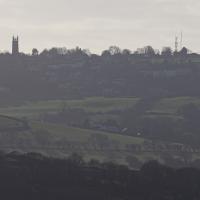
In the far distance, across the Southville rooftops, are the green hills of the Knowle West Health Park, I think.
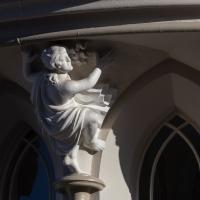
I swear this caryatid must've been modelled on Stephen Fry. This is St Vincent's Priory, a very strange building on Sion Hill that's just been renovated. Next time I pop up I'll try and get a photo of it looking clean and shiny now the scaffolding's down, but I only took a telephoto lens with me on this trip.
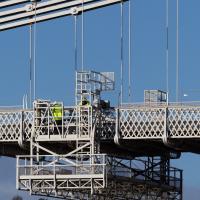
If I'd really considered it, the fact that there was a bloke in high vis standing on the bit of the bridge I wanted to take a photograph of might have warned me what was going to happen...
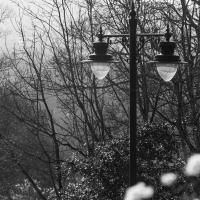
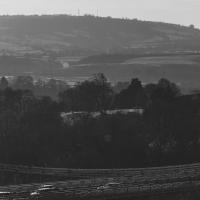
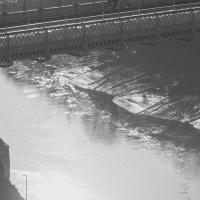
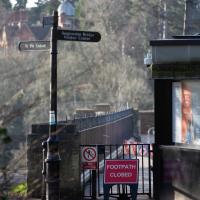
Damn it. That's the bit I wanted to take my photo from. Still, at least on the way here I got some nice pics that I probably wouldn't have tried if I hadn't taken long lens out specially.
Quick Clifton Jaunt Finishing with Southville
09 Jan 2022
It's been pretty dismal recently, weather-wise, so when Sarah called up to say that she and Vik had just left the swimming pool at the student union building up in Clifton, and would I like to join them for a trip to the Last Bookshop, also known as The £3 Bookshop, for reasons you can probably deduce, I leapt at the chance.
Not many photos on this walk, but I did manage to get down a little road I'd never been to before, basically just the access road to a car park at a block of flats, but it was on the map looking all tempting, so I figured I'd knock it off the list as we were passing.
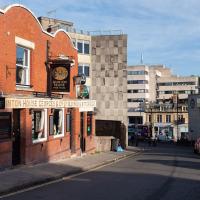
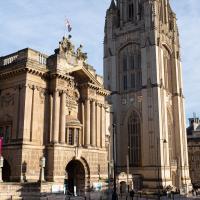
The museum and the Wills Memorial looking resplendent. Behind me on this chilly morning was someone sleeping in a doorway under a quilt, with a plastic suitcase presumably containing their entirely worldly possessions. It's a place of contrasts, Clifton.
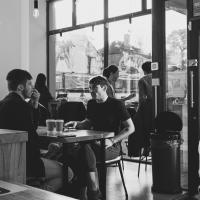
I love Coffee Under Pressure's coffee, so I usually grab something from them when I'm passing. I've got to admit, though, being in a relatively confined space with a bunch of other people is giving me the heebie-jeebies a bit in the time of the Omicron variant. I got a quick take-out, wearing my mask, and ran.
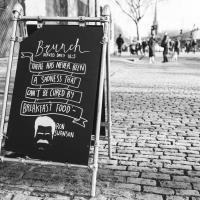
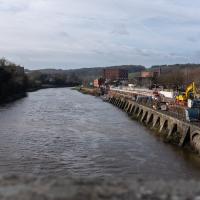
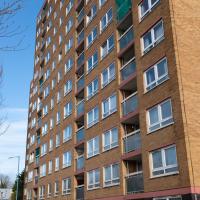
By complete coincidence, I took a photo of this block last week from a great distance (well, a mile, anyway) and then noticed that I hadn't actually walked along its access road and back. So here it is, rather closer up.
After this Sarah and Vik and I nipped to the Tobacco Factory Market where I managed to resist buying a copy of the Cowboy Junkies' The Trinity Session in great condition on the original vinyl. After resisting buying any books in the £3 bookstore earlier this pretty much depleted my reserves of energy for the day, so I headed back home without snapping any more pictures :)
Lunchtime Reproduction (of an old photo...)
17 Jan 2022
This was basically the quick lunchtime jaunt I tried to do at the beginning of January, only this time I actually managed to get to roughly the viewpoint I'd been hoping for to recreate a historical photo of the Bristol International Exhibition.
I did this walk about a month ago, but I've been a bit poorly and not really up to doing much in my spare time, and it's taken me this long to even face processing even these few photos. Hopefully normal service will be resumed at some point and I can carry on trying to walk any roads and paths that I need to do to make this project feel complete...
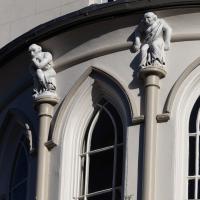
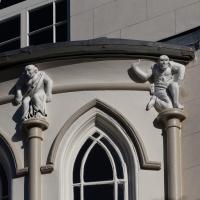
Gargoyles? Caryatids? Gargyatids? Caryoyles? There's probably a proper name for them, knowing architecture...
This is St Vincent's Priory, a very odd building on Clifton Hill. According to Maurice Fells' excellent Clifton: History You Can See:
Its name conjures up visions to the sounds of monastic of an ancient religious foundation with its hallowed walls echoing chanting. But St Vincent's Priory is a private house and the likelihood is that it was built as such and probably conceived as an architectural folly...
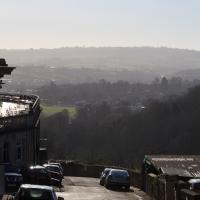
We've been as far as we can go down there on an earlier wander. From the top you'd just think it led to the Hotel car park.
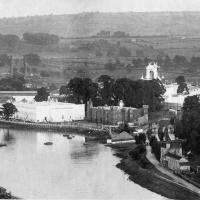
From Bristol's Lost City, by Clive Burlton, available from Bristol Books; photograph from the author's own collection.
(And extra credit goes to my parents for buying me the book for my birthday! Thanks!)
The Bristol International Exhibition site, presumably around 1914 or not long after. You can see the Rownham Ferry in use, too. I still find it pretty amazing that there used to be a busy ferry and a significant railway station on this little scrap of land that I just used to know as the grassy bit at the start of the towpath, let alone a replica of Bristol Castle!
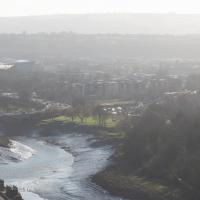
Unlike my last attempt I successfully managed to get somewhere near the vantage point of the historic photo this time...
I should probably have tried to get it at high tide to make it a bit more comparable, but you can't have everything.
You can see the White City Allotments—those glints of light toward the middle are mostly reflections from greenhouses—where the "White City" of the Exhibition used to stand. There's still a glimpse or two of the railway line to Portishead to be seen, too, along with a vestige of the Rownham Ferry slipway.
Mostly though it's the modern things that stand out—the long line of flats along Paxton Drive, the curve of Brunel Way across the river, and the roof of Ashton Gate Stadium...
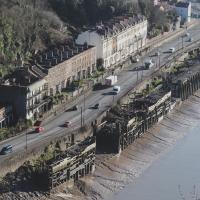
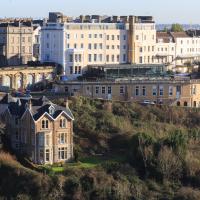
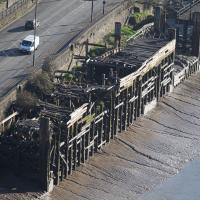
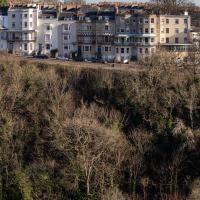
The Colonnade, the Rock House, St Vincent's Parade and the old landing stages for Campbell's paddle steamers. The leftover fruit of bygone boom years.
Lunchtime Cliftonwood Wander
18 Jan 2022
Another workday, another quick lunchtime trip to get me out of the house. This time my flimsy pretext is a tiny bit of Clifton Vale Close that I'd apparently not walked, and the fact that although I'd walked down Church Lane at least once before I still hadn't taken a single photo of it. Really I just fancied a mosey through Cliftonwood in the sunshine, with the promise of a coffee from Clifton Village at the top of the hill.
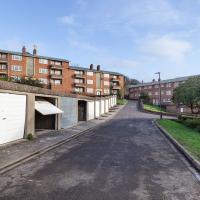
Or a bit of it, anyway. Getting back into the spirit of this project a bit by knocking off the odd end of a road that I'd noticed wasn't filled in on the map yet.
As modern flats go, these seem pleasant enough, and some of them will have amazing views. The don't seem terribly inspiring inside, from what I've seen of Rightmove pictures, but they certainly could be worse.
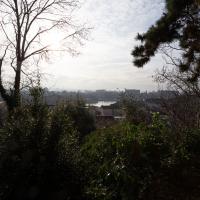
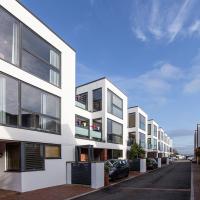
We've popped down here before, on the site of the Clifton National School that didn't survive bombing in the war.
Today, the modern flats look to me as I imagine their original models would have done back when they were still just an idea on an architect's table (or more likely computer monitor, I suppose.)
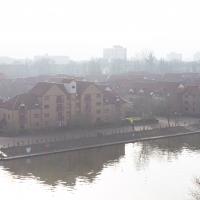
I used to live down there, in the block on this end, Portland Court. I recently found a photograph by the late local photographer George Gallop (he had a place on the Hotwell Road) of these Baltic Wharf flats being built, taken from a similar vantage point.
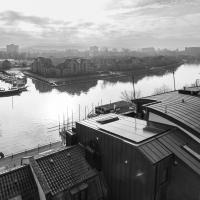
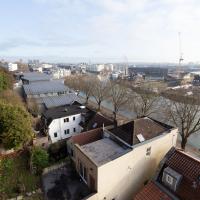
The spire of St Mary Redcliffe, just left of centre on the horizon, is about the same location as the office I work in, at least a few days a week. I took the job half on the basis of the location meaning a lovely commute down one side or other of the harbour. And then a week after I started the first Covid-19 lockdown kicked in and I didn't get to do the commute again for many months.
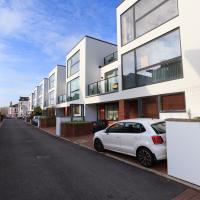
I really do like these little houses. Hate to think how much you'd have to pay for them, though.
Ouch. Just looked it up. Apparently the average property sale price over the last year was £750,000. I suppose the Tesla parked to the left there should have given away the income level; the Model S sells for about £75,000 in the UK.
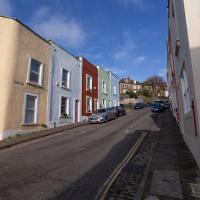
This is the road I didn't have many (or any) snaps of that inspired my route today, not that I need much of an excuse to traipse around Cliftonwood on a sunny lunchtime.
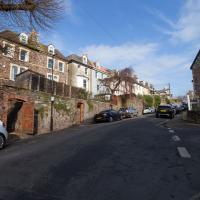
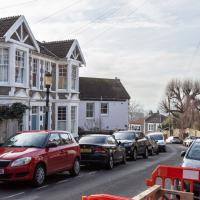
It's a perfectly nice street, but there's nothing too photogenic in it. I suppose that's why I didn't feel the need to raise the camera too much on previous occasions.
Bedminster Trip for New Walking Shoes
26 Feb 2022
I needed to buy new walking shoes—my old ones were squeaking and it was driving me up the wall—so I ordered some for collection from Taunton Leisure on East Street in Bedminster, and decided to make picking them up an official wander.
I didn't cover any new ground within my mile, but I did take advantage of the trip to take in a few interesting things just outside my normal radius, mostly New Gaol-related. Along the way there are a couple of sanitation-related diversions, including a visit to a rare manhole cover. You can hardly wait, I can tell!
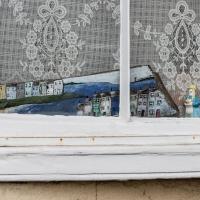
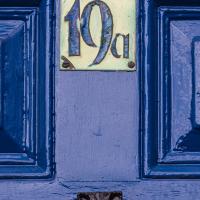
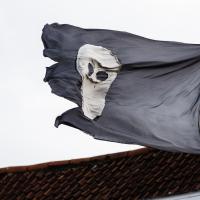
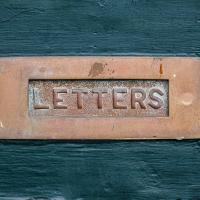

Hadn't spotted this one before. It's hidden away a little, tucked inside the entrance to the disused public toilets under the ramp for one of the Cumberland Basin flyovers.
You can pretty much take the word "disused" for read when it comes to public toilets in Bristol. Protesters recently wrote an open letter to the council demanding the re-opening of some of the many closed toilets.
The lack of access to public toilets in Bristol is not simply inconvenient – it raises issues of equality, and of dignity. Lack of toilets has led to the use of public spaces as substitute toilets – effectively open sewers in our city
As someone whose main form of exercise is walking through the city, I've definitely noticed the decreasing availability of public loos over the years. I can only imagine that my need for them will increase as the years go by...
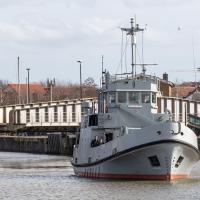
Anyway, on to happier contemplations. Here we see the Merchant's Road bridge (Junction Bridge, to give it its official title) swinging closed behind the Pride of Bristol.
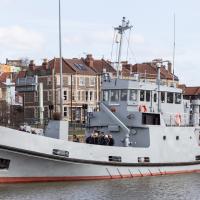
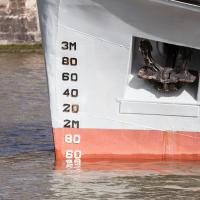
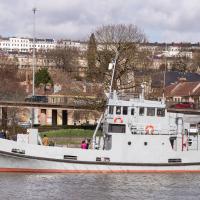
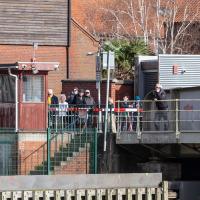
The bridge seemed to be taking a while to lock back into place, and I don't recall seeing one of the life-jacketed operators wandering up and down it before. I did wonder if something had gone wrong, but it closed eventually.