Tagged: a
Downs Wander
23 Feb 2021
Just a quick trip to knock off a path or two on Clifton Down. I'm not actually convinced I walked down the paths I was hoping to, but I suppose I'll see once I upload this and look at it on the map :)
Today's highlight turned out to be retrospective—looking up Gertrude Hermes' amazing wood engravings when I got home. (By complete coincidence, I was trying to discover the location of the Stella Matutina's former Hermes Lodge in Bristol as part of my researches last night...)
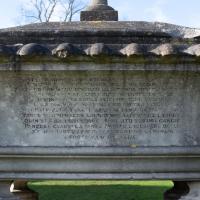
Latin text from the Seven Years War memorial on Clifton Down
Tags: Bristol Places UK onemilematt united kingdom Clifton Village war memorial Manilla Seven Years War memorial
Auto-Tags: Sky Grave Cemetery Font Headstone Grass Cloud Monument Facade Ancient history Historic site Memorial History Artifact Stone carving
Text Recognition Tags: STC ST PTEITINTINEE Ara S TAMA DETA TAEE TEENPHALES L O ASFEUGEELAUFOS QUIN ST A A TEN EEE S ATO TIMA GANGIS PANCERE CLAUSYEA VAnes OLES ERE BETLO STC ST PTEITINTINEE Ara S TAMA DETA TAEE TEENPHALES L O ASFEUGEELAUFOS QUIN ST A A TEN EEE S ATO TIMA GANGIS PANCERE CLAUSYEA VAnes OLES ERE BETLO
Of Bridges and Buoys
04 Mar 2021
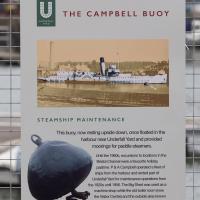
A trip to Imagine That coffee, so no fresh roads knocked off my list, but I stopped off to snap a couple of the engineering-related bits of the docks: the Campbell Buoy (used by P&A Campbell for mooring their paddle steamers) and Brunel's "other" bridge, the foot/horse swing bridge that now sits sadly disused in the shadow of the Plimsoll Bridge at Howard's Lock.
Tags: Bristol Places UK onemilematt united kingdom harbourside floating harbour harbour Spike Island engineering Buoy Campbell Buoy docks
Auto-Tags: Airship Blimp Vertebrate Aircraft Aerostat Motor vehicle Vehicle Aviation Zeppelin Air travel Font Gas Advertising Aerospace engineering Design
Text Recognition Tags: THE CAMPBELL BUOY STEAMSHIP MAINTENANCE This buoy, now resting upside down, once floated in the harbour near Underfal Yard and provided moorings for paddle steamers. Lrtil the 1980s, eounions to locations in the Brietol Channel werea tavourte hokday pastime. P&A Campbel operated a fleet of ships trom the hartbour and rented part of Udertal Yard for maintenance operations from the 1320s unti 1956. The Big Shed was used as a machine shop while the old boler room inow the Visitor Centrej and the outsicle are krown as the Knuckle wore ned as a foundry. THE CAMPBELL BUOY STEAMSHIP MAINTENANCE This buoy, now resting upside down, once floated in the harbour near Underfal Yard and provided moorings for paddle steamers. Lrtil the 1980s, eounions to locations in the Brietol Channel werea tavourte hokday pastime. P&A Campbel operated a fleet of ships trom the hartbour and rented part of Udertal Yard for maintenance operations from the 1320s unti 1956. The Big Shed was used as a machine shop while the old boler room inow the Visitor Centrej and the outsicle are krown as the Knuckle wore ned as a foundry.
I bought a vintage post card from eBay this week. It's a well-known photo of the Hotwells landing stage, showing what's likely to be a P&A Campbell paddle steamer moored there. (Just yesterday I snapped a photo of their buoy on display at Underfall Yard with its information sign.) It was posted from here to Canada in 1936, and has now returned via a presumably quite circuitous route.
Local journalist Maurice Fells (really local—I could probably hit his house with a well-flung teacake from here) notes in The A-Z of Curious Bristol (£) that:
For tens of thousands of people, the pier at Hotwells was the starting point of their day trip as they boarded steamers with names like Glen Avon, Glen Usk and Britannia. The salty tang of the sea was never far away as the steamers headed for Ilfracombe, Weston-super-Mare, Clevedon and Portishead on the Devon and Somerset coast and Barry, Porthcawl and Tenby in South Wales.
The landing stage is long-abandoned. A variety of economic issues, including fuel prices, the increasing prevalence of the motor car, the construction of the Severn Crossing giving easier access to Wales, and the collapse of Clevedon Pier during safety testing in 1970, which prevented larger pleasure boats from stopping at the resort, all led to dwindling trade.
I went to have a poke about there today, not staying for long as it's a cold day and the wind was biting. I couldn't reproduce the postcard's view—you'd need to risk life, limb and presumably a trespass prosecution—but I did try to judge the rough viewpoint and angle of the photo by lining up with Rock House, the Colonnade and the Suspension Bridge and snapped a photo looking back to where the original photographer would have stood on the pontoon.
This Bristol City Docks history page has many good photos of the landing stage and the nearby Port and Pier Railway line (whose tunnel I was in the other day) and the Hotwells Halt railway station, which was just the other side of the suspension bridge from here.
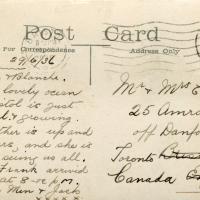
Well, I think that's what it says.
Tags: Bristol Places UK onemilematt united kingdom Hotwells Avon Gorge river avon hotwell road landing stage pontoon
Auto-Tags: Handwriting Postcard Font Stamp seal Rubber stamp Mail Writing Paper Signature Letter Paper product Document Parallel Collectable Envelope
Text Recognition Tags: Post Card Address Only 5NE PENNY For Correspondence Bruilob 29/6/3l Dear Ein Hlonele, Had a lovely trif, Bruslol is Jual oeean 25 Amroth an. off banforild ave Tronts htato nt banada olaad Wonderful.rgrowring. Erns Mother is up and downolairs, and she is Soieilid oung Emma r Franh arrivid Set last at 8-0e f6m. Love from Menr fack us all, Post Card Address Only 5NE PENNY For Correspondence Bruilob 29/6/3l Dear Ein Hlonele, Had a lovely trif, Bruslol is Jual oeean 25 Amroth an. off banforild ave Tronts htato nt banada olaad Wonderful.rgrowring. Erns Mother is up and downolairs, and she is Soieilid oung Emma r Franh arrivid Set last at 8-0e f6m. Love from Menr fack us all,
I headed to Bedminster to do a crossword with my support bubble today. On the way I delved into a couple of bits of Hotwells history, first of all snapping a "now" shot to go with a historical photo of Holy Trinity I happened across recently, and second of all to snap the Britannia Buildings.
The Britannia Buildings are a little strip of offices on a corner of the Hotwell Road. They've mostly been the headquarters of a cleaning company for years, but I've often wondered what this distinctive curve of offices, its ground floor standing proudly out from the upper floors, used to be. Well, after my last wander, where I poked about the landing stage just down the road, I found out! Researching the paddleboat company P&A Campbell I came across this nugget in The A-Z of Curious Bristol, by Maurice Fells (£):
The firm of P & A Campbell was the main steamer operator in the Bristol Channel, with its local headquarters in offices close to the Hotwells pier and overlooking the harbour at the Cumberland Basin. Campbell's named their offices Britannia Buildings, after one of the ships in their White Funnel Fleet.
So! Turns out the Britannia Buildings were named after a paddle steamer—you can see some pictures of Britannia here.
In related news, I've now bought three of Maurice Fells' local history books, and they were hand-delivered by the author on Sunday, a half-hour after I ordered them online (through a message exchange on Nextdoor!) Not even Amazon Prime has managed to deliver me anything that quickly...
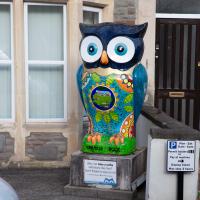
"I'd like to buy an owl, please." "We don't sell owls." "Someone told me you did." "Who?" "See! I just heard one!"
Tags: Bristol Places UK onemilematt united kingdom Bedminster owl Local Pages Boris
Auto-Tags: Vertebrate Window Mammal Art Bird Graffiti Wall Automotive lighting Owl Painting Gas Great horned owl Font Vehicle registration plate Snapshot
Text Recognition Tags: 00 Men Sat Permit halders Pay at reachine Display ticket Wy ettake a she with os the Od Dent fonget o tagusin Hax stay 3 houra 00 Men Sat Permit halders Pay at reachine Display ticket Wy ettake a she with os the Od Dent fonget o tagusin Hax stay 3 houra
Since setting up a search for Hotwells on eBay I've mostly managed to restrain myself from buying much (or in one case, was outbid, luckily for my finances.) However, I couldn't resist a 1902 flyer for a singalong at the Terrett Memorial Hall, which would have stood five minutes' walk from my flat, overlooking Howard's Lock.
I've found out a fair bit about this non-denominational seaman's mission, including tracking down both a Loxton drawing and an aerial photo of it. The main thing that's eluded me, ironically enough, is finding out who Terrett was, so as a Memorial Hall it didn't do a very good job 😀.
EDIT: Ah! Did a little more digging and found that the Bristol Archives has a Bristol Dock Company document on file called "William Terrett, Esq.; corresp. etc. re proposed erection of a Mission Hall at Cumberland Basin, 1892", so that might be worth a look once the Archives are properly open again. Given that:
Sarah Terrett died suddenly on 25 November 1889, aged 53, after speaking at a meeting of the White Ribbon Army, the temperance organization she had founded in 1878. Following her death many people sent letters of sympathy to her bereaved husband, William. One of these, from the Rev. W. F. James, a minister of the Bible Christians, makes for especially interesting reading. The Bible Christian denomination, to which Sarah and William belonged, was one of the smaller Methodist connexions, and had its heartland in rural Devon, the area where she had grown up. James recalled the hospitality he enjoyed when visiting the Terretts’ home, Church House, in Bedminster, south Bristol...
...I wonder if William Terrett built the hall in memory of his late wife. They were clearly just the kind of temperance movement people who would've founded a seaman's mission to get people together to have a nice non-alcoholic singsong rather than a night out on the tiles.
Anyway. This walk to grab a coffee from Hopper Coffee in Greville Smyth Park was mostly an excuse to post the leaflet, a few other things I found related to it, and some pictures of how the site looks now. I would suggest that the present day is not an improvement.
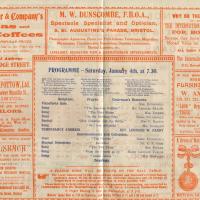
I find the adverts fascinating. My first optician in Bristol was Dunscombe's on St Augustine's Parade, so they were there a long time. They've closed now (or at least moved) but were still there as recently as 2008, I think. Interesting to see gas lighting systems being advertised, too!
Tags: Bristol Places UK onemilematt united kingdom Hotwells Cumberland Basin Flyover System Cumberland Piazza Cumberland Basin Terrett Memorial Hall
Auto-Tags: Newspaper Font Paper Menu Document Paper product Publication
Text Recognition Tags: M. W. DUNSCOMBE, F.B.0.A.,e d WHY DO THE PEOPLE Spectaele Specielist and Optician, 5, St. AUGUSTINE'S PARADE, BRISTOL. Barber &Company's Teas and THE INTERNATIONAL BOOT CO FOR B0OTS? Coffees Photograplie Apparatus, Opes snd Field Glae Telescopen, Magniticn Microscopes Theenameters. Barometers, Drawing lostruments. Optial Laterns, ete. LIMELIGHT, DISSOLVING VIEW A CINEMATOGRAPH ENTERTAINMENTS. Because they know they will get Honest Value tor their money. AT POPULAR PRICES. ONE MUSDED TEAB ALL GASH PIORS. The International Boot Co., Bristol Addreas 33, BRIDGE STREET. 2a, Hetvell Rd., BRISTOL. PROGRAMME – Saturday, Januaty 4th, at 7.30. Estalilahed 1834. IF YOU WANT SHIRTING COLE&POTTOW,Ltd. 15 to 18, Lower Maudlin St., FLANNELETTE, W. AXTENS, 219. 221, 223, Hlotwell Road. LION Brand at 6 d. "TIGER" eter ne range. 2 Tia. ialld by a. Derpasd y NOSE, Astcar THY ৰ । Des t BRISTOL Seripture. Pianoforte Solo. Prayer. Chairman's Remarks. READY-MADE AND BESPOKE TAILORS. Mi FireucoaIL Mr LoA TATLO The Amoec daktal "The HoBhrine" In the thening Grey *How llortlue ie Beidge "Oh! kliheful" Song Song at 5{d. Miss TuK Sti Porata Mis F. Hanter Duet Largast Stock of Ready-Made Clothing in the Wet ol Eagland. Scamen's Complete Ourfits. Recital Song TEMPERANCE ADDRESS M lowan REV. LEONARD W. PARRY ELANNELK, BLANKETS. QUILS, Duet Musinal Selootions Song Song Song Annoaneoments and Colleetion. The aina Acdion "The Te Cities" When the ande g by "Antie anrie Doxology. Mis Fo LI Mr. E IL Do A Gross of Watches for London PREPAUE TO THE MINTER SEASON "WELSBACH Mis Tter Mater LaA TAXton EVELLERT, INCANESCENT GAN LIT SSTEM emar te RELABACE KERN BUN ngecres el er ot- the A PLEDGE BOOK WILL BE FOUND ON THE HALL TABLE. The Lacal Cemmitta t the lntorpated seamen and Boatmes's Friend foclety arnestly appeal te the Mambers t the Chrlatlan Chuncho nd all frienda of Temperince te ugpot thee goteria in every passible way. Thone dentring te help, ether In providinprgremme or canvaalng, e requostad to communicate with the Supertetendent, ke EW, Parry, Avenhurat, Cumhertand Road A Preper Mastin held a Wednerday, at8 pm. Hithe lacl iur il T10 Tarslays, and aday Teeat 11 a 30t ioel r Ant WILSACE HARTRA Muity e Riches i Apply fir paminla te Welsbech Inndescent Gas Light Co, A Titoria Strest, Bristal WATTS & C Ld., p Stokes Croft. M. W. DUNSCOMBE, F.B.0.A.,e d WHY DO THE PEOPLE Spectaele Specielist and Optician, 5, St. AUGUSTINE'S PARADE, BRISTOL. Barber &Company's Teas and THE INTERNATIONAL BOOT CO FOR B0OTS? Coffees Photograplie Apparatus, Opes snd Field Glae Telescopen, Magniticn Microscopes Theenameters. Barometers, Drawing lostruments. Optial Laterns, ete. LIMELIGHT, DISSOLVING VIEW A CINEMATOGRAPH ENTERTAINMENTS. Because they know they will get Honest Value tor their money. AT POPULAR PRICES. ONE MUSDED TEAB ALL GASH PIORS. The International Boot Co., Bristol Addreas 33, BRIDGE STREET. 2a, Hetvell Rd., BRISTOL. PROGRAMME – Saturday, Januaty 4th, at 7.30. Estalilahed 1834. IF YOU WANT SHIRTING COLE&POTTOW,Ltd. 15 to 18, Lower Maudlin St., FLANNELETTE, W. AXTENS, 219. 221, 223, Hlotwell Road. LION Brand at 6 d. "TIGER" eter ne range. 2 Tia. ialld by a. Derpasd y NOSE, Astcar THY ৰ । Des t BRISTOL Seripture. Pianoforte Solo. Prayer. Chairman's Remarks. READY-MADE AND BESPOKE TAILORS. Mi FireucoaIL Mr LoA TATLO The Amoec daktal "The HoBhrine" In the thening Grey *How llortlue ie Beidge "Oh! kliheful" Song Song at 5{d. Miss TuK Sti Porata Mis F. Hanter Duet Largast Stock of Ready-Made Clothing in the Wet ol Eagland. Scamen's Complete Ourfits. Recital Song TEMPERANCE ADDRESS M lowan REV. LEONARD W. PARRY ELANNELK, BLANKETS. QUILS, Duet Musinal Selootions Song Song Song Annoaneoments and Colleetion. The aina Acdion "The Te Cities" When the ande g by "Antie anrie Doxology. Mis Fo LI Mr. E IL Do A Gross of Watches for London PREPAUE TO THE MINTER SEASON "WELSBACH Mis Tter Mater LaA TAXton EVELLERT, INCANESCENT GAN LIT SSTEM emar te RELABACE KERN BUN ngecres el er ot- the A PLEDGE BOOK WILL BE FOUND ON THE HALL TABLE. The Lacal Cemmitta t the lntorpated seamen and Boatmes's Friend foclety arnestly appeal te the Mambers t the Chrlatlan Chuncho nd all frienda of Temperince te ugpot thee goteria in every passible way. Thone dentring te help, ether In providinprgremme or canvaalng, e requostad to communicate with the Supertetendent, ke EW, Parry, Avenhurat, Cumhertand Road A Preper Mastin held a Wednerday, at8 pm. Hithe lacl iur il T10 Tarslays, and aday Teeat 11 a 30t ioel r Ant WILSACE HARTRA Muity e Riches i Apply fir paminla te Welsbech Inndescent Gas Light Co, A Titoria Strest, Bristal WATTS & C Ld., p Stokes Croft.
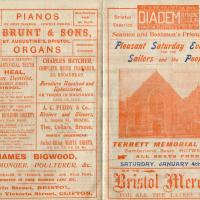
This was my random eBay purchase. I had no idea that the Terrett Memorial Hall had ever existed until I saw this leaflet up for sale.
There's some information on the hall on the Places of Worship database; as you can guess from the title of the leaflet it was basically a seaman's mission, with the aim "to promote the social, moral and religious welfare of sailors and provide sleeping accomodation for seamen, also free beds for destitute seafarers"
My favourite random thing on this leaflet is probably that the Surgeon Dentist is called Mr Heal.
Tags: Bristol Places UK onemilematt united kingdom Hotwells Cumberland Basin Flyover System Cumberland Piazza Cumberland Basin Terrett Memorial Hall
Auto-Tags: Font Material property Publication Brickwork Paper Book Pattern Paper product Brick History Newsprint Book cover Rectangle Holy places Document
Text Recognition Tags: BE SURE YOU CET THE ROYAL F RASNC DIADEM UR Hire Parebane PIANOS As to ATSS. Bristol of the per Month. BY BEST MAKERS LUWEST PRICS FRACTICAL TEST PRIVES THL BESTIneorponated Seamen and Boatmen's Friend Society. District W. BRUNT & SONS, ST. AUGUSTINE'S, BRISTOL. Pleasant Saturday Evenings Instreinenta Instrunents ORGANS Repatred. Exthanged roR THE Sailors and the People. ANERICAN A ENOISH DENTITRY Prize Medal ARTIFICIAL TEETH. Mr. HEAL, Surgeon Dentist, CHARLES HATCHER, COMPLETE HOUSE FURNISHER, 20, BROADMEAD. 25, OLD MAHKEr STREET. BRISTOL. Furnituro Repaired and Upholstered, the t quaty OR TAKEN IN EXCHANGE. CASIL OR IHIRK. a An Metais C Monik s pmaro WET oF NGLANO AND SOUTH WALES A. C. PUDDY & Co. PRRMANENT BUILDING SOCIETY Hosiers and Glovers, SL Staphan's ureat, Bristat he sosh ANNUAL REPORT 3. Dolphie St., BRISTOL Ties, Collars, Braces, Re Men t i anora frebeYBARS Ma FOR DORIDWER AY TER WINTER UNDERWEAR. Parfect-fitting WHITE SHIRTS, in a . e e TERRETT MEMORIAL HALL, Cumberland Basin. HOTWELLS A dm, A Ere JAMES BIGWOOD, ALL SEATS PREE. FISHMONGER, POULTERER, &c. SATURDAY, JANUARY 4th, 1902. BUY THE Bristol Mercury LICENSED DEALER IN VENISON, GAME AND WILD FOWL IMPORTER oF PURE WENHAM LAKE IOE. Baldwin Street, BRISTOS, and Victoria Street, CLIFTON. FOR ALL THE LATEST NEWS. BE SURE YOU CET THE ROYAL F RASNC DIADEM UR Hire Parebane PIANOS As to ATSS. Bristol of the per Month. BY BEST MAKERS LUWEST PRICS FRACTICAL TEST PRIVES THL BESTIneorponated Seamen and Boatmen's Friend Society. District W. BRUNT & SONS, ST. AUGUSTINE'S, BRISTOL. Pleasant Saturday Evenings Instreinenta Instrunents ORGANS Repatred. Exthanged roR THE Sailors and the People. ANERICAN A ENOISH DENTITRY Prize Medal ARTIFICIAL TEETH. Mr. HEAL, Surgeon Dentist, CHARLES HATCHER, COMPLETE HOUSE FURNISHER, 20, BROADMEAD. 25, OLD MAHKEr STREET. BRISTOL. Furnituro Repaired and Upholstered, the t quaty OR TAKEN IN EXCHANGE. CASIL OR IHIRK. a An Metais C Monik s pmaro WET oF NGLANO AND SOUTH WALES A. C. PUDDY & Co. PRRMANENT BUILDING SOCIETY Hosiers and Glovers, SL Staphan's ureat, Bristat he sosh ANNUAL REPORT 3. Dolphie St., BRISTOL Ties, Collars, Braces, Re Men t i anora frebeYBARS Ma FOR DORIDWER AY TER WINTER UNDERWEAR. Parfect-fitting WHITE SHIRTS, in a . e e TERRETT MEMORIAL HALL, Cumberland Basin. HOTWELLS A dm, A Ere JAMES BIGWOOD, ALL SEATS PREE. FISHMONGER, POULTERER, &c. SATURDAY, JANUARY 4th, 1902. BUY THE Bristol Mercury LICENSED DEALER IN VENISON, GAME AND WILD FOWL IMPORTER oF PURE WENHAM LAKE IOE. Baldwin Street, BRISTOS, and Victoria Street, CLIFTON. FOR ALL THE LATEST NEWS.
One Albermarle Row, Granby Green and... People
12 Mar 2021
I was browsing some historical photos the other day, and came across "Rear of Unspecified House" in the Bristol Archives' John Trelawny Ross collection, and immediately recognised it as being the back of 1 Albermarle Row, just around the corner from me. I've not had much time to research the history of this odd little addition to Albermarle Row, or what happened to 1-4 Cumberland Place, number 4 of which used to be attached to the side of 1 Albermarle Row, but it was interesting to look at old maps for a few minutes and work out what used to be where.
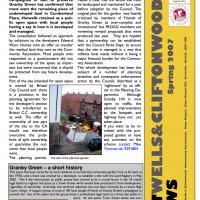
That all connects with the little local bit of land at Granby Green, too, as it used to be numbers 1-3 Cumberland Place. There was something of a planning battle over Granby Green, and I've included an old edition of Hotwells & Cliftonwood News that I found online, a copy of which would have been popped through my letterbox at the time.
I was also inspired by some old pictures of Hotwell Road to try to put a few more people in my pictures, though I set my pre-focus a couple of extra metres out from normal to make sure I didn't get too close to anyone!
Tags: Bristol Places UK onemilematt united kingdom Hotwells Cumberland Place Granby Green
Auto-Tags: Tire Automotive tire Newspaper Publication Motor vehicle Tread Font Wheel Material property News Vehicle Automotive wheel system Advertising Tire care Screenshot
Text Recognition Tags: Decision time for new h&cca Open Space in Hotwells HOTWELLS & CLIFTONWOOD COMMUNITY ASSOCIATION A recent poll of the people who sion granted to Edward Ware Homes campaigned in vain to preserve makes it clear that the whole site must Granby Green has confirmed that be landscaped and maintained for a year most want the remaining piece of before adoption by the Council, The undeveloped land in Cumberland original plan for the garden was heavily Place, Hotwells retained as a pub- criticised by members of Friends of lic open space with local people Granby Green as over-complex and having a say in how it is developed 'institutional but FROGG members are reviewing revised proposals that were The consultation followed an approach produced last year. They are hopeful by solicitors to the developers Edward that a partnership can be established with the Council Parks Dept. to ensure the residual land they own to the Com that the site is managed in a way that munity Association. Most people who reflects local needs without it being a responded to a questionnaire did not major financial burden for the Commu- ed by and managed. Ware Homes with an offer to transfer see ownership of the space as impor- nity Association. tant but were concermed that it should The whole development has been the be protected from any future develop- subject of a number of planning breaches and consequent enforcement Part of the site intended for open space action by the Council, described as a 'nightmare by an offi- cer in the Planning De- Alkhough Granby Hill is now open to traffic, the planned improvements to the footpath and highway have not yet ment. is owned by Bristol City Council and there is a provision in the planning agreement for the developer's section to be transferred to partment. Bristol C.C. owmership as well. The offer of ownership of one part of the site to the CA taken place. If you want to be in- volved with the pro- posed garden or have any comment on the scheme contact Mike would not therefore overcome the prob lems of split ownership or guarantee the out- come that local people Timmins tel: 9291804 want. The planning permis- The s of the panned garden Granby Green -a short history This apace had cared for by local residents a an informal community garden from as far back as the 1970s unail a fance was erected by a develaper, to establiah a tde with the Land Ragistry in May 2002 Tha 4 day interruption to pubic access later proved to be a crudal factor in the IB legal battle to regster the space as Town Green which would have protected it from developmere, n renoved by a recent High pnenas of Graby Green) campagned to Ibeen regardiess of ownership (iroricaly. chis technical objection has now been Court rulng A support group of around 100 local people prevent the loss of the space and the group tced a professional legal team at a three day publik in In this edition: Community News Winning ideas - Meet Your Neighbour -6 Events & Activities - quiry At one point, Town Green satus wos con ferred by the Bristol CC Open Spaces committee but bear rescinded folawing thrests of legal action by the then ownieri, Etward Ware Homes. Local resident Mike Timmin has ggeed that the now smaler space below Walace Place, che new 4 block of Mats should be christened Gromit Gar. 7 dens Rey Smth Contacts 8 HOTWELLS&CLIFTONWOe Spring 2007 SM3N Published y Hetwells A CIenweed Cemmunity Aassetaten, Htepe Chapel, Hepe Chapel Hill, Hetwells, Brtatel. BSa 4ND Decision time for new h&cca Open Space in Hotwells HOTWELLS & CLIFTONWOOD COMMUNITY ASSOCIATION A recent poll of the people who sion granted to Edward Ware Homes campaigned in vain to preserve makes it clear that the whole site must Granby Green has confirmed that be landscaped and maintained for a year most want the remaining piece of before adoption by the Council, The undeveloped land in Cumberland original plan for the garden was heavily Place, Hotwells retained as a pub- criticised by members of Friends of lic open space with local people Granby Green as over-complex and having a say in how it is developed 'institutional but FROGG members are reviewing revised proposals that were The consultation followed an approach produced last year. They are hopeful by solicitors to the developers Edward that a partnership can be established with the Council Parks Dept. to ensure the residual land they own to the Com that the site is managed in a way that munity Association. Most people who reflects local needs without it being a responded to a questionnaire did not major financial burden for the Commu- ed by and managed. Ware Homes with an offer to transfer see ownership of the space as impor- nity Association. tant but were concermed that it should The whole development has been the be protected from any future develop- subject of a number of planning breaches and consequent enforcement Part of the site intended for open space action by the Council, described as a 'nightmare by an offi- cer in the Planning De- Alkhough Granby Hill is now open to traffic, the planned improvements to the footpath and highway have not yet ment. is owned by Bristol City Council and there is a provision in the planning agreement for the developer's section to be transferred to partment. Bristol C.C. owmership as well. The offer of ownership of one part of the site to the CA taken place. If you want to be in- volved with the pro- posed garden or have any comment on the scheme contact Mike would not therefore overcome the prob lems of split ownership or guarantee the out- come that local people Timmins tel: 9291804 want. The planning permis- The s of the panned garden Granby Green -a short history This apace had cared for by local residents a an informal community garden from as far back as the 1970s unail a fance was erected by a develaper, to establiah a tde with the Land Ragistry in May 2002 Tha 4 day interruption to pubic access later proved to be a crudal factor in the IB legal battle to regster the space as Town Green which would have protected it from developmere, n renoved by a recent High pnenas of Graby Green) campagned to Ibeen regardiess of ownership (iroricaly. chis technical objection has now been Court rulng A support group of around 100 local people prevent the loss of the space and the group tced a professional legal team at a three day publik in In this edition: Community News Winning ideas - Meet Your Neighbour -6 Events & Activities - quiry At one point, Town Green satus wos con ferred by the Bristol CC Open Spaces committee but bear rescinded folawing thrests of legal action by the then ownieri, Etward Ware Homes. Local resident Mike Timmin has ggeed that the now smaler space below Walace Place, che new 4 block of Mats should be christened Gromit Gar. 7 dens Rey Smth Contacts 8 HOTWELLS&CLIFTONWOe Spring 2007 SM3N Published y Hetwells A CIenweed Cemmunity Aassetaten, Htepe Chapel, Hepe Chapel Hill, Hetwells, Brtatel. BSa 4ND
Leigh Woods Walk
14 Mar 2021
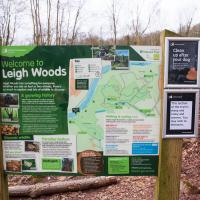
An enormous walk today, or at least it felt enormous. My feet are sore, anyway. I started off recreating a couple of local historical photos in Hotwells, but then headed for my traditional walk along the towpath in the Avon Gorge to the far extreme of Leigh Woods, up and through the woods to the height of the Suspension Bridge, finally crossing into Clifton Village for a well-deserved vanilla latte.
I say "traditional" because this used to be a very regular route for me, first walking, years and years ago, and later jogging—this route combined with a circuit of the Downs on the other side used to be my way of making sure I was fit to do a half-marathon (I did six of them in total, between 2010 and 2014).
I miss the routine of this walk, even though it's a long way and it used to pretty much wipe me out when I did it—I'd come back home and collapse and do very little for the rest of the day. But perhaps that's what Sundays are for, and I should try to remember that.
Doing this walk regularly was quite a meditative experience. Not so much of that today, but once I got to the further extreme of the towpath, where the roar of the Portway traffic on the other side of the river dwindles and I turned into Leigh Woods to climb ever closer to birdsong and further from rushing cars, I did seem to recapture a little of the feeling of previous walks. (I would say my mind cleared, but I was mentally singing along to Life Without Buildings' The Leanover for most of the wander. There are worse songs to have stuck in one's head, though; it's a great track...)
Anyway. Apparently the walk made me more likely to ramble in words, too. I'll stop now :)
Tags: Bristol Places UK onemilematt united kingdom Leigh Woods forest woods
Auto-Tags: Plant Plant community Ecoregion Natural landscape Map Tree Land lot Vegetation Grass Sky Font Landscape Adaptation Groundcover Recreation
Text Recognition Tags: Clean up after your dog Welcome to Kay Leigh Woods Leigh Wsos hes sanetng ter eryone, whetwo much to eplon and lats ot wid to dhcover n foot ar hook, thare's A growing history This section of the bal is stoep and rocky and uneven. Yeu may whth to dnnt ing ing s Discover wildtu Paradioe Bottum Clean up after your dog Welcome to Kay Leigh Woods Leigh Wsos hes sanetng ter eryone, whetwo much to eplon and lats ot wid to dhcover n foot ar hook, thare's A growing history This section of the bal is stoep and rocky and uneven. Yeu may whth to dnnt ing ing s Discover wildtu Paradioe Bottum
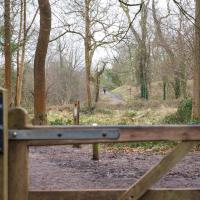
Tags: Bristol Places UK onemilematt united kingdom Leigh Woods forest woods
Auto-Tags: Plant Tree Wood Natural environment Natural landscape Sky Split-rail fence Fence Grass Landscape Trunk Forest Woodland Road Home fencing
Text Recognition Tags: TANK YOUR UNG AREA AOPRVEEPNG Yut Doe ON A LEAD TANK YOUR UNG AREA AOPRVEEPNG Yut Doe ON A LEAD
John Carr's Terrace
16 Mar 2021
I wanted a nice simple lunch-hour walk that took me past a cafe today, and I managed to find the perfect road to knock off my list of targets to do it. Situated just off Jacobs Wells Road, right next to Queen Elizabeth's Hospital, John Carr's Terrace, and Rosebery terrace above it, which I'd completely forgotten existed, are a little cul-de-sac that many Bristolians will have wandered past a thousand times without ever seeing.
There's a reason it's next to QEH:
Known traditionally as "The City School", Queen Elizabeth's Hospital was founded by the will of affluent merchant John Carr in 1586, gaining its first royal charter in 1590.
John Carr's terrace itself isn't much to write home about, architecturally, but I like the secluded feel of it, and I really liked Rosebery Terrace with its little houses, commanding position and friendly, slightly tumbledown feel.
On the way home I popped into Foliage Cafe for a coffee and a very pleasant nutella and banana pastry, then walked home past the refurbishment of the old Thali Cafe into a new and interesting clinic...
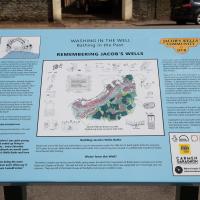
Now the well house seems to have stopped overflowing and the sign board is no longer cordoned off, it's time for a closer look. Lots of good info here.
Tags: Bristol Places UK onemilematt united kingdom Jacob's Well
Auto-Tags: Plant community Ecoregion Vertebrate Map World Green Nature Leaf Natural environment Botany Grass Biome Font Public space Line
Text Recognition Tags: WASHING IN THE WELL Bathing in the Past JACOB'S WELLS COMMUNITY HUB REMEMBERING JACOB'S WELLS Building Jacob's Wes Beths Commat foundahion Viah home whem wa gal yeung abour 17, and ended op iing in warios bedat y Setureley egular a cockwork we t co do ecob Wel ath an hae v tadng a lt u ee v A wlem ar w lwte ite FERRY Water from the Wel? CARMEN GARAGHON Eremenber then beg the est anaing baihe dten sy i they wee s ould come T ie a the Theat Cmpe dy ot W p DeentChaer 2theer Ho iteat My-iacle koal leming C WASHING IN THE WELL Bathing in the Past JACOB'S WELLS COMMUNITY HUB REMEMBERING JACOB'S WELLS Building Jacob's Wes Beths Commat foundahion Viah home whem wa gal yeung abour 17, and ended op iing in warios bedat y Setureley egular a cockwork we t co do ecob Wel ath an hae v tadng a lt u ee v A wlem ar w lwte ite FERRY Water from the Wel? CARMEN GARAGHON Eremenber then beg the est anaing baihe dten sy i they wee s ould come T ie a the Theat Cmpe dy ot W p DeentChaer 2theer Ho iteat My-iacle koal leming C
Quick Around-the-Harbour Wander with Lisa
20 Mar 2021
My friend Lisa was meeting another friend for a walk near the suspension bridge, so we fitted in a quick harbourside loop from my place first. We discussed gardening (we're both envious of the gardening skills of the Pooles Wharf residents; we can just about keep herbs alive, whereas they're growing heartily-fruiting lemon trees outdoors in England along with everything from bonsai to magnolias), cafes, work and architecture, among other things.
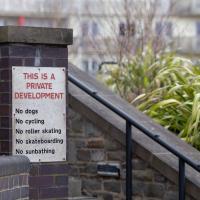
NO FUN
Tags: Bristol Places UK onemilematt united kingdom Hotwells
Auto-Tags: Plant Groundcover Gas Urban design Grass Brickwork Brick Tree Font Road Wood Sidewalk City Shrub Landscape
Text Recognition Tags: THIS IS A PRIVATE DEVELOPMENT No dogs No cycling No roller skating No skateboarding No sunbathing THIS IS A PRIVATE DEVELOPMENT No dogs No cycling No roller skating No skateboarding No sunbathing
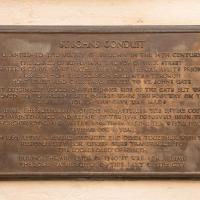
I got interested in Bristol's medieval water supplies after poking around near Jacobs Wells Road and Brandon Hill. It was during that research I found out about a pipe that's still there today, and, as far as I know, still actually functioning, that was originally commissioned by Carmelite monks in the 13th century. They wanted a supply of spring water from Brandon Hill to their priory on the site of what's now the Bristol Beacon—Colston Hall, as-was. It was created around 1267, and later, in 1376, extended generously with an extra "feather" pipe to St John's On The Wall, giving the pipework its modern name of "St John's Conduit".
St John's on the Wall is still there, guarding the remaining city gate at the end of Broad Street, and the outlet tap area was recently refurbished. It doesn't run continuously now, like it did when I first moved to Bristol and worked at the end of Broad Street, in the Everard Building, but I believe the pipe still functions. One day I'd like to see that tap running...
There are a few links on the web about the pipe, but by far the best thing to do is to watch this short and fascinating 1970s TV documentary called The Hidden Source, which has some footage of the actual pipe and also lots of fantastic general footage of Bristol in the seventies.
On my walk today I was actually just going to the building society in town, but I decided to trace some of the route of the Carmelite pipe, including visiting streets it runs under, like Park Street, Christmas Street, and, of course, Pipe Lane. I also went a bit out of my way to check out St James' Priory, the oldest building in Bristol, seeing as it was just around the corner from the building society.
There are far too many pictures from this walk, and my feet are now quite sore, because it was a long one. But I enjoyed it.
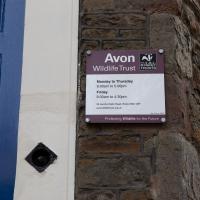
It's the home of the Avon Wildlife Trust now, but back in the day it was Brandon Hill Police Station. It's marked on maps as recent as the 1950s Bristol Town Plans. An interesting tidbit from Bristol Then and Now on Facebook:
One of the first police stations in Bristol, it was opened in 1836 - policemen from the station used the building housing the Jacob's Well as a bicycle store and many old bicycle lamp batteries were found in excavating the small entrance to the mikveh. The Police Station closed in 1967 and it is now the base of Avon Wildlife Trust.
Tags: Bristol Places UK onemilematt united kingdom Jacobs Wells Road
Auto-Tags: Wood Font Material property Gas Brick Facade House numbering Brickwork Door Signage Rectangle Home door City History Electric blue
Text Recognition Tags: Avon A Wildlife Trust S uildlife Montday to Thursday 9.00am to 5.00pm Friday 9.00am to 4.30pm Jco mat. h 8 ID Protecting Widlife for the Future Avon A Wildlife Trust S uildlife Montday to Thursday 9.00am to 5.00pm Friday 9.00am to 4.30pm Jco mat. h 8 ID Protecting Widlife for the Future
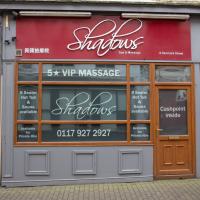
Well, technically, Bristol was a spa town...
Tags: Bristol Places UK onemilematt united kingdom City Centre St Augustine's
Auto-Tags: Door Fixture Window Font Facade Building Logo Advertising Retail Signage Awning Composite material Wood
Text Recognition Tags: nean at 異国按摩院 Spa a Maage G Denmark Streat 5 VIP MASSAGE Statoas 8 Seater Hot Tub B Seater Den Hot Tub Sauna available Sauna available Cashpoint I Inside Aallahie Avallabie for 0117 927 2927 for Private re Private H nean at 異国 按摩院 Spa a Maage G Denmark Streat 5 VIP MASSAGE Statoas 8 Seater Hot Tub B Seater Den Hot Tub Sauna available Sauna available Cashpoint I Inside Aallahie Avallabie for 0117 927 2927 for Private re Private H
Tags: Bristol Places UK onemilematt united kingdom City Centre St John on the Wall St John's Church St. John's Conduit old city
Auto-Tags: Brown Wood Font Commemorative plaque History Interior design Rectangle Memorial Hardwood
Text Recognition Tags: STUOHNS CONDUIT GRANTED TO THE VESTRY OF S JOHN IN THE 14TH CENTURY THE SOARCE OB SOPPLY LS AT TEE FO O AK STREET WATER IS CONVEYED SY TER DIRE OROM THE CARMBLITE PRIORY CISTERN- DN THE COLSTON ALL SITE-TEROUGH 2OST STREET AND CHRISTNLAS STREET TO ST. JOHNS GATE T ORIGINAIEY STOOD ON THE INNER SIDE OF THE GATE BUT WS MOVED TO TS RESENI SITE IN L WHEN THE FOOTWAY ON THE BASTERN SIDE OR TASGATE WAS MADE AFTER THE SUPPRESSION OF THE KORASTEUIS THE INTIRE COST OF MAINTENANCE AND REPAIR CFTRE PIPE DEVOLVED UPON THE CHURCHWARDENS AND VESTRY SONETIAEN YAKINE HE WHOLE PARISH REVENJE BO AYBAR IN 1365 AFTER SEVERE DROUCHT THE DEEDS TOGETHER WITH THE RESPONSIBILTTY SOR UPKEBE WERE TRANSFERRED TO THE LOCAL BORRD OR EBALTH DURING THE AIR RAIDS OF 1940T WAS FOR A TIME THE SOLE WATER SAPPLYN THE FART OF THE CTY STUOHNS CONDUIT GRANTED TO THE VESTRY OF S JOHN IN THE 14TH CENTURY THE SOARCE OB SOPPLY LS AT TEE FO O AK STREET WATER IS CONVEYED SY TER DIRE OROM THE CARMBLITE PRIORY CISTERN- DN THE COLSTON ALL SITE-TEROUGH 2OST STREET AND CHRISTNLAS STREET TO ST. JOHNS GATE T ORIGINAIEY STOOD ON THE INNER SIDE OF THE GATE BUT WS MOVED TO TS RESENI SITE IN L WHEN THE FOOTWAY ON THE BASTERN SIDE OR TASGATE WAS MADE AFTER THE SUPPRESSION OF THE KORASTEUIS THE INTIRE COST OF MAINTENANCE AND REPAIR CFTRE PIPE DEVOLVED UPON THE CHURCHWARDENS AND VESTRY SONETIAEN YAKINE HE WHOLE PARISH REVENJE BO AYBAR IN 1365 AFTER SEVERE DROUCHT THE DEEDS TOGETHER WITH THE RESPONSIBILTTY SOR UPKEBE WERE TRANSFERRED TO THE LOCAL BORRD OR EBALTH DURING THE AIR RAIDS OF 1940T WAS FOR A TIME THE SOLE WATER SAPPLYN THE FART OF THE CTY
Tags: Bristol Places UK onemilematt united kingdom Clifton
Auto-Tags: Daytime Door Blue Azure Wood Fixture Building Brickwork Facade Brick Font Home door Landmark Symmetry Electric blue
Text Recognition Tags: Orhvis Claroi af te Sazinty a de Mier of Gol daui Orhvis Claroi af te Sazinty a de Mier of Gol daui
Tags: Bristol Places UK onemilematt united kingdom Clifton
Auto-Tags: Window Sky Building Brick Wood Brickwork Cloud Door City Facade Road surface Street light Road Roof Urban design
Text Recognition Tags: QUINTON HOUSE OPEN 7 DAYS A wirl EAL ALES CS- GUNTON Star TONFOWSE CEOFE SES &O OLD MILD& BITTER BEERS. OUNTON OUSE PUB QUINTON HOUSE OPEN 7 DAYS A wirl EAL ALES CS- GUNTON Star TONFOWSE CEOFE SES &O OLD MILD& BITTER BEERS. OUNTON OUSE PUB